Smart Lock Security 2026: Preventing Breaches & Maximizing Entry
Smart Lock Security in 2026: Insider Knowledge on Preventing Breaches and Maximizing Entry Security
The year 2026 is upon us, and with it, an unprecedented evolution in home and business security. The promise of convenience offered by smart locks has long been a compelling factor for consumers, but as technology advances, so too do the sophistication of potential threats. Navigating the complex landscape of Smart Lock Security requires more than just understanding features; it demands insider knowledge on preventing breaches and maximizing entry security. This comprehensive guide will delve deep into the current state of smart lock technology, project its near future, and equip you with the essential insights needed to safeguard your premises effectively.
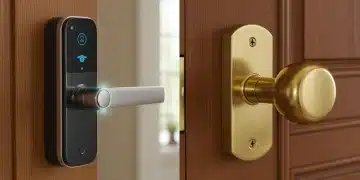
The era of traditional keys is slowly but surely fading into the annals of history. Smart locks, once a niche luxury, are now becoming a mainstream component of modern living and working spaces. Their allure lies in the ability to remotely control access, monitor entry and exit, and integrate with broader smart home ecosystems. However, this increased connectivity brings with it inherent vulnerabilities that, if not properly addressed, can compromise the very security they are designed to provide. In 2026, the focus has shifted from mere functionality to robust, multi-layered security protocols that can withstand increasingly sophisticated cyber threats and physical attacks.
Understanding the nuances of Smart Lock Security means looking beyond the glossy advertisements and delving into the underlying technologies that make these devices both powerful and potentially vulnerable. From encryption standards to communication protocols, and from physical tamper resistance to software update policies, every aspect plays a critical role in the overall security posture of your smart lock system. This article aims to demystify these complexities, offering practical advice and forward-looking perspectives to ensure your entry points remain impervious to unauthorized access.
The Evolving Landscape of Smart Lock Technology: What’s New in 2026?
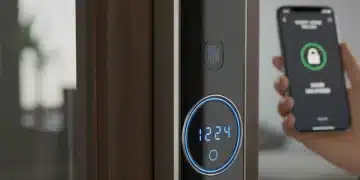
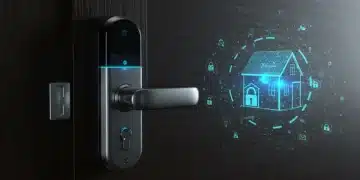
In 2026, smart lock technology has matured significantly. We’re seeing a convergence of advanced biometrics, artificial intelligence (AI), and enhanced encryption methods. No longer are smart locks simply Bluetooth-enabled deadbolts; they are sophisticated security hubs capable of learning, adapting, and responding to threats in real-time. This evolution presents both incredible opportunities for stronger security and new challenges in terms of potential vulnerabilities.
Biometric Authentication: Beyond Fingerprints
While fingerprint scanners have been common for a few years, 2026 sees the widespread adoption of more advanced biometric authentication methods. Facial recognition, often leveraging 3D mapping and liveness detection to prevent spoofing, is becoming a standard feature in high-end smart locks. Retina and iris scanning, once confined to high-security government facilities, are also making their way into commercial and even some residential applications, offering unparalleled levels of authentication accuracy. The integration of multispectral imaging can even detect blood flow and unique subsurface patterns, making biometric spoofing virtually impossible.
AI and Machine Learning for Threat Detection
Perhaps one of the most significant advancements in Smart Lock Security is the integration of AI and machine learning. These intelligent algorithms are trained on vast datasets of attempted breaches, unusual access patterns, and environmental anomalies. An AI-powered smart lock can, for instance, detect if someone is lingering suspiciously near your door, identify forced entry attempts before they succeed, or even recognize unusual entry times for authorized users, prompting a secondary authentication step. This proactive threat detection and response capability significantly elevates the security game.
Quantum-Resistant Encryption
As quantum computing looms on the horizon, threatening to break traditional encryption methods, smart lock manufacturers are proactively adopting quantum-resistant cryptographic algorithms. This ensures that the data transmitted between your lock, your smartphone, and the cloud remains secure against future, more powerful computational attacks. Understanding whether your smart lock utilizes these advanced encryption standards is crucial for long-term security.
Improved Physical Tamper Resistance
While much of the focus is on digital security, physical integrity remains paramount. Modern smart locks are designed with enhanced physical tamper resistance, incorporating stronger materials, anti-drill plates, and alarm systems that trigger upon physical manipulation. Some models even include accelerometers and gyroscopes to detect vibrations and unusual movements, alerting homeowners to potential physical attacks before they escalate.
Common Vulnerabilities and How to Prevent Them
Despite these advancements, smart locks are not impervious to attack. Understanding the common vulnerabilities is the first step in fortifying your Smart Lock Security. Breaches can occur through various vectors, from cyber-attacks to physical tampering. Here’s how to prevent them:
Weak Passwords and PINs
This remains one of the simplest yet most common entry points for unauthorized access. Default passwords, easily guessable PINs, or reusing passwords across multiple services are an open invitation for hackers. Always change default credentials immediately upon installation. Utilize strong, unique passwords for administrator accounts and complex, non-sequential PINs. Many smart locks now enforce strong password policies, but user diligence is still key.
Outdated Firmware and Software
Like any smart device, smart locks rely on firmware and software to function. Manufacturers regularly release updates to patch security vulnerabilities and improve performance. Neglecting these updates leaves your system exposed to known exploits. Always enable automatic updates if available, or make it a habit to check for and install updates regularly. Think of it as vaccinating your lock against new digital diseases.
Insecure Wireless Communication (Bluetooth, Wi-Fi, Z-Wave)
Smart locks communicate wirelessly, often via Bluetooth, Wi-Fi, or Z-Wave. Each protocol has its own security considerations. Ensure your Wi-Fi network is secure with WPA3 encryption. For Bluetooth, verify that the lock uses strong pairing mechanisms and encrypted communication. Z-Wave and Zigbee, often used in mesh networks, should also be configured with encryption and strong network keys. Avoid connecting your smart lock to public or unsecured Wi-Fi networks.
Lack of Multi-Factor Authentication (MFA)
MFA adds an extra layer of security by requiring two or more verification factors to gain access. This could be a password combined with a fingerprint, a PIN combined with a one-time code sent to your phone, or a facial scan. Many advanced smart locks now support MFA, and enabling it is a critical step in enhancing your Smart Lock Security. Even if a hacker obtains one credential, they’ll be stumped without the second.
Physical Tampering and Lock Picking
While smart locks add digital security, their physical components can still be vulnerable. Ensure your smart lock has a high ANSI/BHMA grade for physical security (Grade 1 being the highest). Look for features like anti-drill plates, reinforced strike plates, and robust bolt mechanisms. Regular inspection of the lock for signs of tampering is also advisable.
App Vulnerabilities
The mobile app used to control your smart lock is another potential attack vector. Ensure the app is downloaded from official app stores, kept up-to-date, and has strong security practices (e.g., requires a separate login, supports biometric login). Be wary of phishing attempts that try to trick you into downloading malicious apps.
Maximizing Entry Security: Best Practices for 2026 and Beyond
Beyond preventing breaches, maximizing entry security involves a holistic approach that integrates technology with smart habits. Here’s how to ensure your smart lock system provides the highest level of protection:
Choose Reputable Brands with Strong Security Track Records
Not all smart locks are created equal. Research brands known for their commitment to security, regular firmware updates, and transparent vulnerability reporting. Reading reviews and independent security audits can provide valuable insights. A cheap, no-name smart lock might save you money upfront but could cost you dearly in security later.
Implement a Strong Network Security Foundation
Your smart lock is only as secure as the network it connects to. Use a robust router with strong encryption (WPA3 recommended), unique and complex Wi-Fi passwords, and consider network segmentation (e.g., a separate IoT network) to isolate your smart devices from your main network. Regularly update your router’s firmware.
Enable and Utilize All Available Security Features
Many smart locks come packed with advanced security features that users often overlook. This includes geo-fencing (automatically locking/unlocking when you leave/arrive), activity logs (to monitor who accessed your property and when), temporary guest access with expiration dates, and custom alerts for unusual activity. Take the time to explore and configure all these options to their fullest potential.
Regularly Review Access Permissions
If you grant temporary access to guests, service providers, or even family members, make it a habit to review and revoke these permissions once they are no longer needed. Stale access codes are a security liability. Many smart lock apps allow for easy management of user profiles and access schedules.
Integrate with a Comprehensive Security System
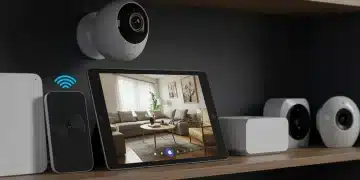
For ultimate protection, integrate your smart lock with a broader smart home security system that includes surveillance cameras, motion sensors, and alarm systems. This creates a layered defense where different components work together to detect, deter, and respond to threats. For example, if an unauthorized entry is detected by the smart lock, cameras can immediately begin recording, and the alarm can be triggered.
Be Mindful of Your Digital Footprint
Information about your smart home setup, travel plans, or daily routines can be exploited by malicious actors. Be cautious about what you share on social media and ensure your smart home apps and accounts are not linked to easily discoverable personal information. A strong Smart Lock Security strategy extends beyond the device itself to your overall digital hygiene.
The Future of Smart Lock Security: Predictions for Post-2026
Looking beyond 2026, the trajectory of Smart Lock Security points towards even greater sophistication and autonomy. Here are some predictions:
Self-Healing Security Systems
Future smart locks might incorporate self-healing capabilities, where AI algorithms can detect and automatically patch certain vulnerabilities, or even reconfigure network settings in response to perceived threats, without human intervention. This would represent a significant leap in proactive security.
Decentralized Identity and Blockchain Integration
Blockchain technology could play a role in creating decentralized, tamper-proof identity management systems for smart locks. This would provide an immutable record of access and enhance the security of user credentials, making them less susceptible to centralized data breaches.
Hyper-Personalized Biometrics
Expect even more advanced biometrics, possibly combining multiple factors like gait analysis, voice recognition, and even heart rate patterns, to create a truly unique and virtually unforgeable personal identifier for entry.
Energy Harvesting and Longer Battery Life
Battery life remains a practical concern for smart locks. Future innovations will likely focus on energy harvesting technologies or ultra-low power consumption designs, reducing the need for frequent battery changes and ensuring continuous operation.
Ethical AI and Privacy Concerns
As AI becomes more integral, ethical considerations and privacy concerns will also grow. Manufacturers will need to be transparent about how data is collected, processed, and secured, and users will need to be educated on their rights and options regarding data privacy. Balancing security with privacy will be a key challenge.
Case Studies: Learning from Real-World Scenarios
To truly grasp the importance of robust Smart Lock Security, it’s helpful to examine real-world scenarios. While specific product names are often withheld for privacy and legal reasons, the patterns of breaches offer invaluable lessons.
The “Forgotten Firmware Update” Incident
In one notable case, a popular smart lock brand released a critical firmware update addressing a vulnerability that allowed unauthorized Bluetooth access. Many users, however, failed to install the update. A group of savvy individuals exploited this known vulnerability, gaining entry to numerous homes. This highlighted the absolute necessity of timely updates and user education. The lesson: always update your firmware, and if automatic updates aren’t available, make it a routine task.
The “Weak Wi-Fi Password” Compromise
Another incident involved a smart lock connected to a home Wi-Fi network secured with a notoriously weak, default password. An attacker sitting outside the home was able to easily guess the Wi-Fi password, gain access to the home network, and subsequently compromise the smart lock. This underscores the fundamental principle that your smart lock’s security is intrinsically linked to the security of your home network. A strong Wi-Fi password and network encryption are non-negotiable.
The “Phishing for Credentials” Scam
A more sophisticated attack involved a phishing campaign targeting smart lock owners. Users received fake emails purporting to be from their smart lock manufacturer, asking them to “verify their account information” by clicking a malicious link. Those who fell for the scam inadvertently provided their login credentials to attackers, who then gained remote access to their smart locks. This emphasizes the importance of cybersecurity awareness and skepticism towards unsolicited communications, no matter how legitimate they appear.
The “Physical Bypass” of a Low-Grade Lock
While many focus on cyber threats, physical vulnerabilities remain. In one instance, a homeowner installed a budget smart lock with a low ANSI/BHMA security grade. A burglar, unable to digitally bypass the lock, resorted to traditional lock-picking techniques that were surprisingly effective against the lock’s inferior physical components. This illustrates that digital security must be complemented by robust physical security, and investing in a high-grade lock is paramount.
These case studies reinforce the idea that Smart Lock Security is a multi-faceted challenge. It requires vigilance from both manufacturers and users, a combination of technological safeguards and responsible user behavior. The most advanced smart lock in the world can be rendered useless by a simple oversight like a weak password or an uninstalled update.
The Role of Regulations and Standards in Smart Lock Security
As smart locks become ubiquitous, the need for standardized security protocols and regulations has grown. In 2026, we are seeing increased efforts by governments and industry bodies to establish baseline security requirements for IoT devices, including smart locks. These regulations aim to:
- Mandate Minimum Encryption Standards: Ensuring that all smart locks use strong, up-to-date encryption for data in transit and at rest.
- Require Regular Security Updates: Holding manufacturers accountable for providing timely security patches and support for a reasonable device lifespan.
- Promote Secure-by-Design Principles: Encouraging manufacturers to integrate security considerations from the initial design phase of a product, rather than as an afterthought.
- Facilitate Transparency: Requiring manufacturers to clearly communicate the security features, data collection practices, and update policies of their devices to consumers.
- Establish Vulnerability Disclosure Programs: Creating channels for security researchers to responsibly report vulnerabilities to manufacturers, allowing them to be patched before they can be exploited.
Adhering to these standards not only benefits consumers by providing a more secure product but also fosters trust in the smart home ecosystem. When evaluating smart locks, looking for certifications or adherence to recognized security standards (e.g., UL, ETSI EN 303 645) can be a good indicator of a manufacturer’s commitment to security.
Conclusion: Embracing a Secure Smart Lock Future
The future of Smart Lock Security in 2026 is one of incredible innovation and heightened vigilance. As technology continues to push the boundaries of convenience and control, so too must our understanding and implementation of robust security measures. By choosing reputable brands, maintaining strong network security, utilizing multi-factor authentication, and staying diligent with updates, you can transform your smart lock from a potential vulnerability into an impenetrable guardian of your property.
The journey towards absolute security is ongoing, but with the insights and best practices outlined in this guide, you are well-equipped to navigate the evolving landscape of smart lock technology. Embrace the future of entry security with confidence, knowing that you have the insider knowledge to prevent breaches and maximize the safety of what matters most.