Adaptive Learning Algorithms: Reshaping Smart Thermostats by 2026
Adaptive Learning Algorithms: Reshaping Smart Thermostats by 2026
The concept of a ‘smart home’ has evolved dramatically over the past decade, moving from simple remote control to sophisticated, interconnected ecosystems. At the heart of this evolution lies the smart thermostat, a device that has transformed from a mere temperature regulator into an intelligent hub for home climate control. However, the journey is far from over. By 2026, the integration of adaptive thermostat algorithms is poised to redefine personalized comfort and energy efficiency in ways we are only just beginning to grasp.
Imagine a home that anticipates your needs, not just based on a static schedule, but on a dynamic understanding of your preferences, habits, and even external environmental factors. This isn’t science fiction; it’s the imminent reality powered by advanced adaptive thermostat algorithms. These intelligent systems are learning, predicting, and optimizing your home’s climate with an unprecedented level of precision and personalization.
The Evolution of Smart Thermostats: From Programmable to Predictive
To truly appreciate the impact of adaptive thermostat algorithms, it’s essential to look back at where we started. Early programmable thermostats were a significant leap from manual dials, allowing users to set schedules for different times of the day or week. While this offered some energy savings, it lacked flexibility. If your schedule changed, you had to manually adjust it, often leading to wasted energy or discomfort.
The first generation of ‘smart’ thermostats introduced features like remote control via smartphone apps, geofencing (adjusting temperature based on your proximity to home), and basic occupancy sensing. These were undoubtedly convenient, but they still operated largely on predefined rules or simple reactive responses. They could learn some patterns, but their ability to truly adapt to complex, changing scenarios was limited.
The current frontier, and what will become standard by 2026, is the integration of sophisticated adaptive thermostat algorithms. These aren’t just following rules; they are learning from vast amounts of data, identifying subtle patterns, and making predictive adjustments. This shift from ‘programmable’ to ‘predictive’ is the game-changer, promising a future where your home’s climate is always just right, without you ever having to lift a finger.
What Exactly Are Adaptive Learning Algorithms?
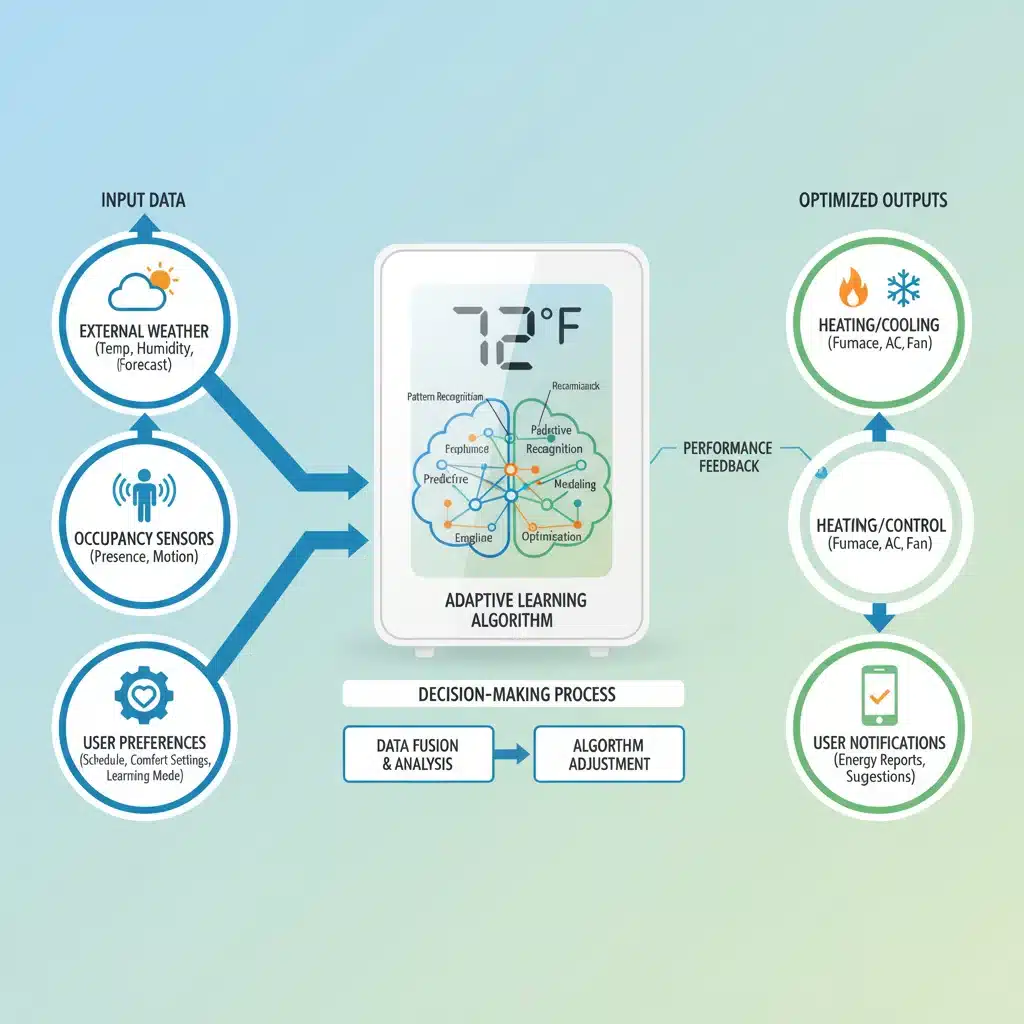
At its core, an adaptive learning algorithm is a system designed to continuously improve its performance by learning from new data. In the context of smart thermostats, these algorithms collect and analyze a wide array of information to build a comprehensive model of your home’s thermal behavior and your personal comfort preferences. This data can include:
- User Interactions: Every time you manually adjust the thermostat, the algorithm learns about your preferred temperature at a specific time and day, and under certain conditions.
- Occupancy Patterns: Sensors detect when rooms are occupied or empty, helping the system understand when heating or cooling is truly needed.
- External Weather Data: Integration with local weather forecasts allows the thermostat to anticipate changes and pre-heat or pre-cool your home more efficiently.
- Home Characteristics: Information about your home’s insulation, window efficiency, and HVAC system performance helps the algorithm understand how quickly your home heats up or cools down.
- Energy Consumption Data: By monitoring energy usage, the algorithm can correlate temperature settings with actual energy expenditure, optimizing for both comfort and cost.
The ‘learning’ aspect comes from machine learning techniques, where the algorithms use statistical models to identify correlations and predict future outcomes. For example, if the thermostat consistently observes that you turn up the heat by 2 degrees every weekday morning at 7:00 AM, it will learn to make that adjustment proactively before you even wake up. But it goes deeper than that: if a cold front is expected, and it knows your home loses heat quickly, it might start pre-heating earlier to maintain comfort without overshooting the target or wasting energy.
The Pillars of Personalized Comfort in 2026
By 2026, adaptive thermostat algorithms will deliver personalized comfort through several key innovations:
1. Hyper-Personalized Temperature Profiles
Forget generic schedules. Adaptive algorithms will create hyper-personalized temperature profiles for each occupant or even different zones within the home. These profiles will be dynamic, adjusting not just to time of day but to individual preferences, activity levels (if integrated with wearables), and even biometric data (in more advanced, future iterations). The system will understand that you prefer a cooler temperature when sleeping but a warmer one when relaxing in the living room, and it will manage these nuances seamlessly.
2. Predictive Thermal Management
This is where the ‘smart’ truly shines. Instead of reacting to temperature changes, adaptive thermostat algorithms will predict them. They will analyze weather forecasts, learn your home’s thermal inertia (how long it takes to heat or cool), and anticipate occupancy. If a heatwave is predicted, the system might pre-cool your home during off-peak energy hours to reduce strain on the grid and save you money. If you’re heading home from work, it will ensure your house is at your ideal temperature the moment you walk through the door, without keeping it unnecessarily conditioned all day.
3. Seamless Integration with the Smart Home Ecosystem
The true power of these algorithms will be unlocked through deeper integration with other smart home devices. Imagine your thermostat communicating with smart blinds to close them on a sunny day to reduce heat gain, or coordinating with smart vents to direct airflow only to occupied rooms. It could even integrate with your smart lighting to adjust brightness based on temperature perception (cooler light can make a room feel cooler). This interconnectedness will create a truly holistic and responsive home environment, all orchestrated by intelligent adaptive thermostat algorithms.
4. Proactive Maintenance and Diagnostics
Beyond comfort, these algorithms will contribute to the longevity and efficiency of your HVAC system. By continuously monitoring performance data, they can detect anomalies that might indicate a developing problem – a filter needing replacement, a fan motor struggling, or a refrigerant leak. The system could then proactively alert you, or even your HVAC service provider, enabling preventative maintenance before a minor issue becomes a costly breakdown. This predictive diagnostic capability will save homeowners money and prevent inconvenient system failures.
Energy Efficiency: The Silent Revolution
While personalized comfort is a primary driver, the energy-saving potential of adaptive thermostat algorithms is arguably their most significant contribution. Heating and cooling account for a substantial portion of household energy consumption. By optimizing these processes, the algorithms can lead to considerable reductions in energy waste.
Consider the ‘set it and forget it’ approach, but with intelligence. The thermostat learns your preferences, knows when you’re away, understands how your home retains or loses heat, and factors in external weather. This means it’s not just turning off the HVAC when you leave; it’s making nuanced decisions like:
- Optimizing Setbacks: Instead of a fixed ‘away’ temperature, it might allow the temperature to drift further during short absences if it knows your home can quickly recover, saving more energy.
- Pre-conditioning Smarter: Heating or cooling your home during off-peak electricity hours when energy is cheaper and the grid demand is lower.
- Zone Control Enhancement: If your system supports zoning, the algorithms can ensure that only occupied zones are conditioned, preventing energy waste in unused areas.
- Weather-Responsive Operation: Automatically adjusting settings based on solar gain (how much heat your windows let in) or humidity levels, which can significantly impact perceived comfort and energy use.
These subtle, continuous optimizations, powered by adaptive thermostat algorithms, accumulate over time, leading to substantial reductions in your energy bills and a smaller carbon footprint. This is a win-win for both your wallet and the environment.
Challenges and Considerations for Widespread Adoption
Despite the immense potential, the widespread adoption of advanced adaptive thermostat algorithms faces certain challenges:
1. Data Privacy and Security
These systems rely on collecting a vast amount of personal data – when you’re home, your preferred temperatures, potentially even your activity levels. Ensuring this data is securely stored, anonymized, and used ethically is paramount. Manufacturers must implement robust cybersecurity measures and transparent privacy policies to build consumer trust.
2. Interoperability and Ecosystem Fragmentation
The smart home market is still somewhat fragmented, with various platforms and standards. For adaptive thermostat algorithms to reach their full potential, seamless interoperability between different devices and brands is crucial. Open standards and partnerships will be key to creating a truly integrated and intelligent home ecosystem.
3. User Education and Trust
Some users may be hesitant to fully cede control to an AI-driven system. Education about how these algorithms work, the benefits they provide, and the level of control users still retain will be important. Building trust through reliable performance and intuitive interfaces will be critical for mass adoption.
4. Installation and Configuration Complexity
While the goal is ‘set it and forget it,’ the initial setup and calibration of highly adaptive systems can be more complex than traditional thermostats. Simplifying the installation process and providing clear, user-friendly configuration tools will be essential to avoid frustration and ensure optimal performance.
5. Cost of Advanced Hardware
Advanced sensors, more powerful processors, and sophisticated software contribute to the cost of these next-generation smart thermostats. As with any new technology, economies of scale will eventually drive prices down, but initial costs might be a barrier for some consumers.
The Road Ahead: What to Expect by 2026 and Beyond
By 2026, we can expect adaptive thermostat algorithms to be a standard feature in most new smart thermostat models. The market will likely see:
- Increased Accuracy: Algorithms will be even better at predicting and optimizing, leading to minimal manual intervention.
- Enhanced Voice Control: More natural language processing will allow users to express comfort preferences more intuitively (e.g., “I feel a bit chilly in the living room”).
- Biometric Integration: While perhaps not mainstream by 2026, early adopters might see integration with wearables to adjust climate based on individual body temperature or activity levels.
- Grid Responsiveness: Thermostats will play a larger role in demand-response programs, intelligently adjusting energy use during peak times to support grid stability and further reduce energy costs for homeowners.
- Self-Learning Maintenance: Beyond diagnostics, systems might proactively order replacement filters or schedule maintenance appointments with approved service providers.
The future of home climate control is not just about convenience; it’s about creating an intelligent, responsive, and sustainable living environment. The continuous refinement of adaptive thermostat algorithms is the engine driving this transformation, making our homes more comfortable, efficient, and smarter than ever before.
Conclusion: The Intelligent Home is Here
The journey from a simple on/off switch to sophisticated adaptive thermostat algorithms has been remarkable. By 2026, these intelligent systems will move beyond being a mere convenience to become an indispensable component of the modern, energy-efficient home. They represent a paradigm shift, transforming our relationship with home climate control from active management to passive, yet perfectly personalized, comfort.
As these algorithms continue to learn and evolve, they will not only enhance our daily lives by ensuring optimal comfort but also play a critical role in addressing global energy challenges. The smart thermostat, powered by adaptive learning, is a testament to how technology can be harnessed to create more intuitive, sustainable, and enjoyable living spaces. The intelligent home isn’t a distant dream; it’s rapidly becoming our reality, and adaptive thermostat algorithms are leading the charge.
Embrace the future of home comfort and efficiency. The next generation of smart thermostats is not just about setting temperatures; it’s about understanding and anticipating your needs, making your home a truly personalized sanctuary.