Advanced Smart Sensors for Home Threat Detection by 2025

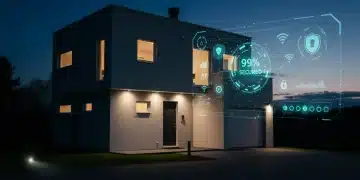
By 2025, advanced smart sensors will transcend conventional cameras, offering a proactive and comprehensive approach to home threat detection, safeguarding properties and occupants with unparalleled precision and intelligence.
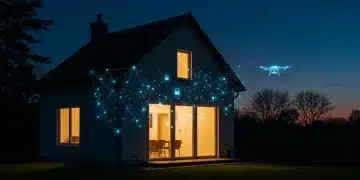
Imagine a home that not only sees but truly understands potential threats before they escalate. The era of relying solely on cameras for security is rapidly evolving, ushering in a new age where advanced smart sensors redefine home safety. By 2025, these intelligent devices will move beyond mere surveillance, offering proactive and predictive capabilities to protect your sanctuary.
The Evolution of Home Security: Beyond Visual Surveillance
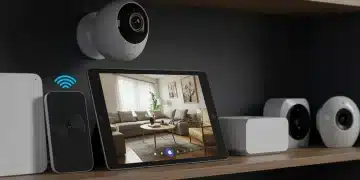
For decades, home security has largely been synonymous with cameras. While visual monitoring remains crucial, the limitations of cameras are becoming increasingly apparent. They often react to events rather than predict them, and privacy concerns persist. The future of home safety demands a more holistic, intelligent, and proactive approach, one that integrates a diverse array of sensor technologies to create an invisible shield around your property.
The next generation of smart sensors isn’t just about detecting a breach; it’s about understanding patterns, identifying anomalies, and alerting you to potential dangers long before they become a visible problem. This shift empowers homeowners with unprecedented control and peace of mind, transforming security from a reactive measure into a predictive one.
Limitations of Traditional Cameras
- Blind Spots: Cameras have limited fields of view and can be circumvented.
- Privacy Concerns: Continuous video recording raises significant privacy issues for occupants.
- Reactive Nature: Often record events after they’ve occurred, not preventing them.
- Environmental Factors: Can be affected by lighting conditions, fog, or obstructions.
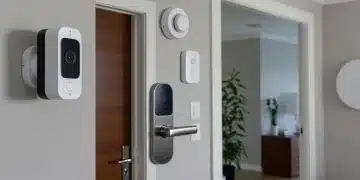
The integration of advanced smart sensors mitigates these issues, providing a comprehensive security layer that complements, and in some cases, surpasses the capabilities of traditional cameras. By moving beyond visual data, these sensors offer a deeper understanding of the environment, enabling earlier and more accurate threat detection.
Acoustic Signature Analysis Sensors: Listening for Danger
One of the most innovative advancements in home security is the development of acoustic signature analysis sensors. These aren’t just microphones; they are sophisticated devices capable of distinguishing between normal household sounds and those indicative of a threat. Imagine a sensor that can differentiate the sound of breaking glass from a dropped plate, or a forced entry from a slamming door.
These sensors employ advanced machine learning algorithms to build a library of sound profiles. When a suspicious sound is detected, it’s cross-referenced with this library, and if a match to a threat signature is found, an immediate alert is sent. This technology offers a non-visual layer of security that works around the clock, unaffected by lighting conditions or physical obstructions.
How Acoustic Sensors Work
- Sound Profile Libraries: Sensors are trained on vast datasets of sounds, including various types of breaking glass, door kicks, and human voices in distress.
- Real-time Analysis: Continuous monitoring of ambient sound for deviations from normal patterns.
- Contextual Understanding: Some systems can even analyze the context of sounds, reducing false alarms.
- Integration with Other Systems: Can trigger cameras to record or lights to flash upon detecting a threat sound.
The ability of these sensors to listen and interpret sounds accurately provides an early warning system that can be invaluable in preventing burglaries or other incidents. They offer a discreet yet powerful layer of protection, working silently in the background to keep your home safe.
Vibration Detection Sensors: Feeling the Unseen Intrusion
Vibration detection sensors represent another significant leap in proactive home security. These devices are designed to detect subtle tremors or vibrations on surfaces like walls, windows, and doors, which can indicate an attempted forced entry. Unlike contact sensors that only trigger when a door or window is opened, vibration sensors can detect attempts to pry open, cut through, or otherwise compromise a barrier before it’s fully breached.
Utilizing advanced accelerometers and piezoelectric technology, these sensors are highly sensitive and can be calibrated to ignore everyday vibrations while picking up on specific patterns associated with forced entry. This means fewer false alarms from a passing truck but immediate alerts if someone is trying to force their way in through a window or door.
Applications of Vibration Sensors
Vibration sensors are particularly effective in securing vulnerable points of entry that might not be covered by traditional contact sensors or motion detectors. They can be installed directly onto window panes, door frames, or even within walls to detect unusual activity. Their discreet nature makes them difficult for intruders to spot and disable, adding another layer of robust security.
Furthermore, these sensors can be integrated with smart home systems to trigger a variety of responses, from sounding an alarm to activating external lighting or even notifying authorities directly. This proactive detection capability provides precious extra seconds that can make all the difference in preventing a successful intrusion.
LiDAR and Radar Sensors for Perimeter Security
Moving beyond the immediate confines of the house, LiDAR (Light Detection and Ranging) and radar sensors are becoming increasingly viable for advanced perimeter security. Traditionally used in autonomous vehicles and industrial applications, these technologies can now be miniaturized and cost-effectively deployed for residential use. They offer superior object detection and tracking capabilities compared to passive infrared (PIR) motion sensors.
LiDAR sensors use pulsed laser light to measure distances to objects, creating a detailed 3D map of the environment. Radar sensors, on the other hand, use radio waves to detect motion and speed. Both can penetrate adverse weather conditions like fog, heavy rain, or snow, where cameras or traditional motion sensors might fail. They can accurately detect human-sized objects approaching your property, distinguishing them from small animals or blowing foliage.
Benefits of LiDAR and Radar
- All-Weather Performance: Unaffected by darkness, fog, rain, or snow.
- Reduced False Alarms: Advanced algorithms differentiate between threats and environmental disturbances.
- Precise Tracking: Can track the path and speed of intruders, providing valuable data.
- Privacy-Friendly: Unlike cameras, they don’t capture identifiable images of individuals.
By establishing an intelligent, invisible fence around your property, LiDAR and radar sensors provide an early warning system for perimeter breaches, giving homeowners ample time to react before an intruder even reaches the house itself. This proactive approach significantly enhances overall home security.
Environmental Anomaly Detection: Air Quality and Gas Sensors
Threats to home safety aren’t always visible intruders; they can also come from unseen dangers like hazardous gases or poor air quality. Advanced environmental sensors are evolving to detect more than just smoke and carbon monoxide. By 2025, integrated systems will monitor a wider range of volatile organic compounds (VOCs), natural gas leaks, and even subtle changes in air pressure that could indicate structural problems or forced ventilation attempts.
These sensors play a crucial role in protecting occupants from health risks and potential environmental hazards, which can sometimes be precursors to other security incidents. For example, a sudden drop in air pressure in a secure area could signal a breach, or the detection of certain VOCs might indicate a clandestine activity.
Beyond Basic Gas Detection
Modern environmental sensors are becoming increasingly granular in their detection capabilities. They can identify specific types of gases and chemicals, providing more detailed information about the nature of a potential threat. This allows for more targeted responses, whether it’s activating ventilation systems, alerting emergency services, or initiating specific security protocols.
The continuous monitoring of your home’s internal environment provides a crucial layer of safety, ensuring the well-being of your family and the integrity of your property against both accidental and intentional environmental threats. This holistic approach to security considers every aspect of your home’s safety.
Thermal Imaging Sensors: Seeing in the Dark
Thermal imaging sensors, once the exclusive domain of military and industrial applications, are becoming increasingly affordable and integrated into smart home security systems. These sensors detect infrared radiation (heat) emitted by objects, allowing them to ‘see’ in complete darkness, through light fog, and even detect objects hidden by light foliage or camouflage.
For home security, thermal cameras offer several distinct advantages. They can detect intruders lurking in shadows or dense bushes that traditional cameras might miss. They are also less prone to false alarms caused by changes in lighting or shadows, as they rely on heat signatures rather than visible light. This makes them exceptionally reliable for outdoor perimeter monitoring, especially during nighttime.
Advantages of Thermal Sensors
- Night Vision: Excellent performance in complete darkness.
- Penetrates Obscurants: Can see through smoke, light fog, and some foliage.
- Reduced False Alarms: Focuses on heat signatures, ignoring visual clutter.
- Privacy-Conscious: Does not capture identifiable facial features, only heat outlines.
Integrating thermal imaging with other sensor types creates a powerful, multi-layered detection system. When a thermal sensor detects a heat signature, it can trigger a visible light camera to record, or activate lights, providing a comprehensive response to potential threats regardless of the time of day or environmental conditions.
Contextual Awareness and AI-Powered Fusion Sensors
The true power of advanced smart sensors lies not in their individual capabilities, but in their ability to work together, powered by artificial intelligence and machine learning. Fusion sensors combine data from multiple sensor types – acoustic, vibration, thermal, environmental, and traditional motion – to create a comprehensive, contextual understanding of your home’s security status. This AI-powered analysis significantly reduces false alarms while drastically improving threat detection accuracy.
Imagine a scenario where a vibration sensor detects an attempt to pry open a window. Simultaneously, an acoustic sensor picks up the sound of breaking glass, and a thermal sensor identifies a heat signature near the window. An AI-powered fusion system can rapidly correlate these distinct data points, confirming a high-probability intrusion and initiating a multi-faceted response, such as sounding an alarm, locking smart doors, and notifying authorities, all within seconds.
The Future of Integrated Security
This integration extends beyond just threat detection. AI can learn your household’s routines, distinguishing between normal activities and anomalous behavior. If a door is opened at an unusual time, or if motion is detected in an unoccupied part of the house when it shouldn’t be, the system can flag it for review or immediate action. This level of intelligent, adaptive security represents the pinnacle of home protection by 2025.
Contextual awareness also allows for intelligent automation. For example, if a gas leak is detected, the system can automatically shut off the main gas line, open windows, and alert occupants and emergency services. This proactive and intelligent response capability is what truly sets the next generation of smart sensors apart.
| Sensor Type | Key Benefit for Home Security |
|---|---|
| Acoustic Signature Analysis | Distinguishes threat sounds like breaking glass from normal household noise for early alerts. |
| Vibration Detection | Detects forced entry attempts on surfaces like windows and doors before a breach occurs. |
| LiDAR & Radar | Provides all-weather perimeter security, accurately tracking objects and reducing false alarms. |
| Thermal Imaging | ‘Sees’ in complete darkness and through light obscurants, detecting heat signatures of intruders. |
Frequently asked questions about advanced smart sensors
Advanced smart sensors offer proactive detection, often identifying threats before they become visible. They provide multi-layered security, are less susceptible to environmental factors like lighting, and can address privacy concerns more effectively by not always relying on continuous visual recording, focusing instead on anomalies and patterns.
These sensors utilize sophisticated machine learning algorithms trained on extensive libraries of sound profiles. They analyze audio in real-time, comparing detected sounds against known threat signatures (like breaking glass or forced entry) while filtering out common household noises, leading to highly accurate threat identification.
Yes, LiDAR and radar sensors significantly enhance outdoor perimeter security as they operate effectively in conditions that challenge traditional cameras and PIR sensors. They use light or radio waves, respectively, to detect and track objects, making them highly reliable through darkness, fog, heavy rain, or snow, minimizing weather-related false alarms.
Environmental sensors go beyond traditional smoke and CO detectors by monitoring a wider range of hazards like VOCs and gas leaks. They protect occupants from health risks and can detect subtle changes, such as air pressure drops, that might indicate structural issues or security breaches, contributing to a comprehensive safety net.
AI-powered fusion sensors combine data from multiple sensor types (e.g., acoustic, vibration, thermal). AI then correlates these diverse data points to create a holistic understanding of a situation, drastically reducing false alarms and confirming genuine threats with higher accuracy, enabling faster and more appropriate responses.
Conclusion
The landscape of home security is undergoing a profound transformation, moving beyond the reactive gaze of cameras to embrace the proactive intelligence of advanced smart sensors. By 2025, homes will be protected by an intricate web of acoustic, vibration, LiDAR, radar, thermal, and environmental sensors, all working in concert and powered by artificial intelligence. This evolution promises not just enhanced security, but a newfound peace of mind, allowing homeowners to confidently safeguard their families and properties against a wider spectrum of threats, both seen and unseen. The future of home safety is intelligent, integrated, and incredibly responsive.