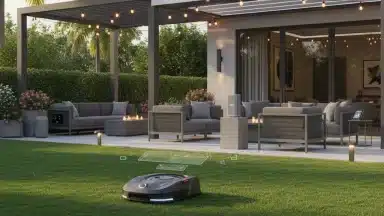
Edge computing is rapidly becoming a cornerstone of smart home technology in 2026, fundamentally transforming data processing to bolster privacy and significantly increase operational speed for connected devices.
The smart home landscape is evolving at an unprecedented pace, with convenience and automation no longer the sole drivers. In 2026, a critical shift is underway, focusing on how our connected devices handle information. This transformation is largely powered by Edge Computing in Smart Homes: A 2026 Trend Report for Enhanced Data Privacy and Speed, a paradigm that brings computation closer to the data source. This report delves into how this innovative approach is not only streamlining device performance but also fundamentally redefining the security and privacy of our most personal spaces.
Understanding Edge Computing in the Smart Home Context
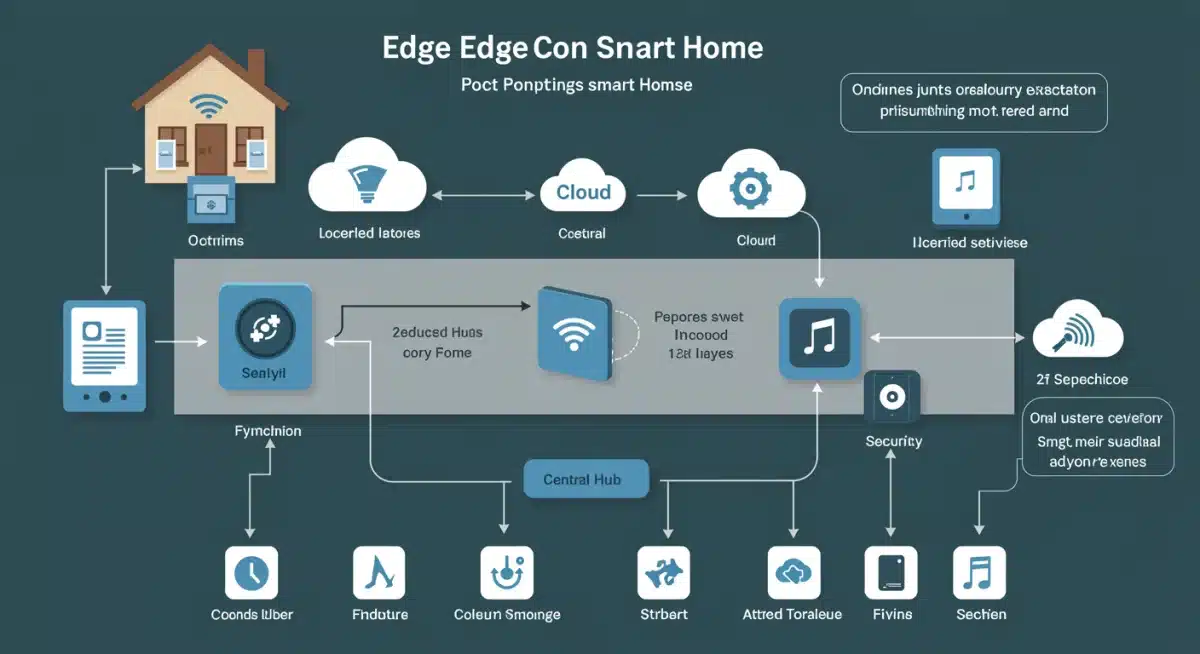
Edge computing, in its essence, refers to processing data closer to where it’s generated, rather than sending it all the way to a centralized cloud server. For smart homes, this means your devices, or a local hub, perform computations right within your dwelling. This fundamental architectural change is critical for the next generation of smart home experiences.
Traditionally, smart home devices would capture data—be it from a security camera, a smart thermostat, or a voice assistant—and transmit it to a remote cloud server for analysis. While effective, this process introduced latency and raised significant privacy concerns. Edge computing mitigates these issues by allowing devices to make immediate, localized decisions, enhancing both responsiveness and data sovereignty.
The Shift from Cloud-Centric to Edge-Centric Models
The transition to an edge-centric model isn’t merely a technical upgrade; it represents a philosophical shift in how we interact with and trust our smart home ecosystems. It empowers homeowners with greater control over their data, moving away from a reliance on external servers for every command or data point.
- Reduced Latency: Commands execute faster as data doesn’t travel far.
- Enhanced Reliability: Devices can function even with intermittent internet connectivity.
- Improved Security Posture: Less data leaves the home network, reducing exposure.
- Optimized Bandwidth Usage: Only essential, aggregated data is sent to the cloud.
This section has laid the groundwork for understanding edge computing’s role. By processing data locally, smart homes become more responsive, resilient, and inherently more private, setting the stage for a truly intelligent living environment in 2026.
The Privacy Imperative: How Edge Computing Secures Your Data
Data privacy has become a paramount concern for consumers adopting smart home technology. The intimate nature of the data collected—from conversations to daily routines—demands robust protection. Edge computing offers a compelling solution by minimizing the exposure of sensitive information to external servers.
When data is processed at the edge, raw, sensitive information, such as video feeds from security cameras or biometric data, can be analyzed and anonymized locally. Only aggregated, non-identifiable insights or necessary action commands are then transmitted to the cloud, if at all. This significantly reduces the risk of data breaches and unauthorized access by third parties.
Local Processing and Anonymization Techniques
Advanced algorithms running on edge devices are capable of performing sophisticated tasks like facial recognition or voice command interpretation without ever sending the raw data beyond the home network. This means that while your smart security camera can identify a package delivery, the actual video stream of your front door never leaves your premises.
- On-device AI: Machine learning models run directly on smart devices.
- Data Minimization: Only necessary data is processed and stored.
- Encryption at Source: Data is encrypted before any external transmission.
- User Control: Greater ability for users to manage what data leaves their home.
The privacy benefits extend beyond just security; they foster greater trust. Consumers are more likely to embrace smart home technologies when they feel confident their personal data is protected. Edge computing, therefore, becomes a key enabler for widespread smart home adoption, addressing one of the biggest hesitations consumers have had.
Speed and Responsiveness: The Real-Time Advantage
Beyond privacy, the immediate and tangible benefit of edge computing in smart homes is the dramatic increase in speed and responsiveness. In a world where instant gratification is the norm, waiting even a few seconds for a smart device to react can be frustrating. Edge computing eliminates this delay, creating a seamless and intuitive user experience.
Consider a smart lighting system that adjusts based on presence detection. With edge computing, the sensor detects movement, processes that information, and triggers the lights almost instantaneously. There’s no round trip to the cloud server, which can be affected by internet congestion or server load. This local processing ensures that your smart home reacts as quickly as you do.
Applications Requiring Ultra-Low Latency
Certain smart home applications are particularly sensitive to latency. Security systems, for instance, need to respond in milliseconds to potential threats. Similarly, augmented reality (AR) applications within the home, or even complex multi-device routines, benefit immensely from local processing.
- Security Systems: Instant threat detection and alarm activation.
- Voice Assistants: Faster command recognition and execution.
- Robotics & Automation: Real-time navigation and task completion.
- Environmental Control: Immediate adjustments to temperature or ventilation.
The shift to edge processing transforms a smart home from a collection of connected gadgets into a truly responsive and integrated ecosystem. This responsiveness is not just a luxury; it’s becoming a fundamental expectation for smart home users in 2026, driving innovation in areas like predictive maintenance and personalized automation.
Key Technologies Powering Edge Computing in 2026
The proliferation of edge computing in smart homes isn’t solely due to a conceptual shift; it’s enabled by significant advancements in hardware and software. Miniaturized, powerful processors, efficient AI algorithms, and robust local networking protocols are all contributing to this trend. These technologies collectively form the backbone of the next-generation smart home.
Chip manufacturers are now designing System-on-Chip (SoC) solutions specifically optimized for edge AI, allowing devices to run complex machine learning models with minimal power consumption. This means that even small, battery-powered sensors can contribute to the edge computing network, making the entire ecosystem more intelligent and self-sufficient.
Hardware Innovations and Software Frameworks
The development of specialized hardware, such as neural processing units (NPUs) on smart home hubs and devices, has been crucial. These NPUs are designed to accelerate AI workloads, making on-device inference feasible and efficient. On the software front, lightweight operating systems and AI frameworks are being developed to run effectively within the resource constraints of edge devices.
- AI-enabled SoCs: Specialized chips for on-device machine learning.
- Mesh Networking: Robust local communication pathways for devices.
- Containerization: Efficient deployment of applications on edge hardware.
- Federated Learning: AI models trained collaboratively without sharing raw data.
These technological advancements are not just theoretical; they are being integrated into commercially available smart home products, making edge computing capabilities accessible to the average consumer. This foundation ensures that the vision of a private and fast smart home is not just a dream but a tangible reality in 2026.
Challenges and Considerations for Widespread Adoption
While the benefits of edge computing in smart homes are clear, its widespread adoption isn’t without hurdles. Addressing these challenges is crucial for a smooth transition and for realizing the full potential of this technology. These considerations range from interoperability to the initial cost of implementing such systems.
One significant challenge is ensuring seamless interoperability between devices from different manufacturers. For edge computing to truly thrive, smart home ecosystems need to communicate effectively at the local level, regardless of brand. This requires industry-wide standards and open protocols, which are still evolving.
Overcoming Interoperability and Security Gaps
Another key area of concern is the security of the edge devices themselves. While edge computing reduces reliance on the cloud, it places a greater emphasis on securing each individual device and the local network. Vulnerabilities in a single device could potentially compromise the entire home network, necessitating rigorous security-by-design principles.
- Standardization: Need for common protocols for device communication.
- Device Security: Ensuring each edge device is robustly protected.
- User Education: Informing consumers about network security best practices.
- Cost of Entry: Initial investment in edge-capable hardware can be higher.
Despite these challenges, the industry is actively working towards solutions, recognizing the immense value edge computing brings. As technology matures and standards become established, these obstacles will likely become less significant, paving the way for a more secure and efficient smart home future.
The Future of Smart Homes: Beyond 2026 with Edge Computing
Looking beyond 2026, edge computing is set to become even more deeply integrated into the fabric of smart homes, evolving from a beneficial feature to an indispensable core technology. The trajectory points towards increasingly autonomous, self-optimizing homes that anticipate needs and react proactively, all while prioritizing user privacy.
We can expect to see more sophisticated AI models running entirely on local hardware, enabling predictive maintenance for appliances, personalized health monitoring without cloud reliance, and truly adaptive environmental controls. The smart home will not just react to commands but will learn and adapt to individual preferences with unprecedented accuracy and speed.
Hyper-Personalization and Proactive Automation
The future smart home, powered by advanced edge computing, will likely offer hyper-personalized experiences. Imagine a home that adjusts lighting, temperature, and even music based on your mood, detected locally through subtle cues, without sending intimate data to external servers. This level of personalization, combined with proactive automation, will redefine convenience.
- Predictive Maintenance: Devices self-diagnose and schedule repairs.
- Contextual Awareness: Homes adapt based on user behavior and environment.
- Enhanced Wellness: Local monitoring for health and safety.
- Energy Optimization: Real-time adjustments for maximum efficiency.
Ultimately, edge computing is not just a trend; it’s a fundamental shift that promises to unlock the full potential of smart homes. By placing privacy and speed at the forefront, it is laying the groundwork for intelligent living spaces that are intuitive, secure, and deeply integrated into our daily lives, moving us closer to a truly symbiotic relationship with our technology.
| Key Aspect | Description of Impact |
|---|---|
| Data Privacy | Local processing minimizes data sent to the cloud, significantly enhancing user privacy and reducing breach risks. |
| Processing Speed | Near-instantaneous device response times due to data analysis happening at the source, eliminating cloud latency. |
| Reliability | Smart home functions remain operational even with internet outages, leveraging local network capabilities. |
| Future Potential | Enables hyper-personalization, proactive automation, and advanced AI features directly within the home. |
Frequently Asked Questions About Edge Computing in Smart Homes
Edge computing in smart homes means that data from your devices, like cameras or sensors, is processed locally within your home network rather than being sent to distant cloud servers. This local processing enhances speed, reduces latency, and significantly improves data privacy by keeping sensitive information on-site.
By processing data at the edge, raw and sensitive information can be analyzed and anonymized locally. Only aggregated insights or necessary commands might be sent to the cloud, minimizing the risk of personal data exposure, breaches, or unauthorized access by third parties, thus strengthening user trust.
Edge computing dramatically increases processing speed and responsiveness because data doesn’t need to travel to and from remote servers. This results in near-instantaneous execution of commands for devices like smart lights, security systems, and voice assistants, creating a more seamless and efficient user experience.
Yes, a significant advantage of edge computing is enhanced reliability. Since many critical functions are processed locally, your smart home devices can continue to operate and communicate with each other even if your internet connection is temporarily unavailable, ensuring essential services remain online.
Edge computing is powered by specialized hardware like AI-enabled System-on-Chips (SoCs) and neural processing units (NPUs) within smart devices and hubs. It also relies on robust local mesh networking protocols and lightweight software frameworks that efficiently run AI algorithms directly on these resource-constrained edge devices.
Conclusion
The 2026 landscape of smart homes is undeniably shaped by the transformative power of edge computing. This report has underscored its pivotal role in addressing the dual demands of enhanced data privacy and unparalleled operational speed. By bringing data processing closer to the source, edge computing not only fortifies the security of our most personal information but also delivers a level of responsiveness that was once only aspirational. As technology continues to mature and industry standards evolve, the smart home of tomorrow will be characterized by its intelligence, autonomy, and unwavering commitment to user control, all thanks to the foundational advancements in edge computing.