Smart Kitchens 2025: Revolutionizing US Cooking

The evolution of smart kitchens for 2025 will fundamentally reshape cooking and food management in US households, driven by advanced AI, seamless appliance integration, and a strong focus on sustainability and personalized experiences.
Get ready to experience a culinary revolution! The landscape of our kitchens is rapidly transforming, and by 2025, the way we cook and manage food in US households will be almost unrecognizable. The smart kitchen trends 2025 are not just about convenience; they’re about efficiency, sustainability, and an entirely new level of personalized culinary experience. Are you prepared for what’s coming?
The rise of AI-powered cooking assistants
Artificial intelligence is no longer confined to science fiction; it’s stepping into our kitchens in a big way. By 2025, AI-powered cooking assistants will be central to how many Americans prepare meals, offering more than just recipe suggestions. These systems learn your preferences, dietary needs, and even your cooking skill level to provide truly personalized guidance.
Imagine an assistant that knows you prefer a certain spice blend, or that you’re trying to reduce your carb intake. It can adapt recipes in real-time, suggest ingredient substitutions, and even walk you through complex cooking techniques with step-by-step video instructions integrated directly into your smart oven or countertop display.
Personalized meal planning and nutrition
One of the most significant advancements will be in personalized meal planning. AI will analyze your health data, activity levels, and even your grocery shopping habits to curate weekly meal plans that are not only delicious but also nutritionally optimized for your specific goals.
- Dietary adaptation: AI adjusts recipes for allergies, intolerances, and specific dietary regimens (e.g., keto, vegan, gluten-free).
- Nutrient tracking: Real-time feedback on calorie and macronutrient intake for each meal prepared.
- Ingredient optimization: Suggests meals based on ingredients you already have, reducing waste and grocery costs.
This level of personalization moves beyond basic meal kits by intelligently integrating into your daily life, making healthy eating both easy and enjoyable. It’s about having a nutritionist and a chef rolled into one, always at your service.
Intelligent appliance synchronization
AI will also orchestrate a symphony of smart appliances. Your smart oven will preheat to the exact temperature at the perfect time, while your smart cooktop adjusts heat settings based on the progress of your dish. This creates a cohesive cooking experience where appliances communicate seamlessly.
The integration will extend to smart pantries and refrigerators, which will alert you when ingredients are running low or nearing their expiration date. This proactive approach to food management is a game-changer for busy households looking to streamline their routines and minimize food waste.
Sustainable food management and waste reduction
As environmental consciousness grows, smart kitchens in 2025 will place a strong emphasis on sustainability. This trend is about more than just energy-efficient appliances; it’s about intelligent systems that help households reduce food waste, conserve resources, and make more eco-friendly choices.
Smart refrigeration and pantry systems will play a pivotal role. These devices will not only track inventory but also monitor spoilage, suggesting recipes to use up ingredients before they go bad. This proactive approach can significantly cut down on the estimated 30-40% of the US food supply that is wasted annually.
Smart food storage and inventory
Advanced refrigerators and pantry sensors will provide real-time updates on your food supply. Imagine a refrigerator that identifies items as they are placed inside, tracks their freshness, and even suggests optimal storage conditions to extend their shelf life.

- Automated inventory: Scans and catalogs items upon entry, updating digital lists.
- Expiration alerts: Notifies users when food items are approaching their expiry dates.
- Optimal storage: Recommends ideal temperature and humidity settings for different foods.
This level of detail empowers consumers to make informed decisions about their food, preventing unnecessary purchases and ensuring that food is consumed at its peak. It’s a subtle but powerful shift towards more mindful consumption within the home.
Energy-efficient appliances and resource conservation
Beyond food management, smart kitchens will integrate energy-saving features into every appliance. Ovens will use predictive algorithms to optimize cooking times and temperatures, while dishwashers will run when electricity rates are lowest or when they are fully loaded, saving both energy and water.
Water filtration systems will become smarter, monitoring usage and alerting homeowners to potential leaks or inefficiencies. This holistic approach to resource management makes smart kitchens not just convenient, but also environmentally responsible, aligning with broader societal goals for sustainability.
Seamless integration and connectivity
The fragmented smart home experience of yesteryear is giving way to a truly integrated ecosystem in the kitchen. By 2025, smart kitchen appliances will communicate effortlessly with each other and with other smart home devices, creating a unified and intuitive user experience.
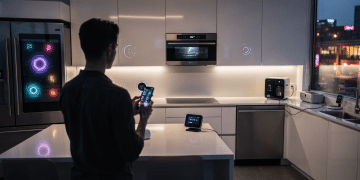
This means your smart assistant can dim the lights, start your favorite cooking playlist, and preheat your oven all with a single voice command. The goal is to remove friction from the cooking process, allowing homeowners to focus on the joy of creating meals rather than managing multiple apps and devices.
Universal communication protocols
The adoption of universal communication protocols, such as Matter and Thread, will be crucial in enabling this seamless integration. These standards ensure that devices from different manufacturers can “speak” to each other, breaking down the silos that have traditionally plagued the smart home market.
- Cross-brand compatibility: Appliances from various manufacturers work together seamlessly.
- Simplified setup: Easier installation and configuration of new smart kitchen devices.
- Enhanced automation: More complex and reliable automation routines across the entire home.
This shift will empower consumers to choose the best appliances for their needs, confident that they will integrate smoothly into their existing smart home setup. It fosters innovation by encouraging manufacturers to focus on features and performance, rather than proprietary ecosystems.
Remote control and monitoring
The ability to control and monitor your kitchen from anywhere will become standard. Forgot to turn off the oven? Check its status and switch it off from your smartphone. Want to start the dishwasher before you get home? A quick tap on your app will do the trick.
Beyond simple controls, remote monitoring will provide peace of mind. Receiving alerts if a burner is left on or if the refrigerator door is ajar ensures safety and prevents food spoilage. This connectivity transforms the kitchen into a truly adaptive and responsive space, accessible from anywhere.
Hyper-personalization and experiential cooking
The future of smart kitchens isn’t just about efficiency; it’s about elevating the cooking experience itself. In 2025, kitchens will offer hyper-personalized experiences, transforming meal preparation from a chore into an engaging and enjoyable activity tailored to individual tastes and moods.
This trend goes beyond simple recipe adjustments. It encompasses immersive cooking tutorials, dynamic lighting that changes with your culinary task, and even scent diffusers that enhance the aroma of your cooking. The kitchen becomes a multi-sensory hub designed to inspire and delight.
Immersive culinary guidance
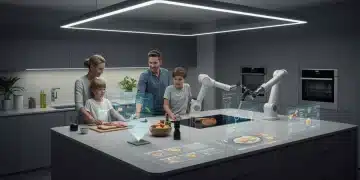
Imagine holographic recipe displays that project cooking instructions directly onto your countertop, complete with augmented reality overlays showing where to cut or how much ingredient to add. Smart tools will guide you through complex techniques, offering real-time feedback on your knife skills or baking precision.
- Augmented reality recipes: Visual overlays for precise cutting and measuring.
- Interactive cooking classes: Step-by-step guidance from virtual chefs.
- Skill development: Tools that help improve cooking techniques and confidence.
These immersive experiences turn every cooking session into a learning opportunity, empowering even novice cooks to create gourmet meals. It’s about bringing the expertise of a professional chef directly into your home, making advanced culinary skills accessible to everyone.
Customizable kitchen environments
Smart kitchens will adapt to your mood and the task at hand. Lighting systems will adjust from bright task lighting for chopping to warm, ambient tones for dining. Integrated sound systems will play music or podcasts, transforming the kitchen into a personalized entertainment zone.
Even the temperature and air quality can be optimized. Smart ventilation systems will automatically activate when cooking, and air purifiers will ensure a fresh environment. This level of environmental customization creates a truly comfortable and enjoyable space, making the kitchen the true heart of the home.
The evolution of smart kitchen appliances
The appliances themselves are undergoing a radical transformation, moving beyond simple connectivity to become intelligent, intuitive partners in the culinary process. By 2025, we’ll see a new generation of devices that anticipate our needs and simplify complex tasks.
From ovens that recognize what you’re cooking to dishwashers that optimize cycles based on load type, these appliances are designed to be more than just tools; they are extensions of our culinary intentions. This evolution is driven by advanced sensors, powerful processors, and sophisticated AI algorithms.
Predictive cooking technologies
Smart ovens and cooktops will feature predictive capabilities. Imagine an oven that uses cameras and AI to identify the dish you’ve placed inside, then automatically suggests optimal cooking settings and monitors progress to ensure perfect results every time. Induction cooktops will sense pan size and type, adjusting heat output precisely.
- Automatic dish recognition: Identifies food and suggests appropriate cooking modes.
- Precision temperature control: Maintains exact temperatures for delicate recipes.
- Integrated food probes: Monitors internal food temperature for perfect doneness.
This eliminates much of the guesswork from cooking, reducing the likelihood of over or undercooked meals. It’s about leveraging technology to achieve consistent, high-quality results with minimal effort, making gourmet cooking accessible to everyone.
Modular and adaptable designs
Kitchen design itself will become more flexible, with modular smart appliances that can be reconfigured to suit changing needs or preferences. This includes countertop modules with integrated induction burners, smart scales, and even small, automated food processors that can be swapped out as needed.
The focus is on adaptability and space efficiency, particularly for smaller urban living spaces. These modular systems allow homeowners to customize their kitchen layout and functionality without the need for extensive renovations, providing a future-proof solution for evolving culinary demands.
Security and privacy in the smart kitchen
As smart kitchens become more integrated and data-rich, the importance of security and privacy cannot be overstated. In 2025, manufacturers and consumers alike will prioritize robust safeguards to protect personal data and ensure the safe operation of connected appliances.
From secure data encryption to transparent privacy policies, the industry is responding to growing concerns about how personal information is collected, stored, and used. Trust will be a key factor in the adoption of advanced smart kitchen technologies.
Enhanced data protection protocols
Smart kitchen devices will employ advanced encryption protocols to secure data transmitted between appliances, cloud services, and user devices. This includes personal preferences, dietary information, and even real-time cooking data, ensuring it remains confidential and protected from unauthorized access.
- End-to-end encryption: Secures all data communications.
- Regular security updates: Patches vulnerabilities and improves system resilience.
- User control over data: Clear options for managing and deleting personal data.
Manufacturers will also implement stricter access controls, requiring multi-factor authentication for sensitive operations and providing users with detailed logs of device activity. This transparency builds confidence and allows users to maintain control over their digital kitchen footprint.
Safe operation and remote monitoring
Beyond data security, physical safety is paramount. Smart ovens, cooktops, and other appliances will incorporate intelligent safety features, such as automatic shut-off functions if a hazard is detected or if a device is left unattended for too long. Remote monitoring capabilities will allow users to check the status of appliances from anywhere, providing peace of mind.
These features are not only about preventing accidents but also about providing users with a sense of security and control. The integration of smart smoke detectors and carbon monoxide alarms with kitchen appliances further enhances safety, creating a truly protected culinary environment.
| Key Trend | Brief Description |
|---|---|
| AI-Powered Cooking | Personalized meal planning, recipe adaptation, and intelligent appliance synchronization driven by artificial intelligence. |
| Sustainable Food Management | Smart refrigeration, inventory tracking, and energy-efficient appliances to reduce waste and conserve resources. |
| Seamless Integration | Universal communication protocols and cross-device connectivity for a unified smart kitchen ecosystem. |
| Hyper-Personalization | Immersive culinary guidance, customizable environments, and multi-sensory cooking experiences tailored to users. |
Frequently asked questions about smart kitchen trends
Smart kitchen technology in 2025 offers numerous benefits, including enhanced convenience through automation, significant reductions in food waste via intelligent inventory management, improved nutritional tracking for healthier eating, and personalized cooking experiences that cater to individual tastes and skill levels. These advancements aim to streamline daily routines and elevate culinary creativity.
AI will revolutionize everyday cooking by providing personalized recipe suggestions based on dietary needs and available ingredients, offering real-time cooking guidance with adaptive instructions, and intelligently synchronizing appliances for optimal performance. This will make complex dishes more accessible and reduce the mental load of meal preparation, fostering a more intuitive cooking process.
Yes, sustainability is a core focus for smart kitchens in 2025. Innovations include smart refrigerators that track food freshness to minimize waste, energy-efficient appliances that optimize power consumption, and systems that encourage mindful resource use. These technologies help households reduce their environmental footprint by promoting responsible consumption and reducing food spoilage.
Seamless integration means that smart kitchen appliances from different brands will communicate and work together effortlessly, often through universal protocols like Matter. This eliminates compatibility issues, simplifies setup, and enables advanced automation routines across the entire smart home. Users can control multiple devices from a single interface, creating a cohesive and intuitive environment.
Smart kitchens will prioritize security and privacy through robust data encryption, regular software updates, and transparent user controls over personal data. Manufacturers are implementing multi-factor authentication and clear privacy policies to protect sensitive information. Physical safety features like automatic shut-offs and remote monitoring also enhance overall security, building user trust in connected appliances.
Conclusion
The rapid evolution of smart kitchen technology is poised to redefine our relationship with food and cooking by 2025. From AI-powered assistants offering personalized culinary guidance to integrated systems that champion sustainability and reduce waste, these advancements promise not just convenience, but a profound transformation of daily life in US households. Embracing these trends means stepping into a future where cooking is more intuitive, efficient, and enjoyable than ever before, making the smart kitchen an indispensable part of the modern home.