Sustainable Smart Homes: Cut Bills by 15% in 2025
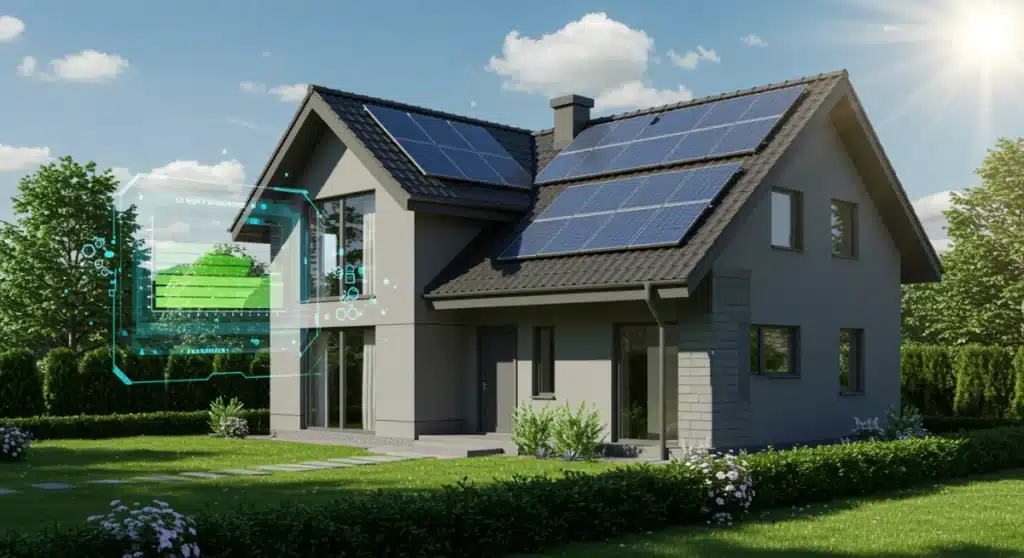
Sustainable smart homes integrating advanced energy management technologies are projected to enable homeowners to cut utility bills by up to 15% by 2025 through optimized consumption and eco-friendly practices.
Are you ready to transform your home into an eco-friendly powerhouse that also saves you money? The concept of sustainable smart homes is rapidly evolving, promising not just convenience but significant financial benefits. By 2025, new energy management trends are expected to empower homeowners to slash their utility bills by as much as 15%. This guide will walk you through the practical steps and innovative technologies that make this future a tangible reality.
The Rise of Smart Energy Management in Homes
The journey towards a more sustainable future for our homes is intrinsically linked with technological advancements in energy management. We’re moving beyond simple automation; the focus is now on intelligent systems that learn, adapt, and optimize energy consumption in real-time. This shift is driven by a combination of environmental consciousness, rising energy costs, and the increasing accessibility of smart home devices.
Integrating smart energy management means creating a cohesive ecosystem where all your devices communicate to maximize efficiency. This isn’t just about turning lights off when you leave a room; it’s about predictive analytics, demand response, and harnessing renewable energy sources effectively. The goal is to minimize waste and maximize savings, making your home both greener and more economical.
Understanding the Core Principles
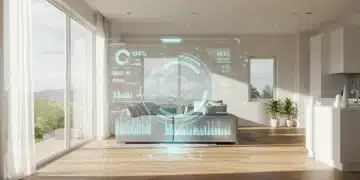
At its heart, smart energy management relies on data and connectivity. Devices collect information on usage patterns, external conditions, and energy prices, then use this data to make informed decisions. This proactive approach ensures your home is always operating at peak energy efficiency.
- Data Collection: Sensors and smart meters gather real-time energy consumption data.
- Automation: Devices automatically adjust settings based on predefined rules or learned patterns.
- Optimization: Algorithms analyze data to identify and implement the most efficient energy usage strategies.
- Integration: Seamless communication between different smart home devices and systems.
Ultimately, the rise of smart energy management in homes signifies a monumental step towards personalizing sustainability. It puts the power to control and reduce energy consumption directly into the hands of homeowners, offering a clear path to both environmental responsibility and financial relief.
Key Technologies Driving Energy Savings by 2025
As we look towards 2025, several technological innovations are poised to revolutionize how we manage energy in our homes. These advancements are not just incremental improvements; they represent fundamental shifts in efficiency and control, making the vision of a 15% reduction in utility bills increasingly attainable. Understanding these key technologies is crucial for any homeowner looking to embrace the future of sustainable living.
From advanced thermostats to sophisticated home energy management systems, the landscape of eco-friendly tech is expanding rapidly. These tools are designed to work together, creating a synergistic effect that amplifies their individual benefits. The focus is on intelligent, responsive systems that can adapt to changing conditions and user preferences without constant manual intervention.
Advanced Smart Thermostats and HVAC Systems
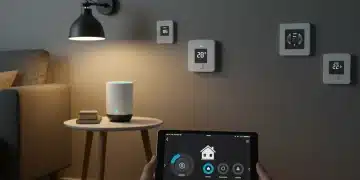
Modern smart thermostats do far more than just adjust the temperature. They learn your preferences, detect occupancy, and integrate with weather forecasts to optimize heating and cooling. Paired with smart HVAC systems, they can zone your home, directing conditioned air only where and when it’s needed.
- Learning Algorithms: Adapts to your schedule and preferences over time.
- Occupancy Sensors: Detects when rooms are empty to save energy.
- Geofencing: Adjusts temperature based on your proximity to home.
- Predictive Maintenance: Monitors system health to prevent costly breakdowns.
These systems represent a cornerstone of energy efficiency, often being the largest energy consumers in a typical home. Optimizing them with smart technology offers some of the most significant savings potential.
Integrated Home Energy Management Systems (HEMS)
HEMS are the central nervous system of a sustainable smart home. They integrate all connected devices, from lighting to appliances, into a single platform. This allows for holistic monitoring, control, and optimization of energy usage across the entire household. HEMS can prioritize energy use, shift loads to off-peak hours, and even interact with the grid.
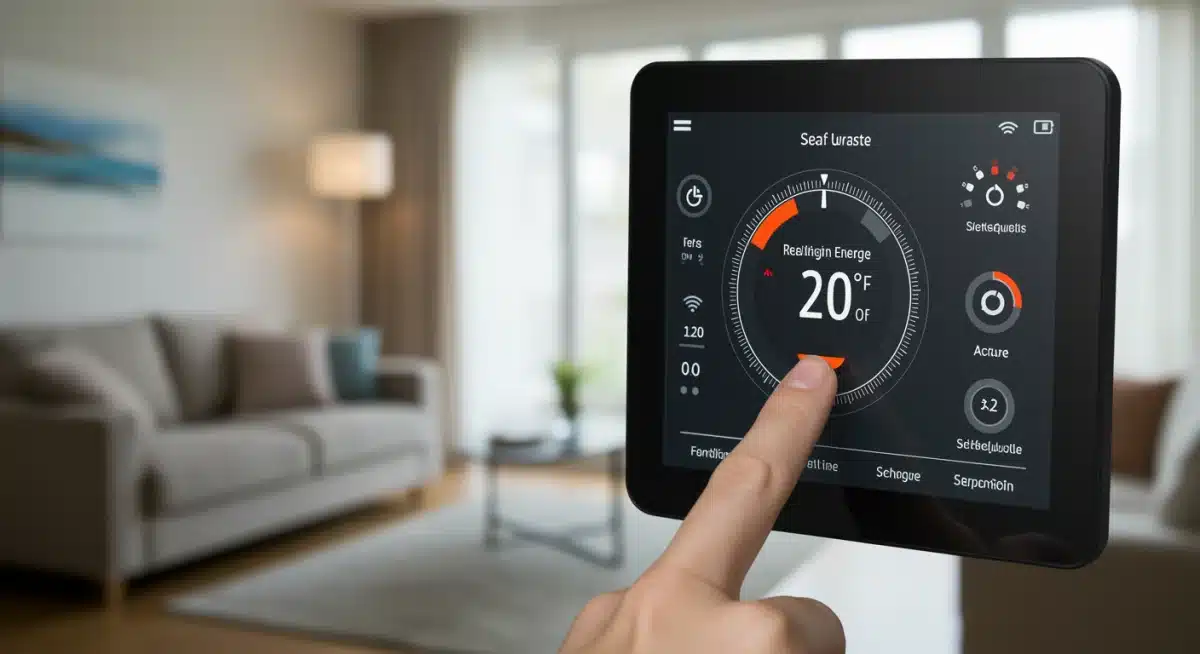
The beauty of HEMS lies in its ability to provide a comprehensive overview of your energy footprint. This detailed insight empowers homeowners to make informed decisions and identify areas for further improvement. With HEMS, managing your home’s energy becomes an intuitive and automated process, leading to consistent savings.
The Role of Renewable Energy Integration
While optimizing consumption is crucial, truly sustainable smart homes embrace renewable energy sources. By 2025, integrating technologies like solar panels and smart battery storage will become even more seamless and cost-effective, significantly boosting energy independence and reducing reliance on the traditional grid. This integration is not just about generating power; it’s about intelligently managing it within your home’s ecosystem.
The upfront investment in renewable energy can be substantial, but the long-term financial and environmental benefits are undeniable. Government incentives, falling equipment costs, and advancements in energy storage are making these options more accessible for the average homeowner. The ability to generate your own clean energy is a powerful step towards reducing utility bills and your carbon footprint.
Smart Solar Panels and Microinverters
Today’s solar panels are smarter than ever. Equipped with microinverters, each panel can operate independently, maximizing energy harvest even when some panels are shaded. Smart monitoring systems track performance in real-time, alerting homeowners to any inefficiencies or issues. These systems integrate directly with your HEMS, providing a clear picture of your energy generation.
- Individual Panel Optimization: Microinverters ensure maximum output from each panel.
- Real-time Monitoring: Track energy production and identify performance issues instantly.
- Seamless HEMS Integration: Data feeds directly into your home energy management system.
- Enhanced Reliability: System continues to operate even if one panel has an issue.
The intelligence embedded in modern solar setups means you get the most out of your investment, turning sunlight into a consistent and reliable power source for your home.
Battery Storage Solutions
Energy storage is the missing link that makes renewable energy truly resilient. Smart batteries store excess solar energy generated during the day, allowing you to use it at night or during peak demand hours when electricity prices are higher. This not only increases self-sufficiency but also provides a backup power source during outages.
Battery systems are becoming more affordable and efficient, with intelligent management that can decide whether to charge, discharge, or sell excess energy back to the grid based on current electricity prices and your home’s needs. This dynamic interplay between generation, storage, and consumption is a cornerstone of future energy savings.
Behavioral Changes and User Engagement
While technology provides the tools, human behavior remains a critical factor in achieving optimal energy savings in sustainable smart homes. Smart home systems are designed to make eco-friendly habits easier and more intuitive, but active user engagement can significantly amplify these benefits. Understanding your energy consumption patterns and making conscious adjustments complements the automated efficiencies.
The goal is to foster a symbiotic relationship between the homeowner and their smart home, where technology informs and empowers better choices. This partnership can lead to deeper savings and a more profound understanding of personal energy impact. It’s not just about setting it and forgetting it; it’s about informed interaction.
Gamification and Energy Feedback
Many smart home apps now incorporate gamification elements, turning energy saving into an engaging activity. Seeing your progress, competing with neighbors, or earning virtual rewards can motivate users to be more mindful of their consumption. Real-time feedback on energy usage, often displayed on dashboards or smart device screens, provides immediate insight into the impact of your actions.
- Interactive Dashboards: Visualize energy consumption in an easy-to-understand format.
- Comparative Data: See how your usage compares to similar homes or historical data.
- Goal Setting: Set personal energy-saving targets and track your achievement.
- Educational Tips: Receive personalized advice on how to further reduce consumption.
This immediate and accessible feedback loop helps demystify energy usage, making it easier for homeowners to identify and correct wasteful habits, translating directly into lower bills.
Personalized Recommendations and Alerts
Smart home systems can learn your routines and preferences, offering personalized recommendations for energy optimization. This might include suggestions for adjusting thermostat schedules, identifying energy-hungry appliances, or advising on the best times to run certain devices based on electricity tariffs. Automated alerts can notify you of unusual energy spikes or when a device has been left on unnecessarily.
These proactive suggestions remove much of the guesswork from energy management, guiding homeowners towards more efficient practices without requiring extensive knowledge. By integrating behavioral insights with technological capabilities, sustainable smart homes empower users to become active participants in their energy-saving journey, leading to sustained financial and environmental benefits.
Financial Incentives and ROI of Smart Home Upgrades
Investing in sustainable smart home technologies is not just an environmental decision; it’s a sound financial one. Beyond the direct savings on utility bills, various incentives and the long-term return on investment (ROI) make these upgrades increasingly attractive. Understanding the financial landscape can help homeowners plan their investments strategically and maximize their benefits.
The initial cost of installing smart home systems and renewable energy solutions can seem daunting, but it’s crucial to look at the bigger picture. The cumulative savings over time, combined with available financial aids, often make these upgrades pay for themselves faster than many realize. This section explores the economic advantages and support mechanisms available.
Federal and State Tax Credits
In the United States, numerous federal and state programs offer tax credits and rebates for energy-efficient home improvements. These can significantly offset the upfront costs of installing solar panels, energy-efficient windows, or advanced HVAC systems. Staying informed about current incentives is essential, as eligibility criteria and available funds can vary.
- Federal Solar Tax Credit: A substantial credit for installing solar panels.
- State-Specific Rebates: Many states offer programs for energy-efficient appliances or insulation.
- Energy Audit Incentives: Some programs cover the cost of professional energy audits.
- Local Utility Programs: Utilities often provide rebates for smart thermostats or demand response participation.
These incentives are designed to encourage adoption of sustainable technologies, making them a key component of the financial equation for smart home upgrades.
Increased Home Value and Long-term Savings
Beyond direct incentives, sustainable smart homes often command higher resale values. Buyers are increasingly looking for homes with lower operating costs and modern, eco-friendly features. The long-term savings on utility bills also contribute to a strong ROI, as every dollar saved on energy is a dollar kept in your pocket. Over the lifespan of these systems, the accumulated savings can be substantial, often outweighing the initial investment multiple times over.
The combination of government support, enhanced property value, and continuous savings positions sustainable smart home upgrades as a wise financial investment for the modern homeowner. It’s an investment that pays dividends both in terms of personal finances and environmental stewardship.
Preparing Your Home for 2025: A Practical Guide
The journey to a sustainable smart home by 2025 doesn’t have to be overwhelming. It can be approached in manageable steps, focusing on areas that offer the most impact for your specific home and budget. This practical guide outlines key steps you can take now to begin transforming your residence into an energy-efficient haven, ready to embrace the future of smart living.
Starting with an assessment of your current energy usage and identifying pain points is a great first step. From there, you can prioritize upgrades that align with your financial goals and lifestyle. Remember, every small step contributes to the larger goal of a more sustainable and cost-effective home.
Conducting an Energy Audit
Before making any significant investments, a professional energy audit can pinpoint where your home is losing energy and identify the most impactful upgrades. Many utility companies offer free or subsidized audits. This provides a baseline understanding of your home’s energy performance.
- Professional Assessment: Identifies drafts, poor insulation, and inefficient appliances.
- Personalized Recommendations: Provides a tailored plan for energy improvements.
- Potential Savings Estimate: Gives an idea of how much you can save with each upgrade.
- Prioritization: Helps you decide which upgrades to tackle first for maximum impact.
An energy audit is a foundational step, providing the data needed to make informed decisions about your smart home transformation.
Phased Implementation of Smart Devices
You don’t need to overhaul your entire home overnight. A phased approach allows you to gradually integrate smart devices, starting with those that offer the quickest ROI or address your biggest energy drains. Begin with a smart thermostat, then expand to smart lighting, smart plugs, and eventually a comprehensive HEMS.
Focus on interoperability; choose devices that can communicate with each other and integrate into a central platform. This ensures that as you add more components, they work together seamlessly to maximize energy efficiency. By taking a strategic, phased approach, you can comfortably transition to a sustainable smart home, enjoying savings and increased comfort along the way.
Future Outlook: Beyond 2025 for Sustainable Smart Homes
While 2025 marks a significant milestone in sustainable smart home evolution, the journey towards ultimate energy efficiency and environmental harmony extends far beyond. The innovations we see today are merely stepping stones to a future where homes are not just energy-efficient but actively contribute to the grid, becoming self-sufficient micro-ecosystems. This forward-looking perspective reveals even greater potential for savings and sustainability.
The technological landscape is constantly evolving, and future developments promise even more sophisticated and integrated solutions. We can anticipate homes that are more responsive, more resilient, and more deeply connected to the broader energy infrastructure, pushing the boundaries of what’s possible in eco-friendly living.
Grid-Interactive Homes and Virtual Power Plants
The next frontier for sustainable smart homes involves active participation in the energy grid. Grid-interactive homes will not only consume less energy but also intelligently manage their renewable generation and storage to support grid stability. Imagine your home’s battery system discharging stored solar energy back to the grid during peak demand, earning you credits or even revenue.
- Demand Response: Automatically reduces consumption during grid stress.
- Energy Trading: Sells surplus renewable energy back to the grid.
- Microgrid Participation: Connects with local energy networks for enhanced resilience.
- Optimized Charging/Discharging: Intelligent battery management based on grid needs and energy prices.
This concept, often referred to as a Virtual Power Plant (VPP), aggregates the distributed energy resources of many homes to act as a single, flexible power source, revolutionizing energy management on a larger scale.
AI and Predictive Maintenance
Artificial intelligence will play an increasingly dominant role in optimizing smart home efficiency. AI algorithms will become even more sophisticated, predicting energy needs based on complex factors like weather patterns, occupancy forecasts, and even personal health data, ensuring optimal comfort with minimal energy use. Predictive maintenance, driven by AI, will monitor the health of all home systems, identifying potential issues before they become costly problems and ensuring continuous energy efficiency.
The future sustainable smart home will be an intelligent, adaptive entity that not only saves you money but also contributes positively to the environment and the energy grid. These advancements promise a future of enhanced comfort, significant savings, and true energy independence, making the initial investment in smart home technology an increasingly compelling choice.
| Key Trend | Impact on Sustainable Smart Homes |
|---|---|
| Smart Energy Management Systems | Integrate and optimize all home devices for maximum efficiency, reducing waste. |
| Renewable Energy Integration | Seamless incorporation of solar and battery storage for energy independence and savings. |
| Behavioral Nudges & Feedback | Gamification and real-time data empower homeowners to make conscious energy-saving choices. |
| Financial Incentives | Tax credits and rebates significantly offset initial investment costs, boosting ROI. |
Frequently Asked Questions About Sustainable Smart Homes
A smart home becomes sustainable when its integrated technologies are primarily focused on reducing environmental impact and optimizing resource consumption. This includes efficient energy usage, waste reduction through smart appliances, water conservation systems, and the integration of renewable energy sources like solar power. It’s about minimizing the home’s ecological footprint while maximizing efficiency.
Achieving a 15% utility bill reduction by 2025 is highly realistic for many homeowners, especially those starting with less efficient homes. This is driven by advancements in smart energy management systems, increased adoption of renewable energy, and growing awareness of energy-saving behaviors. The combined effect of these factors creates significant potential for substantial savings.
The most impactful first step is often conducting a professional energy audit to identify your home’s specific inefficiencies. Following this, installing a smart thermostat is an excellent starting point. HVAC systems are typically the largest energy consumers, so optimizing their use with smart technology can yield immediate and significant savings on your utility bills.
The cost varies widely depending on the extent of upgrades. While some investments, like solar panels, can be significant, many smart devices are affordable. Crucially, numerous federal and state incentives, along with long-term utility bill savings and increased home value, often make these upgrades a financially sound investment over time, providing a strong return on investment.
Sustainable smart homes are increasingly designed to be grid-interactive. This means they can intelligently manage their energy consumption and generation (e.g., from solar panels) in response to grid conditions. They can participate in demand response programs, reduce energy use during peak times, and even feed excess renewable energy back into the grid, contributing to overall grid stability.
Conclusion
The vision of sustainable smart homes is rapidly transitioning from a futuristic concept to a present-day reality, offering substantial financial and environmental benefits. By embracing the new energy management trends emerging by 2025, homeowners can realistically expect to see their utility bills drop by 15% or more. This reduction isn’t just about adopting new gadgets; it’s about integrating intelligent systems, leveraging renewable energy, and fostering mindful consumption habits. The journey towards a greener, more economical home is accessible, rewarding, and a powerful step towards a more sustainable future for all.