5G Smart Home Performance: Unlocking Future Possibilities

The landscape of our daily lives is undergoing a profound transformation, driven by an accelerating wave of technological innovation. At the heart of this revolution lies the concept of the smart home, a vision where every appliance, every sensor, and every system works in perfect harmony to create an intuitive, responsive, and efficient living space. For years, this vision has been steadily evolving, moving from nascent concepts to increasingly sophisticated realities. However, the full potential of the smart home has often been constrained by the limitations of existing network infrastructures. Connectivity has been a bottleneck, impacting everything from device responsiveness to the seamless integration of complex systems. This is precisely where 5G steps onto the stage, not just as an incremental upgrade, but as a paradigm shift that promises to redefine the very essence of 5G Smart Home performance.
As we look towards 2026 and beyond, the convergence of advanced smart home devices and the unparalleled capabilities of 5G technology is set to unlock a new era of possibilities. This isn’t just about faster internet for your streaming services; it’s about a foundational change in how devices communicate, how data is processed, and how intelligently our homes can respond to our needs. From ultra-low latency that enables instantaneous command execution to massive capacity for connecting hundreds of devices simultaneously, 5G is poised to eliminate the current frustrations and open doors to innovations previously confined to science fiction. This article delves deep into the transformative impact of 5G on smart home performance, exploring the core technological advantages, the enhanced applications it enables, the challenges that need to be addressed, and the exciting future that awaits us in this hyper-connected world.
Understanding 5G: The Backbone of the Next-Gen Smart Home
Before we can fully appreciate the impact of 5G on smart home performance, it’s crucial to understand what makes this fifth generation of wireless technology so revolutionary. Unlike its predecessors, 5G isn’t just about speed; it’s a holistic upgrade designed to support a vast ecosystem of connected devices and demanding applications. Three core characteristics define 5G’s transformative power:
- Enhanced Mobile Broadband (eMBB): This is the most commonly understood aspect of 5G – significantly higher speeds. While fiber optics still hold the crown for raw speed in fixed installations, 5G brings gigabit-per-second speeds wirelessly, directly to devices. For the smart home, this means ultra-fast downloads, seamless 4K/8K video streaming, and rapid data transfer for bandwidth-intensive applications like virtual reality or augmented reality experiences within the home. Imagine downloading a large software update for your smart appliance in seconds, or streaming multiple high-definition video feeds from security cameras without any buffering.
- Ultra-Reliable Low-Latency Communications (URLLC): This is arguably the most critical feature for the smart home. Latency refers to the delay between sending a signal and receiving a response. In 4G, latency can range from 50-100 milliseconds; 5G aims for latency as low as 1 millisecond. This near-instantaneous communication is vital for applications where real-time response is non-negotiable. Think about autonomous robots navigating your home, critical health monitoring devices, or instant activation of emergency systems. The ability for devices to communicate and react almost instantaneously transforms the reliability and responsiveness of the entire smart home ecosystem.
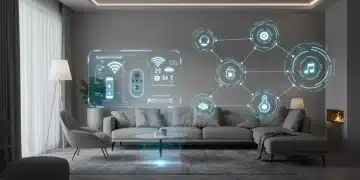
- Massive Machine-Type Communications (mMTC): The smart home of the future will not just have a few connected devices; it will have dozens, if not hundreds. From smart light bulbs and thermostats to door sensors, pet feeders, and smart mirrors, the sheer volume of devices requiring connectivity will explode. mMTC is designed to support this massive scale, allowing millions of devices to connect within a small geographical area efficiently and without overwhelming the network. This ensures that every smart device in your home, no matter how small, can maintain a stable and reliable connection, contributing to a truly integrated and intelligent environment.
These three pillars of 5G collectively lay the groundwork for unprecedented advancements in 5G Smart Home capabilities, moving beyond simple automation to truly intelligent and autonomous living spaces.
Elevating Smart Home Performance: Key Benefits of 5G
The unique attributes of 5G translate into tangible, significant benefits for smart home performance, addressing many of the limitations that current smart home users experience. The impact will be felt across every facet of connected living.
Seamless Connectivity and Reduced Latency
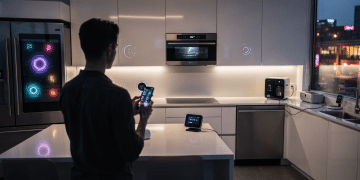
One of the most frustrating aspects of current smart home setups can be the lag between issuing a command and a device’s response. Whether it’s turning on a light, adjusting a thermostat, or unlocking a door, even a few seconds of delay can disrupt the seamless experience. 5G’s ultra-low latency (down to 1ms) virtually eliminates this delay. Imagine pressing a button on your smart display and the lights responding instantly, or your smart lock disengaging the moment your fingerprint is recognized. This immediacy creates a far more intuitive and natural interaction with your home, making smart technology feel less like a gadget and more like an extension of your will. Furthermore, with enhanced mobile broadband, signal strength and consistency will improve, reducing dead zones and ensuring that all your devices remain reliably connected, regardless of their location within the home.
Enhanced Data Processing and Edge Computing
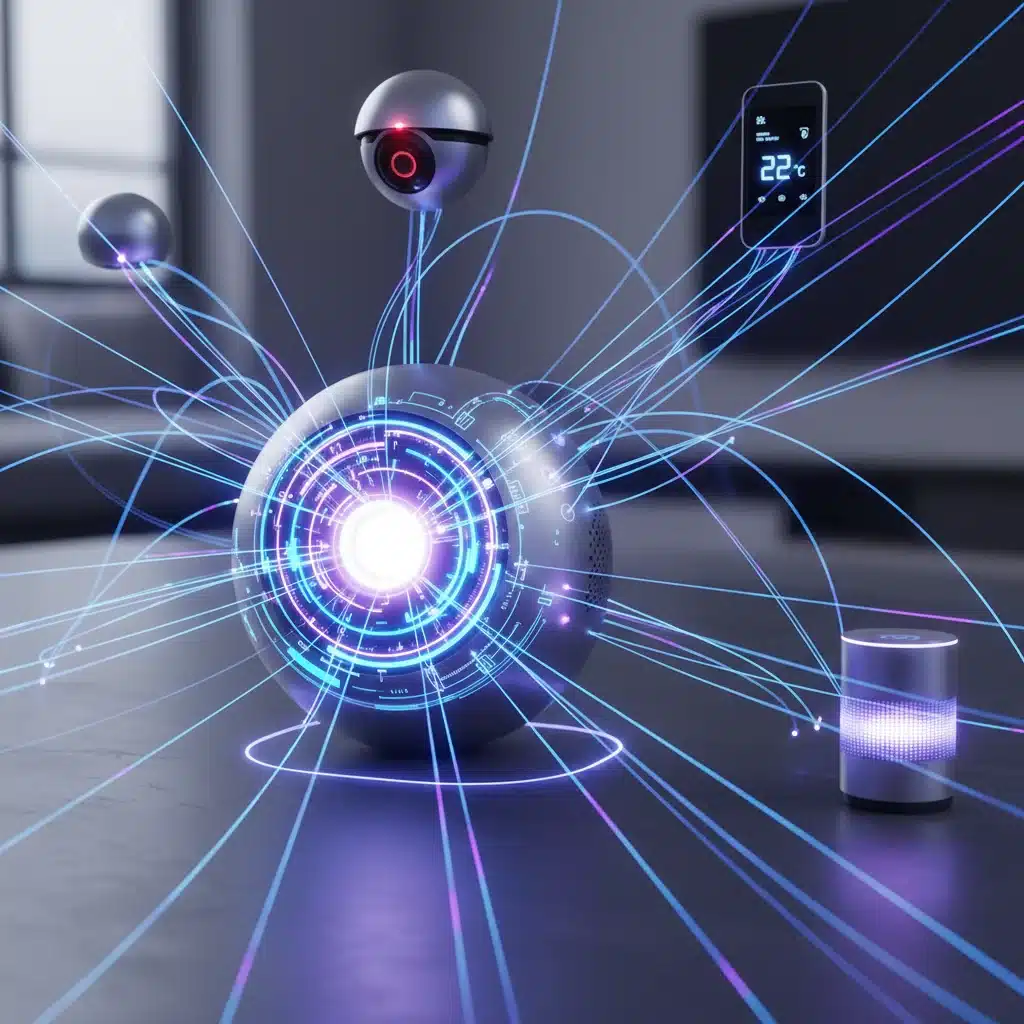
The sheer volume of data generated by smart homes is staggering. Security cameras record video, sensors collect environmental data, and appliances monitor their own performance. Traditionally, much of this data is sent to the cloud for processing. This cloud-centric model introduces latency and can raise privacy concerns. 5G facilitates the rise of edge computing, where data processing happens closer to the source – often on local hubs or even on the devices themselves. With 5G’s speed and low latency, devices can communicate with local edge servers almost instantly, allowing for faster decision-making and reduced reliance on constant cloud communication. This means your smart home can react more quickly to events, analyze data in real-time for personalized automation, and potentially offer greater data privacy by keeping sensitive information within your local network. For example, a smart security camera could analyze video footage for unusual activity locally, only sending alerts or specific clips to the cloud if a genuine threat is detected, rather than constantly streaming all footage.
Robust Security and Privacy Enhancements
The increasing number of connected devices in a smart home naturally raises concerns about security and privacy. Each new device represents a potential vulnerability. 5G networks are built with security as a fundamental design principle, incorporating advanced encryption protocols and authentication mechanisms that are more robust than previous generations. Features like network slicing, which allows for dedicated, isolated network segments for different applications, can further enhance security for critical smart home functions. For instance, your security cameras and smart locks could operate on a separate, highly secure 5G slice, isolated from your entertainment devices. Additionally, the move towards edge computing means less sensitive data needs to travel to the cloud, potentially reducing exposure to external threats and giving users greater control over their private information. This fortified digital perimeter is essential for fostering trust and widespread adoption of 5G Smart Home technologies.
Transformative Applications: What 5G Enables in the Smart Home
Beyond general performance improvements, 5G’s capabilities open the door to entirely new categories of smart home applications and significantly enhance existing ones. The possibilities extend far beyond simple convenience.
Advanced Automation and AI Integration
With 5G’s low latency and high bandwidth, smart home automation can become truly intelligent and proactive. Artificial intelligence (AI) can process vast amounts of real-time data from sensors, cameras, and user interactions to predict needs and automate tasks with unprecedented accuracy. Imagine your home learning your daily routines so precisely that it adjusts lighting, temperature, and even music based on your mood or the time of day, all without explicit commands. AI-powered voice assistants will become even more responsive and capable of understanding complex, nuanced requests. Furthermore, with edge computing, AI can run more sophisticated algorithms locally, enabling faster, more personalized automation that adapts to your unique living patterns in real-time, making your home truly anticipate your needs.
Immersive Entertainment and Communication
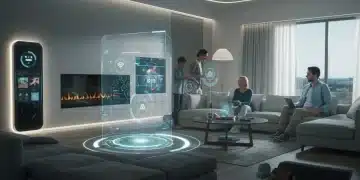
The entertainment experience within a 5G smart home will be nothing short of revolutionary. Ultra-fast speeds mean seamless 4K/8K streaming on multiple devices simultaneously without any buffering. This extends to virtual reality (VR) and augmented reality (AR) applications, which will become integral to home entertainment and communication. Imagine hosting a virtual reality game night with friends across the globe, all from your living room, with no lag or visual distortion. Or using AR to virtually redecorate your home, seeing furniture and art pieces in your space before buying them. 5G also facilitates crystal-clear, high-definition video calls with minimal delay, making remote work and virtual family gatherings feel more personal and immersive than ever before.
Enhanced Health and Elder Care Monitoring
The URLLC aspect of 5G is particularly impactful for health and elder care applications within the smart home. Wearable health monitors can transmit vital signs and activity data in real-time to caregivers or medical professionals with extremely low latency, enabling immediate intervention in emergencies. Smart sensors can detect falls, unusual activity patterns, or deviations from routine, triggering alerts instantly. For individuals with chronic conditions or the elderly living independently, a 5G-enabled smart home can provide an invaluable safety net, offering peace of mind to both residents and their families. This reliable, instantaneous communication can literally be life-saving, transforming the home into a proactive health assistant.
Advanced Security and Surveillance Systems
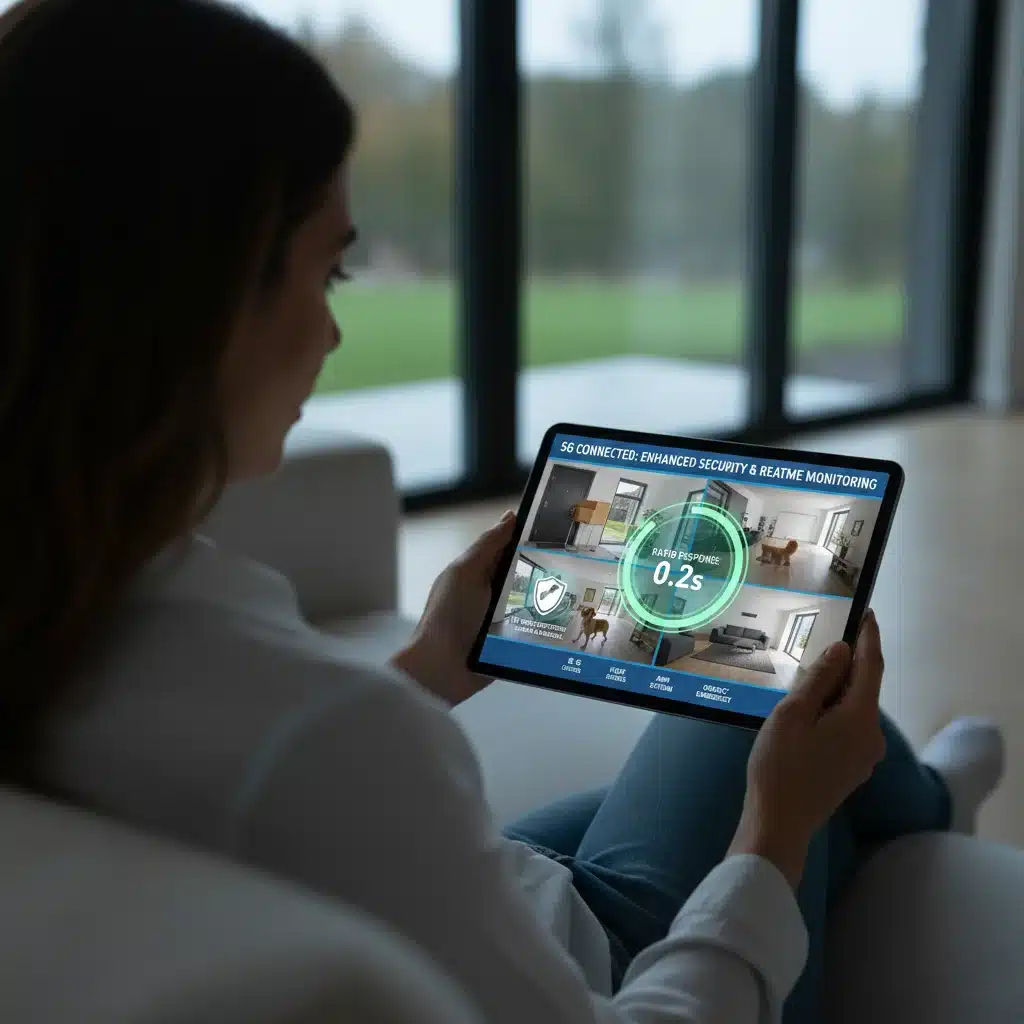
Current smart home security systems often rely on Wi-Fi, which can be susceptible to interference or limited bandwidth. 5G dramatically enhances security and surveillance capabilities. High-definition (4K and beyond) video streaming from multiple cameras simultaneously becomes effortless, providing crystal-clear footage without lag. The low latency means security alerts are delivered instantly, and remote control of locks, alarms, and cameras is immediate. AI-powered facial recognition, anomaly detection, and perimeter monitoring can operate with greater precision and speed, reducing false positives and improving response times. Imagine a drone autonomously patrolling your property, streaming high-definition video over 5G, and immediately alerting you to any suspicious activity, all with real-time feedback and control.
Challenges and Considerations for Widespread 5G Smart Home Adoption
While the promise of 5G in the smart home is immense, its widespread adoption and full realization are not without challenges. Addressing these considerations will be crucial for a seamless transition to a hyper-connected future.
Infrastructure Rollout and Availability
Perhaps the most significant hurdle is the ongoing rollout of 5G infrastructure. While major metropolitan areas are seeing increasing coverage, rural and suburban areas still lag behind. For a truly ubiquitous 5G Smart Home experience, comprehensive network coverage is essential. The deployment of small cells and millimeter-wave technology, which delivers the fastest speeds but has limited range, requires significant investment and time. Consumers will need reliable 5G access in their homes for these advanced applications to function correctly.
Cost of 5G-Enabled Devices and Services
Early adoption of any new technology often comes with a premium price tag. 5G-enabled smart home devices, from routers to appliances, may initially be more expensive than their Wi-Fi counterparts. Similarly, 5G data plans, especially those designed for high-bandwidth home use, could be pricier. As the technology matures and economies of scale kick in, these costs are expected to decrease, but they remain a barrier for some consumers in the near term.
Interoperability and Standardization
The smart home market is currently fragmented, with numerous manufacturers and platforms often operating in silos. Achieving true interoperability, where devices from different brands can seamlessly communicate and work together, is a persistent challenge. While initiatives like Matter aim to address this, the introduction of 5G adds another layer of complexity. Ensuring that 5G-enabled devices adhere to common standards and can integrate effortlessly into diverse smart home ecosystems will be vital for consumer adoption and a frictionless user experience.
Power Consumption and Device Efficiency
While 5G offers incredible performance, the initial generations of 5G modems and chipsets can sometimes be more power-intensive than their 4G or Wi-Fi equivalents. For battery-powered smart home devices, this could impact battery life. As 5G technology matures and becomes more efficient, this issue is expected to diminish, but it’s a factor developers must consider when designing new 5G-enabled smart home products. Balancing high performance with energy efficiency will be key for sustainable smart home growth.
Security and Privacy Concerns (Ongoing)
Despite 5G’s inherent security advantages, the ever-evolving landscape of cyber threats means that security and privacy will remain ongoing concerns. As more critical systems (e.g., health, security) become connected via 5G, the stakes for protecting these networks and the data they carry become even higher. Continuous vigilance, robust end-to-end encryption, regular software updates, and clear privacy policies will be paramount to maintaining user trust and safeguarding sensitive information in the 5G Smart Home.
The Future Outlook: 5G Smart Home in 2026 and Beyond
Looking ahead to 2026 and the subsequent years, the vision of the 5G Smart Home is one of profound integration, intelligence, and personalization. The foundational capabilities of 5G are not just enhancing existing smart home features but enabling entirely new paradigms of living.
Hyper-Personalized Living Spaces
Homes will become truly adaptive environments, learning and anticipating our needs with incredible precision. Imagine a home that adjusts lighting, temperature, ambient sounds, and even scent profiles based on your presence, mood, and activity. AI, powered by 5G’s real-time data processing, will move beyond simple automation to predictive intelligence, creating a living space that feels intuitively connected to its inhabitants. This could extend to personalized wellness routines, where your home guides you through exercises or meditation based on your health data and schedule.
Autonomous Home Management
The concept of a truly autonomous home will move closer to reality. Robots for cleaning, maintenance, and even cooking will navigate and operate seamlessly within the home, communicating instantly over 5G. Smart appliances will self-diagnose issues, order parts, and even schedule maintenance appointments. Energy management systems will optimize consumption in real-time, leveraging grid data and home occupancy patterns to minimize waste and costs, potentially even trading energy with the grid. The home will become a self-managing entity, freeing up valuable human time and effort.
Seamless Integration with Smart Cities and Environments
The 5G Smart Home will not exist in isolation. It will be a key component of a larger smart ecosystem, seamlessly integrated with smart cities, intelligent transportation, and connected healthcare networks. Imagine your smart car communicating with your home to pre-cool it before your arrival, or your home receiving real-time traffic updates to adjust your morning routine. Health data from your home could be securely shared with your healthcare provider for proactive monitoring. This interconnectedness will create a holistic smart living experience that extends beyond the walls of your home.
New Business Models and Services
The capabilities of 5G will undoubtedly spur new business models and services centered around the smart home. Subscription services for advanced AI features, predictive maintenance, personalized health monitoring, and immersive entertainment will become commonplace. Home builders will integrate 5G capabilities as standard, offering ‘smart home as a service’ packages. The ability to collect and analyze vast amounts of data (with proper privacy safeguards) will create opportunities for innovative services that enhance convenience, security, and quality of life for residents.
Conclusion: The Dawn of a Truly Intelligent Home
The journey towards a fully intelligent and responsive smart home has been a long one, marked by incremental advancements and persistent challenges. However, with the advent of 5G technology, we stand at the precipice of a monumental leap forward. The unparalleled speeds, ultra-low latency, and massive connection capacity offered by 5G are not merely improvements; they are foundational elements that are set to redefine what a smart home can be. From instantaneous device responsiveness to hyper-personalized automation, robust security, and immersive entertainment, the impact of 5G on smart home performance is nothing short of transformative.
As we navigate the coming years, the challenges of infrastructure rollout, cost, and interoperability will undoubtedly require concerted effort from industry stakeholders, policymakers, and consumers alike. Yet, the trajectory is clear: the future of living is inextricably linked to advanced connectivity. The 5G Smart Home of 2026 and beyond promises a world where our living spaces are not just structures, but intuitive partners that anticipate our needs, enhance our well-being, and seamlessly integrate into a broader ecosystem of smart cities and services. It’s a future where technology fades into the background, empowering us to live more comfortably, securely, and efficiently than ever before. The intelligent home is no longer a distant dream; it is rapidly becoming a tangible reality, powered by the incredible potential of 5G.