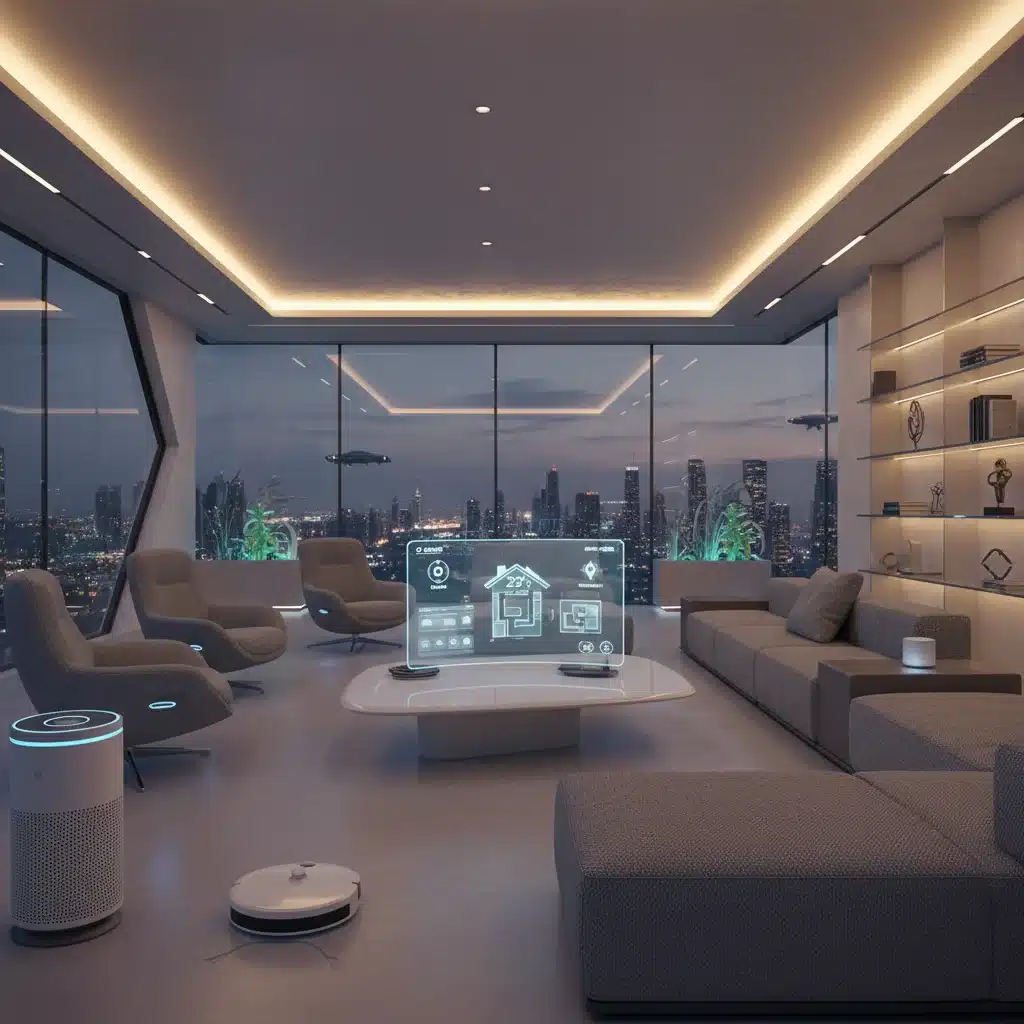
Mastering Smart Home Routines: A 2026 Beginner’s Guide to Automating 8 Daily Tasks for Convenience and Efficiency
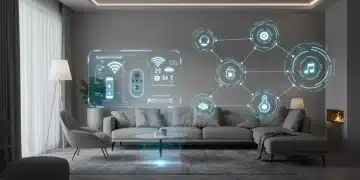
Welcome to 2026, where the future of home living is not just about having smart devices, but about making them work together seamlessly to simplify your life. The concept of smart home routines has evolved significantly, moving beyond simple on/off commands to intricate, personalized sequences that anticipate your needs. If you’re looking to transform your daily grind into a symphony of automated convenience, you’ve come to the right place. This comprehensive guide will walk you through the exciting world of smart home automation, focusing on how to set up intelligent routines that elevate your living experience.
In an increasingly interconnected world, our homes are becoming smarter, more intuitive, and remarkably responsive. The technology available in 2026 allows for an unprecedented level of customization and integration, making it easier than ever to create a truly intelligent living space. But what exactly are smart home routines, and why are they so crucial for the modern homeowner? Simply put, they are automated sequences of actions performed by your smart devices, triggered by specific conditions like time of day, sensor input, or even your presence. These routines can range from simple tasks, like turning on lights at sunset, to complex scenarios, such as preparing your home for your arrival after a long day at work.
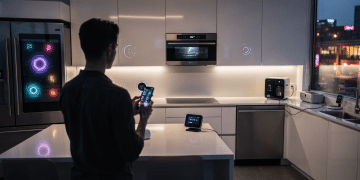
The primary goal of implementing smart home routines is to enhance convenience and efficiency. Imagine waking up to a home that gently eases you into your day, or returning to an environment perfectly tailored to your evening relaxation. This isn’t science fiction; it’s the reality achievable with today’s smart home technology. By automating repetitive tasks, you free up valuable time and mental energy, allowing you to focus on what truly matters. Furthermore, smart routines can contribute to significant energy savings, bolster home security, and even improve your overall well-being by creating a more harmonious living space.
This article is designed as a beginner’s guide, providing you with practical steps and insights into setting up 8 essential daily smart home routines. Whether you’re a seasoned tech enthusiast or just starting your smart home journey, the information presented here will empower you to harness the full potential of your connected devices. We’ll explore the necessary components, the platforms that tie everything together, and concrete examples of routines that can dramatically improve your daily life. Get ready to embrace a smarter, more efficient, and undeniably convenient future with expertly crafted smart home routines.
The Foundation of Smart Home Routines: What You Need
Before diving into specific routines, it’s essential to understand the foundational elements required to build a robust smart home ecosystem. In 2026, the landscape of smart home technology is more diverse and integrated than ever, offering a plethora of options to suit every need and budget. Establishing a solid foundation is paramount to creating effective and reliable smart home routines.
1. A Central Hub or Controller
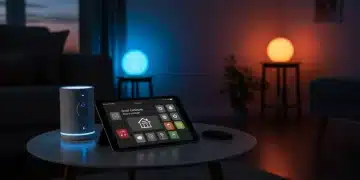
At the heart of any sophisticated smart home system is a central hub or controller. This device acts as the brain, allowing different smart devices to communicate with each other, even if they use different protocols (like Wi-Fi, Zigbee, Z-Wave, or Thread). Popular options include Amazon Echo devices (with Alexa), Google Nest Hubs (with Google Assistant), Apple HomePod (with HomeKit), or dedicated smart home hubs like Samsung SmartThings or Hubitat. These hubs are crucial for orchestrating complex smart home routines, enabling seamless interaction between disparate devices.
2. Compatible Smart Devices
The effectiveness of your smart home routines hinges on the quality and compatibility of your smart devices. Consider investing in devices from reputable brands that offer good integration with your chosen hub. Common smart devices include:
- Smart Lighting: Philips Hue, Govee, Nanoleaf, LIFX.
- Smart Thermostats: Nest, Ecobee, Honeywell Home.
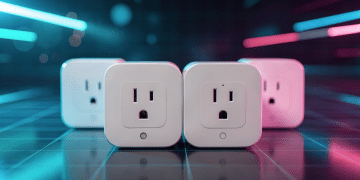
- Smart Plugs: TP-Link Kasa, Meross, Gosund.
- Smart Security Cameras: Arlo, Ring, Eufy, Google Nest Cam.
- Smart Locks: August, Yale, Schlage.
- Smart Blinds/Shades: Lutron, Somfy, IKEA.
- Smart Speakers: Amazon Echo, Google Nest, Apple HomePod.
- Smart Sensors: Motion sensors, door/window sensors, leak detectors, temperature/humidity sensors.
When selecting devices, always check for compatibility with your chosen smart home ecosystem (e.g., “Works with Alexa,” “Works with Google Home,” “HomeKit compatible”). This ensures that your devices can be easily integrated into your smart home routines.
3. Reliable Wi-Fi Network
A stable and robust Wi-Fi network is the backbone of any modern smart home. Most smart devices rely on Wi-Fi for communication, and a weak or unreliable connection can lead to frustrating delays or outright failures in your smart home routines. Consider upgrading your router to a mesh Wi-Fi system if you have a large home or multiple devices, ensuring consistent coverage and performance.
4. A Smart Home App or Platform
Finally, you’ll need an intuitive app or platform to configure and manage your smart home routines. This is typically the app associated with your central hub (e.g., Amazon Alexa app, Google Home app, Apple Home app) or a dedicated app for a specific smart home ecosystem. These apps provide the interface for creating triggers, actions, and conditions that define your automated sequences.
The Power of Automation: Understanding Triggers, Actions, and Conditions
At the core of every smart home routine are three fundamental concepts: triggers, actions, and conditions. Understanding how these elements interact is key to designing effective and intelligent automations.
Triggers: What Starts the Routine?
A trigger is the event that initiates a smart home routine. Without a trigger, your routine won’t know when to start. Triggers can be:
- Time-based: “At 7:00 AM,” “At sunset,” “Every weekday at 6:00 PM.”
- Sensor-based: “When motion is detected,” “When a door opens,” “When the temperature drops below 20°C.”
- Voice commands: “Alexa, good morning,” “Hey Google, I’m home.”
- Location-based (Geofencing): “When I arrive home,” “When I leave the house.”
- Device state change: “When the TV turns on,” “When the washing machine finishes.”
Actions: What Happens During the Routine?
Actions are the tasks your smart devices perform once a routine is triggered. These can be single commands or a sequence of multiple commands executed simultaneously or in a specific order. Examples of actions include:
- Turning lights on/off or changing their color/brightness.
- Adjusting thermostat temperature.
- Locking/unlocking smart locks.
- Playing music or podcasts on smart speakers.
- Opening/closing smart blinds.
- Activating security cameras.
- Sending notifications to your phone.
Conditions: When Should the Routine Run?
Conditions are optional but powerful additions that add intelligence to your smart home routines. They specify criteria that must be met for the routine to execute. For example:
- “Only if it’s a weekday.”
- “Only if I am home.”
- “Only if the outdoor temperature is below 10°C.”
- “Only if the lights are currently off.”
By combining triggers, actions, and conditions, you can create highly sophisticated and personalized smart home routines that truly cater to your lifestyle.
8 Essential Smart Home Routines to Automate Your Daily Life in 2026
Now, let’s dive into practical examples. Here are 8 essential smart home routines that can significantly enhance your daily convenience and efficiency, complete with examples of how to set them up using common smart home platforms.
Routine 1: The Gentle Wake-Up
Start your day smoothly with a routine that gradually brings your home to life.
- Trigger: Time (e.g., 6:30 AM on weekdays).
- Actions:
- Slowly brighten bedroom lights over 15 minutes (smart bulbs).
- Raise bedroom blinds (smart blinds).
- Start playing soft news or a calming playlist on your smart speaker in the bedroom.
- Adjust the thermostat to your preferred morning temperature.
- Conditions: Only if it’s a weekday.
This routine eliminates jarring alarms and creates a more natural, pleasant awakening experience, setting a positive tone for your entire day. This is a prime example of how well-designed smart home routines can impact your well-being.
Routine 2: The Morning Departure
Ensure your home is secure and energy-efficient when you leave for the day.
- Trigger: Geofencing (when the last family member leaves the house) OR a specific voice command (“Alexa, I’m leaving”).
- Actions:
- Turn off all lights.
- Lower the thermostat to an energy-saving temperature.
- Lock all smart locks.
- Arm the security system.
- Turn off smart plugs connected to non-essential devices (e.g., curling iron, TV).
- Send a notification confirming the home is secured.
- Conditions: Only if no one is home (for geofencing trigger).
This routine provides peace of mind and saves energy, making it one of the most practical smart home routines you can implement.
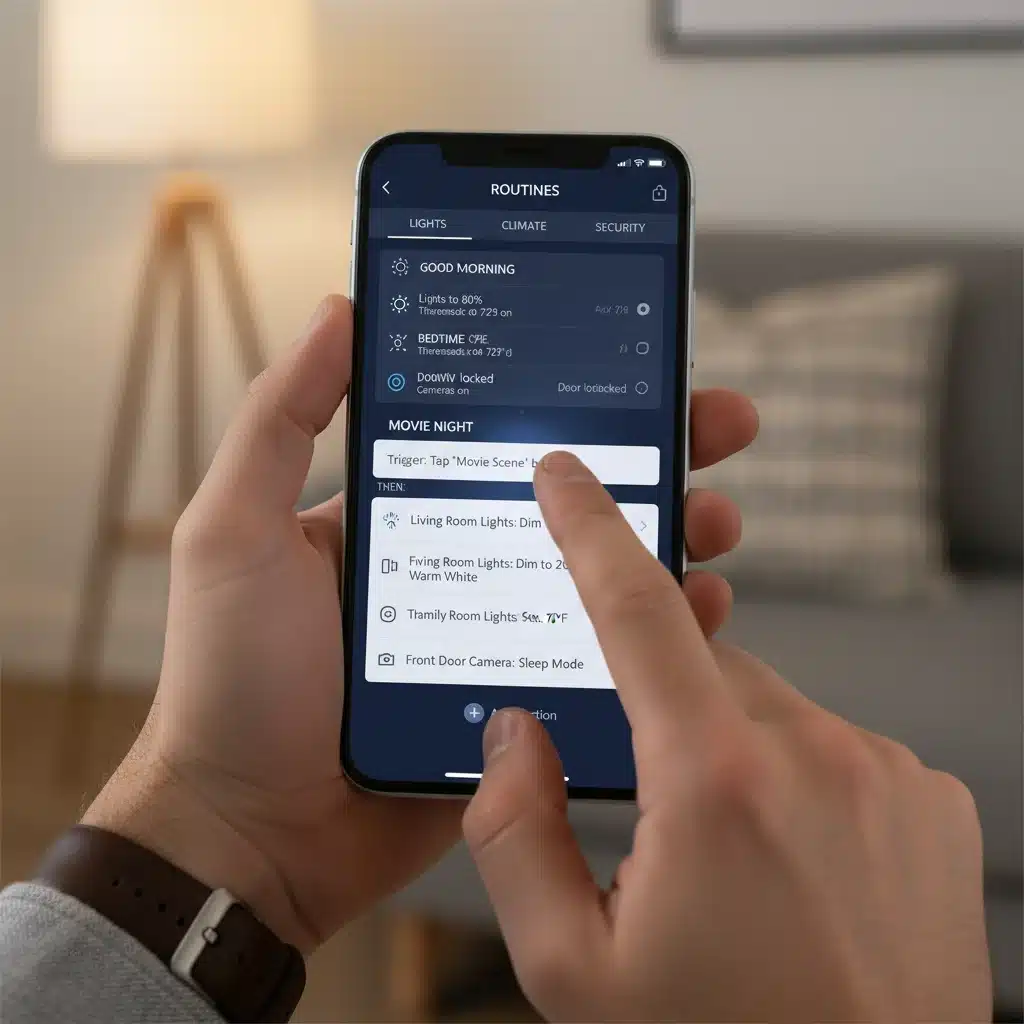
Routine 3: The Welcome Home
Arrive to a welcoming and comfortable home environment.
- Trigger: Geofencing (when the first family member arrives home).
- Actions:
- Unlock the front door (smart lock).
- Turn on entryway and living room lights.
- Adjust the thermostat to your preferred comfort temperature.
- Play your favorite music or a welcome playlist on smart speakers.
- Disarm the security system.
- Conditions: Only if it’s after 4:00 PM and before 10:00 PM.
This routine transforms your arrival into a delightful experience, showcasing the true convenience of smart home routines.
Routine 4: The Evening Relaxation
Create a perfect ambiance for unwinding after a long day.
- Trigger: Time (e.g., 7:00 PM daily) OR a specific voice command (“Hey Google, evening mode”).
- Actions:
- Dim living room and bedroom lights to a warm, soft glow.
- Close smart blinds.
- Play ambient music or a podcast on smart speakers.
- Adjust the thermostat for evening comfort.
- Conditions: Only if someone is home.
This routine helps you transition from a busy day to a relaxed evening, making your home a true sanctuary thanks to intelligent smart home routines.
Routine 5: The Movie Night
Transform your living room into a home theater with a single command.
- Trigger: Voice command (“Alexa, movie night”) OR when the smart TV turns on.
- Actions:
- Dim all living room lights to a very low level or turn them off.
- Close smart blinds/curtains.
- Adjust smart thermostat for optimal viewing comfort.
- Turn on smart plug connected to a popcorn machine (if applicable).
- Conditions: Only if it’s after 6:00 PM.
This is a fun and immersive example of how smart home routines can enhance entertainment.
Routine 6: The Bedtime Preparation
Ensure your home is secure and ready for a good night’s sleep.
- Trigger: Time (e.g., 10:30 PM daily) OR a specific voice command (“Google, good night”).
- Actions:
- Turn off all lights in the house, except for a dim path to the bedroom if desired.
- Lock all smart locks.
- Arm the security system (perimeter only).
- Adjust the thermostat to a sleep-friendly temperature.
- Turn off smart plugs for non-essential electronics.
- Play white noise or calming sounds in the bedroom.
- Conditions: Only if someone is detected in the house.
This routine provides security and optimal sleep conditions, demonstrating the multifaceted benefits of smart home routines.
Routine 7: Energy Saving & Away Mode
Optimize energy consumption when you’re away for extended periods.
- Trigger: Geofencing (when all family members have been away for 1 hour) OR a specific voice command (“Alexa, vacation mode”).
- Actions:
- Set thermostat to an extreme energy-saving temperature.
- Turn off all lights and smart plugs (except essential devices like refrigerators).
- Activate security cameras and motion sensors with increased sensitivity.
- Randomly turn on/off a few lights in the evening to simulate occupancy (vacation mode).
- Conditions: Only if no one is home.
This routine is excellent for reducing utility bills and enhancing security, highlighting the financial and safety advantages of smart home routines.
Routine 8: The Smart Sprinkler System
Automate your garden watering based on real-time conditions.
- Trigger: Daily at 5:00 AM.
- Actions:
- Activate smart sprinkler zones for a set duration.
- Conditions:
- Only if the local weather forecast predicts no rain for the next 24 hours.
- Only if the soil moisture sensor indicates dryness (if available).
- Only if the outdoor temperature is above 5°C.
This routine saves water and ensures your garden thrives, showcasing how smart home routines extend beyond indoor living.
Advanced Tips for Optimizing Your Smart Home Routines
Once you’ve mastered the basics, consider these advanced tips to take your smart home routines to the next level in 2026:
1. Embrace Conditional Logic
Don’t just rely on simple triggers. Use multiple conditions (e.g., “if X AND Y OR Z”) to make your routines more intelligent and responsive to various scenarios. For instance, your “Welcome Home” routine could have different actions if it’s daytime versus nighttime, or if it’s a weekend versus a weekday. The more nuanced your conditions, the more intuitive your smart home routines become.
2. Integrate with Voice Assistants
While many routines run automatically, voice commands offer a powerful way to manually trigger or adjust them. Ensure your key smart home routines are linked to simple, memorable voice phrases. This adds a layer of flexibility and control, allowing you to override automated sequences or activate them on demand.
3. Leverage Presence Detection
Beyond geofencing, consider using motion sensors, door/window sensors, or even Wi-Fi presence detection to determine if someone is home or in a specific room. This allows for truly dynamic smart home routines that react to actual occupancy, rather than just scheduled times. For example, lights could turn on only when someone enters a room and turn off automatically when no motion is detected for a period.
4. Use Smart Sensors Creatively
Smart sensors are the eyes and ears of your smart home. Beyond basic motion and contact sensors, explore temperature, humidity, light, and even air quality sensors. These can provide invaluable data to trigger highly specific smart home routines. Imagine your exhaust fan turning on automatically when humidity levels rise in the bathroom, or your air purifier activating when air quality drops.
5. Prioritize Security and Privacy
As you build more complex smart home routines, always keep security and privacy in mind. Use strong, unique passwords for all your smart devices and Wi-Fi network. Enable two-factor authentication wherever possible. Be mindful of the data your devices collect and how it’s used. Choose devices from manufacturers with a strong reputation for security and regular firmware updates. A secure smart home is a truly smart home.
6. Start Small and Expand Gradually
Don’t feel overwhelmed by the possibilities. Begin with one or two simple smart home routines that address immediate needs (like a morning or evening routine). Once you’re comfortable, gradually add more devices and complexity. This iterative approach allows you to learn and adapt, ensuring your smart home evolves effectively with your lifestyle.
7. Test and Refine Your Routines
Automation isn’t a set-it-and-forget-it endeavor. Regularly test your smart home routines to ensure they are working as expected. Life changes, and your routines should too. Don’t hesitate to tweak triggers, actions, or conditions to better suit your evolving preferences and daily schedule. Feedback loops are crucial for optimizing your smart home experience.
8. Explore Integration Platforms (IFTTT, Home Assistant)
While most smart home hubs offer robust routine creation, platforms like IFTTT (If This Then That) or more advanced open-source solutions like Home Assistant can unlock even greater possibilities. These platforms allow you to connect devices and services that might not natively integrate, enabling incredibly diverse and powerful smart home routines. For example, you could have your smart lights flash when your favorite sports team scores, or your smart speaker announce the weather forecast every morning.
The Future is Automated: Embracing Smart Home Routines in 2026
The year 2026 marks a pivotal point in smart home technology, where the focus has shifted from mere connectivity to intelligent, proactive automation. By setting up well-thought-out smart home routines, you’re not just adding gadgets to your home; you’re creating an intelligent ecosystem that works tirelessly to enhance your comfort, security, and efficiency. The benefits extend far beyond simple convenience, touching upon energy savings, peace of mind, and even contributing to a more balanced and less stressful daily life.
Remember, the journey to a fully automated smart home is a continuous process of learning, experimentation, and refinement. Start with the basics, understand the interplay of triggers, actions, and conditions, and then gradually expand your horizons. The 8 essential smart home routines outlined in this guide provide an excellent starting point, offering tangible ways to experience the transformative power of automation in your daily life.
As technology continues to advance, the capabilities of smart home routines will only grow, offering even more personalized and predictive experiences. Embrace this exciting future, and take the first step towards a smarter, more connected home today. Your future self will thank you for the time saved, the comfort gained, and the peace of mind that comes with a truly intelligent living space. Happy automating!