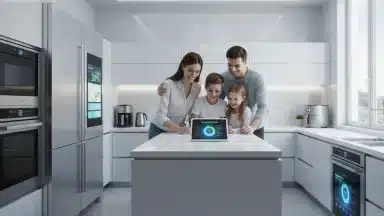
Voice Control Mastery: 10 Advanced Commands for Your Smart Home in 2026
The year is 2026, and your smart home is no longer just a collection of connected gadgets. It’s an intuitive, responsive ecosystem designed to anticipate your needs and simplify your life. While basic commands like ‘turn on the lights’ or ‘play music’ have become second nature, the true power of modern home automation lies in its advanced capabilities. To truly master your smart home, you need to move beyond the fundamentals and delve into the world of sophisticated routines, contextual understanding, and proactive automation. This comprehensive guide will unveil 10 advanced voice commands that will transform your interaction with your connected living space, allowing you to unlock unprecedented levels of convenience, security, and personalization.
We’re not just talking about turning things on and off; we’re talking about orchestrating entire scenarios with a single utterance, having your home adapt to your presence, and even predict your preferences. The evolution of AI and machine learning has propelled voice control into a new era, making your smart home an extension of your will, responding to your nuanced requests with remarkable precision. Prepare to elevate your smart home experience from merely functional to truly extraordinary.
The landscape of smart home technology is constantly evolving, and with it, the sophistication of voice control. In 2026, the leading smart assistants have moved beyond simple, direct commands. They now understand context, can execute complex multi-device routines, and even learn from your habits to offer proactive suggestions. This means that to get the most out of your smart home, you need to learn to speak its language – a language of intricate automation and intelligent interaction. Let’s dive into the commands that will define smart home mastery in the coming years.
1. ‘Initiate Morning Routine: Productive Start’
Gone are the days of fumbling with multiple apps or issuing a string of individual commands to get your day started. In 2026, your smart home can flawlessly execute a complex ‘Morning Routine: Productive Start’ with a single, succinct phrase. This advanced voice command triggers a cascade of actions designed to optimize your morning.
Imagine waking up to your smart blinds slowly opening, letting in the natural light while your smart diffuser releases an invigorating aroma like peppermint or citrus. Simultaneously, your smart coffee maker begins brewing your favorite blend, and your smart thermostat adjusts the temperature to your preferred morning setting. As you step into the bathroom, your smart mirror displays a personalized news brief or your calendar for the day, while your smart shower preheats to the ideal temperature. All of this, orchestrated seamlessly, simply by saying, ‘Initiate Morning Routine: Productive Start.’
The magic behind this command lies in its ability to integrate various devices and services into a cohesive, time-sensitive sequence. It’s not just about turning things on; it’s about creating an atmosphere and preparing your environment for optimal productivity. This level of automation saves valuable time, reduces mental load, and sets a positive tone for your entire day. It embodies the essence of advanced voice commands, transforming your home into a truly intelligent assistant.
2. ‘Activate Security Protocol: Away Mode’
Security is paramount, and your smart home in 2026 offers unparalleled peace of mind through advanced voice-activated security protocols. ‘Activate Security Protocol: Away Mode’ is far more sophisticated than simply arming an alarm system. This advanced voice command deploys a multi-layered defense strategy, making your home appear occupied even when you’re miles away.
Upon activation, your smart locks engage, and all doors and windows are secured. Smart lights throughout your home begin to randomly cycle through various on/off patterns, mimicking human activity. Your smart blinds may periodically open and close. Indoor and outdoor security cameras activate motion detection and begin recording, sending real-time alerts to your smartphone if any suspicious activity is detected. Furthermore, smart speakers might play ambient sounds like conversation or a barking dog at random intervals, further deterring potential intruders.
This command can also integrate with smart sprinklers, triggering them if an unknown presence is detected in certain areas of your yard, or even with smart pet feeders, ensuring your furry friends are cared for while you’re away. The ability to manage such a comprehensive security setup with a single voice command represents a significant leap in home protection, offering both convenience and robust defense.
3. ‘Set Ambiance: Dinner Party’
Hosting a dinner party should be an enjoyable experience, not a frantic scramble to adjust lighting, music, and climate. With the ‘Set Ambiance: Dinner Party’ advanced voice command, your smart home handles all the details, creating the perfect atmosphere for your guests.
Upon hearing this command, your smart lighting system intelligently dims the main lights to a warm, inviting glow, while accent lights highlight artwork or architectural features. Your smart speakers begin playing a curated dinner party playlist, adjusting the volume to a comfortable background level. The smart thermostat subtly lowers the temperature a few degrees, accounting for the increased body heat from multiple guests. If you have a smart fireplace, it might even ignite, adding to the cozy atmosphere. Smart curtains or blinds might close to enhance privacy and intimacy.
This command streamlines the preparation process, allowing you to focus on your guests rather than fiddling with controls. It demonstrates the power of contextual understanding, where your smart home interprets your social needs and translates them into a harmonious environmental setting. This is about more than just convenience; it’s about enhancing social experiences within your home.
4. ‘Optimize Energy: Eco Mode Engaged’
As environmental consciousness and energy costs rise, optimizing your home’s energy consumption becomes increasingly important. ‘Optimize Energy: Eco Mode Engaged’ is an advanced voice command that puts your smart home into a state of maximum energy efficiency without sacrificing comfort.
When activated, this command triggers a series of energy-saving measures. Your smart thermostat adjusts to a wider temperature range, prioritizing energy conservation over precise comfort (e.g., slightly warmer in summer, slightly cooler in winter). Smart lighting reduces brightness levels in non-essential areas or switches to motion-activated only. Smart plugs might power down non-critical appliances that are in standby mode, eliminating phantom drain. If integrated with a smart grid, your home might even shift energy usage to off-peak hours or prioritize power from renewable sources like solar panels.
This command can also factor in external data, such as weather forecasts. If a sunny day is predicted, it might open smart blinds to maximize natural light and passive heating, or close them to reduce solar gain. This holistic approach to energy management not only reduces your carbon footprint but also significantly lowers your utility bills, showcasing the practical and financial benefits of advanced smart home integration.
5. ‘Find My Lost Item: Keys’
Misplacing everyday items is a universal frustration. In 2026, your smart home can help you locate them with an advanced voice command like ‘Find My Lost Item: Keys.’ This command leverages the growing ecosystem of smart trackers and indoor positioning systems.
Assuming your keys are equipped with a tiny smart tracker (e.g., Bluetooth LE or UWB), your smart assistant can triangulate their location within your home. Upon hearing the command, your smart speakers throughout the house will announce the approximate location (‘Your keys are in the living room, near the sofa’) and simultaneously trigger the tracker on the keys to emit an audible beep or flash a light, guiding you directly to them. If you have smart cameras, the system might even display a live feed of the area where the keys are believed to be.
This is a game-changer for daily convenience, eliminating wasted time and stress. It highlights the evolution of smart homes from controlling static devices to actively assisting with personal challenges, making everyday life smoother and more efficient. The integration of personal item tracking into the voice control ecosystem is a testament to the increasing intelligence of our living spaces.
6. ‘Prepare for Bed: Relaxation Mode’
Winding down after a long day can be challenging, but your smart home in 2026 can create the perfect environment for relaxation and sleep with the ‘Prepare for Bed: Relaxation Mode’ advanced voice command.
This command initiates a soothing sequence of actions. Smart lights throughout your bedroom and adjacent areas dim to a warm, amber hue, promoting melatonin production. Your smart thermostat adjusts to your preferred sleeping temperature. Smart speakers might begin playing calming ambient sounds, nature soundscapes, or a guided meditation. If you have a smart diffuser, it releases a relaxing essential oil like lavender. Smart blinds or curtains gently close to block out external light. Your smart bed might even adjust to a comfortable position, and any smart sleep trackers begin monitoring your sleep patterns.
This routine is designed to gently guide you into a state of tranquility, optimizing your sleep environment for restorative rest. It’s a proactive approach to well-being, leveraging technology to enhance a fundamental human need. The ability to create such a personalized and comprehensive relaxation routine with a simple voice command underscores the power and potential of advanced smart home automation.
7. ‘Start My Workout: Gym Session’
For fitness enthusiasts, the ‘Start My Workout: Gym Session’ advanced voice command transforms your home gym or workout space into an optimized training environment. This command orchestrates a series of actions tailored to your fitness regimen.
Upon activation, your smart lights might brighten to an energizing cool white, or even flash a dynamic sequence if you’re doing high-intensity interval training. Your smart speakers will blast your pre-selected workout playlist at an invigorating volume. Your smart TV or display might automatically launch your preferred fitness app or display a virtual trainer. If you have smart ventilation, it will kick in to ensure proper airflow, and your smart thermostat will adjust to a cooler temperature to compensate for your exertion. Smart fitness equipment, like a connected treadmill or bike, might even power on and load your personalized training program.
This command removes any friction from starting your workout, allowing you to seamlessly transition from daily life into your fitness routine. It’s about creating a dedicated, motivating space that supports your health goals, all controlled effortlessly by your voice. This level of personalized, health-centric automation is a hallmark of advanced smart homes.
8. ‘Family Time: Movie Night’
Creating memorable family moments is a core aspect of home life, and ‘Family Time: Movie Night’ is an advanced voice command designed to make those moments effortless and immersive.
When you utter this command, your smart home instantly transforms your living room into a cinematic haven. Smart blinds or curtains close, plunging the room into darkness. Your smart TV or projector powers on, automatically switching to your preferred streaming service or input. Smart lights dim to a low, ambient glow or turn off completely, with only accent lighting around the screen remaining. Your sound system activates, settling into a surround sound profile optimized for movies. The smart thermostat adjusts for comfortable viewing, and if you have smart recliners, they might even recline to your preset positions. Popcorn makers or snack dispensers might even receive a signal to prepare a treat.
This command eliminates the need to individually adjust multiple devices, allowing you to immediately dive into the movie experience with your loved ones. It’s a prime example of how advanced voice commands can enhance leisure and entertainment, making your home a truly responsive and enjoyable space for every occasion.
9. ‘Guest Mode: Welcome’
Having guests over should be a joyous occasion, not a complex setup. The ‘Guest Mode: Welcome’ advanced voice command streamlines the process of preparing your home for visitors, ensuring they feel comfortable and well-cared for.
Upon activation, this command can unlock smart guest room doors (if applicable) or provide temporary access codes. Smart lights in common areas and guest rooms adjust to a welcoming brightness. The smart thermostat slightly raises or lowers the temperature to a universally comfortable setting. Your smart speaker in the guest room might play soft, welcoming music or provide instructions on how to connect to the guest Wi-Fi network. Smart blinds in guest areas might open. You could even have a smart display in the guest room show a personalized welcome message or useful local information.
This command takes the hassle out of hosting, allowing you to focus on your guests’ company rather than managing your home’s settings. It demonstrates the flexibility and thoughtfulness that advanced voice control brings to smart living, making your home a more hospitable and intuitive environment for everyone.
10. ‘Contextual Query: What’s the best route to the airport given current traffic and my calendar?’
Moving beyond simple direct commands, the ‘Contextual Query: What’s the best route to the airport given current traffic and my calendar?’ is a powerful advanced voice command that highlights the AI-driven intelligence of smart assistants in 2026. This isn’t just a command; it’s a multi-faceted inquiry that requires deep integration and understanding.
Upon receiving this query, your smart assistant doesn’t just pull up a map. It accesses your personal calendar to identify your flight time, checks real-time traffic data from integrated services, and analyzes various routes to the airport. It then provides an optimized recommendation, factoring in potential delays, preferred transportation methods (if you’ve set them), and even suggests when you should leave to arrive comfortably early. This command can also proactively send the directions to your smart car’s navigation system or your smartphone.
This level of contextual understanding and data synthesis is where smart homes truly shine. It moves beyond simple automation to genuine assistance, acting as a personal concierge that anticipates your needs and provides actionable intelligence. This command exemplifies the future of voice control: an intelligent, predictive, and deeply integrated assistant that makes complex tasks simple and efficient, enhancing your daily life in profound ways.
Mastering the Art of Advanced Voice Commands: Tips and Best Practices
To truly unlock the potential of these advanced voice commands and others like them, consider these tips and best practices:
Personalization is Key
The beauty of advanced voice commands lies in their customizability. Don’t be afraid to experiment and create routines that are uniquely tailored to your lifestyle. Most smart home platforms allow you to create custom phrases and sequences of actions. Think about your daily habits, your pain points, and how your smart home can proactively address them.
Integrate Everything
The more devices and services you integrate with your smart assistant, the more powerful your advanced commands will become. Ensure compatibility between your devices and your chosen smart home ecosystem. Look for devices that support open standards or have robust API integrations.
Use Natural Language
Modern smart assistants are becoming incredibly adept at understanding natural language. You don’t always need to use rigid, specific phrases. Experiment with different ways of phrasing your commands. The more you interact, the better your assistant will learn your preferences and speech patterns.
Leverage Context and Sensors
Many advanced commands benefit from contextual information. Integrate motion sensors, door/window sensors, temperature sensors, and even presence detection (via smartphones or smart watches) to add another layer of intelligence to your routines. For example, a ‘Goodnight’ command could be triggered not just by your voice, but also when the last person leaves the living room after a certain hour.
Regularly Review and Refine
Your needs and preferences change over time, and so should your smart home routines. Periodically review your advanced commands and routines. Are they still serving you effectively? Are there new devices or features you can incorporate? Continuous refinement ensures your smart home remains optimized for your evolving lifestyle.
Explore Third-Party Integrations and Skills
Beyond the core functionalities, explore the vast ecosystem of third-party integrations, ‘skills,’ or ‘applets’ available for your smart assistant. These can add specialized functionalities, from ordering groceries to controlling niche appliances, further expanding the scope of your advanced voice commands.
Prioritize Security and Privacy
As your smart home becomes more integrated and intelligent, it’s crucial to prioritize security and privacy. Use strong, unique passwords for all your smart devices and accounts. Enable two-factor authentication wherever possible. Be mindful of the data you share and review the privacy settings of your smart home platforms regularly.
Troubleshoot and Learn
Like any technology, smart homes can sometimes have hiccups. Familiarize yourself with the troubleshooting guides for your devices and smart assistant. Online communities and forums are also excellent resources for learning new tricks and resolving issues. The more you understand how your system works, the better you can leverage its advanced capabilities.
The Future of Voice Control: Beyond Commands
Looking ahead, the evolution of advanced voice commands will move even further beyond explicit instructions. We’re already seeing the emergence of proactive intelligence, where your smart home anticipates your needs before you even voice them. Imagine your home automatically adjusting lighting based on the time of day and your activity, or pre-cooling the house when it detects you’re on your way home from work on a hot day.
Emotional intelligence will also play a role. Future smart assistants may detect nuances in your voice – stress, fatigue, joy – and adjust the home environment accordingly. A tired voice might trigger softer lighting and calming music, while an excited tone could prompt a more dynamic and vibrant setting.
Furthermore, the integration of augmented reality (AR) and virtual reality (VR) with voice control will open up entirely new paradigms. Imagine pointing at a device in your home and issuing a command, or navigating a virtual interface with your voice and gestures. The boundaries between the digital and physical worlds will continue to blur, making our homes not just smart, but truly intuitive and seamlessly integrated into our lives.
Conclusion
The journey to smart home mastery is an exciting one, and in 2026, advanced voice commands are at the forefront of this revolution. By moving beyond basic instructions and embracing complex routines, contextual awareness, and proactive automation, you can transform your living space into a truly intelligent companion. These 10 advanced commands are just the beginning, offering a glimpse into the limitless possibilities of a voice-controlled future.
Whether you’re enhancing security, optimizing energy, creating the perfect ambiance, or simply finding your keys, mastering these commands will empower you to interact with your home on a deeper, more intuitive level. Embrace the future of home automation, and let your voice be the conductor of your intelligent abode.