AI-Powered Smart Home Assistants: 2026 U.S. Household Expectations

By 2026, AI-powered smart home assistants in U.S. households will revolutionize daily life through advanced predictive capabilities, hyper-personalization, and proactive security, creating an effortlessly intelligent living environment for users.
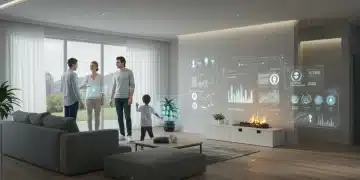
The landscape of our homes is undergoing a profound transformation, driven by the relentless march of artificial intelligence. By 2026, the presence of AI-powered smart home assistants in U.S. households will extend far beyond simple voice commands, evolving into indispensable, intuitive partners that anticipate our needs and manage our living spaces with unprecedented efficiency. This shift promises a future where convenience, security, and energy efficiency are seamlessly integrated into our daily lives, redefining what it means to live in a truly smart home.
The Evolution of AI in Smart Homes: Beyond Voice Commands
The journey of smart home assistants began with basic voice recognition, allowing users to play music or get weather updates. However, by 2026, AI’s role will be profoundly deeper, moving from reactive responses to proactive management. These systems will no longer just follow instructions; they will learn, predict, and automate based on complex behavioral patterns, environmental factors, and even emotional cues. This advanced capability marks a significant leap, transforming assistants into genuine intelligent agents within the home ecosystem.
This evolution is fueled by more powerful processors, advanced machine learning algorithms, and pervasive sensor networks. Homes will become sentient, capable of understanding and adapting to the rhythm of their inhabitants’ lives. The focus will shift from individual device control to holistic environment management, where all connected components work in concert to optimize comfort, security, and resource consumption.
Predictive Intelligence and Proactive Automation
One of the most significant advancements will be in predictive intelligence. AI assistants will analyze vast amounts of data to anticipate household needs, from adjusting thermostat settings before residents arrive home to pre-ordering groceries when supplies run low. This proactive approach minimizes user intervention, making the smart home truly autonomous.
- Energy optimization based on usage patterns and weather forecasts.
- Maintenance alerts for appliances before they fail.
- Personalized recommendations for entertainment and daily routines.
The integration of predictive capabilities means less manual input and more seamless living. Our smart homes will begin to think ahead, making decisions that enhance our well-being and simplify our responsibilities, often before we even realize the need ourselves. This level of foresight will become a cornerstone of the 2026 smart home experience.
Hyper-Personalization: Tailoring the Home to You
In 2026, AI-powered smart home assistants will offer a level of personalization previously unimaginable, moving beyond simple user profiles to create truly bespoke living environments. These systems will understand individual preferences, habits, and even moods, adapting the home’s various elements to perfectly suit each occupant. This deep understanding will foster a sense of genuine connection between residents and their smart homes, making technology feel less like an external tool and more like an extension of themselves.
Imagine a home that adjusts lighting, temperature, and even ambient sounds to match your stress levels after a long day, or one that curates a morning routine tailored to your personal wake-up preferences and daily schedule. This hyper-personalization will be driven by continuous learning, with AI assistants constantly refining their understanding of household members through interactions and sensor data. The goal is to create an environment that not only responds to commands but anticipates desires, making every moment at home more comfortable and efficient.
Emotional Intelligence and Contextual Awareness
Future AI assistants will exhibit enhanced emotional intelligence, inferring mood from voice tone, facial expressions (via integrated cameras, with strict privacy protocols), and even physiological data from wearables. This allows the home to respond in contextually appropriate ways, offering comfort or stimulation as needed.
- Adjusting music playlists based on perceived mood.
- Optimizing lighting for relaxation or concentration.
- Suggesting calming routines during stressful periods.
Contextual awareness will also extend to external factors. The assistant will consider traffic conditions when suggesting departure times, weather forecasts when managing irrigation, and even local event schedules when planning family activities. The home becomes a truly intelligent hub, seamlessly integrating internal preferences with external realities to provide optimal living conditions.
Enhanced Security and Privacy in the AI-Driven Home
As AI assistants become more central to our homes, concerns around security and privacy naturally escalate. By 2026, significant advancements will have been made to ensure these systems are not only intelligent but also robustly secure and respectful of personal data. End-to-end encryption, decentralized data processing, and advanced biometric authentication will be standard, giving U.S. households greater peace of mind and control over their digital footprint within the home. The industry recognizes that trust is paramount for widespread adoption.
New regulations and industry standards will mandate transparent data handling policies, allowing users to understand exactly what data is collected and how it’s used. Furthermore, AI will play a proactive role in identifying and mitigating security threats, from anomalous activity detection to advanced cybersecurity protocols that protect the entire home network. The smart home of 2026 will be a fortress of both convenience and digital safety.
Advanced Biometrics and Anomaly Detection
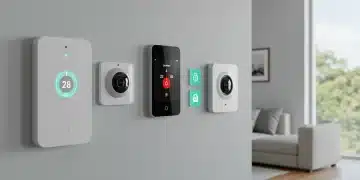
Access control will move beyond traditional passwords to include multi-factor biometric authentication, such as facial recognition, voiceprints, and even gait analysis. AI will continuously monitor for unusual patterns or unauthorized access attempts, alerting homeowners instantly.
- Real-time threat assessment of connected devices.
- Secure, encrypted communication channels for all data.
- User-defined privacy settings with granular control.
AI will also be crucial in detecting anomalies in daily routines, such as an unexpected door opening or an unfamiliar face at the entrance. This proactive security layer will provide a significant upgrade from current systems, turning the smart home into an active participant in its own protection. Privacy controls will be intuitive, allowing users to easily manage data sharing and access permissions for different devices and services.
Seamless Integration and Interoperability Standards
A persistent challenge in smart home technology has been the fragmentation of ecosystems and the lack of universal interoperability. By 2026, significant strides will have been made to address this, with AI-powered smart home assistants acting as central orchestrators capable of seamlessly integrating devices from various manufacturers. The adoption of robust, open standards will enable a truly unified smart home experience, eliminating the frustrations of incompatible gadgets and disparate control apps. This push towards universal compatibility is essential for mass market adoption and user satisfaction.
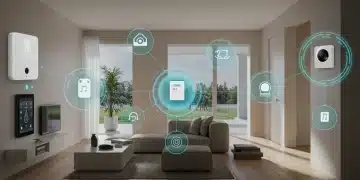
These unified platforms will allow different devices, regardless of brand, to communicate and cooperate intelligently. An AI assistant might dim the lights from one brand, adjust the thermostat from another, and lock the doors from a third, all in response to a single command or a learned routine. This level of integration will unlock the full potential of the smart home, creating a cohesive and responsive living environment where technology truly fades into the background, working harmoniously to serve the residents.
Universal Communication Protocols and AI Hubs
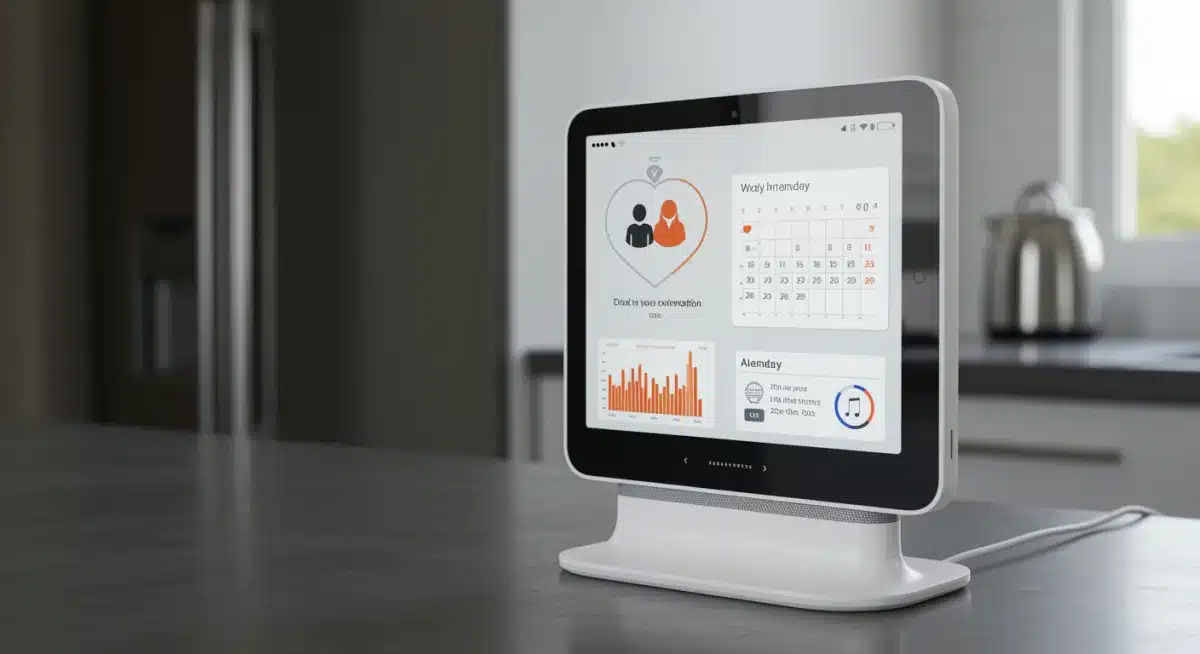
New communication protocols and AI-driven central hubs will ensure that all smart devices can ‘speak’ to each other fluently. This means less troubleshooting for users and more powerful automation possibilities, as the AI can leverage data from every connected component.
- Matter and Thread becoming industry-wide communication standards.
- AI hubs acting as universal translators for diverse device ecosystems.
- Simplified setup and management of new smart home devices.
The focus on interoperability means that consumers will no longer be locked into a single brand’s ecosystem. This freedom of choice will drive innovation and competition among manufacturers, ultimately benefiting the end-user with more robust, versatile, and affordable smart home solutions. The AI assistant will be the conductor of this complex symphony of devices, ensuring every note is played in perfect harmony.
Sustainability and Energy Efficiency Driven by AI
Beyond convenience and security, AI-powered smart home assistants in 2026 will play a crucial role in promoting sustainability and significantly enhancing energy efficiency within U.S. households. With growing environmental consciousness and rising energy costs, these systems will become indispensable tools for optimizing resource consumption. AI will intelligently manage lighting, heating, cooling, and appliance usage, not only based on occupancy and preference but also in real-time response to utility pricing, grid demand, and renewable energy availability. This proactive management will lead to substantial energy savings and a reduced carbon footprint for homeowners.
Imagine a home that automatically adjusts its energy consumption to take advantage of off-peak hours or when solar panels are producing excess power, or one that learns your habits to minimize wasted energy without sacrificing comfort. These intelligent optimizations will be a standard feature, making sustainable living effortless for the average household. The economic and environmental benefits will be a significant driver for adoption.
Dynamic Energy Management and Waste Reduction
AI will constantly monitor energy usage across all devices, identifying inefficiencies and suggesting or implementing optimizations. This includes dynamic HVAC adjustments, smart lighting schedules, and even advising on appliance usage for maximum efficiency.
- Integration with smart grids for demand-response programs.
- Automated appliance scheduling to minimize peak hour usage.
- Real-time feedback on energy consumption and savings.
Furthermore, AI will extend its reach to waste management, perhaps by integrating with smart bins that monitor contents and suggest optimal recycling or composting practices. The overarching goal is to create a home that is not only comfortable and secure but also environmentally responsible, with AI acting as the diligent steward of its resources. This blend of technology and ecological awareness will define the sustainable smart home of the future.
The Future of Daily Life with AI Smart Home Assistants
By 2026, the integration of AI-powered smart home assistants will fundamentally redefine the rhythm of daily life for U.S. households, moving beyond mere gadgets to become integral parts of our existence. These assistants will be the silent orchestrators of our homes, blending into the background yet constantly working to enhance our comfort, streamline our routines, and simplify complex tasks. The future promises a home that is not just smart, but truly intuitive and anticipatory, freeing up valuable time and mental space for residents to focus on what truly matters.
From the moment we wake up, perhaps to a personalized alarm that considers our sleep patterns and daily schedule, to the minute we settle down for the evening, with the home automatically transitioning into a relaxing mode, AI will be there. This seamless integration will create an environment where technology is no longer a distraction but a facilitator of a more harmonious and efficient lifestyle. The emphasis will be on effortless living, where the home proactively supports our well-being and productivity.
Ambient Computing and Invisible Interfaces
The trend will shift towards ambient computing, where AI interfaces become increasingly invisible. Voice commands will remain, but many interactions will occur through subtle gestures, biometric cues, or even pre-programmed routines that trigger automatically based on context.
- Gesture control for lights and media.
- Holographic displays for interactive information.
- Seamless integration with augmented reality devices.
The smart home of 2026 will adapt to us, rather than requiring us to adapt to it. This means less time spent managing devices and more time enjoying the benefits of a truly intelligent living space. The AI assistant will become a trusted companion, understanding our needs, predicting our desires, and tirelessly working to create the perfect home environment, effortlessly and intelligently. This profound shift will mark a new era in domestic technology.
| Key Trend | Brief Description |
|---|---|
| Predictive Automation | AI learns habits to proactively manage home functions, reducing manual input. |
| Hyper-Personalization | Environments adapt to individual moods, preferences, and daily routines. |
| Enhanced Security & Privacy | Advanced biometrics and transparent data handling become standard. |
| Seamless Interoperability | Unified standards allow diverse devices to communicate effortlessly via AI hubs. |
Frequently Asked Questions About AI Smart Home Assistants in 2026
By 2026, AI assistants will move beyond basic voice commands to offer predictive automation and hyper-personalization. They will learn user habits, anticipate needs, and proactively manage home functions, integrating seamlessly across diverse devices. This shift creates a much more intuitive and autonomous living environment.
Expect robust security measures like end-to-end encryption, decentralized data processing, and advanced biometric authentication. AI will also actively monitor for unusual activity and cyber threats. Users will have granular control over data sharing, ensuring transparency and enhanced protection for their personal information.
Absolutely. AI will dynamically manage energy consumption across all devices, optimizing HVAC, lighting, and appliance usage based on occupancy, preferences, and real-time utility pricing. This intelligent management will lead to significant energy savings and a reduced carbon footprint, promoting sustainable living effortlessly.
The adoption of open standards like Matter and Thread will lead to seamless integration. AI assistants will act as central hubs, allowing devices from various manufacturers to communicate and cooperate effortlessly. This eliminates fragmentation, offering a unified and cohesive smart home experience for users.
AI assistants will redefine daily routines by providing an intuitive and anticipatory home environment. They will automate mundane tasks, personalize settings based on mood and schedule, and free up mental space. This enables residents to focus on more meaningful activities, fostering a more harmonious and efficient lifestyle.
Conclusion
The year 2026 stands as a pivotal moment for AI-powered smart home assistants in U.S. households, marking a transition from novelty gadgets to indispensable intelligent partners. We are on the cusp of an era where our homes will not merely respond to commands but will proactively anticipate our needs, enhance our security, champion sustainability, and seamlessly integrate every aspect of our digital and physical lives. This evolution promises an unprecedented level of comfort, efficiency, and personalization, transforming our living spaces into truly intuitive environments. The future of the smart home is intelligent, interconnected, and profoundly personal, offering a glimpse into a world where technology truly serves to enrich our daily existence.