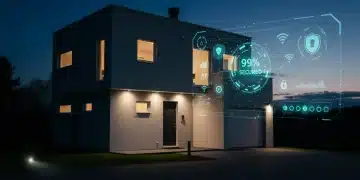
Augmented Reality in Smart Homes: Customization by 2025
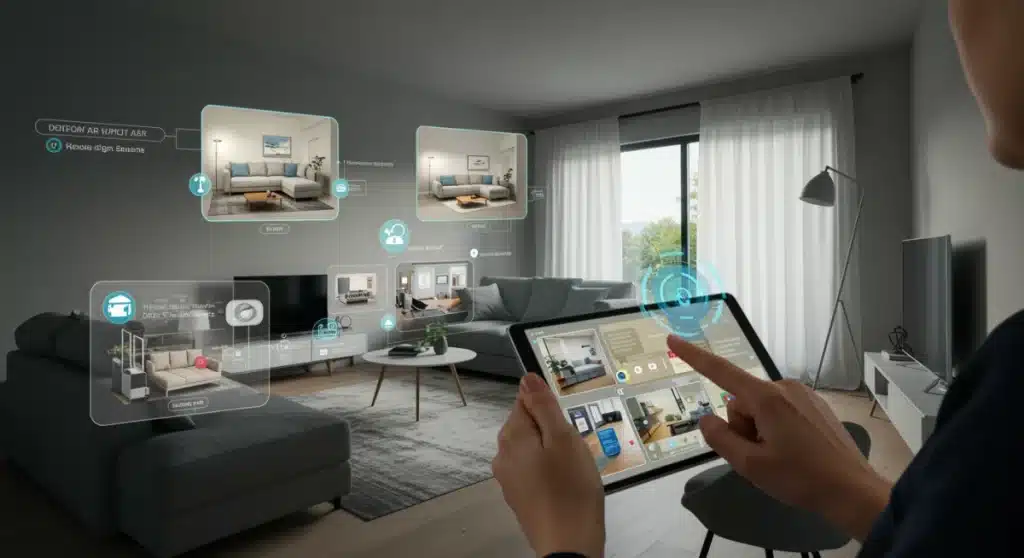
Augmented Reality (AR) is poised to revolutionize smart home customization by 2025, enabling homeowners to visualize and interact with their living spaces in unprecedented, immersive ways before making physical changes.
The landscape of home customization is on the brink of a significant transformation, driven by advancements in augmented reality (AR) technology. By 2025, AR smart home customization will be an integral part of how we design, personalize, and interact with our living spaces, moving beyond simple aesthetics to deeply integrated, functional enhancements.
The dawn of augmented reality in home design
Augmented reality, once a concept confined to science fiction, is rapidly becoming a tangible reality, especially within the smart home sector. It overlays digital information onto the physical world, creating an enhanced view of reality. For homeowners, this means visualizing changes, testing layouts, and integrating smart devices with unparalleled precision and foresight.
This technology empowers individuals to make informed decisions about their home environments, reducing costly errors and fostering a deeper connection with their living spaces. The ability to ‘try before you buy’ extends far beyond furniture, encompassing everything from smart lighting configurations to security system placements.
Visualizing smart device integration
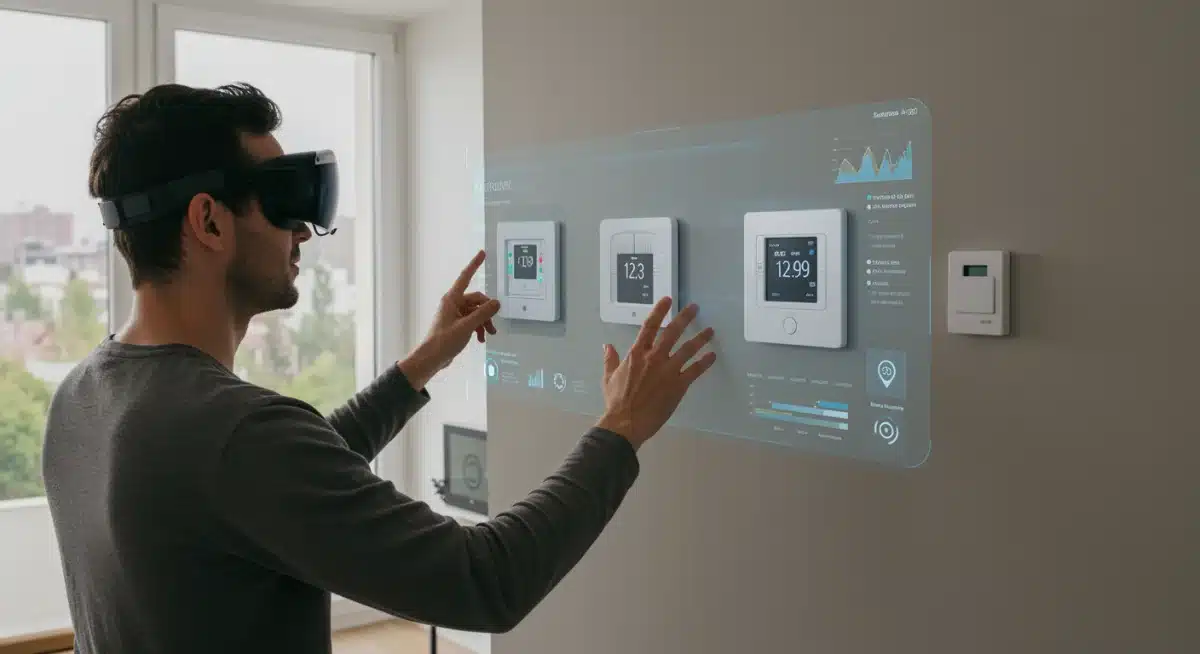
One of the immediate benefits of AR in smart homes is the ability to virtually place and interact with smart devices. Imagine holding up your smartphone or wearing AR glasses and seeing a new smart thermostat appear on your wall, complete with an interface you can interact with. This eliminates guesswork and helps ensure aesthetic and functional compatibility.
- Pre-visualization of devices: See how smart speakers, cameras, or displays look in your actual space.
- Interactive placement: Experiment with optimal locations for sensors and hubs for best performance.
- Aesthetic harmony: Ensure new gadgets complement your existing decor before purchase.
The integration of AR in home design is not just about aesthetics; it’s about optimizing functionality. Homeowners can simulate how different smart devices will operate within their unique home layout, identifying potential dead zones for Wi-Fi or areas where motion sensors might be more effective. This proactive approach saves time and resources in the long run.
Ultimately, AR’s role in the early stages of smart home planning will become indispensable. It transforms abstract ideas into concrete visual experiences, making complex technological integrations accessible and understandable for the average consumer. This shift democratizes smart home design, allowing more people to create truly personalized and efficient living environments.
Immersive home planning and virtual staging
Beyond individual devices, AR is set to revolutionize the entire home planning process. Virtual staging, traditionally used by real estate agents, is evolving into an interactive tool for homeowners, allowing them to design and re-design their spaces with unprecedented flexibility. This trend goes beyond static images, offering dynamic and immersive experiences.
Imagine walking through your empty living room and, through AR, seeing it fully furnished with smart furniture, dynamic lighting, and integrated entertainment systems. You can change colors, materials, and even rearrange elements with a simple gesture, all in real-time. This level of immersion transforms home planning from a daunting task into an engaging, creative endeavor.
Dynamic layout and furniture placement
AR tools will enable homeowners to experiment with various room layouts and furniture arrangements without moving a single physical object. This is particularly beneficial for smart homes, where the placement of certain items might impact connectivity or sensor performance.
- Real-time furniture arrangement: Drag and drop virtual furniture into your room, seeing it to scale.
- Space optimization: Test different configurations to maximize space and flow for smart living.
- Smart furniture integration: Visualize how smart sofas with built-in charging or smart tables fit.
The precision offered by AR in layout planning is a game-changer. No more measuring tapes and guesswork; AR apps can accurately project dimensions and ensure everything fits perfectly. This not only saves time but also prevents the frustration of purchasing items that don’t quite work in your space.
Furthermore, the ability to virtually stage a home can extend to external elements, such as landscaping or outdoor smart lighting. Homeowners can visualize how smart irrigation systems or decorative smart lights will enhance their curb appeal and functionality, ensuring a cohesive design both inside and out.
Personalized ambient experiences with AR
The future of smart homes isn’t just about controlling devices; it’s about creating personalized ambient experiences. Augmented reality will play a pivotal role in this, allowing users to customize their home’s atmosphere in ways previously unimaginable. This involves dynamically altering lighting, sound, and even virtual decor to suit moods or occasions.
Consider an AR system that learns your preferences. As you enter a room, it can project a virtual fireplace on a blank wall, adjust smart lighting to a warm, inviting glow, and even play ambient sounds, all tailored to your current activity or mood. This goes beyond simple automation; it’s about creating an adaptive, responsive environment.
Adaptive lighting and soundscapes
AR can enhance smart lighting systems by providing a visual overlay of light intensity, color, and direction. Users can ‘paint’ their rooms with light, seeing the effects in real-time, and even project dynamic light patterns. Similarly, AR can map out ideal sound zones for smart speakers, optimizing audio experiences.
- Virtual light painting: Experiment with light colors and intensities directly on surfaces.
- Acoustic mapping: Visualize sound dispersion from smart speakers to identify dead spots.
- Dynamic ambiance creation: Project virtual art or scenes onto walls that change with your mood.
The power of AR here lies in its ability to provide immediate visual feedback. Instead of guessing how a new light setting will look, you see it instantly. This intuitive control makes creating complex atmospheric settings simple and accessible, allowing for truly personalized living spaces.
Moreover, AR can integrate with smart home sensors to create responsive environments. For instance, if an AR system detects a high-stress level, it could automatically suggest calming visuals and sounds, transforming your home into a sanctuary. This proactive personalization elevates the smart home experience to a new level of sophistication and comfort.
AR-powered maintenance and troubleshooting
The utility of augmented reality in smart homes extends beyond design and personalization; it’s also set to revolutionize how we maintain and troubleshoot our connected devices. Imagine having an issue with a smart appliance, and instead of sifting through manuals, an AR overlay guides you step-by-step through the repair process.
This application of AR can significantly reduce reliance on professional technicians for minor issues, empowering homeowners with the knowledge and tools to manage their smart home ecosystems more independently. It’s about demystifying complex technology and making maintenance more accessible.
Guided repairs and diagnostics
AR systems can provide visual instructions directly overlaid onto the physical device, showing exactly which component to check or how to perform a specific repair. This eliminates confusion and accelerates the troubleshooting process.
- Step-by-step visual guides: AR overlays show exactly where to tighten a screw or replace a battery.
- Real-time diagnostics: See sensor readings or error codes explained directly on the device.
- Virtual tool assistance: AR can highlight the correct tools needed for a specific task.
The potential for AR to simplify smart home maintenance is enormous. From changing a filter in a smart air purifier to recalibrating a smart lock, AR can make these tasks straightforward, even for those with limited technical expertise. This fosters greater confidence in managing smart home technology.
Furthermore, AR can facilitate remote assistance. A technician could guide a homeowner through a repair virtually, drawing annotations and pointing to specific parts through a shared AR view. This reduces service call times and improves efficiency for both parties, marking a significant advancement in smart home support.
Future trends: predictive AR and AI integration
Looking beyond 2025, the integration of augmented reality with artificial intelligence (AI) will usher in a new era of predictive and highly intuitive smart home experiences. This synergy will allow AR systems to anticipate user needs, learn from behaviors, and offer proactive solutions, making customization truly seamless and almost invisible.
Predictive AR will move from reactive visualization to proactive suggestions. Instead of you telling the system what you want, the system will learn your patterns and preferences, offering personalized suggestions for ambiance, device settings, or even maintenance needs before you even think to ask. This represents the ultimate in personalized home environments.
AI-driven environmental adaptation
AI can analyze data from smart home sensors – temperature, humidity, light levels, occupancy – and combine it with user preferences to dynamically adjust the environment. AR will then provide a visual feedback loop, showing how these adjustments are being made and their expected impact.
- Proactive comfort adjustments: AI predicts your preferred temperature before you arrive home.
- Energy optimization suggestions: AR visualizes potential energy savings based on AI analysis.
- Personalized security alerts: AI identifies unusual patterns, and AR highlights potential threats.
The combination of AI and AR creates a smart home that truly understands and adapts to its occupants. It’s not just about automating tasks but about creating a living space that intelligently responds to your needs and desires, enhancing comfort, security, and efficiency without constant manual input.
Moreover, predictive AR could extend to long-term planning. Imagine an AR system that analyzes your energy consumption patterns and, using AI, suggests optimal placements for solar panels or smart windows, visualizing the long-term cost savings directly on your property. This empowers homeowners to make strategic, data-driven decisions for their future.
Challenges and ethical considerations
While the promise of augmented reality in smart homes is immense, its widespread adoption also brings forth a set of challenges and ethical considerations that need careful navigation. Addressing these issues is crucial for ensuring that AR technology enhances, rather than complicates, our lives and respects our privacy.
The primary concerns revolve around data privacy, security, and the potential for digital fatigue. As AR systems become more integrated into our homes, they will collect vast amounts of data about our habits, preferences, and even physical spaces. Safeguarding this information becomes paramount.
Data privacy and security concerns
AR systems, especially those integrated with AI, will process sensitive personal data, from facial recognition for access control to tracking movement patterns within a home. Ensuring robust encryption and transparent data handling policies will be essential to build user trust.
- Consent and data usage: Clear policies on how personal data is collected, stored, and used.
- Cybersecurity risks: Protecting AR devices and their networks from hacking and breaches.
- User control: Empowering users to manage and restrict access to their AR-generated data.
The ethical implications extend to the potential for AR to create ‘filter bubbles’ or influence consumer behavior in subtle ways. Developers and regulatory bodies will need to collaborate to establish guidelines that promote responsible innovation and protect consumer rights.
Furthermore, the cost of advanced AR hardware and software could create a digital divide, making cutting-edge smart home customization accessible only to a select few. Efforts to make this technology more affordable and inclusive will be vital for its widespread, equitable adoption.
| Key Trend | Brief Description |
|---|---|
| Immersive Planning | Visualize and interact with virtual smart devices and furniture in real-time within your home. |
| Personalized Ambience | Dynamically alter lighting, sound, and virtual decor to match moods or activities. |
| AR-Guided Maintenance | Step-by-step visual instructions for troubleshooting and repairing smart devices. |
| Predictive AI Integration | AI-powered AR anticipates needs and proactively adjusts the home environment. |
Frequently asked questions about AR in smart homes
Augmented Reality (AR) in smart homes involves overlaying digital information, like virtual furniture or smart device interfaces, onto a user’s real-world view. This allows homeowners to visualize and interact with potential changes or additions to their living spaces through devices like smartphones or AR glasses.
By 2025, AR will offer immersive planning tools, enabling users to virtually stage rooms, experiment with smart device placements, and customize ambient experiences. This reduces guesswork, saves time, and empowers homeowners to design highly personalized and functional smart living environments with greater precision.
Yes, AR is expected to revolutionize maintenance. It will provide guided step-by-step instructions overlaid onto physical devices, assisting with troubleshooting, repairs, and installations. This empowers homeowners to manage minor issues independently and reduces the need for professional service calls.
AR systems collect extensive data about home environments and user behaviors. Key privacy concerns include securing this personal data from breaches, ensuring transparent data usage policies, and providing users with robust control over their information. Ethical guidelines will be crucial for responsible development.
AI will enable predictive AR, allowing systems to learn user preferences and proactively offer personalized suggestions for environmental adjustments, device settings, and even maintenance. This creates a highly intuitive and adaptive smart home that anticipates needs, enhancing comfort and efficiency seamlessly.
Conclusion
The journey of augmented reality into the smart home is not merely an incremental upgrade; it represents a fundamental shift in how we conceive, design, and interact with our personal spaces. By 2025, AR will empower homeowners with unprecedented tools for customization, moving beyond simple aesthetics to deeply integrated, functionally optimized, and emotionally resonant environments. While challenges regarding privacy and accessibility will need careful consideration, the transformative potential of AR in creating truly intelligent and personalized homes is undeniable, promising a future where our living spaces intuitively adapt to our every need and desire.