Future Home Security: 4 Smart Trends for US Families in 2025
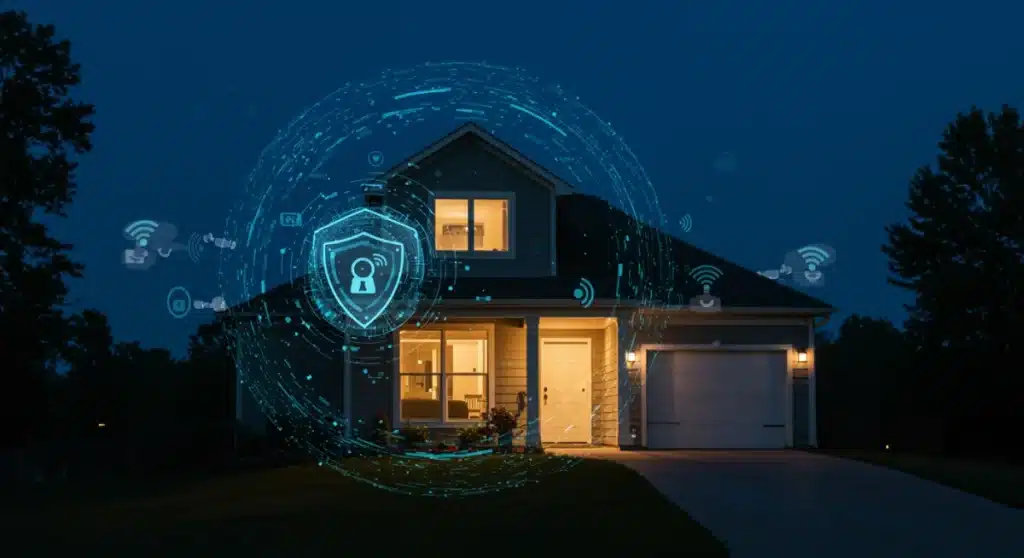
Advanced smart home security trends in 2025 will integrate AI, biometrics, and comprehensive network defenses to deliver unparalleled protection and peace of mind for US families.
The landscape of home protection is rapidly evolving, and understanding the nuances of future home security is crucial for every family. As we approach 2025, smart home technologies are poised to redefine safety, moving beyond basic alarms to offer integrated, intelligent, and proactive defense systems that promise unprecedented peace of mind for US families.
The Rise of AI-Powered Predictive Security
Artificial Intelligence (AI) is no longer a futuristic concept; it’s rapidly becoming the cornerstone of advanced home security. In 2025, AI-powered systems will transition from reactive responses to predictive threat detection, fundamentally changing how homes are protected.
These sophisticated systems analyze vast amounts of data, including historical incident patterns, local crime statistics, and even real-time environmental factors, to anticipate potential threats before they materialize. This proactive approach allows homeowners to take preventive measures, significantly reducing vulnerabilities.
Advanced Behavioral Analytics
One of the most significant advancements lies in AI’s ability to learn and interpret behavioral patterns. This includes not just human movement but also anomalies in device usage and environmental changes.
- Unusual Activity Detection: AI can distinguish between routine family activities and suspicious behaviors, such as a stranger lingering near a property or an object being moved unexpectedly.
- Pattern Recognition: It learns daily schedules, identifying when family members are typically home or away, and flags deviations that might indicate an intrusion attempt.
- Environmental Anomaly Alerts: Beyond human threats, AI can detect unusual changes in temperature, humidity, or sound that might point to a fire, flood, or gas leak, providing early warnings.
The integration of AI into security cameras, smart locks, and sensors creates a cohesive network that constantly monitors and adapts. This intelligent layer provides a level of vigilance that human monitoring alone cannot match, offering a robust defense against evolving threats.
Ultimately, AI-powered predictive security aims to create a self-learning, adaptive defense system that minimizes false alarms while maximizing threat identification. This evolution ensures that home security is not just about reacting to events, but actively preventing them, thereby offering a more secure environment for families.
Integrated Smart Home Ecosystems for Holistic Protection
The future of home security in 2025 will heavily rely on fully integrated smart home ecosystems, moving away from disparate devices towards a unified, centralized control system. This integration ensures that every smart device, from lighting to thermostats, contributes to the overall security posture.
A truly integrated system means that if a security camera detects an unfamiliar face, it can trigger smart lights to flash, activate exterior sirens, and even adjust the thermostat to simulate occupancy, all in a coordinated response. This multi-layered defense creates a more formidable deterrent.
Seamless Device Communication
The key to these ecosystems is seamless communication protocols. Interoperability between devices from different manufacturers will become standard, allowing for greater flexibility and customization in security setups.
- Centralized Control Hubs: A single interface, often a tablet or smartphone app, will manage all security functions, providing a comprehensive overview of the home’s status.
- Automated Response Chains: Users can program complex sequences of actions based on specific triggers, such as locking all doors and windows if a motion sensor is activated.
- Voice Command Integration: Security systems will be increasingly responsive to voice commands, allowing for hands-free control and quick adjustments to security settings.
This holistic approach extends beyond traditional security, encompassing fire safety, carbon monoxide detection, and flood prevention. By having all these elements interconnected, families gain a comprehensive safety net that addresses a wider range of potential household emergencies.
The vision for 2025 is a smart home that acts as a single, intelligent entity, constantly monitoring, adapting, and responding to ensure the utmost safety and convenience for its inhabitants. This interconnectedness is vital for comprehensive protection.
Enhanced Biometric Authentication and Access Control
Biometric authentication is set to become a standard feature in home security by 2025, offering a more secure and convenient alternative to traditional keys and passcodes. This technology leverages unique biological characteristics to grant or deny access, significantly raising the bar for home protection.
From fingerprint scanners to advanced facial recognition and even iris scans, biometric systems provide a highly reliable method of identity verification. This means only authorized individuals can enter your home, reducing the risk of unauthorized access due to lost keys or stolen codes.
Beyond Fingerprints: Multi-Modal Biometrics
While fingerprint readers are already present, 2025 will see the widespread adoption of multi-modal biometric systems that combine several authentication methods for enhanced security.
- Facial Recognition: Cameras will accurately identify family members, granting access and even personalizing home settings upon entry.
- Voice Recognition: Voice activated locks and security commands will verify identity through unique vocal patterns, adding another layer of defense.
- Gait Analysis: Some advanced systems may even analyze walking patterns to identify authorized individuals from a distance.
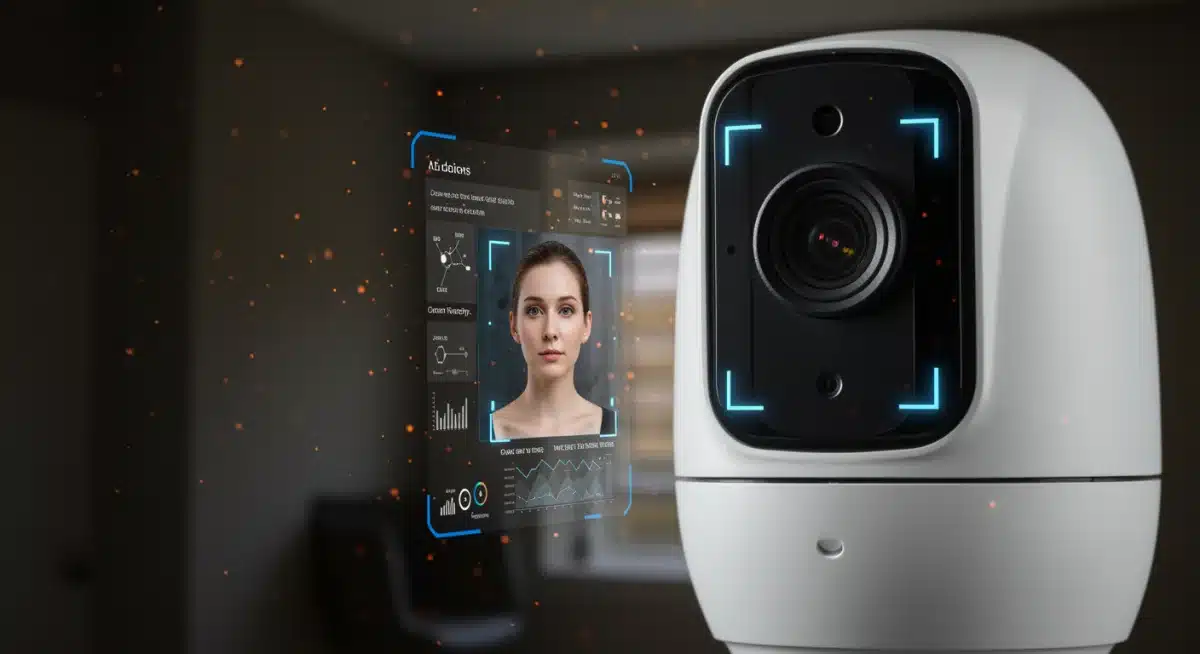
These systems are not just about preventing intrusion; they also offer unparalleled convenience. Imagine arriving home and having your door unlock automatically as it recognizes your face or fingerprint, without fumbling for keys. This seamless experience integrates security into daily life without compromise.
The evolution of biometric authentication promises a future where access control is both effortless for residents and virtually impenetrable for unauthorized individuals. This shift will redefine personal security and convenience within the smart home environment, providing superior peace of mind.
Robust Cybersecurity for Smart Home Devices
As smart homes become more interconnected, the importance of robust cybersecurity measures for smart home devices cannot be overstated. In 2025, protecting the digital perimeter of a smart home will be as critical as securing its physical boundaries.
Every smart device, from a connected doorbell to a smart thermostat, represents a potential entry point for cyber threats. Therefore, comprehensive cybersecurity strategies are essential to safeguard personal data, privacy, and the integrity of the entire home security system.
Proactive Threat Detection and Encryption
Future smart home ecosystems will incorporate advanced cybersecurity features designed to detect, prevent, and respond to digital attacks in real-time. This includes sophisticated encryption protocols and continuous vulnerability scanning.
- End-to-End Encryption: All data transmitted between smart devices and cloud servers will be encrypted, protecting sensitive information from interception.
- Network Segmentation: Smart home networks will be segmented, isolating critical security devices from less secure ones to prevent lateral movement of threats.
- Automated Firmware Updates: Devices will automatically receive and install security patches, ensuring they are always protected against the latest vulnerabilities.
Beyond device-level security, families will have access to smart home firewalls and intrusion detection systems specifically designed to monitor network traffic for suspicious activity. These systems can alert homeowners to potential breaches and even quarantine compromised devices.
The emphasis on cybersecurity ensures that the convenience and advanced features of smart home technology do not come at the cost of digital safety. Protecting the smart home’s digital integrity is paramount to maintaining overall home security and family privacy in an increasingly connected world.
Emergency Preparedness and Response Integration
The future of home security in 2025 extends beyond preventing intrusions to encompass comprehensive emergency preparedness and rapid response integration. Smart home systems will play a crucial role in mitigating the impact of various emergencies, from natural disasters to medical incidents.
These integrated systems will not only detect emergencies but also initiate pre-programmed responses, contact emergency services, and provide vital information to residents and first responders, significantly improving reaction times and safety outcomes.
Automated Emergency Protocols
Smart homes will be equipped to handle a wide array of emergency scenarios through automated protocols tailored to specific threats.
- Fire and Flood Mitigation: Upon detecting smoke or water, systems can automatically shut off utilities, unlock doors for emergency access, and send alerts to occupants and fire departments.
- Medical Alert Integration: Wearable health devices can connect with the smart home system to detect falls or medical distress, automatically contacting emergency contacts or paramedics.
- Natural Disaster Warnings: Integration with local weather services will allow smart homes to receive early warnings for tornadoes, hurricanes, or earthquakes, and activate protective measures like closing smart shutters or reinforcing doors.
Furthermore, these systems can provide real-time information to first responders, such as floor plans, the location of occupants, and details about hazardous materials, enabling more efficient and safer rescue operations. This level of integration transforms a home into a proactive safety hub.
By streamlining emergency responses and providing critical support, smart home security systems will offer an unparalleled level of preparedness. This comprehensive approach to safety ensures that families are not only protected from external threats but also resilient in the face of unexpected crises, enhancing overall peace of mind.
The Human Element: User-Friendly Interfaces and Education
While technological advancements are critical, the success of future home security systems in 2025 also hinges on their usability and the education of homeowners. Complex systems, no matter how advanced, are ineffective if they are not intuitive or if users don’t understand how to maximize their potential.
The focus will increasingly be on creating user-friendly interfaces and providing comprehensive educational resources that empower families to effectively manage and utilize their smart security setups. This ensures that peace of mind comes from both robust technology and informed usage.
Intuitive Control and Customization
Developers are prioritizing interfaces that are easy to navigate, allowing users to customize security settings, monitor activities, and respond to alerts with minimal effort.
- Simplified Dashboards: Centralized control panels will offer clear, concise information and easy access to all security features.
- Personalized Alerts: Users can set preferences for notifications, ensuring they receive relevant alerts without being overwhelmed by unnecessary information.
- Guided Setup: Installation processes will become simpler, often guided by apps that walk users through each step, making advanced security accessible to everyone.
Beyond the technology itself, ongoing education for homeowners will be vital. This includes understanding the latest cyber threats, best practices for password management, and how to identify and report suspicious activities. Companies will offer resources like online tutorials, webinars, and dedicated customer support.
Ultimately, the human element in future home security is about striking a balance between advanced technology and user empowerment. By making security systems accessible and understandable, families can confidently leverage these tools to create a safer and more secure living environment, reinforcing true peace of mind.
| Key Trend | Brief Description |
|---|---|
| AI Predictive Security | AI analyzes data to anticipate and prevent threats proactively, moving beyond reactive responses. |
| Integrated Ecosystems | All smart devices communicate seamlessly for a unified, multi-layered security response. |
| Biometric Access | Advanced multi-modal biometrics (facial, fingerprint) enhance access control and convenience. |
| Cybersecurity Focus | Robust encryption and network defenses protect smart home devices from digital threats. |
Frequently Asked Questions About Future Home Security
AI will transform home security from reactive to predictive. By analyzing behavioral patterns and environmental data, AI systems will anticipate and prevent threats before they occur, reducing false alarms and providing more proactive protection for families.
It means all smart devices in your home, from cameras to lighting and thermostats, communicate seamlessly. Instead of isolated functions, they work together in a coordinated response to threats, creating a more robust and unified defense system.
While traditional keys may not disappear completely, biometric authentication (like facial recognition and fingerprints) will become the primary and most secure method of access control. It offers enhanced convenience and significantly reduces vulnerability to lost or stolen keys.
Future smart homes will feature end-to-end encryption, network segmentation, and automated firmware updates. These measures are designed to protect sensitive data, prevent cyberattacks, and ensure the integrity of your entire connected security system from digital threats.
Smart homes in 2025 will integrate emergency preparedness for various scenarios. This includes automated responses to fires, floods, and medical incidents, as well as providing early warnings and coordinated actions for natural disasters, enhancing overall family safety.
Conclusion
The future of home security in 2025 paints a picture of unparalleled protection and profound peace of mind for US families. The integration of AI-powered predictive capabilities, seamless smart home ecosystems, advanced biometric authentication, and robust cybersecurity measures signifies a monumental leap forward. These trends are not just about deterring intruders; they’re about creating intelligent, adaptive, and comprehensive safety nets that respond to a wide array of potential threats and emergencies. As technology continues to advance, the emphasis on user-friendly interfaces and continuous education will ensure that these sophisticated systems are accessible and effective for every homeowner, truly redefining what it means to feel secure at home.