Smart Home Security Trends 2026: Integrating Biometrics and Advanced AI for 99% Better Protection
The concept of a ‘smart home’ has evolved dramatically over the past decade, transforming from a futuristic dream into a tangible reality for millions. As we inch closer to 2026, the convergence of advanced technologies is poised to revolutionize the very core of home protection: Smart Home Security 2026. This isn’t just about cameras and alarms anymore; it’s about intelligent, proactive, and almost impenetrable defense systems powered by biometrics and artificial intelligence. Imagine a home that not only detects threats but anticipates them, a sanctuary that recognizes its inhabitants with unparalleled precision, and a system that learns and adapts to keep you safer than ever before. This comprehensive guide delves into the groundbreaking trends shaping smart home security by 2026, highlighting how biometrics and AI are leading the charge towards a future of 99% better protection.
The digital age has brought with it an increased awareness of security, both physical and digital. Our homes, once considered our ultimate safe haven, are increasingly vulnerable to sophisticated threats. Traditional security measures, while still relevant, are often reactive. The promise of Smart Home Security 2026 lies in its ability to be predictive and preventative. By integrating cutting-edge biometrics and sophisticated AI, homeowners can expect a level of peace of mind previously unattainable. This article will explore the key technological advancements, their practical applications, and the profound impact they will have on our everyday lives.
The Rise of Biometrics in Smart Home Security 2026
Biometrics, the measurement and statistical analysis of people’s unique physical and behavioral characteristics, are no longer confined to spy movies. By 2026, these technologies will be a cornerstone of Smart Home Security 2026. The days of fumbling for keys or remembering complex alarm codes are rapidly fading. Instead, your home will recognize you instantly and grant access, while simultaneously identifying and deterring unauthorized individuals with remarkable accuracy.
Fingerprint Recognition: Beyond the Smartphone
Fingerprint scanners have become ubiquitous on smartphones and laptops, but their application in smart homes is set to expand dramatically. Imagine smart door locks that respond to your unique fingerprint, granting access to family members while logging every entry and exit. These systems are becoming more robust, with advanced sensors capable of detecting fake fingerprints and resisting spoofing attempts. Integration with smart home hubs means that a successful fingerprint scan could not only unlock the door but also disarm the alarm, turn on lights, and adjust the thermostat to your preferred settings. This seamless experience is a hallmark of Smart Home Security 2026.
Iris and Facial Recognition: The Ultimate Gatekeepers
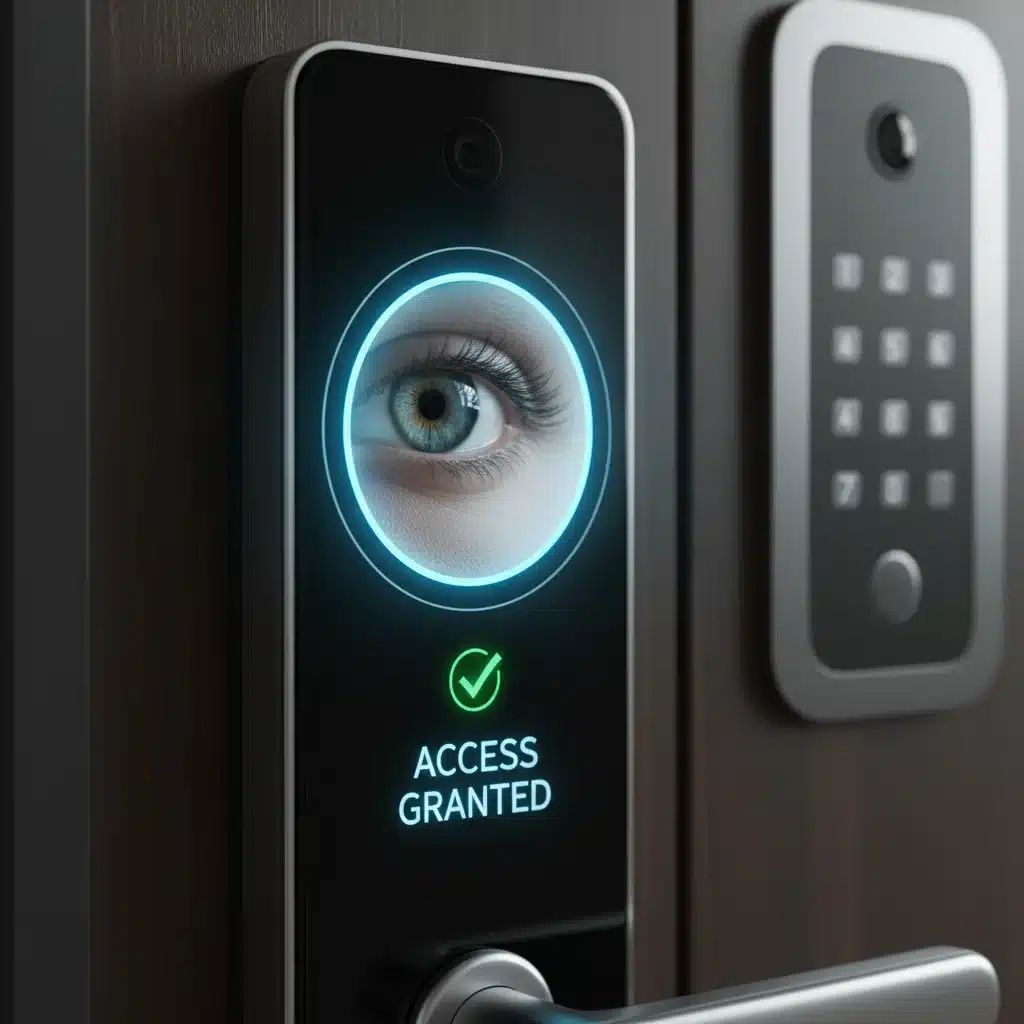
Perhaps the most exciting advancements in biometric security for homes are iris and facial recognition. Iris scanning, which maps the unique patterns of your iris, offers an incredibly high level of accuracy, making it almost impossible to fool. Integrated into smart doorbells or entry points, an iris scanner could identify residents from a short distance, allowing for touchless and highly secure access. Facial recognition technology, already prevalent in various sectors, will see significant improvements in home security. These systems will be able to distinguish between family members, friends, delivery personnel, and potential threats, even in varying lighting conditions or with partial obstructions. Advanced AI algorithms will allow these systems to learn and adapt, improving their accuracy over time and reducing false positives, a critical component of effective Smart Home Security 2026.
Voice and Gait Recognition: Subtle Layers of Protection
Beyond visual biometrics, voice and gait recognition are emerging as powerful tools for Smart Home Security 2026. Voice recognition, often used for smart assistants, can be extended to verify identity for access control or to authorize specific actions within the home. For instance, a smart lock might require a voice command from a registered user before unlocking. Gait recognition, which analyzes an individual’s unique walking pattern, offers a more passive form of identification. Integrated into smart flooring or exterior sensors, it could help identify unfamiliar individuals approaching the property, triggering alerts or recording footage even before they reach the main entry points. These subtle layers of protection add significant depth to a home’s security posture, making it incredibly difficult for unauthorized access.
The Power of AI in Elevating Smart Home Security 2026
While biometrics provide the ‘who’ in home security, Artificial Intelligence (AI) provides the ‘what,’ ‘when,’ and ‘how.’ AI is the brain behind the brawn, transforming raw data from various sensors into actionable intelligence. By 2026, AI won’t just be a feature; it will be the fundamental operating system for Smart Home Security 2026, enabling systems to be more intuitive, predictive, and incredibly efficient.
Predictive Threat Analysis and Anomaly Detection
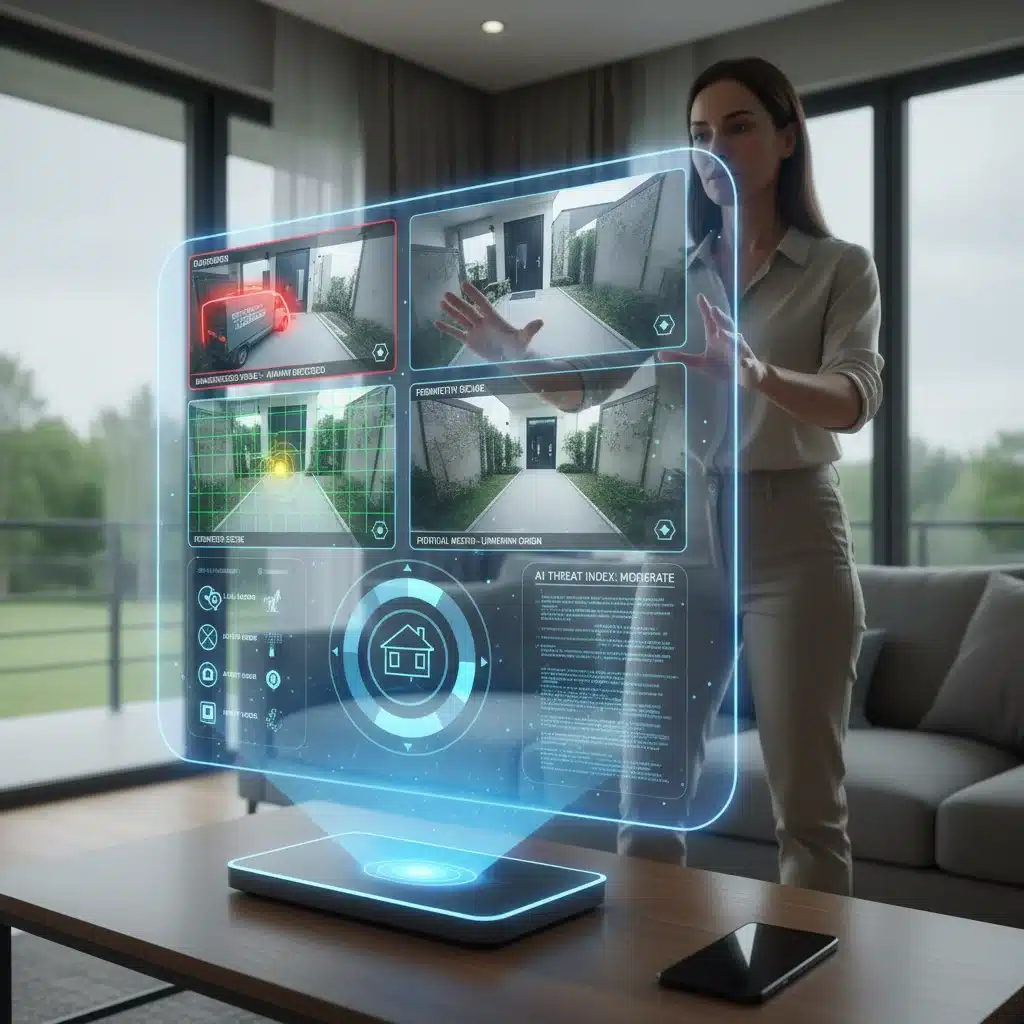
One of the most significant contributions of AI to Smart Home Security 2026 is its ability to perform predictive threat analysis. Traditional security systems react to events; AI-powered systems anticipate them. By constantly analyzing patterns of behavior, environmental data, and external threats, AI can identify anomalies that might indicate an impending security breach. For example, if a camera repeatedly detects an unfamiliar vehicle slowly circling the neighborhood, or if a specific door sensor is triggered at an unusual hour, the AI can flag these events as suspicious. It can then initiate proactive measures, such as activating additional lighting, notifying homeowners, or even alerting local authorities, all before a potential intruder has even made an attempt. This paradigm shift from reactive to proactive security is a game-changer.
Contextual Awareness and Behavioral Learning
AI in Smart Home Security 2026 will be highly context-aware. It will learn the routines and behaviors of the household members. When are people typically home? Which doors are usually locked at night? What are the normal sounds and movements within the house? By establishing these baselines, AI can more effectively detect deviations. If the system observes unusual activity – a window opening when everyone is away, or an unfamiliar sound late at night – it can cross-reference this with its learned knowledge and determine if it’s a genuine threat or a benign event. This reduces false alarms, a common frustration with older security systems, and ensures that legitimate threats receive immediate attention. The adaptive nature of AI means that your security system gets smarter and more tailored to your lifestyle over time.
Integration with Smart Home Ecosystems for Holistic Protection
The true power of AI in Smart Home Security 2026 comes from its seamless integration with the broader smart home ecosystem. AI acts as the central orchestrator, allowing various devices to communicate and cooperate for enhanced security. For instance, if an AI-powered camera detects an unauthorized person, it can not only send an alert but also trigger smart lights to flash, activate a loud siren, lock all smart doors and windows, and even initiate a recording from multiple camera angles. This coordinated response creates a formidable deterrent and provides comprehensive evidence. Furthermore, AI can manage energy consumption, environmental controls, and entertainment systems, ensuring that security is just one facet of a fully integrated, intelligent living space.
The Synergy: Biometrics and AI for Unparalleled Protection
The real magic of Smart Home Security 2026 happens when biometrics and AI work in concert. This synergy creates a security system that is not only highly accurate but also incredibly intelligent and responsive. Imagine this scenario:
A delivery person approaches your front door. The AI-powered smart doorbell uses facial recognition to identify them as a known delivery service employee. Simultaneously, a package sensor confirms a delivery. The AI then temporarily unlocks a smart package drop-off box, sends a notification to your phone with a live video feed, and relocks the box once the package is deposited. If, however, an unknown individual attempts to force entry, the biometric lock fails to recognize them. The AI immediately flags this as a high-priority threat, triggers a silent alarm to your security provider, activates exterior floodlights, and uses an integrated speaker to issue a warning, all while recording the incident from multiple angles. This level of integrated, intelligent response is what defines 99% better protection in Smart Home Security 2026.
Enhanced Privacy and Data Security
With the rise of biometric and AI technologies, concerns about privacy and data security are paramount. Developers of Smart Home Security 2026 systems are acutely aware of these issues. Encryption will be a standard feature, ensuring that biometric data and video feeds are securely stored and transmitted. Edge computing, where data processing happens locally on the device rather than in the cloud, will also play a crucial role in enhancing privacy and reducing latency. This approach minimizes the risk of data breaches and ensures that sensitive information remains within the homeowner’s control. Transparency in data handling policies will be key, empowering users to understand and manage their privacy settings effectively.
Challenges and Considerations for Smart Home Security 2026
While the future of Smart Home Security 2026 looks incredibly promising, there are challenges that need to be addressed to ensure widespread adoption and effectiveness.
Cost and Accessibility
Advanced biometric and AI systems can be expensive. As with any new technology, initial costs may be prohibitive for some consumers. However, as production scales and technology matures, prices are expected to become more accessible, making these sophisticated security solutions available to a broader market. Manufacturers will also need to offer tiered solutions, allowing homeowners to gradually upgrade their security systems.
Interoperability and Standardization
The smart home market is fragmented, with many different brands and platforms. For Smart Home Security 2026 to reach its full potential, greater interoperability and standardization are crucial. Systems need to be able to communicate seamlessly with each other, regardless of the manufacturer, to create a truly unified and intelligent security network. Industry collaborations and open-source initiatives will be vital in overcoming this hurdle.
Ethical Implications and Trust
The use of biometrics and constant AI monitoring raises ethical questions about surveillance and personal freedom. Building trust with consumers will require clear communication about how data is collected, stored, and used. Opt-in features, robust data protection laws, and user-friendly controls will be essential in addressing these concerns and ensuring that Smart Home Security 2026 enhances, rather than diminishes, our sense of privacy and autonomy.
Cybersecurity Threats to Smart Home Security 2026
As smart home security systems become more connected and intelligent, they also become potential targets for cyberattacks. Protecting these systems from hacking, data breaches, and ransomware is paramount. Robust encryption, regular software updates, multi-factor authentication, and intrusion detection systems will be critical. Homeowners will also need to be educated on best practices for securing their home networks and smart devices to prevent vulnerabilities.
The Future is Now: Implementing Smart Home Security 2026
For homeowners eager to embrace the future of protection, there are steps that can be taken now to prepare for Smart Home Security 2026. Investing in a robust smart home hub that supports a wide range of protocols (like Zigbee, Z-Wave, Wi-Fi 6) is a good starting point. Gradually integrating smart locks, cameras with AI capabilities, and smart sensors will lay the groundwork for a truly intelligent security system. Prioritizing devices that offer strong encryption and regular security updates is also crucial. As the technology continues to evolve, staying informed about the latest advancements and choosing reputable brands will ensure that your home remains at the forefront of security innovation.
The landscape of home security is undergoing a profound transformation. By 2026, the integration of biometrics and advanced AI will redefine what it means to protect our homes and loved ones. These technologies promise not just incremental improvements but a fundamental shift towards proactive, intelligent, and deeply personalized security solutions. While challenges remain, the path forward is clear: a future where our homes are not just smart, but truly secure, offering an unparalleled 99% better protection and peace of mind for every homeowner.
The Role of Machine Learning in Predictive Security
Machine learning, a subset of AI, is the engine that drives the predictive capabilities of Smart Home Security 2026. Through continuous data analysis, machine learning algorithms can identify subtle patterns that human observers might miss. For instance, they can learn the difference between the sound of a pet moving around and the sound of someone attempting to force open a window. They can also differentiate between normal daily activities and highly unusual events that warrant immediate attention. This constant learning and refinement mean that the security system becomes more effective and less prone to errors over time, adapting to the unique nuances of each household. This level of intelligent adaptation is key to achieving a 99% improvement in security effectiveness.
User Experience: Seamless and Intuitive Control
Despite the complexity of the underlying technology, Smart Home Security 2026 systems will prioritize a seamless and intuitive user experience. Control will be accessible through voice commands, intuitive mobile apps, and even gesture controls. Dashboards will provide clear, real-time insights into the security status of the home, with easy-to-understand alerts and options for immediate action. The goal is to make advanced security effortless for the homeowner, allowing them to manage their protection with minimal fuss. This user-centric design ensures that the powerful capabilities of biometrics and AI are easily harnessed, making advanced security features a convenience rather than a burden.
Conclusion: A Safer Tomorrow with Smart Home Security 2026
The journey towards Smart Home Security 2026 is not just about adopting new gadgets; it’s about embracing a new philosophy of home protection. It’s a future where your home becomes an active participant in its own defense, leveraging the power of biometrics to recognize its rightful inhabitants and the intelligence of AI to anticipate and neutralize threats. The promise of 99% better protection is within reach, offering unparalleled peace of mind in an increasingly complex world. As these technologies mature and become more integrated, our homes will evolve into truly intelligent fortresses, safeguarding our families and our assets with unprecedented precision and efficiency. The smart home revolution is here, and with it, a new era of security that is both powerful and profoundly personal.