Smart Home IoT Security: 2026 Cyber Threat Prevention

The dawn of 2026 is upon us, and with it comes a landscape increasingly dominated by interconnected devices. Our homes, once simple sanctuaries, have evolved into intricate ecosystems of smart technology – from intelligent thermostats and lighting systems to security cameras and voice assistants. This pervasive integration of the Internet of Things (IoT) promises unparalleled convenience and efficiency, but it also ushers in a new era of complex IoT security threats. As our reliance on these smart devices grows, so too does the imperative to understand and proactively address the vulnerabilities they introduce. The year 2026 is poised to present unique challenges in safeguarding our digital lives, demanding a vigilant and informed approach to smart home and IoT security.
The rapid expansion of the IoT market has outpaced the development and implementation of robust security protocols. Many devices are designed for ease of use and affordability, often at the expense of comprehensive security features. This creates fertile ground for cybercriminals to exploit weaknesses, leading to potential data breaches, privacy invasions, and even physical harm. Understanding the evolving nature of these IoT security threats is not just a technical exercise; it’s a fundamental aspect of maintaining personal safety and digital well-being in the connected age.
This comprehensive guide will delve into the top three predicted IoT security threats for 2026, offering a detailed analysis of their mechanisms, potential impacts, and, most importantly, actionable strategies to mitigate them. Our goal is to empower you with the knowledge and tools necessary to fortify your smart home against the cyber dangers of tomorrow, ensuring that your connected world remains secure and private.
The Evolving Landscape of Smart Home and IoT Security
The IoT revolution is not a future concept; it’s a present reality. From smart refrigerators that order groceries to wearable health trackers that monitor vital signs, devices are constantly collecting and transmitting data. This interconnectedness, while offering immense benefits, also creates a vast attack surface for malicious actors. The sheer volume and diversity of IoT devices make securing them a monumental task. Unlike traditional computing devices, many IoT gadgets have limited processing power and memory, making it difficult to implement sophisticated security measures. Furthermore, the lifecycle of these devices can be long, often outlasting the support for security updates, leaving them vulnerable to newly discovered exploits.
In 2026, we anticipate that cybercriminals will become even more sophisticated, leveraging advanced AI and machine learning techniques to identify and exploit vulnerabilities. The financial incentives for data theft and ransomware attacks will continue to drive innovation in cybercrime, making it crucial for users and manufacturers alike to prioritize security. The shift towards edge computing and distributed networks in IoT also introduces new complexities, as security needs to be considered at every point, not just at a central hub.
The regulatory landscape is also struggling to keep pace with technological advancements. While some regions are beginning to implement stricter IoT security standards, a global, unified approach is still largely absent. This fragmented regulatory environment means that many devices entering the market may not meet a consistent baseline of security, further exacerbating the problem of IoT security threats.
Understanding these foundational challenges is the first step in building a resilient defense. By recognizing the inherent vulnerabilities and the motivations of attackers, we can better prepare for the specific threats that are likely to dominate the smart home and IoT security landscape in the coming years.
Threat 1: Sophisticated Data Harvesting and Privacy Invasions
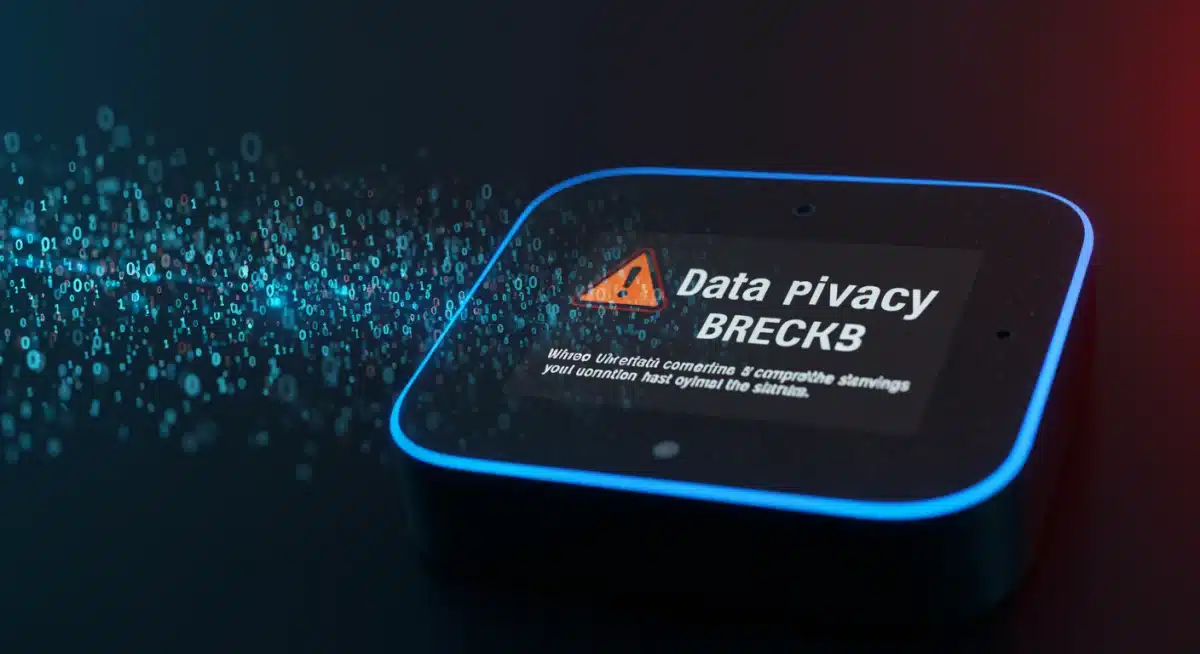
In 2026, the primary concern for many smart home users will undoubtedly be the increased sophistication of data harvesting techniques and the resulting privacy invasions. IoT devices, by their very nature, are designed to collect data about our habits, preferences, and even our physical presence. This data, when aggregated and analyzed, can paint an incredibly detailed picture of our lives. While much of this data is collected for legitimate purposes (e.g., optimizing energy consumption, personalizing experiences), it also represents a goldmine for cybercriminals and data brokers.
The Mechanics of Data Harvesting
Attackers will increasingly target IoT devices as entry points to extract sensitive personal information. This can happen through several vectors:
- Vulnerable Device Firmware: Many IoT devices ship with outdated or poorly secured firmware. Exploiting these vulnerabilities allows attackers to gain unauthorized access to the device and the data it collects. Once compromised, the device can be instructed to transmit data to malicious servers.
- Insecure Communication Channels: Data often travels unencrypted or with weak encryption between the device, the cloud, and companion apps. Intercepting these communications allows attackers to eavesdrop on sensitive information, such as voice commands, video feeds, or sensor readings.
- Weak Default Credentials: A persistent problem in the IoT space is the use of default or easily guessable passwords. Attackers leverage automated tools to scan for devices with these weak credentials, gaining easy access to personal data.
- Social Engineering and Phishing: Users can be tricked into revealing credentials or installing malicious software through sophisticated phishing attacks tailored to smart home users. For example, an email seemingly from a smart device manufacturer might prompt users to update their password on a fake website.
- Third-Party Application Vulnerabilities: Many smart devices rely on third-party integrations or cloud services. A vulnerability in one of these interconnected services can expose data from multiple devices, even if the primary device itself is secure.
Impact on Privacy and Security
The consequences of sophisticated data harvesting extend far beyond mere inconvenience:
- Identity Theft: Collected personal data, including names, addresses, routines, and financial information, can be used for identity theft, leading to financial fraud and reputational damage.
- Targeted Attacks: Detailed profiles of individuals can be used to craft highly effective spear-phishing campaigns or even physical attacks, as criminals gain insights into when homes are empty or which family members are vulnerable.
- Loss of Autonomy: When personal data is continuously monitored and exploited, individuals lose control over their private lives, leading to a chilling effect on personal expression and freedom.
- Blackmail and Extortion: Intimate details gleaned from smart home devices (e.g., conversations, video recordings) could be used for blackmail or extortion.
- Financial Exploitation: Data about purchasing habits or financial routines can be sold to advertisers or used by criminals to exploit financial weaknesses.
Proactive Mitigation Strategies for Data Harvesting and Privacy
To combat these IoT security threats, a multi-layered approach is essential:
- Strong, Unique Passwords and Two-Factor Authentication (2FA): This is the most fundamental step. Use complex, unique passwords for every smart device and associated online account. Where available, enable 2FA to add an extra layer of security. Password managers can greatly assist in this.
- Regular Firmware Updates: Always install firmware updates as soon as they are available. Manufacturers release these updates to patch known vulnerabilities. Enable automatic updates if possible, or set reminders to check manually.
- Review Privacy Settings: Carefully examine the privacy settings of every smart device and associated app. Limit data collection to the absolute minimum necessary for the device to function. Understand what data is being collected and how it’s being used.
- Secure Your Home Network: Your Wi-Fi network is the gateway to your smart home. Use WPA3 encryption, create a strong and unique Wi-Fi password, and consider setting up a separate guest network or a dedicated IoT network (VLAN) to isolate smart devices from your main network.
- Disable Unnecessary Features: If a device has features you don’t use (e.g., a microphone on a smart light bulb), disable them. The fewer active features, the smaller the attack surface.
- Research Before You Buy: Before purchasing an IoT device, research its security track record, privacy policies, and how often the manufacturer provides security updates. Look for devices from reputable brands with a commitment to security.
- Encrypt Communications: Ensure that your devices are communicating over encrypted channels (e.g., HTTPS for web services, WPA3 for Wi-Fi). While often handled by the device, it’s good to be aware.
- Consider a VPN for Your Router: For advanced users, installing a VPN directly on your router can encrypt all traffic leaving your home network, adding an extra layer of privacy.
- Regular Security Audits: Periodically review all connected devices, checking for suspicious activity, unexpected data usage, or changes in settings.
- Educate Yourself and Your Family: Awareness is key. Ensure everyone in your household understands the risks and best practices for smart home security.
Threat 2: IoT Botnets and Distributed Denial of Service (DDoS) Attacks
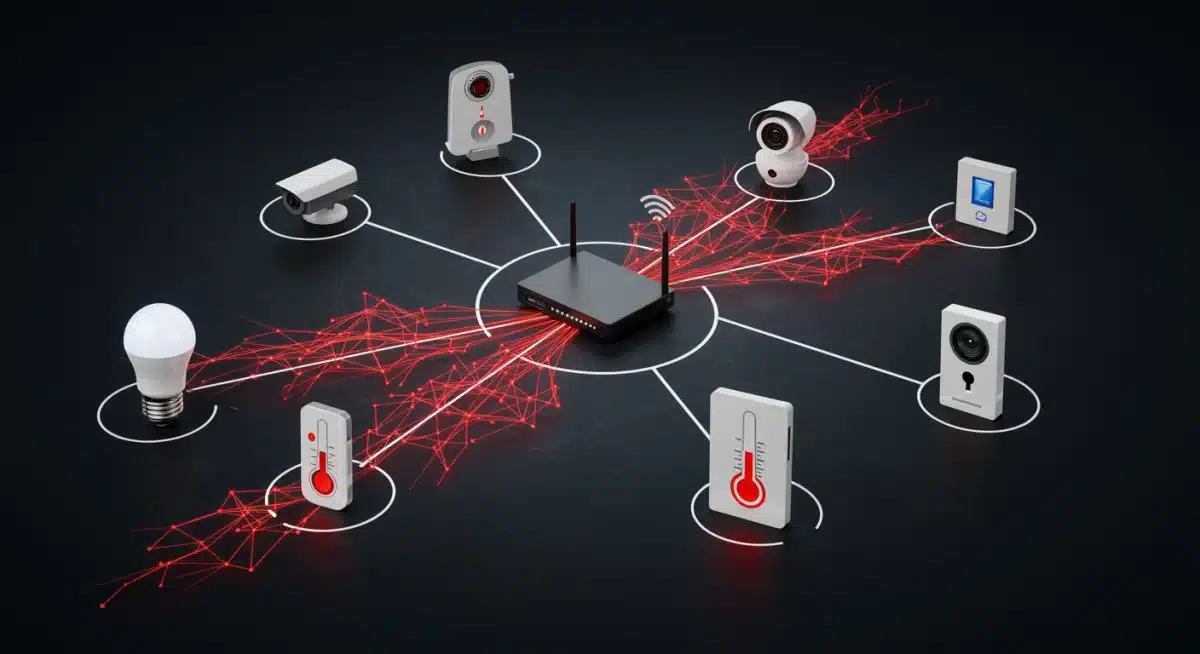
One of the most insidious IoT security threats projected for 2026 is the proliferation of sophisticated IoT botnets. A botnet is a network of compromised devices, often IoT gadgets, controlled by a single attacker or group of attackers. These ‘zombie’ devices are then used to launch large-scale cyberattacks, most notably Distributed Denial of Service (DDoS) attacks, but also for spamming, crypto-mining, and other malicious activities.
The Rise of IoT Botnets
The sheer number of insecure IoT devices makes them ideal targets for botnet recruitment. Unlike traditional computers, many IoT devices lack robust security features, making them easy to compromise. Once infected, they can operate silently in the background, consuming bandwidth and resources without the owner’s knowledge.
In 2026, we expect botnet operators to leverage more advanced techniques:
- AI-Powered Scans: AI will be used to more efficiently identify and exploit vulnerabilities across vast networks of IoT devices.
- Self-Propagating Malware: Botnet malware will become more adept at spreading autonomously from one vulnerable device to another within a network, and even across different networks.
- Evasion Techniques: Botnet code will incorporate advanced evasion techniques to remain undetected by traditional security software, making them harder to eradicate.
- Targeting Industrial IoT (IIoT): Beyond smart homes, critical infrastructure and industrial control systems (IIoT) are also becoming increasingly connected. Botnets targeting these systems could have catastrophic real-world consequences, leading to power outages, manufacturing disruptions, or even public safety hazards.
Impact of Botnet Attacks
The consequences of your smart devices becoming part of a botnet are significant:
- Degraded Performance: Your internet connection may slow down, and your smart devices might behave erratically as they are secretly used to launch attacks.
- DDoS Attacks: The primary use of IoT botnets is to launch massive DDoS attacks against websites, online services, or even national infrastructure. While your device is just one small part, it contributes to a larger, damaging assault.
- Reputational Damage: Your IP address could be flagged as malicious, potentially leading to your internet service being throttled or blocked.
- Legal Ramifications: In extreme cases, if your devices are used in highly damaging attacks, you could face legal scrutiny, even if you were an unwitting participant.
- Further Compromise: A device compromised by a botnet could also be used as a stepping stone to further breach your home network, leading to data theft or other malicious activities.
Proactive Mitigation Strategies for IoT Botnets and DDoS Attacks
Protecting your devices from becoming part of a botnet is crucial for both your security and the broader internet ecosystem:
- Change Default Credentials Immediately: This is paramount. Most botnets rely on scanning for devices with default usernames and passwords. Change them to strong, unique combinations as soon as you set up a new device.
- Keep Firmware Updated: As with data harvesting, regular firmware updates patch known vulnerabilities that botnets exploit to gain initial access.
- Network Segmentation (VLANs): For advanced users, creating a separate network segment (VLAN) for your IoT devices can isolate them from your main network. If an IoT device is compromised, it cannot easily spread malware to your computers or smartphones.
- Use a Strong Router Firewall: Configure your router’s firewall to block unsolicited incoming connections. Many routers have built-in security features that should be enabled and properly configured.
- Disable Universal Plug and Play (UPnP): UPnP can automatically open ports on your router, making it easier for attackers to access devices on your network. Unless absolutely necessary, disable UPnP.
- Monitor Network Traffic: Tools and services (some available through advanced routers or network monitoring devices) can help you identify unusual outbound traffic from your IoT devices, which could indicate botnet activity.
- Purchase Reputable Devices: Again, choose IoT devices from manufacturers with a strong reputation for security and regular updates. Cheap, unbranded devices are often the most vulnerable.
- Consider an IoT-Specific Security Solution: Specialized security solutions for smart homes can monitor IoT device behavior, detect anomalies, and block malicious traffic.
- Regularly Reboot Devices: While not a permanent fix, rebooting some devices can temporarily clear certain types of malware that reside only in volatile memory.
- Disconnect Unused Devices: If you’re not actively using a smart device, consider unplugging it from the network to reduce its exposure.
Threat 3: Physical World Compromise Through IoT Vulnerabilities
While data theft and DDoS attacks are significant, perhaps the most alarming IoT security threats for 2026 involve the direct compromise of physical safety and property. As smart devices increasingly control physical mechanisms in our homes, vulnerabilities in these systems can have tangible, real-world consequences.
Mechanisms of Physical Compromise
In 2026, attackers will look for opportunities to translate digital exploits into physical harm or disruption:
- Smart Lock Exploits: Vulnerabilities in smart locks or integrated home security systems can allow unauthorized access to your home, leading to theft, vandalism, or personal danger.
- Smart Camera Manipulation: Hacked smart cameras can be turned off, manipulated to show false feeds, or used to spy on occupants, compromising security and privacy. Attackers could also use them to identify optimal times for a physical break-in.
- Environmental Control Systems (HVAC, Lighting): Compromised smart thermostats or lighting systems could be used to create uncomfortable or even dangerous conditions within a home. Imagine a heating system being turned to maximum in summer, or all lights being turned off repeatedly in a dark house.
- Smart Appliance Sabotage: In extreme scenarios, vulnerabilities in smart ovens, refrigerators, or other appliances could be exploited to cause malfunctions, damage, or even safety hazards (e.g., overheating).
- Voice Assistant Misdirection: While often reliant on cloud processing, vulnerabilities in voice assistants at the device level could allow attackers to issue commands that manipulate other connected devices (e.g., “unlock the front door,” “disarm the alarm”).
- Vehicle IoT Integration: As cars become more connected, vulnerabilities in vehicle IoT systems could lead to remote unlocking, tracking, or even manipulation of vehicle functions, posing serious safety risks.
Impact on Physical Safety and Property
The real-world implications of these attacks are profound:
- Burglary and Theft: The most direct consequence of compromised smart locks or security systems.
- Personal Safety Risks: If attackers can control access to your home or manipulate environmental systems, your personal safety can be directly threatened.
- Property Damage: Malicious manipulation of appliances or environmental controls could lead to physical damage to your home or belongings.
- Loss of Trust: A breach that impacts physical safety erodes trust in smart technology, potentially hindering its adoption and innovation.
- Emotional Distress: The feeling of being physically vulnerable in your own home due to a cyberattack can cause significant emotional distress and anxiety.
Proactive Mitigation Strategies for Physical World Compromise
Safeguarding against physical compromise requires vigilance and a focus on devices that directly control access or critical functions:
- Prioritize Security for Critical Devices: Smart locks, security cameras, and alarm systems should be treated with the highest security priority. Invest in devices from highly reputable brands known for their robust security.
- Physical Security Layer: Do not rely solely on smart locks. Maintain traditional physical locks and security measures as a backup. A smart lock should enhance, not replace, physical security.
- Regular Audits of Access Logs: For devices like smart locks and security cameras, regularly check access logs for any unauthorized or suspicious activity.
- Isolate High-Risk Devices: Use network segmentation (VLANs) to isolate devices that control physical access (e.g., smart locks, garage door openers) from other less critical IoT devices.
- Strong Authentication for Voice Assistants: If your voice assistant can control critical functions, ensure it requires strong voice recognition or PIN authentication for sensitive commands.
- Disable Remote Access When Not Needed: If a device offers remote access, disable it when you don’t require it. The less exposure to the internet, the better.
- Review Permissions Carefully: When setting up devices and apps, be meticulous about the permissions you grant. Only allow access to what’s absolutely necessary for the device’s function.
- Consider Professional Installation and Monitoring: For advanced smart home security systems, consider professional installation and monitoring services. These often come with more robust security protocols and expert oversight.
- Physical Tamper Detection: Some advanced smart devices include physical tamper detection features. Ensure these are enabled and configured to alert you in case of unauthorized physical access.
- Stay Informed on Product Recalls and Vulnerabilities: Keep up-to-date with news on security vulnerabilities and product recalls for your specific smart devices. Manufacturers often release patches or advisories when critical flaws are discovered.
The Path Forward: Building a Resilient Smart Home
The growing sophistication of IoT security threats in 2026 demands a proactive and informed approach from every smart home owner. It’s no longer sufficient to simply plug in a device and assume it’s secure. The responsibility lies with both manufacturers to design with security in mind and with consumers to adopt best practices.
The interconnected nature of our digital lives means that a vulnerability in one device can have cascading effects across an entire network. Therefore, a holistic approach to smart home security is paramount. Think of your smart home as a fortress: every entry point needs to be secured, every internal corridor monitored, and every inhabitant educated on potential dangers.
Key Principles for Enduring IoT Security
- Security by Design: Advocate for and purchase devices where security is not an afterthought but a core component of the design process.
- Continuous Updates: Prioritize devices with a commitment to long-term security updates and support.
- User Education: The human element remains the weakest link. Educating ourselves and our families about cyber risks is crucial.
- Network Hygiene: Treat your home network as a critical piece of infrastructure, securing it with strong passwords, firewalls, and segmentation.
- Data Minimization: Only allow devices to collect the data absolutely necessary for their function.
- Layered Defense: Implement multiple layers of security – from strong passwords to network segmentation and potentially dedicated IoT security solutions.
- Vigilance and Awareness: Stay informed about emerging IoT security threats and best practices.
As we navigate further into 2026 and beyond, the smart home will continue to evolve, offering even greater levels of convenience and integration. By understanding and actively mitigating the top IoT security threats, we can ensure that this technological progress enhances our lives without compromising our privacy, safety, or peace of mind. The future of the smart home is secure, but only if we collectively commit to making it so.