
The 2026 privacy regulations for connected security systems are set to significantly enhance consumer data protection within smart homes, requiring manufacturers and service providers to implement stricter security protocols and transparent data handling practices to safeguard personal information.
Ever wondered if your smart home is truly a fortress of privacy or a potential data leak? As our homes become increasingly connected, the question, Is Your Smart Home Data Safe? Understanding the 2026 Privacy Regulations for Connected Security Systems. becomes more urgent. These upcoming regulations are designed to provide a much-needed layer of protection for your digital life, ensuring that the convenience of smart technology doesn’t come at the cost of your personal privacy.
The evolving landscape of smart home privacy
The rapid evolution of smart home technology has brought unprecedented convenience, but also new challenges concerning data privacy. Devices from smart thermostats to sophisticated security cameras collect vast amounts of personal information, often without users fully understanding how it’s stored or used. This influx of data necessitates robust regulatory frameworks.
Before 2026, the regulatory environment was a patchwork of state-specific laws and industry self-regulation, which often left gaps in consumer protection. This fragmented approach made it difficult for homeowners to ascertain the true level of security for their personal data across different smart devices and platforms. The lack of a unified standard also posed challenges for manufacturers aiming for broad market penetration.
The pre-2026 privacy challenges
- Inconsistent data handling: Different devices and services had varying policies on data collection, storage, and sharing.
- Lack of transparency: Users often found it difficult to understand complex privacy policies or even locate them.
- Vulnerability to breaches: Without standardized security, smart home systems were susceptible to cyberattacks.
- Limited recourse for consumers: When data breaches occurred, legal avenues for affected individuals were often unclear or insufficient.
The fragmented nature of pre-2026 privacy laws meant consumers bore much of the burden of securing their smart homes. Many were unaware of the risks associated with their connected devices, assuming manufacturers adhered to best practices that weren’t legally mandated. This created a fertile ground for privacy concerns and potential exploitation of personal data.
The upcoming 2026 regulations aim to address these systemic issues by establishing a baseline for data privacy and security across the entire smart home ecosystem. This shift represents a significant step towards empowering consumers and holding manufacturers accountable for their data practices. It’s a proactive measure to safeguard digital lives in an increasingly connected world.
Understanding the core principles of the 2026 privacy regulations
The 2026 privacy regulations are built upon several foundational principles designed to empower consumers and enforce greater accountability from smart home device manufacturers and service providers. At its heart, the framework emphasizes data minimization, purpose limitation, and user consent, aiming to shift the balance of power back to the individual homeowner.
These regulations stipulate that companies must collect only the data necessary for the functionality of their devices and services. This principle of data minimization directly combats the previous trend of indiscriminate data harvesting, where companies often collected more information than required, simply because they could. Now, every piece of data collected must have a clear, justifiable purpose.
Key regulatory pillars
- Data minimization: Companies can only collect data essential for device functionality.
- Purpose limitation: Collected data must only be used for the specified, explicit purposes for which it was gathered.
- User consent: Explicit, informed consent is required before any personal data is collected or processed.
- Data security: Robust technical and organizational measures must be in place to protect data from unauthorized access or breaches.
Furthermore, the regulations introduce the concept of ‘privacy by design,’ meaning that privacy protections must be integrated into the design and architecture of smart home products and services from the outset, rather than being an afterthought. This proactive approach ensures that security and privacy are fundamental components, not optional add-ons.
Transparency is another cornerstone. Manufacturers are now required to provide clear, easy-to-understand privacy policies that outline exactly what data is collected, how it’s used, and with whom it might be shared. This moves away from the legalese-laden documents that previously obscured critical information, enabling consumers to make truly informed decisions about their smart home devices.
The 2026 regulations represent a significant paradigm shift, moving towards a more ethical and user-centric approach to data handling in the smart home sector. By focusing on these core principles, the aim is to foster trust and ensure that smart home technology enhances, rather than compromises, personal privacy and security.
Impact on smart home device manufacturers and service providers
The advent of the 2026 privacy regulations heralds a new era for smart home device manufacturers and service providers, demanding significant operational and strategic adjustments. Compliance is not merely an option but a necessity, potentially reshaping product development cycles, data management practices, and customer relations.
Manufacturers must now integrate privacy considerations at every stage of product development, from initial design to market release. This ‘privacy by design’ mandate means re-evaluating hardware and software architectures to ensure data minimization and robust security protocols are embedded from the ground up. This could involve investing in new encryption technologies and secure data storage solutions.
Operational changes for companies
- Redesigning data collection processes: Implementing systems that only gather essential data.
- Enhanced encryption standards: Upgrading security to protect data both in transit and at rest.
- Transparent privacy policies: Crafting clear, concise, and accessible privacy statements.
- Employee training: Educating staff on new data handling protocols and compliance requirements.
For service providers, the regulations mandate stricter protocols for how they manage, process, and share user data. This includes reviewing third-party agreements to ensure all partners adhere to the same stringent privacy standards. Any service that handles smart home data, from cloud storage to AI analytics, falls under the purview of these new rules.
Non-compliance carries substantial penalties, including hefty fines and reputational damage, which can be devastating for businesses in a competitive market. Therefore, companies are incentivized to not only meet but exceed the regulatory requirements, positioning themselves as leaders in data privacy and security to gain consumer trust.
Ultimately, these regulations will likely spur innovation in privacy-enhancing technologies and foster a more responsible approach to data within the smart home industry. While the initial adaptation period may be challenging, the long-term benefits of increased consumer confidence and a more secure ecosystem are expected to outweigh the costs.
What the 2026 regulations mean for you, the homeowner
For the average homeowner, the 2026 privacy regulations bring a welcome shift towards greater control and peace of mind regarding their smart home data. These new rules are designed to empower you with more transparency and stronger protections, transforming how you interact with your connected devices.
You can expect more straightforward and understandable privacy policies, making it easier to grasp what data your devices collect and how it’s used. No more deciphering pages of legal jargon; companies are now obligated to present this information clearly, allowing you to make informed decisions about which devices you bring into your home.
Your enhanced privacy rights
- Right to access: Request and receive a copy of the personal data collected about you.
- Right to rectification: Correct inaccurate or incomplete personal data.
- Right to erasure: Request the deletion of your personal data under certain conditions.
- Right to object: Object to the processing of your personal data for specific purposes.
Furthermore, the regulations strengthen your ability to grant or revoke consent for data collection and processing. This means you’ll have more granular control over what information your smart devices share, ensuring that your preferences are respected. If you don’t want your smart thermostat sharing your occupancy patterns with third-party advertisers, you’ll have clearer mechanisms to prevent it.
The increased emphasis on data security also means a reduced risk of your personal information falling into the wrong hands. Manufacturers are now legally bound to implement robust security measures, which translates to better protection against cyberattacks and data breaches for your smart home devices. This added layer of security helps safeguard sensitive information, such as camera feeds or door lock activity.
In essence, the 2026 regulations are about giving you, the homeowner, more agency and protection in the digital realm of your home. They aim to foster an environment where smart home technology can be enjoyed for its convenience without constant worry about privacy compromises.
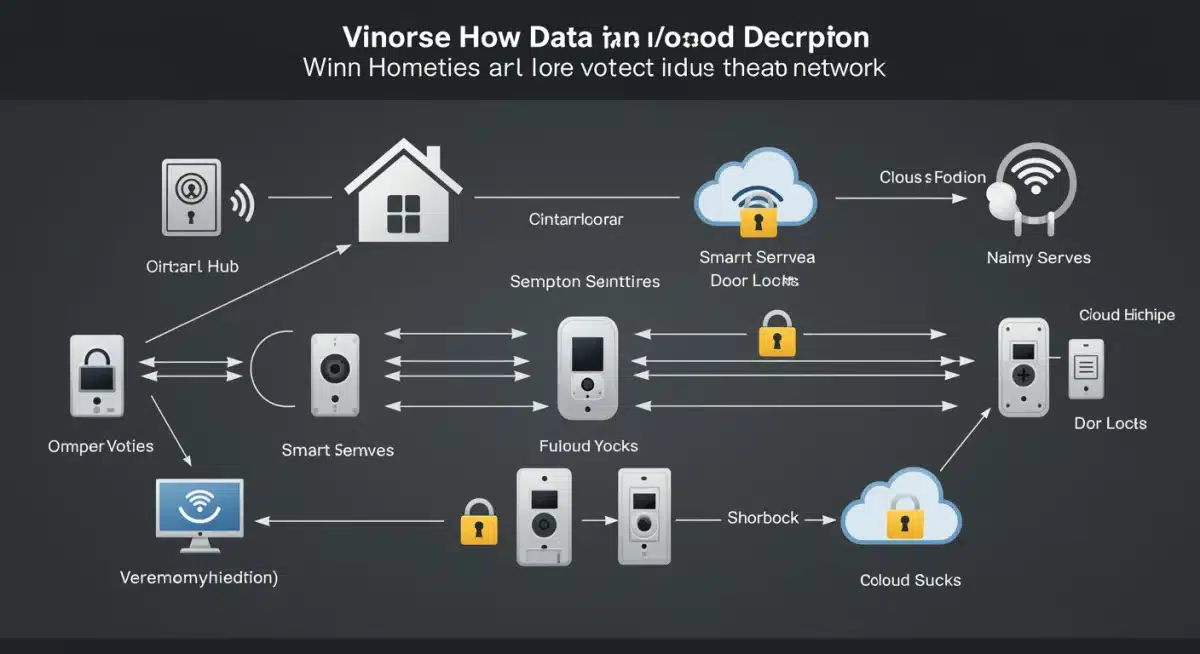
Navigating data sharing and third-party integrations
One of the most complex aspects of smart home privacy involves data sharing with third parties and the integration of various devices. The 2026 regulations introduce stringent rules to bring clarity and control to these interactions, which have historically been a significant source of privacy concern for homeowners.
Under the new framework, explicit consent will be paramount before your smart home data can be shared with any third party. This means that companies can no longer quietly bundle data-sharing agreements into lengthy terms and conditions. You will need to actively agree to such sharing, and the purpose of that sharing must be clearly articulated.
Controlling your data integrations
- Explicit consent: Your data cannot be shared without your clear and informed agreement.
- Transparency on partners: Companies must disclose who they share your data with and why.
- Revocation of consent: You have the right to withdraw consent for data sharing at any time.
- Data portability: Easier transfer of your data between different services and platforms.
Manufacturers and service providers will also be required to provide transparent information about their third-party partners. This includes naming the entities with whom data is shared and explaining the specific reasons for such sharing. This level of detail was often missing in the past, leaving consumers in the dark about the full extent of their data’s journey.
The regulations also address the interoperability of smart home devices and platforms. While encouraging seamless integration, they mandate that such integrations must adhere to the same high privacy standards. This prevents a situation where a secure device’s data becomes vulnerable once integrated with a less secure third-party service.
For homeowners, this means a significantly improved ability to manage their digital footprint within their smart home ecosystem. You’ll gain greater confidence that when you connect a new device or service, your data remains protected and under your control, even as it interacts with various components of your connected home.
Preparing your smart home for 2026 compliance
As the 2026 privacy regulations draw closer, homeowners have an opportunity to proactively assess and adjust their smart home setups to align with the new standards and maximize their data security. Taking a few deliberate steps now can ensure you’re fully compliant and protected once the regulations come into full effect.
Start by auditing your existing smart home devices. Make a list of all connected security systems, cameras, door locks, and other data-collecting gadgets. For each device, review its current privacy settings and any associated privacy policies. Look for updates from manufacturers regarding their plans for 2026 compliance.
Actionable steps for homeowners
- Inventory your devices: List all smart home devices that collect personal data.
- Review privacy settings: Adjust settings to minimize data collection and sharing where possible.
- Update firmware regularly: Ensure all devices have the latest security patches.
- Strong, unique passwords: Use complex, distinct passwords for each smart device and account.
- Enable two-factor authentication: Add an extra layer of security to your smart home accounts.
Consider consolidating your smart home ecosystem where possible, opting for brands and platforms known for their commitment to privacy and security. As manufacturers adapt to the 2026 regulations, those prioritizing consumer data protection will likely emerge as more trustworthy choices. Researching these options now can save you headaches later.
It’s also crucial to practice good digital hygiene. Regularly update your device firmware, as these updates often include critical security patches. Use strong, unique passwords for every smart device and associated account, and enable two-factor authentication whenever available. These basic security practices remain vital even with enhanced regulations.
By taking these preparatory steps, you’re not just waiting for the regulations to take effect; you’re actively creating a more secure and privacy-respecting smart home environment. This proactive approach ensures you’re well-positioned to benefit from the enhanced protections offered by the 2026 guidelines.
The future of smart home security and privacy
The 2026 privacy regulations are not merely a finish line but a significant waypoint in the ongoing journey of smart home security and privacy. Their implementation is expected to catalyze further innovations, fostering a future where connected homes are both intelligent and inherently secure.
One anticipated outcome is the rise of more privacy-centric smart home devices. Manufacturers will likely compete on the strength of their privacy features, leading to devices that offer enhanced local processing, reduced reliance on cloud services for sensitive data, and more robust anonymization techniques. This shift could make privacy a key differentiator in the market.
Anticipated future trends
- Privacy-centric device design: Products built with privacy as a core function, not an add-on.
- Decentralized data processing: More data processed locally on devices, reducing cloud reliance.
- AI for privacy protection: Development of AI tools to identify and mitigate privacy risks.
- Interoperable privacy standards: Global alignment on data protection for connected devices.
We can also expect advancements in artificial intelligence and machine learning to play a dual role. While AI can enhance smart home functionality, it will also be crucial in developing sophisticated privacy protection mechanisms, such as advanced anomaly detection for data breaches and automated privacy compliance checks.
Furthermore, the regulations may pave the way for greater international collaboration on smart home data privacy. As technology transcends borders, a harmonized global approach to data protection would simplify compliance for multinational corporations and offer consistent safeguards for consumers worldwide. This could lead to a more universally trusted smart home ecosystem.
Ultimately, the future points towards a smart home environment where security and privacy are not afterthoughts but fundamental pillars. The 2026 regulations are a crucial step in this direction, laying the groundwork for a more responsible, transparent, and user-empowered connected living experience. It’s a future where innovation and protection go hand-in-hand.
| Key Point | Brief Description |
|---|---|
| Data Minimization | Companies must only collect essential data for device functionality. |
| User Consent | Explicit, informed consent is required for data collection and sharing. |
| Privacy by Design | Privacy protections must be integral to device design from the start. |
| Enhanced Security | Stricter technical and organizational measures to protect data. |
Frequently asked questions about smart home data safety
These regulations are a new set of rules designed to enhance data privacy and security for connected home devices. They mandate stricter controls on data collection, storage, and sharing, requiring explicit user consent and emphasizing ‘privacy by design’ for all smart home security products and services.
Manufacturers will need to update firmware and software to comply. You might see clearer privacy policies and new options for managing your data sharing preferences. It’s advisable to keep your devices updated and review their settings as 2026 approaches to ensure maximum protection.
‘Privacy by design’ means that privacy and data protection measures are built into smart home devices and services from the very beginning of their development. This ensures that security isn’t an afterthought, providing a stronger, more inherent level of data protection for users.
Yes, but under stricter conditions. Companies will require your explicit, informed consent before sharing any data with third parties. You’ll also have more transparency regarding who your data is shared with and for what specific purposes, giving you greater control over your information.
Non-compliance can result in significant financial penalties and damage to a company’s reputation. These consequences are designed to strongly incentivize manufacturers and service providers to adhere strictly to the new data privacy and security standards, ensuring robust consumer protection.
Conclusion
The 2026 privacy regulations for connected security systems mark a pivotal moment in the evolution of smart home technology. They represent a concerted effort to balance the convenience of smart living with the fundamental right to privacy and data security. For homeowners, these regulations promise greater transparency, more control over personal data, and a significantly reduced risk of privacy breaches. For manufacturers and service providers, they demand a proactive and responsible approach to data handling, fostering an environment of trust and accountability. As we move towards 2026, embracing these changes will not only ensure compliance but also build a more secure and user-centric smart home ecosystem for everyone.