Achieving 99% smart home security in 2026 necessitates a comprehensive approach combining AI-driven monitoring, robust physical and digital defenses, and seamless, automated response protocols for unparalleled homeowner protection.
In an increasingly connected world, the dream of a truly secure smart home is closer than ever. For 2026 homeowners, achieving 99% smart home security isn’t just an aspiration; it’s a tangible reality made possible by cutting-edge technology and intelligent strategies. This guide delves into the advanced monitoring and response tactics that define the next generation of home protection, ensuring your peace of mind in an evolving digital and physical landscape.
The Evolution of Smart Home Security Systems
Smart home security has moved far beyond simple alarms and motion sensors. Today’s systems leverage artificial intelligence and machine learning to create proactive, adaptive defenses. This evolution means security is no longer just about reacting to a breach, but actively preventing one.
The integration of diverse technologies allows for a holistic security ecosystem. From biometric access controls to drone surveillance, the layers of protection available to homeowners in 2026 are sophisticated and interconnected, offering unprecedented levels of safety and control.
AI-Powered Threat Detection
Artificial intelligence is at the heart of modern smart home security. AI algorithms can analyze vast amounts of data from various sensors to identify unusual patterns that might indicate a threat. This goes beyond simple motion detection, understanding context and intent.
- Behavioral Analytics: AI learns the typical routines of your household members and pets, flagging any deviations as potential anomalies.
- Facial Recognition: Advanced facial recognition identifies authorized individuals and alerts you to unknown faces approaching your property.
- Audio Anomaly Detection: Systems can distinguish between benign sounds (e.g., a car backfiring) and suspicious noises (e.g., glass breaking, unusual voices).
These intelligent systems significantly reduce false alarms, making the security experience more reliable and less intrusive. They continuously learn and adapt, improving their accuracy over time.
Integrated Perimeter Defense
Securing the perimeter of your home is the first line of defense. In 2026, this involves a combination of physical barriers and smart technologies working in concert. Think beyond fences and gates to invisible shields of detection.
- Smart Fencing: Electrified or sensor-embedded fences that detect attempts to climb or cut through.
- Ground Sensors: Buried sensors that detect footsteps or tunneling attempts around the property.
- Drone Surveillance: Automated security drones can patrol the perimeter on a schedule or in response to an alert, providing aerial views and recording evidence.
These integrated systems provide early warning, giving homeowners crucial time to respond before an intruder even reaches the house itself. The goal is to deter and detect before entry is even attempted.
The evolution of smart home security signifies a shift from reactive measures to proactive defense. By understanding and implementing these advanced systems, homeowners can achieve a level of protection that was once only imagined in science fiction. The focus is on a seamless, intelligent layer of security that integrates into daily life without hindering it.
Advanced Monitoring Techniques and Tools
Effective monitoring is the backbone of any robust security system. In 2026, monitoring techniques have become incredibly sophisticated, offering granular control and real-time insights into every corner of your property. These tools go beyond simple cameras, providing intelligent data for informed decisions.
The convergence of high-definition imaging, thermal sensing, and AI-driven analytics creates a comprehensive monitoring suite. This allows homeowners to not only see what’s happening but also understand the potential implications, enabling faster and more effective responses.
High-Resolution Thermal and Night Vision Cameras
Standard visible-light cameras have limitations, especially in low-light conditions. Thermal cameras, however, detect heat signatures, making it impossible for intruders to hide in shadows or camouflage themselves. Paired with advanced night vision, these cameras offer unparalleled visibility 24/7.
These cameras can distinguish between humans and animals, further reducing false alarms. Their ability to operate effectively in complete darkness or adverse weather conditions makes them a critical component of a 2026 smart home security setup. The clarity provided ensures identification and evidence collection are always top-notch.
Environmental and Predictive Sensors
Security isn’t just about intruders; it’s also about protecting your home from environmental hazards. Modern smart homes integrate sensors that go beyond traditional smoke detectors, offering predictive capabilities to prevent disasters before they occur.
- Water Leak Detectors: Identify small leaks before they become major floods, potentially saving thousands in repairs.
- Smart Smoke/CO Detectors: Not only detect hazards but also pinpoint their location and communicate directly with emergency services.
- Air Quality Monitors: Alert to dangerous levels of pollutants or gases, maintaining a healthy living environment.
- Predictive Maintenance Sensors: Monitor the health of critical home systems (HVAC, plumbing) to predict failures and prevent related security vulnerabilities.
These sensors provide an additional layer of protection, safeguarding both your property and your family’s well-being. Their integration into the central security platform ensures a unified response to any threat, be it human or environmental.
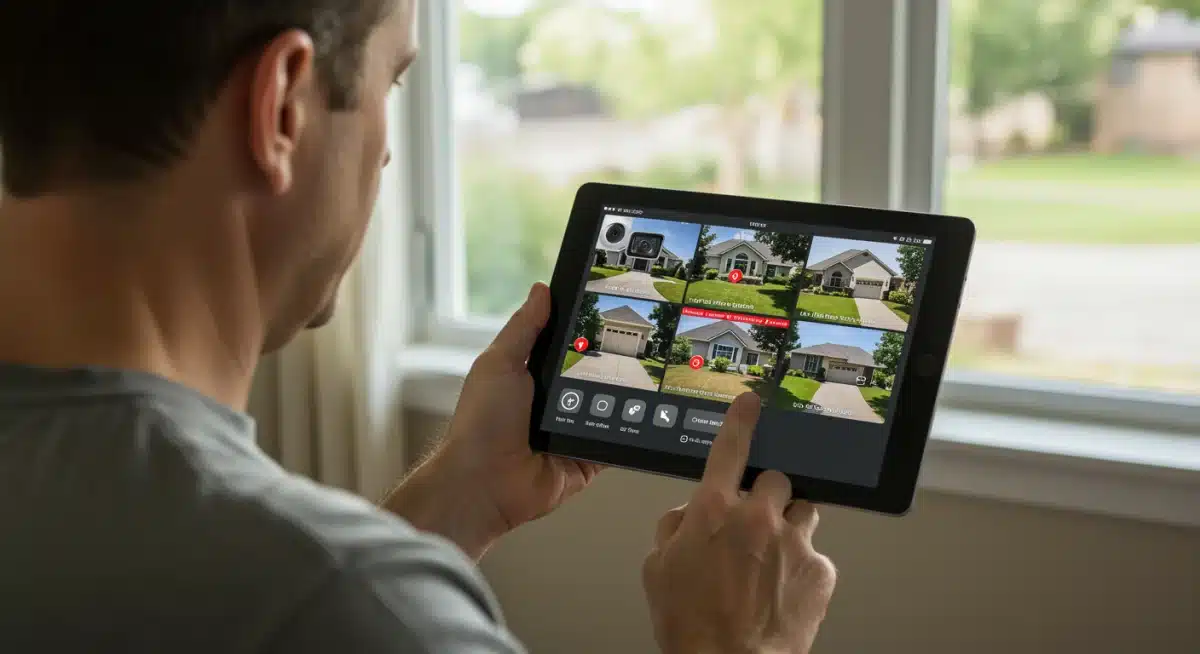
Effective monitoring in 2026 is about more than just recording; it’s about intelligent interpretation and foresight. By leveraging advanced cameras and a suite of predictive sensors, homeowners gain a comprehensive understanding of their home’s security posture, allowing for proactive intervention and enhanced safety.
Integrated Response Strategies for 2026
Monitoring is only half the battle; an effective security system requires robust and rapid response capabilities. In 2026, these responses are highly integrated and often automated, minimizing the time between detection and mitigation. The goal is to deter, delay, and apprehend.
These strategies combine physical deterrents with immediate communication protocols, ensuring that both the homeowner and relevant authorities are instantly aware and can act decisively. The speed of response is paramount in limiting potential damage or loss.
Automated Deterrents and Active Defense
Upon detection of a threat, modern smart home systems don’t just send an alert; they initiate a series of automated deterrents designed to scare off intruders or delay their entry. This active defense approach is a game-changer for home security.
- Dynamic Lighting: Lights flash erratically or illuminate specific areas, drawing attention to the intruder.
- Sound Blasters: High-decibel alarms or even pre-recorded authoritative voice messages are activated.
- Smart Sprinklers: Activated to douse intruders, making the area uncomfortable and potentially leaving forensic evidence.
- Fog Generators: Interior fog systems can disorient intruders, making it difficult for them to navigate or see.
These automated responses are designed to create an unpleasant and surprising environment for an intruder, often causing them to retreat before causing significant harm or theft. The element of surprise is a powerful deterrent.
Seamless Communication with Emergency Services
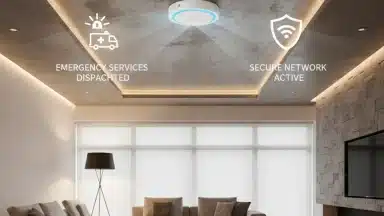
Beyond automated deterrents, the ability to instantly connect with emergency services is crucial. 2026 smart home security systems offer direct, pre-programmed links to police, fire, and medical responders, often without requiring homeowner intervention.
Many systems now feature AI-driven voice assistants that can communicate directly with 911 dispatchers, providing critical information about the nature of the emergency, the location, and even live video feeds. This reduces response times significantly and ensures that help is on the way even if the homeowner is incapacitated or away.
Integrated response strategies in 2026 transform a smart home from a passive target into an active defender. By combining automated deterrents with instant emergency communication, homeowners can rest assured that their security system is not just watching, but actively protecting their property and loved ones.
Cybersecurity for the Smart Home Ecosystem
As smart homes become more interconnected, their digital security becomes as critical as their physical security. A single compromised device can open the door to the entire network, making robust cybersecurity measures indispensable for 2026 homeowners. Digital threats are evolving as rapidly as physical ones.
Protecting your smart home involves more than just a strong Wi-Fi password. It requires a multi-layered approach to network security, device authentication, and data privacy, ensuring that your connected lifestyle remains private and secure.
Dedicated Smart Home Network Segmentation
One of the most effective cybersecurity strategies is to segment your smart home devices onto a separate network. This isolates them from your main personal computers and sensitive data, creating a protective barrier in case one device is compromised.
- IoT VLANs: Creating a Virtual Local Area Network (VLAN) specifically for IoT devices prevents them from interacting with your primary network.
- Guest Networks for Smart Devices: Utilizing a guest network for devices that don’t need access to sensitive data offers a similar isolation benefit.
This strategy limits the potential damage of a breach, ensuring that even if a smart light bulb is hacked, an intruder cannot easily access your banking information or personal files. It’s a proactive step to contain potential cyber threats.
Regular Software Updates and Strong Authentication
The weakest link in many smart home systems is outdated software or weak passwords. Manufacturers constantly release updates to patch vulnerabilities, and it’s imperative that homeowners apply these promptly. Similarly, strong, unique passwords and multi-factor authentication (MFA) are non-negotiable.
MFA adds an extra layer of security, requiring a second form of verification (like a fingerprint or a code from your phone) in addition to a password. This dramatically reduces the risk of unauthorized access, even if your password is stolen. Regular audits of connected devices are also recommended to ensure no unauthorized devices are on your network.
Cybersecurity is an ongoing battle, and for the smart home, it’s a vital component of holistic security. By segmenting networks, maintaining up-to-date software, and implementing strong authentication, homeowners can significantly bolster their digital defenses and protect their smart home ecosystem from evolving online threats.
The Role of AI and Machine Learning in Proactive Security
The true power of 2026 smart home security lies in its proactive capabilities, largely driven by artificial intelligence and machine learning. These technologies enable systems to not just react, but to anticipate and even prevent security incidents before they fully materialize. Predictive analysis is the new frontier.
AI algorithms continuously learn from collected data, identifying subtle patterns and deviations that human observers might miss. This constant learning and adaptation make smart home security systems increasingly intelligent and effective over time.
Predictive Analytics for Anomaly Detection
Machine learning models are trained on vast datasets of typical household activity and known threat patterns. This allows them to develop a baseline of ‘normal’ behavior. Any significant deviation from this baseline triggers an alert, often before a threat is fully realized.
- Traffic Pattern Analysis: Systems learn typical vehicle and pedestrian traffic around your home, flagging unfamiliar or lingering presence.
- Door/Window Sensor Learning: AI understands when doors and windows are typically opened or closed, detecting unusual activity outside of these norms.
- Device Health Monitoring: Predicting potential failures in security hardware before they occur, allowing for proactive maintenance.
This predictive capability means that your smart home can often warn you of potential danger hours or even days before it becomes an immediate threat. It’s about foresight, not just hindsight.
Self-Healing and Adaptive Security Systems
Beyond prediction, advanced smart home security systems are becoming self-healing and adaptive. This means they can automatically reconfigure or strengthen their defenses in response to newly identified threats or vulnerabilities. They are not static; they evolve.
If a new type of cyberattack is detected globally, your smart home system can download and apply patches automatically. If a specific sensor fails, the system can dynamically re-route monitoring responsibilities to other sensors, maintaining continuous coverage. This level of autonomy ensures consistent protection without constant manual intervention.
AI and machine learning are transforming smart home security from a reactive guard into a proactive, intelligent guardian. By leveraging predictive analytics and adaptive systems, homeowners in 2026 can enjoy a level of security that continuously learns, evolves, and protects against the most sophisticated threats.
Personalizing Your 99% Secure Smart Home
Achieving 99% smart home security isn’t a one-size-fits-all endeavor. The most effective systems are those that are customized to your specific property, lifestyle, and security concerns. Personalization ensures that your security solution is optimally tuned to your unique needs.
This involves careful selection of devices, strategic placement, and continuous calibration to reflect changes in your family’s routine or environmental factors. A truly secure home is one where the technology seamlessly integrates with and enhances daily life.
Tailoring Security Zones and Access Controls
Every home has different vulnerabilities and areas of concern. A personalized security plan involves defining specific security zones within and around your property, each with its own monitoring and response protocols. This granular control allows for highly efficient and targeted protection.
- Interior Zones: Specific rooms or areas (e.g., a home office with sensitive documents) can have higher alert sensitivities.
- Exterior Zones: Front yard, backyard, garage, and side entrances can each have distinct monitoring settings and automated responses.
- Biometric Access: Fingerprint or facial recognition for different family members, with customizable access schedules for guests or service providers.
By tailoring these zones and access controls, you can ensure that security measures are proportionate to the risk, minimizing inconvenience while maximizing protection. It’s about smart security, not just more security.
Regular Security Audits and System Calibration
A smart home security system is not a set-it-and-forget-it solution. To maintain 99% security, regular audits and calibration are essential. This ensures that the system remains optimized as your needs change and as new threats emerge.
Periodically review sensor placements, camera angles, and AI learning parameters. Test your automated responses to ensure they function as intended. Consider professional security audits annually to identify any potential weaknesses or areas for improvement. This continuous refinement is key to long-term, high-level security.
Personalization is the final frontier in achieving truly effective smart home security. By tailoring security zones, customizing access controls, and committing to regular audits, homeowners can create a system that is not only highly effective but also perfectly aligned with their lifestyle, delivering unparalleled peace of mind.
Future Trends in Smart Home Security by 2026 and Beyond
The landscape of smart home security is dynamic, constantly evolving with new technologies and emerging threats. Looking towards 2026 and beyond, several key trends will shape how homeowners protect their properties, pushing the boundaries of what’s possible in intelligent defense.
These trends point towards even greater autonomy, integration, and predictive capabilities, creating security systems that are increasingly intuitive and less reliant on direct human oversight. The future is about truly intelligent, self-managing security.
Quantum-Resistant Encryption and Decentralized Security
As computing power grows, current encryption methods may become vulnerable. Future smart home systems will likely adopt quantum-resistant encryption protocols to protect sensitive data from even the most powerful future cyberattacks. This proactive approach to digital security is critical.
Decentralized security architectures, perhaps leveraging blockchain technology, will also become more prevalent. This distributes security data and control across multiple points, making it much harder for a single breach to compromise the entire system. Enhanced privacy and resilience will be key benefits.
Hyper-Personalized and Predictive Threat Modeling
Future AI will develop hyper-personalized threat models for each individual home. Instead of generic threat intelligence, systems will analyze local crime statistics, neighborhood activity, and even individual homeowner habits to predict specific risks and tailor defenses accordingly. This moves beyond general anomaly detection to highly specific risk assessment.
- Micro-Location Threat Assessment: Analyzing real-time local data to anticipate specific risks like package theft or unusual loitering.
- Adaptive Vulnerability Scanning: Continuously scanning the home’s unique digital and physical footprint for new weaknesses.
- Proactive Countermeasure Deployment: Automatically deploying specific deterrents or strengthening particular security zones based on predicted threats.
This level of predictive modeling means security becomes almost clairvoyant, preparing for threats before they even become apparent to the homeowner. It’s a significant leap forward in proactive protection.
The future of smart home security is exciting, promising systems that are more intelligent, resilient, and adaptive than ever before. By embracing quantum-resistant encryption, decentralized architectures, and hyper-personalized threat modeling, homeowners in 2026 and beyond can look forward to an even higher standard of safety and peace of mind.
| Key Aspect | Description for 2026 Homeowners |
|---|---|
| AI Monitoring & Detection | Utilizes behavioral analytics, facial recognition, and audio anomaly detection to identify threats with high accuracy, reducing false alarms. |
| Integrated Response | Automated deterrents (lights, sounds, sprinklers) combined with direct, AI-driven communication to emergency services for rapid mitigation. |
| Cybersecurity Measures | Network segmentation (IoT VLANs), regular software updates, and multi-factor authentication are crucial for digital protection. |
| Personalization & Audits | Customizing security zones, access controls, and conducting regular system audits ensures optimal and evolving protection. |
Frequently Asked Questions About 2026 Smart Home Security
The main difference lies in the pervasive integration of AI and machine learning, shifting from reactive alarms to proactive, predictive threat detection and automated, intelligent responses. Systems are now far more adaptive and personalized.
AI cameras offer advanced features like behavioral analytics, facial recognition, and context-aware anomaly detection. They can distinguish between pets, known individuals, and potential threats, significantly reducing false alarms and providing more relevant alerts.
Absolutely. As more devices connect, cybersecurity becomes paramount. Strategies like network segmentation, multi-factor authentication, and regular software updates are critical to protect your smart home ecosystem from digital breaches and data theft.
Automated deterrents include dynamic lighting (flashing lights), high-decibel sound blasters, smart sprinklers activating to douse intruders, and even interior fog generators designed to disorient and deter potential threats upon detection.
Personalization involves tailoring security zones, customizing access controls with biometrics, and conducting regular security audits. This ensures the system aligns with specific property layouts, family routines, and evolving security needs for maximum effectiveness.
Conclusion
The journey towards achieving 99% smart home security for 2026 homeowners is marked by innovation, integration, and intelligence. We’ve explored how AI and machine learning are revolutionizing monitoring and response, creating systems that are not just reactive but truly proactive. From advanced perimeter defenses and thermal imaging to robust cybersecurity protocols and personalized security zones, the tools available today offer an unprecedented level of protection. By embracing these advanced strategies, homeowners can transform their residences into fortresses of peace, ensuring that their families and assets are safeguarded against an ever-evolving array of threats, both physical and digital. The future of home security is here, and it’s smarter, safer, and more secure than ever before.