Smart Home Security 2026: Trends & Advanced Features in the U.S.
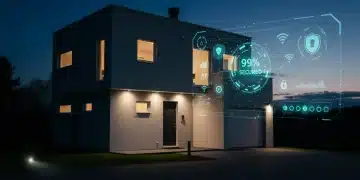
By 2026, smart home security in the U.S. will be defined by seamless AI integration, advanced biometric authentication, and highly proactive threat detection, moving beyond simple alerts to comprehensive, intelligent protection.
As we approach 2026, the landscape of smart home security 2026 in the U.S. is evolving at an unprecedented pace, transforming our understanding of safety and protection. Gone are the days of basic alarms; today’s homeowners seek intelligent, integrated systems that anticipate threats and offer seamless control. What innovations can we expect to see defining the next generation of home protection?
The Rise of AI and Machine Learning in Home Security
Artificial intelligence (AI) and machine learning (ML) are no longer futuristic concepts but integral components of modern smart home security systems. By 2026, these technologies will elevate security from reactive to truly proactive, offering a level of vigilance previously unimaginable. AI-powered systems can learn household routines, differentiate between family members and strangers, and even predict potential threats based on behavioral patterns and environmental data.
The sophistication of AI algorithms allows for real-time anomaly detection. Instead of simply alerting you to a motion event, an AI-driven camera can identify if that motion is a pet, a delivery person, or a potential intruder. This significantly reduces false alarms, a common frustration with older systems, and ensures that homeowners receive relevant, actionable notifications.
Predictive Analytics and Behavioral Learning
One of the most exciting advancements lies in predictive analytics. Smart security systems will analyze vast amounts of data—from weather patterns and local crime statistics to individual family habits—to anticipate and mitigate risks before they materialize. For instance, if a system detects unusual activity on a neighbor’s property or an unexpected change in your own routine, it can flag this as a potential vulnerability.
- Learned Routines: Systems adapt to your daily schedule, knowing when you’re home or away.
- Anomaly Detection: Identifies deviations from normal patterns, like a door opening at an unusual time.
- Environmental Integration: Correlates external factors (e.g., severe weather warnings) with security protocols.
Behavioral learning also extends to smart locks and access control. These systems can recognize authorized individuals by their unique gait or even the way they approach the door, granting access without manual intervention. This blend of convenience and heightened security is a hallmark of the future.
In essence, AI and machine learning are transforming smart home security into an intelligent guardian that understands its environment and its inhabitants, moving beyond simple detection to truly intelligent prevention and response. This shift makes homes not just safer, but smarter in their defense mechanisms.
Advanced Biometric Authentication: Beyond Fingerprints
Biometric authentication has been a staple of high-security environments for years, but by 2026, its integration into smart home security will be widespread and multifaceted. Fingerprint scanners are just the beginning; the future promises a suite of biometric options that offer unparalleled convenience and security, making unauthorized access virtually impossible. These advanced methods leverage unique biological characteristics to verify identity with extreme precision.
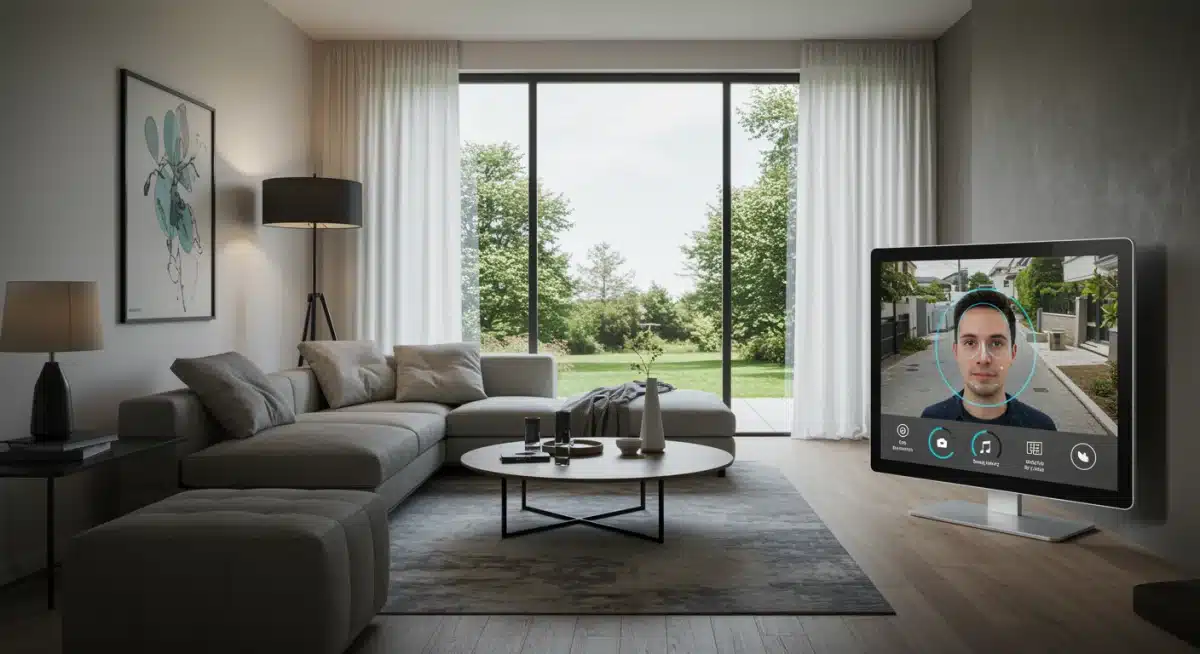
Facial recognition technology, for example, is becoming incredibly sophisticated. Systems can now distinguish between identical twins, recognize faces under varying lighting conditions, and even detect signs of duress. This means your front door could unlock automatically for family members while instantly alerting you to an unfamiliar face or someone attempting forced entry.
Voice and Gait Recognition
Beyond visual biometrics, voice and gait recognition are emerging as powerful authentication tools. Voice biometrics can verify identity based on unique vocal patterns, allowing homeowners to disarm systems or grant access with a simple voice command. This adds a layer of hands-free convenience, especially useful when carrying groceries or managing children.
- Voice Commands: Securely control security features using unique voiceprints.
- Gait Analysis: Identify individuals by their walking patterns, even from a distance.
- Iris and Retina Scans: Ultra-secure access control for sensitive areas within the home.
Gait recognition, while still evolving, holds immense promise. Imagine a system that can identify family members approaching the property based on their distinct walking style, triggering personalized actions like turning on lights or disarming the alarm before they even reach the door. This seamless integration of biometrics into daily life represents a significant leap forward in home security.
The combination of these biometric modalities creates a layered security approach, making it exponentially harder for intruders to bypass. As these technologies become more affordable and reliable, they will become standard features in advanced smart home security systems, offering both robust protection and effortless user experience.
Integrated Ecosystems: Seamless Security and Smart Home Devices
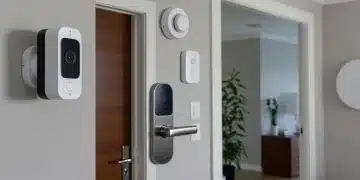
The fragmented nature of early smart home devices is a thing of the past. By 2026, the dominant trend in smart home security will be fully integrated ecosystems, where all devices—from cameras and locks to thermostats and lighting—communicate seamlessly. This interconnectedness enhances security by allowing different components to work in concert, creating a unified and more intelligent defense system.
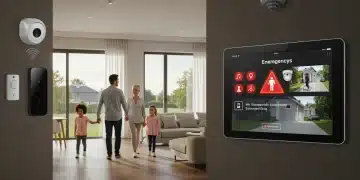
Imagine a scenario where a motion sensor detects unusual activity, immediately triggering not just a camera recording, but also turning on all interior and exterior lights, locking all doors, and even playing a pre-recorded deterrent message through smart speakers. This coordinated response is far more effective than individual alerts from disparate devices.
The key to these integrated ecosystems is universal compatibility and open standards. Manufacturers are increasingly collaborating to ensure their devices can communicate effectively, regardless of brand. This fosters a more flexible and powerful security setup, allowing homeowners to choose the best components for their needs without worrying about compatibility issues.
Centralized Control and Automation
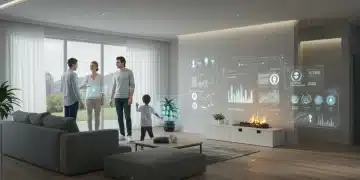
A single, intuitive interface will manage the entire security ecosystem. This centralized control hub, whether a dedicated panel, a smartphone app, or a voice assistant, will provide homeowners with a comprehensive overview and effortless management of all security functions. Automation rules can be set up to respond to various events, optimizing both security and convenience.
- Unified Dashboards: Control all security and smart home devices from one interface.
- Automated Responses: Create custom rules for device interactions based on security events.
- Cross-Brand Compatibility: Devices from different manufacturers work together seamlessly.
Furthermore, these integrated systems will offer advanced personalization. Homeowners can define specific zones, set different security levels for various times of day, and even grant temporary, time-limited access to visitors or service providers. This level of granular control ensures that the security system adapts to the unique needs and lifestyle of every household.
The move towards integrated ecosystems represents a maturation of the smart home market, where security is not an add-on but a fundamental layer woven into the fabric of the entire connected home experience. This ensures a more robust, responsive, and user-friendly security solution for 2026 and beyond.
Proactive Threat Detection and Deterrence
The future of smart home security is not just about reacting to intrusions but actively preventing them. By 2026, systems will be equipped with sophisticated proactive threat detection and deterrence capabilities that aim to stop potential threats before they escalate. This shift focuses on creating an environment that is so secure and challenging for intruders that they are deterred from even attempting a break-in.
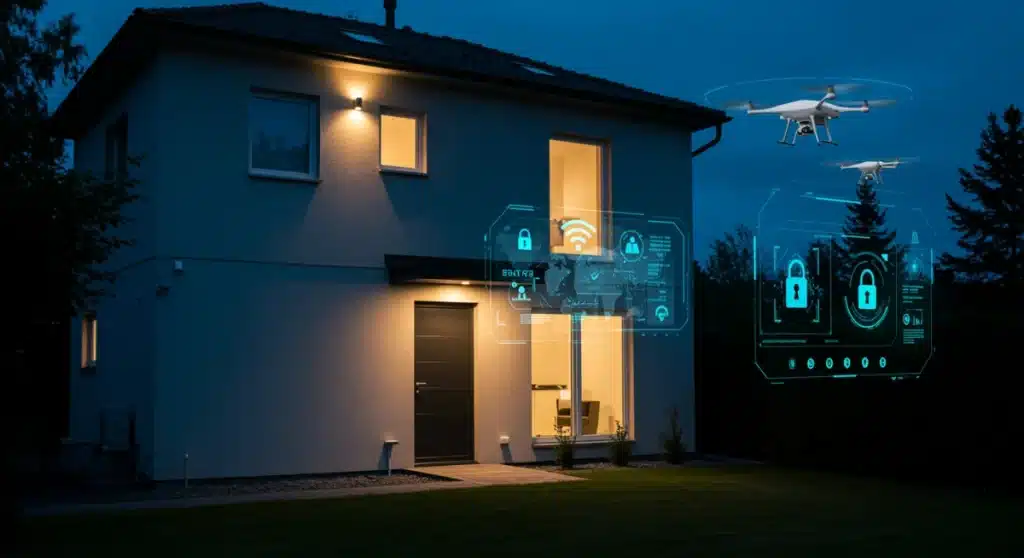
One key innovation is the use of drone surveillance. While perhaps not commonplace for everyday residential use, specialized security drones could be deployed in larger properties or as part of community security networks. These drones can provide aerial monitoring, identify suspicious activity from a broader perspective, and even communicate with ground-based systems.
Advanced Sensory Networks
Beyond traditional sensors, future homes will integrate advanced sensory networks capable of detecting a wider range of environmental anomalies. This includes thermal imaging to detect body heat in unexpected areas, acoustic sensors that can distinguish between benign noises and suspicious sounds (like glass breaking or forced entry), and even chemical sensors to identify potential hazards.
- Perimeter Defense: Invisible laser grids or motion-activated deterrents around the property.
- Sound Analysis: Differentiating between common household noises and potential threats.
- Thermal Imaging: Detecting hidden intruders or abnormal heat signatures.
Another powerful deterrent is dynamic lighting. Instead of simply turning on all lights when motion is detected, smart systems can create complex lighting patterns that mimic human presence, making a home appear occupied even when it’s empty. This psychological deterrent can be remarkably effective in discouraging opportunistic criminals.
Moreover, two-way audio communication through security cameras will become more sophisticated, allowing homeowners or monitoring services to verbally confront intruders in real-time, often startling them into retreat. The goal is to make the home an unappealing target, leveraging technology to create an intelligent, active defense perimeter.
Cybersecurity and Privacy in Smart Home Security
As smart home security systems become more interconnected and reliant on data, the importance of robust cybersecurity and privacy measures intensifies. By 2026, consumers will demand, and manufacturers will deliver, solutions that not only protect physical assets but also safeguard personal data and digital integrity. The risk of cyber-attacks, data breaches, and privacy infringements looms large, necessitating continuous innovation in these areas.
End-to-end encryption will be standard for all data transmitted between smart devices and cloud servers, ensuring that sensitive information remains indecipherable to unauthorized parties. Regular security updates, often delivered automatically, will patch vulnerabilities and protect against emerging threats, much like updates for our smartphones and computers.
Data Minimization and User Control
A key principle driving privacy in 2026 will be data minimization—collecting only the necessary data to perform security functions. Homeowners will have greater control over what data is collected, how it’s used, and who it’s shared with, often through transparent, easily manageable privacy settings. This empowerment of the user is crucial for building trust in smart security systems.
- Strong Encryption: Protecting all communication and stored data.
- Regular Updates: Automatic firmware and software security patches.
- Privacy Dashboards: User-friendly interfaces for managing data and permissions.
Furthermore, the shift towards edge computing, where data processing happens on the device itself rather than exclusively in the cloud, will enhance both privacy and speed. By processing data locally, less sensitive information needs to be transmitted externally, reducing the risk of interception. This approach also allows for faster response times, as decisions can be made instantaneously without relying on cloud communication.
The focus on cybersecurity and privacy will be a defining characteristic of smart home security in 2026. Trust in these systems will be paramount, and manufacturers that prioritize user data protection and offer transparent, robust security frameworks will gain significant market advantage, ensuring peace of mind for digitally connected homes.
DIY vs. Professionally Monitored Systems: A Hybrid Future
The debate between do-it-yourself (DIY) smart home security systems and professionally monitored services has long been a key consideration for homeowners. By 2026, this distinction will blur significantly, giving way to a hybrid model that combines the flexibility and cost-effectiveness of DIY with the reliability and rapid response of professional monitoring. This evolution caters to a broader spectrum of consumer needs and preferences.
DIY systems will continue to offer ease of installation and customization, appealing to tech-savvy individuals who prefer direct control over their security setup. However, these systems will increasingly integrate options for on-demand professional monitoring, allowing users to subscribe to monitoring services only when needed, such as during vacations or extended absences.
Flexible Monitoring Options
The future will see more granular control over monitoring services. Instead of a one-size-fits-all subscription, homeowners can choose specific services—like video verification of alarms, dispatching emergency services, or remote system diagnostics—on an as-needed basis. This flexibility provides a cost-effective way to enhance security without committing to long-term contracts for services that may not always be required.
- On-Demand Monitoring: Activate professional monitoring for specific periods or events.
- Tiered Services: Choose from various levels of professional support based on budget and need.
- Self-Monitoring with Backup: Maintain primary control with professional intervention for critical events.
Conversely, traditional professionally installed systems will incorporate more user-friendly DIY elements, empowering homeowners to manage daily settings, add new devices, and troubleshoot minor issues themselves. This fusion benefits both consumers, who gain more control and flexibility, and providers, who can offer more scalable and adaptable services.
The hybrid future of smart home security systems acknowledges that security needs are dynamic. It offers a spectrum of choices, allowing homeowners to tailor their protection to their evolving circumstances, ensuring optimal security without unnecessary expense or complexity. This adaptable approach will define the market for smart home security in 2026.
The Role of Sustainability and Ethical AI in Smart Security
Beyond advanced features, 2026 will also see an increased focus on sustainability and ethical AI practices within the smart home security industry. Consumers are becoming more environmentally conscious and concerned about the societal impact of technology. Manufacturers are responding by developing eco-friendly products and ensuring their AI systems are designed with fairness and transparency in mind.
Sustainable security solutions will involve devices made from recycled materials, energy-efficient operation, and packaging that minimizes environmental waste. The entire lifecycle of a smart security product, from manufacturing to disposal, will be scrutinized for its ecological footprint. This commitment to sustainability aligns with broader consumer values and regulatory pressures.
Ethical AI Development and Bias Mitigation
The ethical implications of AI, particularly in areas like facial recognition and behavioral analysis, are paramount. By 2026, smart home security systems will incorporate ethical AI principles designed to mitigate bias and ensure equitable treatment. This means rigorous testing to prevent discriminatory outcomes and transparent algorithms that explain how decisions are made.
- Eco-friendly Materials: Devices built with recycled and sustainable components.
- Energy Efficiency: Low-power consumption modes and renewable energy integration.
- Bias-Free Algorithms: AI systems designed to operate fairly and without prejudice.
Furthermore, accountability in AI development will be crucial. Manufacturers will be expected to demonstrate responsible data handling and clear policies regarding the use of AI in security contexts. This includes ensuring that AI systems are not used for surveillance beyond their intended purpose and that user privacy is always respected.
The integration of sustainability and ethical AI into smart home security is not just a trend but a fundamental shift towards more responsible technology. These considerations will build greater trust and acceptance among consumers, ensuring that the advancements in security technology serve humanity responsibly and sustainably. This holistic approach will shape the future of smart home security in the U.S. by 2026.
| Key Trend | Brief Description |
|---|---|
| AI & Machine Learning | Proactive threat prediction, behavioral learning, and reduced false alarms. |
| Advanced Biometrics | Beyond fingerprints: facial, voice, and gait recognition for secure access. |
| Integrated Ecosystems | Seamless communication between all smart devices for unified defense. |
| Proactive Deterrence | Advanced sensors and dynamic lighting to prevent intrusions before they occur. |
Frequently Asked Questions About Smart Home Security in 2026
By 2026, AI will transform smart home security by enabling proactive threat detection, learning your daily routines, and significantly reducing false alarms. It will identify unusual patterns and differentiate between known individuals and potential intruders, offering more intelligent and reliable protection than ever before.
Beyond traditional fingerprints, 2026 will see widespread integration of advanced biometrics like highly accurate facial recognition, voice authentication, and even gait analysis. These technologies will provide seamless, hands-free access for authorized users while offering robust protection against unauthorized entry, enhancing both convenience and security.
The trend for 2026 is towards more integrated ecosystems and open standards. While some older devices might require upgrades, manufacturers are prioritizing cross-brand compatibility. This means a higher likelihood that your current smart devices will integrate with newer security systems, creating a more unified and responsive home defense.
Cybersecurity and privacy will be paramount. Expect end-to-end encryption, automatic security updates, and user-friendly privacy dashboards. Emphasis will be on data minimization and edge computing, where data processing happens locally, reducing reliance on cloud transmission and giving users greater control over their personal information and security settings.
By 2026, a hybrid model will dominate. DIY systems will offer on-demand professional monitoring options, allowing users to subscribe only when needed. Conversely, professional services will integrate more DIY-friendly features. This flexibility ensures personalized, cost-effective security solutions tailored to individual needs and lifestyles, blending control with professional backup.
Conclusion
The future of smart home security in the U.S. by 2026 is poised for transformative advancements, moving beyond simple alerts to an era of intelligent, proactive protection. We can anticipate systems that not only detect threats but predict and deter them, leveraging the power of AI, advanced biometrics, and seamlessly integrated ecosystems. This evolution promises not just safer homes, but smarter, more responsive living environments that prioritize both robust security and user convenience. As cybersecurity and privacy concerns are effectively addressed, and sustainable, ethical practices become standard, homeowners will gain unprecedented peace of mind, confident that their digital guardians are vigilant, intelligent, and trustworthy. The journey towards a truly secure smart home is well underway, offering a glimpse into a future where safety is both effortless and absolute.