Personalized Wellness: Smart Home Tech Adapting to Individual Health Needs in 2026
Personalized Wellness: How Smart Home Tech is Adapting to Individual Health Needs in 2026
The dawn of 2026 brings with it a revolution in how we perceive and manage our health, all from the comfort of our own homes. The concept of smart home wellness 2026 is no longer a futuristic fantasy but a tangible reality, with technology seamlessly integrating into our living spaces to offer unprecedented levels of personalized care. Gone are the days of one-size-fits-all health advice; instead, we are entering an era where our homes actively adapt to our unique physiological and psychological needs, transforming into bespoke wellness hubs.
This paradigm shift is driven by the convergence of advanced artificial intelligence (AI), the Internet of Things (IoT), sophisticated sensor technology, and a growing societal emphasis on preventative health. Our homes are evolving from mere shelters into intelligent ecosystems that monitor, analyze, and proactively respond to our individual health trajectories. From optimizing sleep environments to tracking vital signs and even cueing exercise routines, smart home tech is becoming an indispensable partner in our journey towards holistic well-being.
The promise of smart home wellness 2026 lies in its ability to empower individuals with actionable insights and automated support, fostering a proactive approach to health management. Imagine waking up to a home that has already adjusted its lighting and temperature for optimal alertness, or a kitchen that suggests meal plans based on your current nutritional needs and activity levels. This article will delve deep into the innovative ways smart home technology is adapting to individual health needs, exploring the key advancements, practical applications, and the profound impact this will have on our quality of life in the coming years.
The Evolution of Smart Home Technology: Beyond Convenience to Care
Initially, smart home technology focused primarily on convenience and security. Smart thermostats, lighting systems, and security cameras aimed to automate routine tasks and provide peace of mind. However, as sensor technology became more sophisticated and AI algorithms grew more powerful, the potential for these systems to contribute to health and wellness became undeniable. In 2026, this potential is being fully realized, pushing the boundaries of what a home can do for its inhabitants.
The shift towards health-centric smart homes is not just about adding new gadgets; it’s about creating an integrated, responsive environment. This involves a complex interplay of various technologies. For instance, environmental sensors now do more than just detect temperature; they can analyze air quality for allergens, pollutants, and even volatile organic compounds (VOCs), adjusting ventilation systems accordingly to prevent respiratory issues. Smart lighting systems are no longer just dimmable; they dynamically adjust color temperature and intensity throughout the day to synchronize with circadian rhythms, promoting better sleep and mood regulation. This holistic approach is foundational to achieving true smart home wellness 2026.
Furthermore, the data collected by these interconnected devices is no longer siloed. Cloud-based platforms, powered by advanced AI, aggregate and analyze this information, drawing correlations between environmental factors, lifestyle choices, and individual health markers. This allows for a deeper understanding of personal health patterns and enables the home to offer truly personalized interventions. The predictive capabilities of these systems are also rapidly improving, moving us from reactive treatment to proactive prevention, a cornerstone of effective wellness strategies.
Key Pillars of Personalized Wellness in Smart Homes by 2026
The landscape of smart home wellness 2026 is built upon several foundational technological pillars, each contributing to a more personalized and effective health management system. Understanding these components is crucial to appreciating the full scope of this revolution.
Advanced Biometric Monitoring and Wearable Integration
One of the most significant advancements is the seamless integration of biometric monitoring into the home environment. Beyond traditional wearables, which continue to evolve with greater accuracy and comfort, ambient sensors are becoming increasingly prevalent. These sensors, embedded in furniture, flooring, or even mirrors, can track vital signs like heart rate, breathing patterns, blood pressure, and even glucose levels without requiring direct user interaction. This passive monitoring provides a continuous stream of data, offering a comprehensive picture of an individual’s health status throughout the day and night.
The data from these ambient sensors, combined with information from personal wearables (smartwatches, rings, patches), creates a robust health profile. AI algorithms then analyze this aggregated data to detect anomalies, identify potential health risks, and track progress towards wellness goals. For example, a sudden change in sleep patterns combined with an elevated resting heart rate might trigger an alert or a suggestion for stress-reduction techniques. This level of continuous, passive monitoring is a game-changer for preventative care and early detection, making smart home wellness 2026 truly proactive.
AI-Powered Environmental Adaptation for Optimal Health
Artificial intelligence is the brain behind the adaptive capabilities of smart homes. In 2026, AI goes beyond simple automation; it learns individual preferences, habits, and physiological responses to environmental stimuli. This allows the home to dynamically adjust various parameters to create an optimal wellness environment.
- Circadian Lighting Systems: AI-driven lighting adjusts color temperature and brightness throughout the day to align with natural light cycles, boosting energy during the day and promoting melatonin production for better sleep at night.
- Personalized Thermal Comfort: Smart thermostats learn individual thermal preferences and can predict when a room needs to be cooled or heated based on occupancy, external weather, and even individual metabolic rates, minimizing energy waste while maximizing comfort.
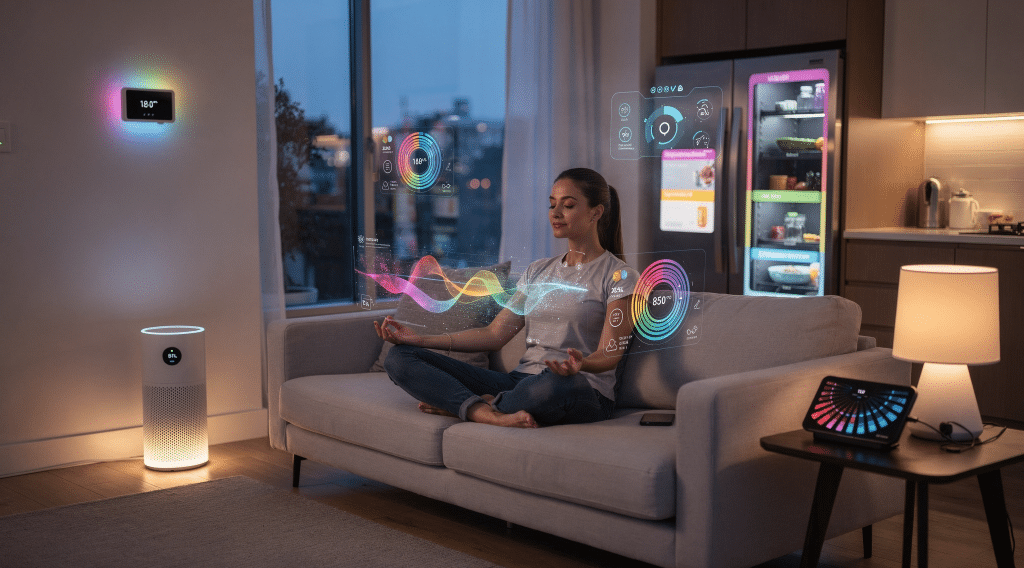
- Air Quality Management: AI-powered air purifiers and humidifiers monitor indoor air quality in real-time, identifying pollutants, allergens, and humidity imbalances. They then automatically activate to maintain optimal air purity and moisture levels, crucial for respiratory health, especially for those with allergies or asthma.
- Soundscapes for Well-being: Smart sound systems can generate personalized soundscapes – from calming nature sounds for relaxation to energizing beats for workouts – adapting to the user’s mood and activity.
These AI-powered adaptations are not static; they continuously learn and refine their responses based on user feedback and biometric data, ensuring the home truly caters to unique physical and psychological needs, a hallmark of advanced smart home wellness 2026.
Nutrition and Hydration Management
The kitchen, often considered the heart of the home, is transforming into a sophisticated wellness hub. Smart appliances, integrated with AI, are playing a pivotal role in managing nutrition and hydration. Smart refrigerators can track inventory, suggest recipes based on available ingredients and dietary preferences, and even monitor expiration dates. Connected scales and smart cutting boards can help with portion control and nutritional logging.
Beyond appliances, AI-powered personal nutrition assistants can analyze data from wearables and biometric sensors to recommend personalized meal plans, grocery lists, and hydration goals. They can even connect with smart water bottles to ensure adequate fluid intake throughout the day. This level of integrated nutritional guidance helps individuals make healthier food choices and maintain consistent hydration, vital components of overall smart home wellness 2026.
Proactive Fitness and Movement Encouragement
Sedentary lifestyles are a growing concern, and smart homes in 2026 are actively combating this. Integrated sensors in flooring or smart mats can track activity levels and identify prolonged periods of inactivity. AI then steps in to provide gentle nudges or suggestions for movement, such as recommending a short stretch break, a walk around the house, or even a guided exercise routine displayed on a smart mirror or TV.
Smart home gyms, equipped with AI-powered trainers, offer personalized workout plans that adapt in real-time based on performance, energy levels, and recovery needs. These systems can correct form, provide motivation, and track progress, making exercise more accessible and effective. The goal is to seamlessly integrate physical activity into daily life, transforming the home into an active partner in maintaining fitness, a key aspect of comprehensive smart home wellness 2026.
The Critical Role of Sleep Optimization
Sleep is a cornerstone of good health, and smart homes are becoming incredibly adept at optimizing sleep environments. By 2026, smart beds are equipped with advanced sensors that monitor sleep stages, heart rate variability, breathing irregularities, and even micro-movements throughout the night. These beds can then dynamically adjust their firmness, temperature, and even angle to provide optimal comfort and support, responding to individual sleep patterns.
Beyond the bed itself, the entire bedroom ecosystem works in harmony. AI-controlled lighting gradually dims in the evening and brightens gently in the morning, mimicking natural sunrise to promote a more natural wake-up. Smart sound machines generate white noise or calming soundscapes to mask disturbances and aid relaxation. Air purifiers ensure optimal air quality, and smart blinds automatically close at bedtime and open at wake-up time. The data collected from these systems provides detailed sleep reports and personalized recommendations for improving sleep hygiene, transforming the bedroom into a sanctuary for restorative rest, a crucial element of smart home wellness 2026.
Mental Well-being and Stress Reduction
Beyond physical health, smart home wellness 2026 places a significant emphasis on mental well-being and stress reduction. AI-powered systems are designed to create calming and supportive environments that can help mitigate stress and anxiety.
Smart lighting can shift to soothing color palettes proven to reduce stress. Integrated aromatherapy diffusers can release calming essential oils based on detected stress levels or scheduled relaxation times. Smart speakers can offer guided meditation sessions, mindfulness exercises, or play personalized calming music. Some advanced systems even incorporate biofeedback mechanisms, where sensors detect signs of stress (e.g., increased heart rate, muscle tension) and then trigger environmental adjustments to promote relaxation.
Furthermore, smart homes can facilitate social connection, which is vital for mental health. Integrated video conferencing tools make it easier for individuals, particularly the elderly or those with mobility issues, to connect with family and friends. Virtual reality (VR) and augmented reality (AR) applications are also emerging as tools for mental wellness, offering immersive relaxation experiences or cognitive training programs directly within the home environment. This holistic approach to mental health is a defining feature of the future of smart home wellness 2026.
Accessibility and Assisted Living for All Ages
One of the most profound impacts of smart home wellness 2026 is its potential to revolutionize assisted living and enhance accessibility for individuals of all ages and abilities. For the elderly, smart homes offer increased independence and safety. Motion sensors can detect falls and automatically alert caregivers or emergency services. Smart medication dispensers ensure adherence to prescribed regimens, while voice-activated controls for lighting, heating, and entertainment reduce the need for physical exertion.
For individuals with disabilities, smart home technology provides unprecedented levels of autonomy. Voice and gesture controls can operate virtually any appliance or system, from opening doors to adjusting bed positions. AI-powered navigation tools can assist those with visual impairments, and smart monitoring systems can provide peace of mind for caregivers. The ability of the home to adapt to specific physical limitations significantly improves the quality of life and reduces the burden on care providers, making personalized wellness truly inclusive.
Data Privacy, Security, and Ethical Considerations
As smart homes collect increasingly sensitive personal health data, issues of privacy, security, and ethics become paramount. In 2026, robust data encryption, secure cloud storage, and stringent regulatory frameworks are essential to build trust and protect user information. Users must have clear control over their data, including who can access it and for what purpose. Opt-in consent models and transparent data usage policies are becoming standard.
Ethical considerations also extend to the potential for algorithmic bias and the impact on individual autonomy. AI systems must be designed to be fair and equitable, ensuring that personalized recommendations are truly beneficial and do not inadvertently reinforce unhealthy habits or create new forms of dependency. The balance between proactive assistance and preserving individual choice is a delicate one that continues to be refined as smart home wellness 2026 evolves. Open dialogue between technologists, ethicists, healthcare professionals, and policy makers is crucial to navigate these complex challenges effectively.
The Future Outlook: Beyond 2026
While 2026 marks a significant milestone in smart home wellness, the trajectory of innovation continues upward. Looking further into the future, we can anticipate even more sophisticated and integrated systems. Imagine homes equipped with predictive diagnostics that can detect early signs of illness even before symptoms appear, or personalized therapeutic environments that administer light, sound, or even scent therapies tailored to specific health conditions.
The integration with broader healthcare ecosystems will also deepen. Data from smart homes will seamlessly flow into electronic health records (EHRs) (with explicit user consent), allowing healthcare providers to gain a more complete and real-time understanding of their patients’ health. This will enable more precise diagnoses, personalized treatment plans, and continuous remote monitoring, blurring the lines between home-based wellness and clinical care.
Furthermore, the concept of a ‘digital twin’ of an individual’s health, constantly updated by smart home data, may become a reality. This virtual representation could be used to simulate the effects of different lifestyle changes or medical interventions, offering highly personalized health forecasts and recommendations. The emphasis will increasingly be on truly preventative and even pre-emptive care, where the home acts as the first line of defense against illness and a constant companion in the pursuit of optimal well-being. The vision for smart home wellness 2026 is just the beginning of a profound transformation in how we live, heal, and thrive.
Conclusion: A Healthier Home, A Healthier You
The year 2026 represents a pivotal moment in the integration of technology and personal health. Smart home technology has moved far beyond simple automation, evolving into sophisticated, adaptive ecosystems that actively support and enhance individual well-being. From advanced biometric monitoring and AI-powered environmental control to personalized nutrition, fitness encouragement, and mental wellness support, the impact on our daily lives is profound.
The promise of smart home wellness 2026 is a future where our living spaces are not just places where we reside, but active partners in our health journey. They offer continuous, personalized care, empower us with actionable insights, and foster environments conducive to both physical and mental flourishing. While challenges related to data privacy and ethical considerations remain, the ongoing advancements and increasing awareness are paving the way for solutions that prioritize user trust and well-being.
As we embrace this new era, our homes are set to become the most intimate and effective allies in our quest for a healthier, happier, and more fulfilling life. The future of wellness is undeniably smart, personalized, and right within our reach.