The smart home journey has evolved rapidly, moving from rudimentary remote controls to intricate interconnected systems. As we approach 2026, the discussion shifts significantly Beyond Connectivity: Predicting the Next 3 Big Innovations in Smart Home Technology for 2026. This isn’t just about turning lights on with your voice; it’s about homes that truly understand, anticipate, and adapt to our every need, creating an unprecedented level of convenience and efficiency.
The Rise of Predictive AI and Proactive Automation
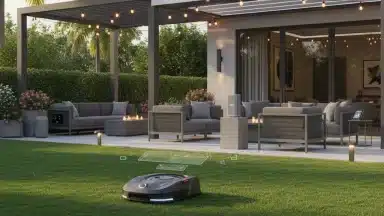
In the coming years, the most profound shift in smart home technology will be the widespread adoption of predictive artificial intelligence. This goes far beyond reactive automation, where devices respond to direct commands. Instead, homes will actively learn user habits, anticipate needs, and make proactive adjustments, transforming living spaces into truly intuitive environments.
Imagine a home that knows when you’re likely to arrive, not just from your calendar, but by analyzing traffic patterns and your usual departure times. It could then pre-adjust the thermostat, dim the lights, and even start brewing your coffee. This level of foresight will redefine comfort and efficiency, moving the smart home from a helpful assistant to an indispensable, intelligent companion.
Contextual Awareness and Behavioral Learning
Predictive AI leverages sophisticated algorithms and vast datasets to build a comprehensive understanding of household dynamics. This includes everything from individual preferences for lighting and temperature to daily routines and even emotional states, inferred through subtle environmental cues and user interactions.
- Personalized Climate Control: Systems will learn individual thermal preferences for each occupant and adjust zones accordingly, optimizing energy use.
- Anticipatory Lighting: Lighting will adapt not just to time of day, but to activities, mood, and even weather forecasts, creating ideal ambiance.
- Routine Optimization: AI will identify patterns in daily activities and streamline processes, such as preparing the home for sleep or waking.
The integration of advanced sensors, including those for occupancy, air quality, and even biometric data (with user consent), will fuel this contextual awareness. These sensors, combined with machine learning, will allow the home to interpret complex situations and respond appropriately, often before a user even realizes a need exists.
Seamless Integration with External Data
A truly predictive smart home won’t operate in a vacuum. It will seamlessly integrate with external data sources, such as local weather forecasts, traffic reports, public transit schedules, and even news feeds, to make more informed decisions. This broader context allows for a far more sophisticated level of automation and personalization.
- Weather-Responsive Adjustments: Blinds might automatically close before a heatwave or open to maximize natural light on a cloudy day.
- Traffic-Based Scheduling: Your home could adjust your alarm or smart appliance schedules based on real-time traffic conditions for your commute.
- Event-Driven Preparations: If a family gathering is scheduled, the home might pre-cool certain areas or prepare entertainment systems.
This innovation marks a significant leap from merely connected devices to an ecosystem that actively anticipates and adapts to the unpredictable nature of daily life. The goal is to create an environment that feels less like a collection of gadgets and more like a living, breathing entity that caters to your well-being.
Hyper-Personalized Environments and Adaptive Living Spaces
The second major innovation shaping smart homes by 2026 is the evolution towards hyper-personalized environments. This means that homes will not only learn individual preferences but will dynamically adapt entire living spaces to suit the specific needs and moods of each occupant, or even multiple occupants simultaneously. This level of customization goes beyond simple settings to a truly adaptive and responsive architecture.
Imagine walking into a room and it instantly transforms to your preferred lighting, sound, and even scent profile, while simultaneously adjusting for another family member’s preferences in an adjacent zone. This isn’t just about individual device settings; it’s about the entire home environment becoming fluid and responsive to human interaction and presence.
Dynamic Spatial Reconfiguration
Advanced robotics and modular furniture systems will allow for subtle, or even significant, spatial reconfigurations within a home. Walls might become translucent, furniture could retract or reconfigure, and lighting fixtures could shift to create entirely new zones or functions within an existing space. This offers unparalleled flexibility in how we use our homes.
- Multi-functional Rooms: A living room could transform into a home office during the day and a cinema at night, all with automated adjustments.
- Personalized Zones: Each family member could have their own micro-environment within a shared space, tailored to their tasks or relaxation needs.
- Adaptive Aesthetics: Digital displays and smart surfaces could change their appearance to match a desired aesthetic or mood.
This innovation addresses the growing need for flexibility in urban living, where space is often at a premium. It also caters to diverse household needs, from remote work to entertainment, ensuring every square foot is optimized for its current purpose.
Sensory Immersion and Digital Wellness
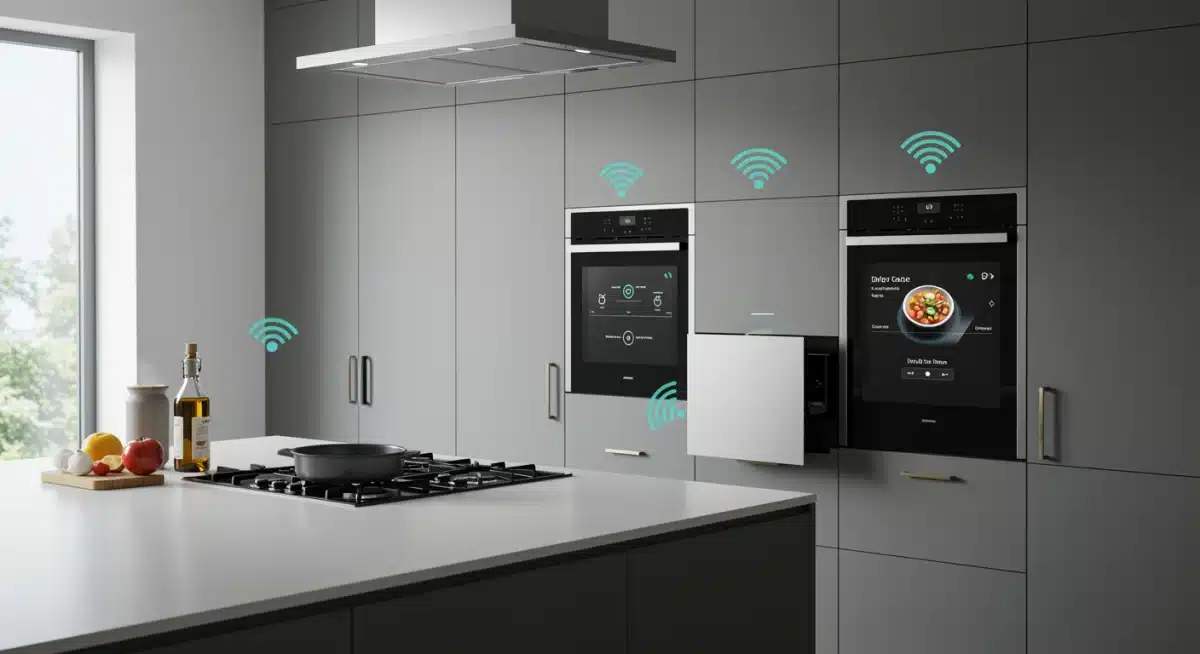
Hyper-personalization will extend to sensory experiences, creating immersive environments designed to enhance well-being. This includes sophisticated soundscapes, adaptive lighting that mimics natural cycles, and even integrated scent diffusion systems. The smart home will become a tool for digital wellness, actively promoting relaxation, focus, or energy as needed.
- Tailored Soundscapes: Dynamic audio environments for meditation, focused work, or social gatherings.
- Circadian Lighting: Lighting systems that adjust color temperature and intensity throughout the day to support natural sleep-wake cycles.
- Aromatherapy Integration: Automated diffusion of essential oils or custom scents to influence mood and atmosphere.
The convergence of predictive AI and adaptive environments means that your home will not just react to you, but will proactively shape itself to optimize your physical and mental state. This represents a paradigm shift from a static dwelling to a dynamic, responsive partner in daily life.
Sustainable Integration and Resource Optimization
The third major innovation for smart homes by 2026 focuses on deep sustainable integration and advanced resource optimization. As environmental concerns grow and energy costs fluctuate, smart homes will play a crucial role in managing consumption, reducing waste, and even contributing to renewable energy grids. This moves beyond simple energy monitoring to active, intelligent environmental stewardship.
Homes will become active participants in a broader sustainable ecosystem, not just consuming resources but intelligently managing their flow and even generating their own power. This holistic approach will make sustainable living not just a choice, but an inherent feature of the modern smart home.
Intelligent Energy Management and Micro-Grids
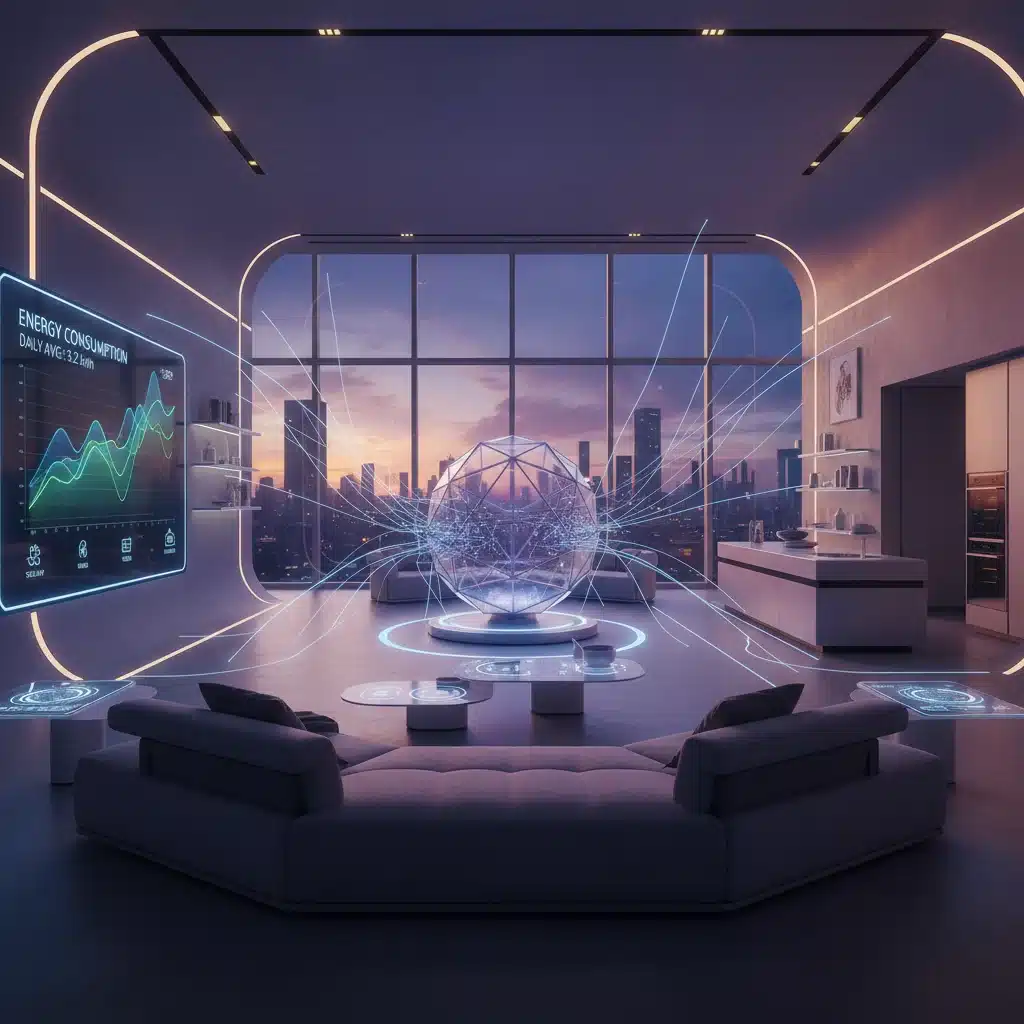
Smart homes will feature highly sophisticated energy management systems that go beyond merely turning off lights when a room is empty. These systems will integrate with local energy grids, renewable energy sources like solar panels, and battery storage solutions to optimize power consumption and even sell surplus energy back to the grid. This creates a dynamic, responsive micro-grid within the home.
- Dynamic Load Balancing: Prioritizing power to essential appliances during peak demand or when renewable energy is scarce.
- Predictive Energy Scheduling: Shifting energy-intensive tasks, like charging EVs or running dishwashers, to off-peak hours or when solar generation is high.
- Integration with Local Grids: Allowing homeowners to participate in demand-response programs, earning credits for reducing consumption during grid strain.
This level of integration transforms the smart home from a passive consumer to an active energy manager, contributing to grid stability and significantly reducing carbon footprints. The financial incentives for such systems will drive their rapid adoption.
Waste Reduction and Resource Tracking
Beyond energy, smart homes will also innovate in waste reduction and comprehensive resource tracking. This includes intelligent waste sorting systems, water conservation technologies, and even smart appliances that monitor food freshness to minimize spoilage. The focus will be on a closed-loop system where resources are managed efficiently throughout their lifecycle.
- Automated Waste Sorting: Smart bins that identify and separate recyclables, compostables, and general waste.
- Water Conservation Systems: Smart irrigation based on hyperlocal weather data, and leak detection systems that proactively prevent waste.
- Food Management: Refrigerators with inventory tracking and expiration date alerts to reduce food waste.
The sustainable smart home of 2026 will empower residents to make environmentally conscious choices effortlessly. By automating resource management and providing real-time data, these innovations will foster a new era of eco-friendly living, making sustainability an integral part of everyday comfort and convenience.
Enhanced Security and Privacy in a Smarter World
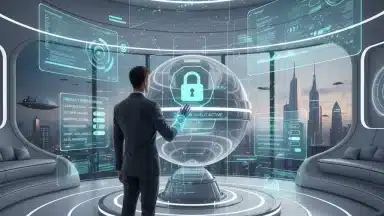
As smart homes become more integrated and intelligent, the imperative for enhanced security and privacy measures grows exponentially. By 2026, innovations in this area will move beyond basic encryption to include advanced biometric authentication, decentralized data storage, and proactive threat detection, ensuring that convenience doesn’t come at the cost of vulnerability.
The increasing sophistication of smart home devices necessitates equally sophisticated protection. We’ll see a shift towards systems that are inherently secure by design, offering users peace of mind in an increasingly connected world. This will involve not just hardware and software updates, but also a fundamental rethinking of how data is managed and accessed within the home ecosystem.
Biometric Authentication and Multi-Layered Security
Traditional passwords will largely be replaced by advanced biometric authentication methods, offering both enhanced security and seamless access. This will be coupled with multi-layered security protocols that protect every point of entry and data exchange within the smart home network.
- Facial and Voice Recognition: Unlocking doors, authorizing payments, and accessing personalized settings based on unique biometric identifiers.
- Behavioral Biometrics: Systems learning unique patterns of interaction (e.g., typing rhythm, gait) for continuous authentication.
- Hardware-Level Encryption: Ensuring data is encrypted at the device level, making it virtually unreadable to unauthorized parties.
The goal is to create an impenetrable digital fortress around the home, where access is granted only to verified individuals and data remains secure from external threats. This will be crucial for maintaining trust in the burgeoning smart home market.
Decentralized Data Architectures and Privacy Controls
Concerns about data privacy will drive innovations towards decentralized data architectures. Instead of relying on central servers, more data will be processed and stored locally on devices or within secure, encrypted home hubs. This minimizes the risk of large-scale data breaches and gives users greater control over their personal information.
- Edge Computing: Processing data on the device itself, reducing the need to send sensitive information to the cloud.
- User-Centric Data Dashboards: Providing homeowners with clear, intuitive interfaces to manage data permissions and access controls.
- Blockchain for Data Integrity: Exploring blockchain technology to create immutable records of data access and device interactions, enhancing transparency.
These privacy-focused innovations will empower users to decide what data is collected, how it’s used, and who can access it. This shift towards user control and data sovereignty will be a hallmark of smart home technology in 2026, building a foundation of trust and reliability.
Seamless Interoperability and Universal Standards
One of the persistent challenges in smart home adoption has been the fragmentation of ecosystems and the lack of universal interoperability. By 2026, significant strides will be made towards seamless communication between devices from different manufacturers, driven by industry-wide commitment to universal standards. This will unlock the full potential of the smart home, making integration effortless for consumers.
The era of proprietary walled gardens will largely recede, replaced by an open, collaborative environment where devices, regardless of brand, can communicate and cooperate harmoniously. This will simplify installation, expand functionality, and reduce consumer frustration, accelerating the mass adoption of smart home technology.
The Maturation of Matter and Beyond
Standards like Matter have laid the groundwork for this interoperable future, but by 2026, these protocols will be mature, widely adopted, and significantly more robust. They will support a broader range of device types and offer enhanced security features, ensuring a truly unified smart home experience.
- Universal Device Compatibility: Any Matter-certified device will seamlessly integrate with any Matter-certified hub or ecosystem, regardless of brand.
- Simplified Setup: Plug-and-play functionality will become the norm, reducing technical barriers for average users.
- Expanded Device Categories: Support for a wider array of smart home devices, from complex appliances to niche sensors.
This widespread adoption of universal standards will dramatically lower the entry barrier for smart home technology, allowing consumers to choose devices based on their features and aesthetics rather than brand compatibility. The consumer experience will be paramount, fostering innovation and competition.
Open APIs and Developer Ecosystems
Beyond standardized protocols, 2026 will see the flourishing of open Application Programming Interfaces (APIs) and vibrant developer ecosystems. This will allow third-party developers to create innovative applications and services that leverage the full capabilities of an integrated smart home, leading to a surge in customized solutions and unforeseen functionalities.
- Custom Automation Routines: Users or developers can create highly specific and complex automation sequences tailored to unique needs.
- Integrated Services: Seamless connection between smart home data and external services, such as healthcare, entertainment, or community platforms.
- Community-Driven Innovation: A global community of developers contributing to the evolution of smart home capabilities, much like app stores for smartphones.
This open approach will ensure that the smart home continues to evolve at a rapid pace, driven by collective intelligence and creativity. The focus on interoperability and open development will democratize smart home technology, making it more accessible, versatile, and future-proof for everyone.
Ethical Considerations and Human-Centric Design
As smart home technology advances at an unprecedented pace, the ethical implications and the necessity of human-centric design become increasingly critical. By 2026, the industry will place a stronger emphasis on developing technologies that not only enhance convenience but also respect user autonomy, promote well-being, and address potential societal impacts. This involves a shift from purely technological innovation to a more thoughtful, responsible approach.
The focus will be on creating smart homes that are not just intelligent, but also empathetic, ensuring that technology serves humanity rather than dictating its terms. This means prioritizing transparency, user control, and the prevention of digital fatigue or over-reliance.
Transparency and User Control over AI Decisions
With predictive AI becoming central to smart homes, transparency in how these systems make decisions will be paramount. Users will demand clear explanations for automated actions and robust controls to override or fine-tune AI behavior. This ensures that the homeowner remains in charge, even as the home becomes more autonomous.
- Explainable AI Interfaces: Dashboards that clearly show why a smart home system made a particular adjustment (e.g., “HVAC adjusted based on predicted outdoor temperature and your preference for 72°F”).
- Granular Control Settings: Allowing users to set boundaries for AI autonomy, from full automation to requiring explicit confirmation for certain actions.
- Ethical AI Frameworks: Industry-wide guidelines and certifications ensuring AI systems are developed with fairness, accountability, and transparency in mind.
This commitment to transparency and user control is vital for building trust and preventing the feeling of being monitored or controlled by one’s own home. It reinforces the idea that technology is a tool to empower, not to dominate.
Preventing Digital Dependency and Promoting Well-being
Smart home design in 2026 will also proactively address the potential for digital dependency and its impact on mental well-being. Innovations will include features designed to encourage screen-free time, promote healthy habits, and even facilitate disconnection when desired, ensuring that technology enhances life without overwhelming it.
- Digital Detox Modes: Automated settings that dim screens, pause notifications, and create a calm environment for relaxation or family time.
- Mindfulness Prompts: Subtle cues from the home to encourage breaks, hydration, or stretching based on learned routines.
- Adaptive Interaction: Systems that offer varied modes of interaction, from voice to gestures to physical controls, reducing reliance on single interfaces.
By integrating ethical considerations and human-centric design principles, smart home technology in 2026 will strive to create environments that are not only intelligent and efficient but also supportive of a balanced, healthy, and fulfilling lifestyle. The true mark of innovation will be how well these technologies serve human needs and values.
| Key Innovation | Brief Description |
|---|---|
| Predictive AI & Automation | Homes learn habits, anticipate needs, and proactively adjust environments for enhanced comfort and efficiency. |
| Hyper-Personalized Environments | Spaces dynamically adapt to individual moods and needs, offering sensory immersion and flexible configurations. |
| Sustainable Integration | Advanced energy management, micro-grid integration, and waste reduction for eco-friendly living. |
| Enhanced Security & Privacy | Biometric authentication, decentralized data, and proactive threat detection ensure robust protection. |
Frequently Asked Questions About Smart Home Innovations
Predictive AI in smart homes refers to systems that learn user habits and external factors to anticipate needs and proactively adjust home settings. This means your home might pre-cool before you arrive or adjust lighting based on your routine, moving beyond simple reactive commands to intelligent foresight.
Hyper-personalization will allow living spaces to dynamically adapt to individual occupants’ moods and needs. Rooms can reconfigure, lighting and soundscapes can shift, and even scents can be diffused to create unique, tailored environments for each person or activity, maximizing comfort and utility.
By 2026, smart homes will be central to sustainable living through intelligent energy management, integrating with micro-grids, and optimizing resource consumption. They will actively reduce waste, manage renewable energy flows, and provide data to help homeowners make eco-conscious decisions effortlessly, contributing to a greener future.
Smart home security will see major advancements, including widespread biometric authentication like facial and voice recognition, coupled with multi-layered encryption. Decentralized data storage and enhanced privacy controls will give users greater ownership of their information, ensuring robust protection against cyber threats and unauthorized access.
Yes, by 2026, interoperability will be greatly enhanced thanks to the maturation and widespread adoption of universal standards like Matter. This means devices from various manufacturers will seamlessly communicate and integrate, simplifying setup and expanding functionality for consumers. Open APIs will also foster a rich ecosystem of custom solutions.
Conclusion
The smart home landscape of 2026 promises a future far richer than mere connectivity. The predicted innovations in predictive AI, hyper-personalized environments, and sustainable integration represent a profound evolution, transforming our dwellings into truly intelligent, responsive, and responsible partners in daily life. This future emphasizes not just convenience, but also well-being, efficiency, and a deeper connection to our environment. As these technologies mature, they will redefine what it means to live in a modern home, making our living spaces more intuitive, adaptive, and ethically designed than ever before.