Smart Home Network Security: 2026 Cyber Attack Prevention Guide

Smart Home Network Security: Essential Updates for 2026 to Prevent 90% of Cyber Attacks
The allure of a connected home is undeniable. From smart thermostats that learn your preferences to security cameras offering peace of mind and voice assistants managing your daily tasks, smart home technology has transformed our living spaces. However, with every convenience comes a corresponding responsibility, especially when it comes to cybersecurity. As we look towards 2026, the landscape of cyber threats continues to evolve, making robust Smart Home Security 2026 measures not just advisable, but absolutely critical. This comprehensive guide will delve into the essential updates and practical solutions you need to implement to safeguard your smart home network, aiming to prevent a staggering 90% of potential cyber attacks.
The rapid proliferation of Internet of Things (IoT) devices has created a vast attack surface for cybercriminals. Each new smart device introduced into your home network represents a potential vulnerability if not properly secured. The stakes are high: unauthorized access could lead to privacy breaches, data theft, financial losses, or even physical harm if critical systems like smart locks or alarm systems are compromised. Therefore, understanding the current threat landscape and proactively implementing advanced security protocols is paramount for achieving robust Smart Home Security 2026.
Understanding the Evolving Threat Landscape for Smart Home Security 2026
Cybercriminals are constantly refining their tactics. What worked for them in 2023 might be obsolete by 2026, but new, more sophisticated methods will emerge. For effective Smart Home Security 2026, it’s crucial to stay informed about these evolving threats:
Advanced Persistent Threats (APTs) Targeting IoT
APTs are no longer exclusive to state-sponsored espionage or corporate sabotage. We’re seeing a rise in APTs specifically designed to target IoT ecosystems. These attackers gain prolonged access to a network, often remaining undetected for extended periods, to exfiltrate data, disrupt services, or establish a foothold for future attacks. They exploit zero-day vulnerabilities in device firmware or use sophisticated social engineering techniques to gain initial access.
Sophisticated Phishing and Social Engineering
While not new, phishing and social engineering attacks are becoming increasingly sophisticated and personalized. Attackers might impersonate your smart device manufacturer, utility provider, or even a family member to trick you into revealing credentials or installing malicious software. With the integration of AI, these attacks are becoming harder to distinguish from legitimate communications, posing a significant threat to Smart Home Security 2026.
Ransomware and Data Extortion
Ransomware has diversified from locking computers to encrypting data on network-attached storage (NAS) devices, smart home hubs, and even individual smart devices. Imagine your smart lock refusing to open unless you pay a ransom, or your personal smart assistant recordings being held hostage. The threat of data extortion, where personal information collected by smart devices is threatened to be released, is also growing.
Supply Chain Attacks
A growing concern for Smart Home Security 2026 is the vulnerability within the supply chain. Malicious code could be injected into device firmware during manufacturing, or vulnerabilities could be introduced through third-party components. This means even seemingly secure devices could harbor hidden risks from the outset.
Exploitation of AI and Machine Learning in Devices
As smart devices increasingly incorporate AI and machine learning for enhanced functionality, new attack vectors emerge. Adversarial AI attacks can manipulate the input data to confuse or mislead AI models, leading to incorrect actions (e.g., a smart camera misidentifying a threat or a smart thermostat setting extreme temperatures). Furthermore, the data used to train these AI models can itself be a target for theft or manipulation.
Pillars of Robust Smart Home Security 2026
To effectively counter these threats and achieve a high level of Smart Home Security 2026, a multi-layered approach is essential. Here are the fundamental pillars:
1. Network Segmentation and Isolation
One of the most impactful strategies for Smart Home Security 2026 is network segmentation. This involves creating separate, isolated networks within your home. A common approach is to set up a dedicated Guest Wi-Fi network and, more importantly, an IoT network. Your main network, where your sensitive data (computers, smartphones) resides, should be kept separate from your smart devices. If an IoT device is compromised, the attacker will have limited access to your critical data.
- Dedicated IoT VLAN: For advanced users, setting up a Virtual Local Area Network (VLAN) specifically for IoT devices can provide an even greater level of isolation. This allows you to control traffic flow between your IoT devices and the internet, and prevent them from communicating with your primary devices.
- Guest Network Utilization: Always use a guest network for visitors to prevent them from accessing your internal network resources and to contain any potential malware they might unwittingly bring.
2. Strong Authentication and Access Control
Weak passwords are still a leading cause of security breaches. For Smart Home Security 2026, this fundamental principle remains paramount.
- Unique, Complex Passwords: Every smart device, router, and online account associated with your smart home should have a unique, strong password. Use a password manager to generate and store these securely.
- Multi-Factor Authentication (MFA): Enable MFA wherever possible. This adds an extra layer of security, typically requiring a code from your phone or a biometric scan in addition to your password. This is increasingly becoming a standard for robust Smart Home Security 2026.
- Regular Password Changes: While not as critical as unique passwords, periodically changing passwords for critical accounts (e.g., smart home hub, router) adds an extra layer of protection.
- Principle of Least Privilege: Grant devices and users only the minimum access necessary to perform their functions. For instance, a smart light bulb doesn’t need access to your entire network.
3. Regular Software and Firmware Updates
This is arguably the most crucial ongoing task for maintaining Smart Home Security 2026. Manufacturers frequently release updates to patch newly discovered vulnerabilities, improve performance, and add new features.
- Enable Automatic Updates: Wherever possible, enable automatic updates for your smart devices, router, and smart home hub.
- Manual Checks: For devices that don’t support automatic updates, make it a habit to periodically check the manufacturer’s website for firmware updates.
- Router Firmware: Your router is the gateway to your home network. Ensure its firmware is always up-to-date. Many modern routers offer automatic update features.

4. Secure Router Configuration
Your router is the first line of defense for your Smart Home Security 2026. Its configuration is critical.
- Change Default Credentials: Immediately change the default username and password for your router.
- WPA3 Encryption: Ensure your Wi-Fi network uses WPA3 encryption, the latest and most secure standard. If your devices don’t support WPA3, use WPA2-AES. Avoid WEP and WPA (TKIP) at all costs.
- Disable UPnP: Universal Plug and Play (UPnP) can open ports on your router, making your network vulnerable. Disable it unless absolutely necessary and understand the risks.
- Firewall Activation: Ensure your router’s firewall is enabled and properly configured to block unwanted incoming connections.
- Disable Remote Access: Unless absolutely required, disable remote access to your router’s administration interface.
5. Privacy-Centric Device Selection and Configuration
For effective Smart Home Security 2026, consider privacy from the moment you purchase a device.
- Research Manufacturers: Choose devices from reputable manufacturers with a strong track record of security and privacy. Read reviews and privacy policies carefully.
- Understand Data Collection: Be aware of what data your smart devices collect, how it’s used, and with whom it’s shared. Opt out of unnecessary data collection where possible.
- Microphone and Camera Control: Use physical covers for smart cameras when not in use. Mute smart assistants when not actively interacting with them. Understand and configure privacy settings for these devices.
- Device Audits: Periodically review your smart devices. Do you still need that old smart plug? Unused devices can become forgotten vulnerabilities.
Advanced Strategies for Smart Home Security 2026
Beyond the foundational steps, several advanced strategies can significantly bolster your Smart Home Security 2026 posture.
1. Implement a Network Intrusion Detection/Prevention System (IDS/IPS)
An IDS/IPS monitors network traffic for suspicious activity and can alert you (IDS) or even automatically block (IPS) malicious connections. Some advanced routers or dedicated security appliances offer this functionality. This proactive monitoring is a key component of future-proof Smart Home Security 2026.
2. Use a Virtual Private Network (VPN) for Remote Access
If you need to access your smart home devices remotely, do so through a VPN. A VPN encrypts your connection, creating a secure tunnel between your device and your home network, making it much harder for attackers to intercept your data or gain unauthorized access. Many modern routers support VPN server functionality.
3. Regular Security Audits and Vulnerability Scans
Periodically conduct a security audit of your smart home network. This can involve using network scanning tools to identify open ports, weak configurations, and known vulnerabilities. While this might require some technical expertise, there are user-friendly tools becoming available that simplify this process for homeowners aiming for peak Smart Home Security 2026.
4. Consider a Dedicated Smart Home Hub with Enhanced Security
Some smart home hubs offer advanced security features, including local processing (reducing reliance on cloud services), stronger encryption, and built-in intrusion detection. Investing in such a hub can centralize your security efforts and provide a more robust defense.
5. Educate Yourself and Your Family
Human error remains one of the biggest vulnerabilities. Educate everyone in your household about safe online practices, the importance of strong passwords, recognizing phishing attempts, and the privacy implications of smart devices. A well-informed household is a critical asset for Smart Home Security 2026.
The Role of Future Technologies in Smart Home Security 2026
As we move closer to 2026, emerging technologies will play an increasingly significant role in shaping the future of smart home security.
AI and Machine Learning for Threat Detection
AI-powered security solutions will become more prevalent, capable of analyzing network traffic patterns, identifying anomalies, and predicting potential threats with greater accuracy. These systems can learn from your network’s normal behavior and flag anything out of the ordinary, providing a proactive defense against novel attacks. This is a game-changer for Smart Home Security 2026.
Blockchain for Device Authentication and Data Integrity
Blockchain technology, known for its decentralized and immutable ledger, could be used to enhance device authentication and ensure data integrity. Each smart device could have a unique, tamper-proof identity on a blockchain, making it extremely difficult for unauthorized devices to join the network or for data to be altered without detection.
Quantum-Resistant Cryptography
While still in its early stages, quantum computing poses a long-term threat to current encryption standards. Research into quantum-resistant cryptography will become increasingly important to future-proof Smart Home Security 2026 and beyond, ensuring that your data remains secure against future computational capabilities.
Standardization and Regulations
Expect to see more stringent industry standards and government regulations regarding IoT security. This will push manufacturers to build security into devices by design, rather than as an afterthought, significantly improving the baseline security of smart home products. This regulatory push will be a major driver for better Smart Home Security 2026.
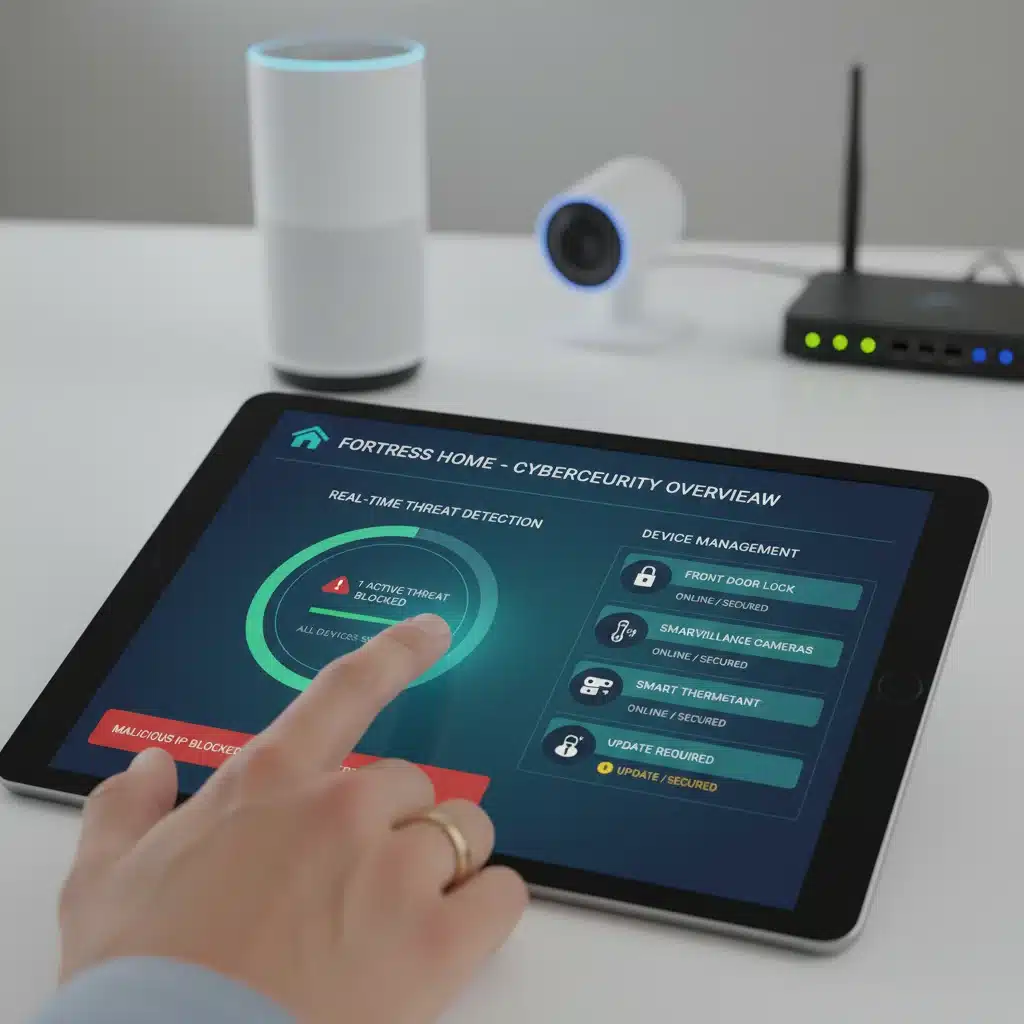
Practical Checklist for Achieving 90% Cyber Attack Prevention by 2026
Here’s a concise, actionable checklist to guide your efforts in securing your smart home network and achieving significant prevention against cyber attacks by 2026:
- Router Hardening:
- Change default router credentials immediately.
- Enable WPA3 (or WPA2-AES) encryption.
- Disable UPnP.
- Ensure firewall is active.
- Disable remote management access.
- Keep router firmware updated automatically.
- Network Segmentation:
- Create a separate Wi-Fi network for IoT devices.
- Utilize a guest network for visitors.
- Consider a VLAN for advanced IoT isolation.
- Device Security Basics:
- Change all default device passwords to unique, strong ones.
- Enable Multi-Factor Authentication (MFA) on all supported devices and accounts.
- Regularly check for and install firmware/software updates for ALL smart devices.
- Disable features not in use (e.g., remote access, cloud services if local processing is an option).
- Privacy Management:
- Review and understand privacy policies of all smart devices.
- Configure privacy settings to limit data collection.
- Physically cover smart cameras when not in use.
- Mute smart assistants when not actively needed.
- Proactive Monitoring & Tools:
- Consider a network intrusion detection/prevention system (IDS/IPS).
- Use a VPN for remote access to your home network.
- Perform periodic network scans for vulnerabilities.
- User Education:
- Educate all household members on cybersecurity best practices.
- Teach how to identify phishing attempts.
- Emphasize the importance of not sharing passwords.
- Device Lifecycle Management:
- Regularly audit your devices and remove/disconnect unused ones.
- Prioritize reputable brands known for security updates and support.
Conclusion: A Proactive Stance for Smart Home Security 2026
The vision of a fully integrated, intelligent smart home is exciting, but it must be built on a foundation of robust security. As cyber threats become more sophisticated, our approach to Smart Home Security 2026 must evolve accordingly. By embracing network segmentation, enforcing strong authentication, maintaining diligent updates, and adopting advanced protective measures, you can significantly reduce your smart home’s vulnerability.
Achieving 90% prevention against cyber attacks by 2026 is an ambitious but attainable goal. It requires a proactive mindset, continuous vigilance, and a commitment to implementing the best practices outlined in this guide. Your smart home is an extension of your life; securing it means securing your privacy, your data, and your peace of mind. Start implementing these essential updates today to future-proof your connected living space and enjoy the benefits of smart technology without the constant worry of cyber threats.