Voice Assistant Optimization: 4 Practical Commands to Streamline Your Daily Smart Home Routines in 2026

Voice Assistant Optimization: 4 Practical Commands to Streamline Your Daily Smart Home Routines in 2026
Welcome to 2026, where the smart home isn’t just a concept but a fully integrated reality. Our lives are increasingly intertwined with technology, and at the heart of this evolution lies the voice assistant. What started as a simple tool for setting timers and playing music has blossomed into a sophisticated control center for our entire living space. But are you truly maximizing its potential? This article delves into critical strategies for voice assistant optimization, focusing on four practical commands that will not only streamline your daily smart home routines but also elevate your entire smart living experience. We’re moving beyond basic requests to a realm of intelligent, context-aware automation that anticipates your needs and responds with unparalleled efficiency.
The landscape of smart home technology is constantly evolving. What was cutting-edge last year might be standard today, and tomorrow’s innovations are just around the corner. In this dynamic environment, effective voice assistant optimization becomes paramount. It’s not just about having smart devices; it’s about making them work together harmoniously, intuitively, and most importantly, in a way that genuinely simplifies your life. We’ll explore how to craft commands that go beyond simple on/off switches, enabling complex sequences of actions with a single spoken phrase. Prepare to transform your smart home from a collection of gadgets into a truly intelligent, responsive ecosystem.
The Evolution of Voice Assistants: Beyond Basic Commands
Remember the early days of voice assistants? “Hey [Assistant Name], what’s the weather?” or “Set a timer for 10 minutes.” These were groundbreaking at the time, but today’s expectations are far higher. Modern voice assistants, powered by advanced AI and machine learning, are capable of understanding complex natural language, interpreting context, and even learning from your habits. This evolution opens up incredible opportunities for sophisticated voice assistant optimization. The goal is to move from reactive commands to proactive automation, where your home anticipates your needs before you even articulate them.
The key to unlocking this advanced functionality lies in understanding how to leverage scripting, routines, and third-party integrations. Many users are still only scratching the surface of what their voice assistants can do. By delving into the settings of your preferred platform – be it Amazon Alexa, Google Assistant, Apple HomeKit, or others – you’ll find powerful tools for creating custom routines. These routines allow you to chain multiple actions together, triggered by a single, intuitive voice command. This is where true voice assistant optimization begins, transforming a series of manual steps into a seamless, automated experience.
Understanding the Power of Routines and Scenes
At the core of advanced voice assistant optimization are ‘routines’ (often called ‘scenes’ or ‘automations’ depending on the platform). A routine is a predefined sequence of actions that your voice assistant executes when a specific trigger occurs. This trigger can be a voice command, a specific time of day, or even the state of another smart device. For instance, instead of saying “Turn on the living room lights,” then “Set thermostat to 72 degrees,” and then “Play my evening playlist,” you can combine all these into one command like “Good evening, home.” This level of integration is what we’re aiming for.
The beauty of routines is their customizability. You can tailor them precisely to your lifestyle and preferences. Imagine a ‘Morning’ routine that slowly brightens your bedroom lights, starts your coffee maker, and reads out your daily briefing. Or a ‘Leaving Home’ routine that locks your doors, adjusts the thermostat, and turns off all non-essential lights. These aren’t just conveniences; they represent significant time and energy savings, contributing to a more efficient and comfortable living environment. Effective voice assistant optimization is about creating these intelligent sequences that truly serve your daily life.
Command 1: The Personalized Morning Kickstart
Let’s start with arguably the most important part of your day: the morning. A chaotic morning can set a negative tone for the entire day. With strategic voice assistant optimization, you can transform your wake-up experience into a calm, efficient, and personalized ritual. Our first practical command is: “Good Morning, Home.”
This command isn’t just about turning on lights; it’s about orchestrating a symphony of smart devices to ease you into your day. Here’s what a ‘Good Morning, Home’ routine might entail:
- Gradual Lighting: Your bedroom lights slowly brighten over a 15-minute period, mimicking a natural sunrise.
- Temperature Adjustment: Your smart thermostat adjusts to your preferred morning temperature, ensuring comfort as you get out of bed.
- Coffee Brewing: Your smart coffee maker starts brewing your favorite coffee, ready for you when you reach the kitchen.
- News Briefing & Weather: Your voice assistant provides a concise summary of the day’s top headlines, your calendar appointments, and the current weather forecast.
- Personalized Music: A gentle, uplifting playlist begins to play in your bedroom or kitchen.
- Smart Blinds/Curtains: Your smart blinds or curtains automatically open, letting in natural light.
To implement this, you’ll need to dive into your voice assistant’s app (e.g., Alexa app, Google Home app) and create a new routine. Select ‘Voice’ as the trigger and type in “Good Morning, Home.” Then, add each of the desired actions, setting delays where appropriate (e.g., a 5-minute delay between lights brightening and music starting). This level of proactive automation exemplifies advanced voice assistant optimization, setting the stage for a productive day.
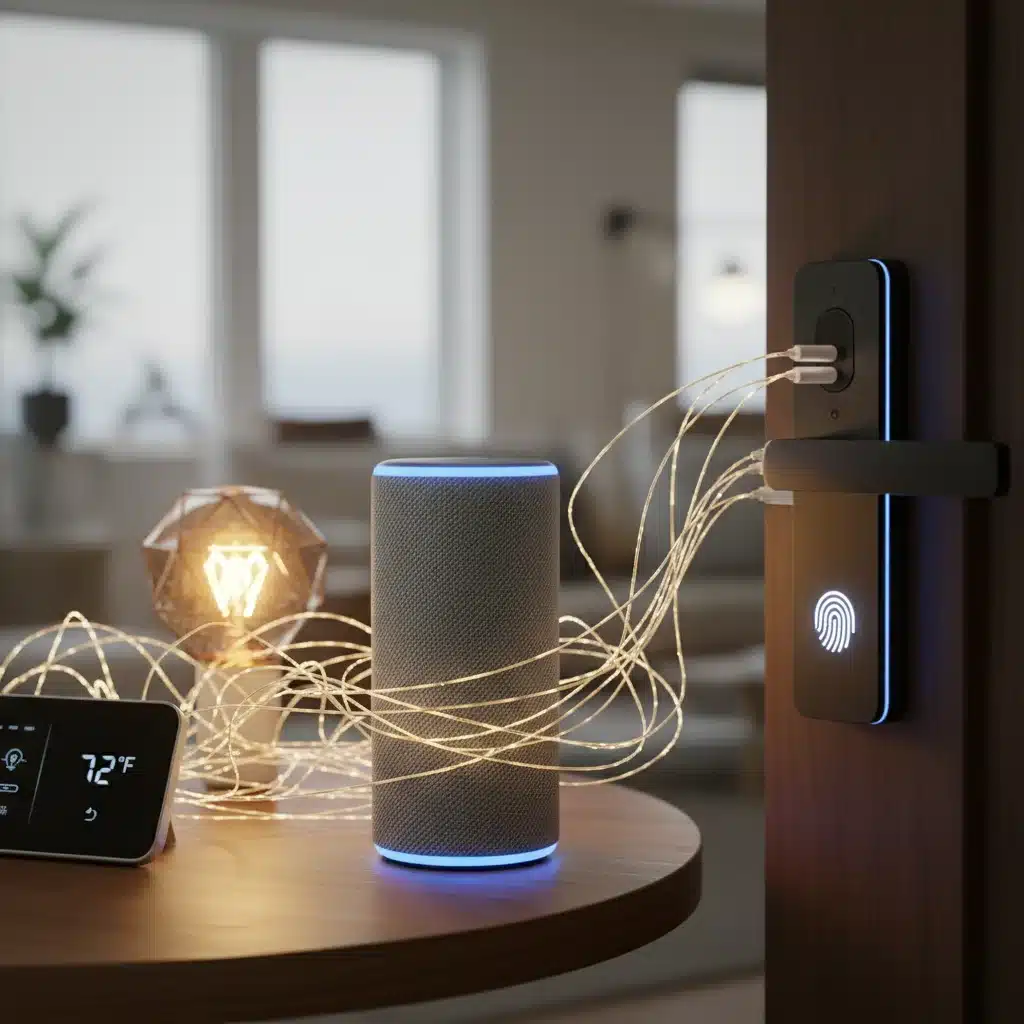
Command 2: The Energy-Saving Exit Strategy
Leaving home often involves a mental checklist: “Did I turn off the lights? Is the thermostat set correctly? Are the doors locked?” This mental load can be eliminated with a single, powerful command designed for voice assistant optimization. Our second command is: “Leaving Home.”
This command centralizes all your departure tasks, ensuring your home is secure and energy-efficient while you’re away. A ‘Leaving Home’ routine could include:
- All Lights Off: Every smart light in your house is immediately turned off, saving energy.
- Thermostat Adjustment: Your smart thermostat sets itself to an away-mode temperature, reducing heating or cooling consumption.
- Door Locking: All smart locks engage, securing your home.
- Arm Security System: Your smart security system is armed.
- Smart Plug Shutdown: Any non-essential devices connected to smart plugs (e.g., entertainment systems, charging stations) are powered off.
- Appliance Check: (Advanced) Some systems can even check if certain appliances, like smart ovens or irons, are off and alert you if not.
The beauty of this routine for voice assistant optimization is not just the convenience but the peace of mind it offers. No more second-guessing whether you left a light on or the door unlocked. A quick “Leaving Home” command confirms everything is taken care of. This is particularly useful for busy individuals or families, ensuring that energy waste is minimized and security is maximized with minimal effort. Configuring this routine is similar to the morning one: create a new routine, use “Leaving Home” as the voice trigger, and add all the necessary actions from your connected devices.
Command 3: The Ultimate Entertainment Hub Activation
After a long day, unwinding with entertainment is crucial. Fumbling with multiple remotes or apps to set up your ideal viewing or listening environment can be a hassle. Our third command focuses on voice assistant optimization for entertainment: “Movie Night” or “Game On.”
These commands transform your living room into an immersive entertainment hub, perfectly tailored to your preferences. Imagine a ‘Movie Night’ routine that orchestrates the following:
- Dim Lights: Your smart lights dim to a cinematic level, or even change to a specific color (e.g., warm amber).
- Close Blinds: Smart blinds or curtains close to block out external light.
- Audio System Activation: Your smart soundbar or surround sound system turns on and sets to the optimal input.
- TV On & Input Change: Your smart TV powers on and switches to the correct HDMI input for your streaming device or console.
- Streaming Service Launch: (Advanced) Some integrations allow your voice assistant to even open a specific streaming app on your smart TV.
- Comfort Settings: Your smart thermostat adjusts to a cozy viewing temperature.
Similarly, a ‘Game On’ command could brightly illuminate your gaming area, switch your TV to the gaming console’s input, and even activate a cooling fan if your system generates a lot of heat. This level of seamless integration, achieved through diligent voice assistant optimization, enhances your leisure time significantly. It removes friction and allows you to dive straight into your chosen entertainment without interruption. Spend some time in your voice assistant’s app linking your smart TV, audio equipment, and lighting to create these engaging scenes.

Command 4: The Intelligent Context-Aware Assistant
The future of voice assistant optimization isn’t just about predefined routines; it’s about context awareness. Our fourth command moves beyond simple triggers to intelligent, adaptive responses: “What’s next?” or “Help me unwind.”
These commands leverage the growing intelligence of voice assistants to provide personalized suggestions and adapt to your current situation. While more complex to set up, they represent the pinnacle of smart home convenience.
“What’s next?” – Your Proactive Daily Planner
This command transforms your voice assistant into a proactive personal assistant. Depending on the time of day and your calendar, it could offer different information:
- Morning: “You have a meeting at 10 AM. Traffic is moderate to your office. Would you like me to order your usual coffee on the way?”
- Afternoon: “It’s 3 PM. Remember to pick up groceries on your way home. I can add ‘milk’ to your list.”
- Evening: “You have no further appointments today. Would you like to hear a podcast or perhaps start your ‘Relaxation’ routine?”
Implementing “What’s next?” requires deeper integration with your calendar, location services (if available through your phone and voice assistant), and potentially third-party services for ordering or reminders. This is where advanced voice assistant optimization truly shines, making your home a truly intelligent partner in your daily life. It anticipates your needs and offers relevant, timely assistance, reducing cognitive load and improving efficiency.
“Help me unwind.” – Personalized Relaxation
This command is about creating a dynamic relaxation environment tailored to your preferences. Instead of a fixed ‘Relaxation’ routine, “Help me unwind” could offer choices:
- “Would you prefer calming music, nature sounds, or a guided meditation?”
- Based on your choice: “Playing [choice]. I’ve also dimmed the lights to a soft blue and adjusted the temperature to 70 degrees. Enjoy.”
This command demonstrates how voice assistant optimization can move beyond simple automation to personalized interaction. It requires setting up multiple options within a single routine and using conditional logic (if your voice assistant supports it, often through advanced scripting features or third-party platforms like IFTTT). The goal is to provide a fluid, adaptive experience that genuinely responds to your mood and preferences, fostering a more serene and stress-free home environment.
Advanced Tips for Voice Assistant Optimization in 2026
Beyond these four specific commands, there are several overarching principles for achieving superior voice assistant optimization:
1. Embrace Natural Language Processing (NLP)
Modern voice assistants are incredibly adept at understanding natural language. Don’t feel restricted to rigid commands. Experiment with different phrasing. For example, instead of just “Turn on the lights,” try “It’s a bit dark in here” or “Illuminate the living room.” The more natural your interactions, the more seamless your experience becomes. Continuous improvement in NLP is a cornerstone of effective voice assistant optimization.
2. Leverage Third-Party Integrations
The true power of a smart home often lies in its ability to connect disparate devices and services. Platforms like IFTTT (If This Then That) allow you to create powerful applets that link your voice assistant to almost any web service or smart device, even if they don’t natively integrate. This expands the possibilities for voice assistant optimization exponentially, enabling routines that can, for example, tweet your smart home status or log events in a spreadsheet.
3. Personalize and Refine
Your smart home should reflect your unique lifestyle. Don’t just copy routines; adapt them. Pay attention to what works and what doesn’t. Does the music volume need to be higher in the morning? Should the lights dim slower for ‘Movie Night’? Continually refine your commands and routines based on your daily experience. This iterative process is vital for ongoing voice assistant optimization.
4. Prioritize Security and Privacy
As your smart home becomes more integrated, security and privacy become even more critical. Use strong, unique passwords for all your smart devices and voice assistant accounts. Be mindful of the data you share and review privacy settings regularly. Ensure your Wi-Fi network is secure. A well-optimized smart home is also a secure smart home, making security a non-negotiable aspect of voice assistant optimization.
5. Explore Location-Based Triggers
Many voice assistant platforms now support geofencing. This means your routines can be triggered not just by voice, but by your physical location. Imagine your ‘Leaving Home’ routine activating automatically when your phone leaves a certain radius around your house, or your ‘Welcome Home’ routine starting as you pull into the driveway. This hands-free automation is a powerful facet of advanced voice assistant optimization.
6. Integrate with Wearables and Other Smart Devices
The smart home ecosystem is expanding beyond just stationary devices. Smartwatches, fitness trackers, and even smart rings can often integrate with your voice assistant. This allows for even more personalized and contextual automation. For example, your voice assistant could suggest a ‘Relaxation’ routine if your wearable detects elevated stress levels, showcasing the next frontier in holistic voice assistant optimization.
The Future of Voice Assistant Optimization
Looking ahead, voice assistant optimization will continue to evolve with advancements in artificial intelligence, ambient computing, and ubiquitous connectivity. We can anticipate even more predictive capabilities, where your home not only responds to your commands but anticipates your needs based on learned patterns, biometric data, and even external factors like traffic or weather. Imagine a home that proactively adjusts lighting based on your known work schedule and natural light availability, or suggests a specific dinner recipe based on ingredients it knows are in your smart fridge.
The integration of multimodal interfaces – combining voice with gestures, touch, and even eye-tracking – will also play a significant role. While voice will remain central, these complementary input methods will offer even richer, more intuitive ways to interact with our smart environments. Furthermore, the focus will shift towards greater interoperability between different brands and ecosystems, making it easier for users to build truly customized and seamlessly integrated smart homes without proprietary limitations. This drive towards an open, intelligent, and truly personalized smart living experience is the ultimate goal of voice assistant optimization.
Conclusion: Empowering Your Smart Home in 2026
The journey to a truly optimized smart home is an ongoing one, but by focusing on strategic voice assistant optimization, you can unlock unprecedented levels of convenience, efficiency, and comfort. The four practical commands discussed – the Personalized Morning Kickstart, the Energy-Saving Exit Strategy, the Ultimate Entertainment Hub Activation, and the Intelligent Context-Aware Assistant – are just starting points. They demonstrate the power of moving beyond basic commands to crafting intelligent routines that genuinely enhance your daily life.
As we navigate 2026 and beyond, the capabilities of voice assistants will only grow more sophisticated. By understanding how to leverage routines, integrate third-party services, and prioritize security, you’re not just using smart technology; you’re mastering it. Take the time to experiment, personalize, and refine your commands. Your smart home has the potential to be more than just a collection of devices; it can be an intuitive, responsive partner that anticipates your needs and empowers you to live a more streamlined, enjoyable life. Embrace the power of voice assistant optimization and transform your home into the intelligent sanctuary you’ve always envisioned.