
The landscape of modern living is undergoing a profound transformation, driven by the relentless march of technological innovation. At the forefront of this revolution are smart home technologies, which have steadily evolved from niche gadgets to essential components of contemporary households. As we peer into the near future, one technology stands poised to redefine our interaction with our living spaces: Augmented Reality (AR). While smart homes have already brought unprecedented convenience and efficiency, the integration of AR promises to elevate this experience to an entirely new dimension, creating intuitive, immersive, and highly personalized environments. This article delves into the exciting realm of AR Smart Home Applications, specifically focusing on the three most impactful applications expected to gain significant traction in the US market by 2026.
Imagine a home where your walls aren’t just static structures but dynamic canvases displaying real-time information, where furniture can be rearranged virtually before it’s physically moved, and where security systems offer a visual overlay of potential threats. This isn’t science fiction; it’s the imminent reality propelled by advancements in augmented reality. The synergy between AR and smart home ecosystems is creating a new paradigm for how we interact with our homes, moving beyond simple voice commands and app controls to a more visual, interactive, and spatial computing experience. Understanding these emerging trends is crucial for both consumers looking to upgrade their living spaces and industry professionals aiming to stay ahead of the curve.
The Dawn of Augmented Reality in Smart Homes
Augmented Reality, often abbreviated as AR, is a technology that overlays computer-generated images and information onto a user’s view of the real world. Unlike Virtual Reality (VR), which creates an entirely artificial environment, AR enhances the existing reality. When applied to smart homes, AR transforms our physical surroundings into interactive interfaces, offering a more intuitive and engaging way to manage our devices, visualize data, and even redesign our living spaces. The potential for AR Smart Home Applications is vast, ranging from practical everyday uses to groundbreaking innovations that redefine comfort, security, and aesthetics.
The US market, known for its rapid adoption of new technologies and its strong consumer base for smart home devices, is a fertile ground for AR integration. As AR hardware becomes more sophisticated, affordable, and less obtrusive – think sleek AR glasses or advanced smartphone/tablet applications – its penetration into the smart home sector is set to accelerate. Consumers are increasingly seeking more seamless and intuitive ways to interact with their connected devices, and AR offers a visual and spatial solution that traditional interfaces often lack. This shift is not just about novelty; it’s about enhancing functionality, simplifying complex systems, and providing a richer, more personalized user experience.
The convergence of faster internet speeds (5G), more powerful mobile processors, and advanced computer vision algorithms is making sophisticated AR experiences in the home a tangible reality. Developers are now able to create more robust and realistic AR overlays, allowing for applications that go beyond mere entertainment. The focus is shifting towards practical utility, problem-solving, and enhancing daily life. This foundational understanding is key to appreciating the specific AR Smart Home Applications that are poised to dominate the market in the coming years.
Application 1: Immersive Home Design and Virtual Renovation
One of the most exciting and immediately impactful AR Smart Home Applications is in the realm of interior design and virtual renovation. Traditionally, redesigning a room or planning a renovation involves extensive measuring, imagining, and often, expensive mistakes. AR fundamentally changes this process by allowing users to visualize changes in real-time, within their actual physical space, before committing to any purchases or structural alterations.
Visualizing Furniture and Decor
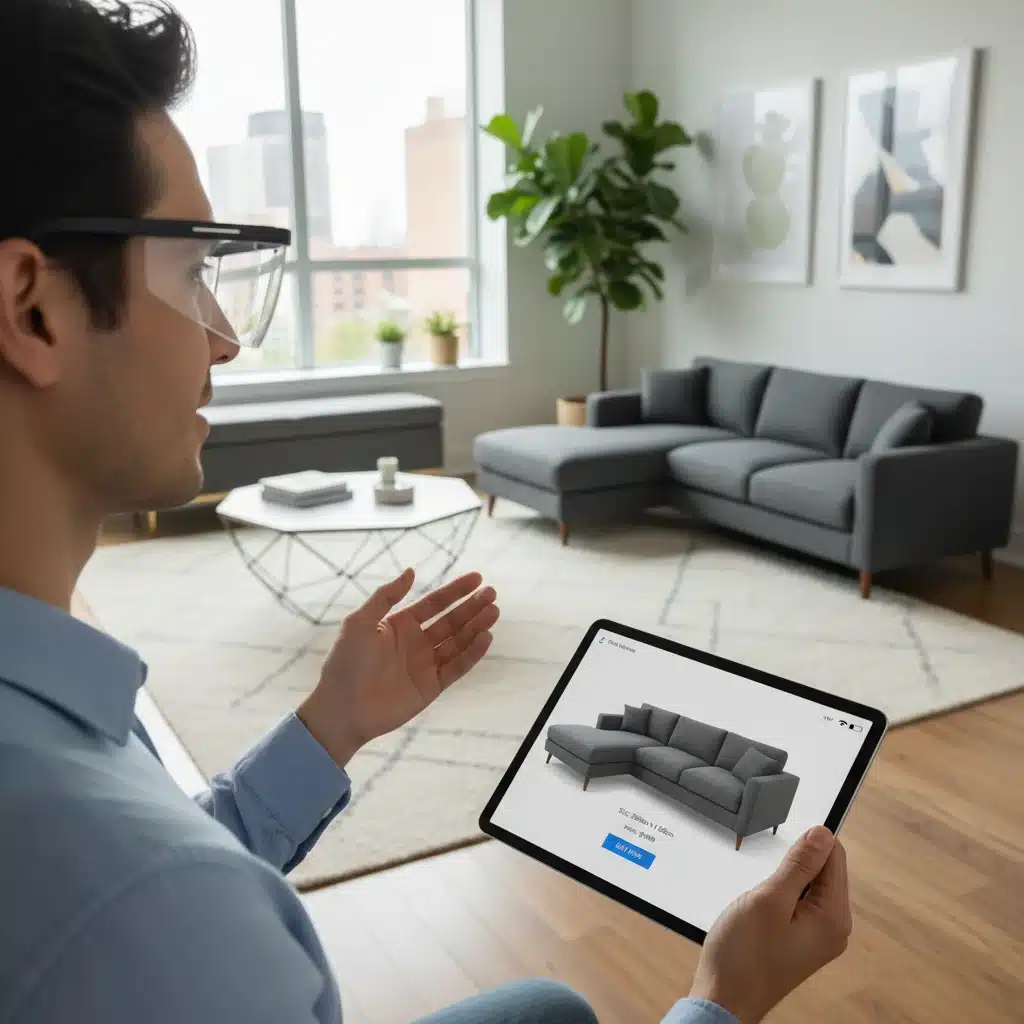
Imagine wanting to buy a new sofa. Instead of guessing how it will look or fit, AR apps allow you to virtually place a 3D model of the sofa in your living room, scaled correctly, and view it from different angles. You can see how it complements your existing decor, if its size is appropriate for the space, and even experiment with different colors and textures. Major retailers like IKEA and Wayfair have already dabbled in this space, offering AR features in their apps. By 2026, these capabilities will become more sophisticated, offering hyper-realistic renderings, advanced lighting simulations, and broader product catalogs integrated directly into AR platforms. This significantly reduces buyer’s remorse and streamlines the decision-making process for consumers.
Virtual Renovation and Spatial Planning
Beyond individual furniture pieces, AR is revolutionizing how homeowners approach larger renovation projects. With AR, you can virtually knock down walls, add extensions, change flooring, or repaint rooms, all within a live view of your home. Architects and interior designers can use AR tools to walk clients through proposed changes, allowing them to experience the new layout and aesthetics before any construction begins. This not only enhances client satisfaction but also helps identify potential issues early on, saving time and money. Imagine using an AR app to see how new kitchen cabinets would look, or how a wall removal would open up a living space, all from the comfort of your existing home.
The ability to virtually experiment with different design elements, materials, and layouts empowers homeowners with unprecedented control and confidence in their design choices. This application of AR is not just about aesthetics; it’s about practical planning, budgeting, and ensuring that the final outcome perfectly matches the homeowner’s vision. The increasing accuracy of spatial mapping and 3D rendering in AR devices will make this a cornerstone of future home design processes.
Application 2: Intuitive Smart Home Control and Data Visualization
The second major area where AR Smart Home Applications are poised for significant growth is in transforming how we control and interact with our smart home devices. Currently, managing a smart home often involves juggling multiple apps, voice commands, or physical buttons. AR offers a unified, visual, and context-aware interface that simplifies this complexity.
Contextual Device Control
Imagine pointing your smartphone or wearing AR glasses and seeing interactive overlays on your physical devices. Point at a smart light bulb, and an AR interface pops up allowing you to change its color, brightness, or turn it on/off with a simple gesture or tap. Point at your thermostat, and you see real-time temperature readings and controls to adjust the climate. This eliminates the need to open specific apps or remember voice commands, making interaction far more intuitive and immediate. This contextual control extends to all smart devices – from blinds and entertainment systems to kitchen appliances.
Real-time Data Visualization
Beyond control, AR excels at visualizing data in a meaningful way within its physical context. For instance, an AR overlay on your smart meter could display real-time energy consumption for specific appliances or rooms, helping you identify energy vampires and make informed decisions to reduce utility bills. You could see air quality readings overlaid on different areas of your home, or even visualize the network strength of your Wi-Fi router in various rooms. For home security, AR could display live feeds from cameras directly onto the walls of your home, with alerts highlighting movement or unusual activity.
This ability to see data in its physical environment makes it more actionable and understandable. Instead of abstract numbers on a screen, you see the impact of your smart home settings directly. This kind of intuitive data visualization is crucial for maximizing the efficiency and comfort of a smart home, making complex data accessible to all users. As smart homes become more sophisticated with a multitude of sensors and devices, AR will become an indispensable tool for managing this complexity, offering a single, unified, and visually rich interface for the entire ecosystem.
Application 3: Enhanced Home Security and Surveillance
Security is a paramount concern for homeowners, and AR Smart Home Applications are set to revolutionize how we monitor and protect our properties. While smart security cameras and sensors are already common, AR adds a layer of intuitive visualization and interactive threat assessment that significantly enhances their effectiveness.
Visualizing Security Feeds and Alerts
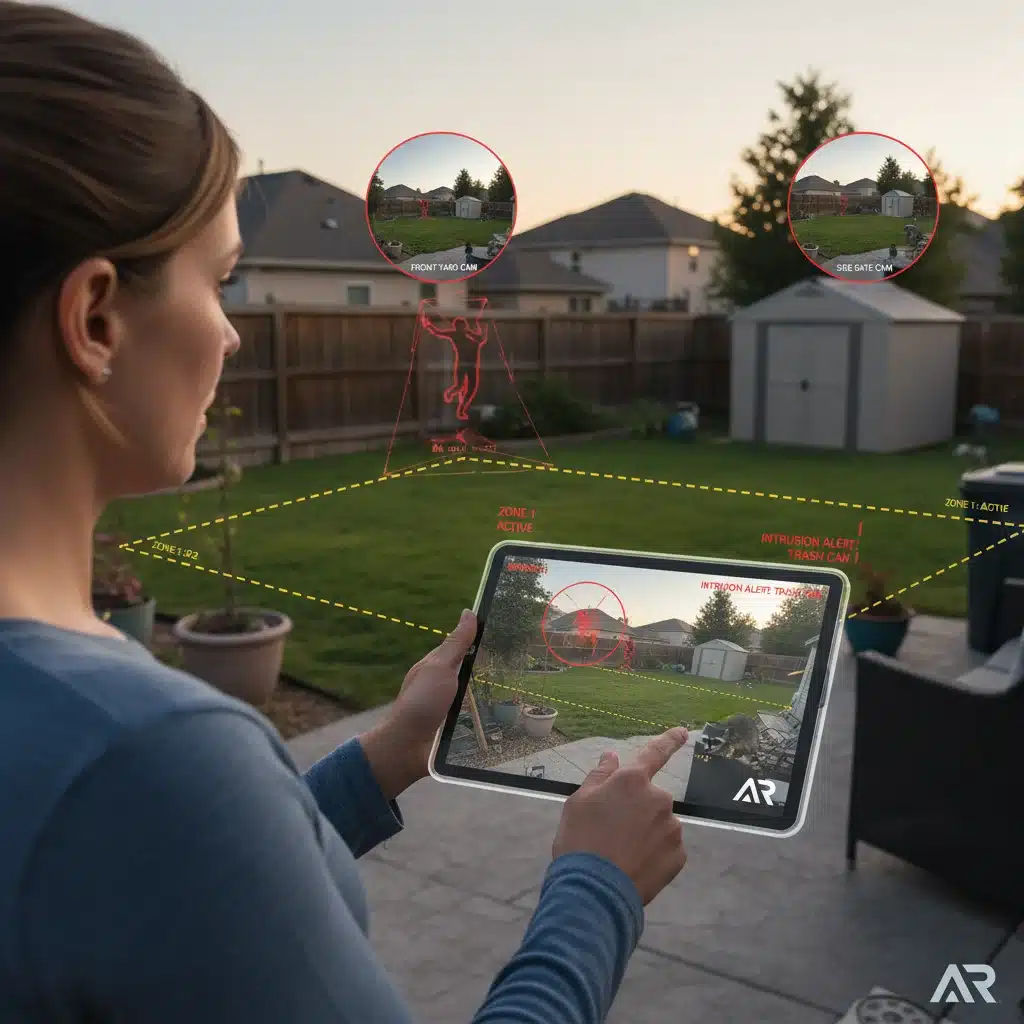
Instead of passively viewing camera feeds on a screen, AR allows for an active, spatial awareness of your home’s security status. Imagine looking at your front door through an AR device and seeing a live overlay from your doorbell camera, perhaps with facial recognition data identifying a visitor. If a motion sensor is triggered in your backyard, an AR alert could appear, highlighting the exact location on a virtual map of your property, or even projecting the live feed onto a wall in your living room with the specific area of concern highlighted.
This immediate, context-rich information allows homeowners to react more quickly and effectively to potential threats. You can virtually patrol your property, checking on different zones with a glance, and receive visual cues about any anomalies. This moves beyond simple notifications to an immersive security dashboard that is always present and seamlessly integrated into your environment.
Virtual Boundaries and Threat Detection
AR can also be used to set up virtual boundaries and zones within your property that trigger alerts when breached. For instance, you could define an AR perimeter around a valuable item in your living room, or around your entire backyard. If these virtual boundaries are crossed, the AR system can immediately highlight the intrusion, display relevant camera feeds, and even guide you to the location of the breach with visual cues. Advanced AI-powered AR systems could even analyze movement patterns and highlight suspicious behavior in real-time, providing proactive warnings rather than just reactive alerts.
For instance, if a package is left on your doorstep, AR could confirm its delivery and monitor it until you retrieve it. If an unknown person lingers near your property for an extended period, the AR system could flag this as a potential threat. This proactive and highly visual approach to security offers peace of mind and a level of situational awareness that traditional systems cannot match. By 2026, these advanced AR security features will be a significant differentiator in the smart home security market.
The Future Landscape: Challenges and Opportunities for AR Smart Home Applications
While the potential of AR Smart Home Applications is immense, several factors will influence their widespread adoption. On the hardware front, the development of lightweight, stylish, and affordable AR glasses is crucial. Current AR experiences are largely driven by smartphones and tablets, which, while capable, don’t offer the same seamless, hands-free immersion that dedicated AR eyewear promises. As companies like Apple, Meta, and Google continue to invest heavily in AR hardware, we can expect significant breakthroughs in this area by 2026.
Software development also plays a critical role. The creation of robust, user-friendly AR platforms and applications that seamlessly integrate with existing smart home ecosystems will be key. Interoperability standards will need to mature to ensure that AR experiences can control a wide array of devices from different manufacturers without friction. Furthermore, the accuracy of spatial mapping and object recognition in AR systems needs to continuously improve to deliver truly reliable and immersive experiences.
Privacy and data security are also significant considerations. As AR systems gather more data about our homes and daily routines, ensuring that this information is protected and used ethically will be paramount for consumer trust and adoption. Companies developing AR Smart Home Applications will need to prioritize robust security measures and transparent data policies.
Despite these challenges, the opportunities are far greater. For consumers, AR promises a more intuitive, personalized, and efficient way to interact with their homes. For businesses, it opens up entirely new markets for hardware, software, and service providers. The integration of AI with AR will further enhance these applications, leading to predictive systems that anticipate needs and proactively adjust home environments. Imagine an AR system that learns your preferences and automatically adjusts lighting and temperature as you move through different rooms, or suggests design changes based on your aesthetic tastes.
Conclusion: The Imminent AR Revolution in Our Homes
The smart home of tomorrow will be defined not just by connectivity, but by intelligence and immersion. Augmented Reality is the key technology poised to unlock this next era, transforming our living spaces into dynamic, interactive environments that respond to our needs and desires in unprecedented ways. The three applications explored – immersive home design, intuitive control and data visualization, and enhanced security – represent just the tip of the iceberg for what AR Smart Home Applications will bring to the US market by 2026.
As hardware becomes more advanced and software more sophisticated, we will see AR move from novel concept to indispensable tool in our daily lives. Homeowners will benefit from more personalized spaces, simplified device management, and heightened security. The era of the truly intelligent and interactive home is not a distant dream; it is rapidly becoming a tangible reality, with Augmented Reality leading the charge. Prepare to experience your home in a whole new dimension.