Seamless Smart Device Integration: 2026 Guide for 10+ Gadgets
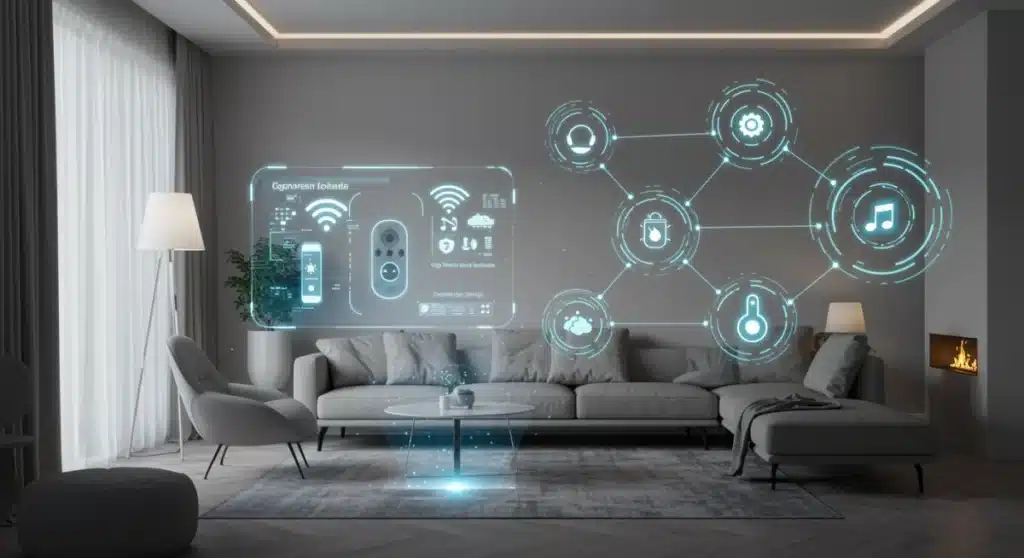
Achieving seamless smart device integration in 2026 means optimizing your home network and choosing compatible platforms to connect over 10 gadgets without lag, ensuring a truly intelligent and responsive living environment.
Welcome to the future of home automation! In 2026, the dream of a truly connected home is not just possible, but accessible. This guide will walk you through achieving seamless smart device integration, allowing you to connect 10 or more gadgets without experiencing frustrating lag or compatibility issues.
Understanding the 2026 Smart Home Ecosystem
The smart home landscape in 2026 is vastly more sophisticated than ever before. We’ve moved beyond basic remote control to truly intelligent, predictive systems. This evolution demands a deeper understanding of how these devices communicate and coexist, ensuring that your myriad gadgets work together as a cohesive unit rather than a collection of disparate parts.
Central to this ecosystem is the concept of interoperability, where devices from different manufacturers can communicate effectively. This is no longer a luxury but a fundamental expectation, driven by advancements in universal protocols and AI-powered integration platforms. The goal is to create an environment where every smart device contributes to a unified, intelligent home experience.
The Rise of Universal Communication Protocols
Gone are the days when each brand had its own proprietary language. 2026 sees the dominance of robust, open-source communication protocols that act as universal translators for your devices. These protocols are the backbone of any truly integrated smart home.
- Matter 2.0: This iteration has become the gold standard, offering unparalleled cross-platform compatibility and enhanced security features. It allows smart devices from virtually any manufacturer to speak the same language, simplifying setup and management.
- Thread Networking: Working hand-in-hand with Matter, Thread provides a self-healing mesh network that extends the reach and reliability of your smart home. It’s energy-efficient and creates a robust communication backbone for all your battery-powered devices.
- Wi-Fi 7 (802.11be): The latest Wi-Fi standard offers significantly higher speeds, lower latency, and increased capacity, crucial for homes with a multitude of high-bandwidth smart devices like 8K security cameras and augmented reality interfaces.
These protocols significantly reduce the complexity of integrating diverse devices, making it easier for users to expand their smart home without worrying about compatibility headaches. They ensure that commands are executed swiftly and reliably, minimizing lag even with a high device count.
AI-Powered Central Hubs and Edge Computing
The brain of your 2026 smart home is an AI-powered central hub, often incorporating edge computing capabilities. These hubs process data locally, reducing reliance on cloud services and improving response times.
These advanced hubs learn your routines, anticipate your needs, and intelligently manage device interactions. From optimizing energy consumption to proactively adjusting environmental settings, AI-driven hubs elevate convenience and efficiency. They are designed to handle the increased data flow from multiple devices, ensuring that your commands are processed instantly and actions are synchronized perfectly across your entire smart home ecosystem.
Understanding these foundational elements is the first step toward building a truly seamless and lag-free smart home in 2026. By leveraging these advanced technologies, you can ensure that your 10+ gadgets work in perfect harmony, providing an intuitive and responsive living experience.
Optimizing Your Home Network for Peak Performance
A strong and stable network foundation is non-negotiable for seamless smart device integration. In 2026, with an average home boasting over a dozen connected devices, traditional Wi-Fi setups simply won’t suffice. Optimizing your network means investing in the right hardware and configuring it intelligently to handle the demands of a high-density smart home environment without any noticeable lag.
Mesh Wi-Fi Systems: The Backbone of Connectivity
For homes with 10 or more smart devices, a mesh Wi-Fi system is no longer an option, but a necessity. Unlike traditional routers that broadcast from a single point, mesh systems utilize multiple nodes to create a unified, robust network that covers every corner of your home, eliminating dead zones and ensuring consistent signal strength for all your gadgets.
- Wi-Fi 7 Compatibility: Ensure your mesh system supports Wi-Fi 7 (802.11be) for optimal speed, low latency, and capacity, crucial for handling numerous high-bandwidth devices.
- Dedicated Backhaul: Look for systems with a dedicated wireless backhaul or the option for an Ethernet backhaul. This separate communication channel between mesh nodes prevents congestion and ensures devices connect to the internet at full speed.
- Scalability: Choose a system that allows you to easily add more nodes as your smart home expands, ensuring future-proofing and continued coverage.
A well-configured mesh network ensures that every smart device, regardless of its location, receives a strong and stable connection, which is paramount for real-time responsiveness and avoiding frustrating delays in automation routines.
Prioritizing Bandwidth and Quality of Service (QoS)
With multiple devices simultaneously streaming, downloading, and communicating, managing bandwidth becomes critical. Modern routers and mesh systems offer advanced Quality of Service (QoS) settings that allow you to prioritize network traffic, ensuring that essential smart home functions get the bandwidth they need.
For instance, you might prioritize your security cameras and smart locks to ensure their real-time feeds and commands are never delayed, even if someone is streaming 8K video in another room. Many 2026 smart hubs and routers now feature AI-driven QoS, which automatically learns your usage patterns and adjusts priorities dynamically, providing an intelligent and hands-off approach to network management. This intelligent prioritization prevents any single device from monopolizing bandwidth and causing lag for others, maintaining overall system responsiveness.
Optimizing your home network is the foundational step towards achieving true seamless integration. By investing in a high-performance mesh Wi-Fi system and leveraging advanced QoS features, you create an environment where all your smart devices can communicate efficiently and without interruption, delivering a truly lag-free smart home experience.
Choosing the Right Smart Home Platform and Ecosystem
The platform you choose to manage your smart home devices is just as crucial as the devices themselves. In 2026, the market offers several robust ecosystems, each with its strengths in terms of device compatibility, user interface, and automation capabilities. Making the right choice ensures that your 10+ gadgets can not only connect but also interact meaningfully and efficiently, creating a unified smart home experience.
A well-chosen platform acts as the central nervous system for your smart home, enabling cross-device communication and complex automation routines that would otherwise be impossible. It’s about more than just controlling devices; it’s about orchestrating them into a symphony of convenience and efficiency.
Leading Smart Home Platforms in 2026
As of 2026, several platforms have distinguished themselves through their comprehensive features and commitment to interoperability. These are the frontrunners for managing a diverse array of smart devices:
- Apple HomeKit (with Matter 2.0): Known for its robust security and privacy features, HomeKit, especially with its deep integration of Matter 2.0, offers seamless control for a wide range of devices. Its user-friendly interface and strong automation capabilities make it a top choice for iOS users.
- Google Home (with Thread and Matter 2.0): Google Home has evolved into a powerful ecosystem, leveraging Thread and Matter 2.0 for broad device support. Its AI-driven routines and voice control integration with Google Assistant provide a highly intuitive and responsive experience across Android and other devices.
- Amazon Alexa (Enhanced for Matter 2.0): Alexa continues to be a dominant force, now with even stronger Matter 2.0 support. Its vast array of compatible devices and extensive skill library, combined with advanced voice commands, make it a versatile choice for many smart homes.
When selecting a platform, consider your existing devices, preferred voice assistant, and the level of privacy and security you desire. The best platform will be one that grows with your needs and offers straightforward management for all your connected gadgets.
The Importance of a Unified App Experience
One of the biggest frustrations in early smart homes was juggling multiple apps for different devices. In 2026, leading platforms offer a unified app experience, allowing you to control and manage all your connected gadgets from a single interface. This centralization is vital for efficient operation and a truly seamless user experience.
A unified app simplifies device setup, streamlines automation creation, and provides a consolidated view of your entire smart home. It eliminates the need to switch between applications, making interactions with your smart home more intuitive and less time-consuming. This streamlined control is essential when managing a large number of diverse smart devices, ensuring that your smart home remains easy to use and responsive.
Choosing the right smart home platform and ecosystem is a foundational decision that impacts the entire integration process. By opting for a robust, interoperable platform that offers a unified app experience, you lay the groundwork for a truly seamless and efficient smart home, capable of managing 10+ devices without a hitch.
Advanced Automation and Routine Creation
Beyond simply connecting devices, the true power of seamless smart device integration in 2026 lies in advanced automation and routine creation. This is where your smart home transitions from a collection of individual gadgets to an intelligent, proactive assistant that anticipates your needs and manages tasks autonomously. Setting up sophisticated routines ensures that your 10+ devices work in concert, responding to triggers and conditions in a synchronized, lag-free manner.
Automation transforms your home into a responsive environment, where actions are triggered by events, schedules, or even your presence. This level of intelligence is what defines a truly modern smart home.
Leveraging Conditional Logic and Sensor Triggers
Modern smart home platforms offer powerful conditional logic, allowing you to create complex routines based on multiple factors. This moves beyond simple ‘if this, then that’ scenarios to more nuanced ‘if this AND that, THEN do this, ELSE do something else’ automations.
- Multi-Sensor Input: Combine data from various sensors (motion, light, temperature, humidity, door/window) to create highly specific triggers. For example, turn on the hallway lights only if motion is detected AND it’s after sunset.
- Time-Based and Presence-Based Triggers: Integrate routines with your schedule and location data. Have your home adjust climate control and lighting based on when you typically arrive home, or when your smartphone indicates you’re within a certain radius.
- Environmental Monitoring: Use air quality sensors to trigger air purifiers or smart windows. Integrate smart blinds to adjust based on sunlight intensity to optimize natural light and temperature.
By using conditional logic and combining multiple sensor inputs, you can create a smart home that truly understands and responds to your living patterns, minimizing manual interventions and maximizing efficiency. This reduces the need for constant interaction, making your smart home feel more intuitive.
Cross-Platform Automation with Matter 2.0 and API Integrations
With Matter 2.0’s widespread adoption, creating cross-platform automations has become significantly easier. Devices from different manufacturers can now directly communicate and trigger actions within the same routine, eliminating the need for complex workarounds or third-party bridges.
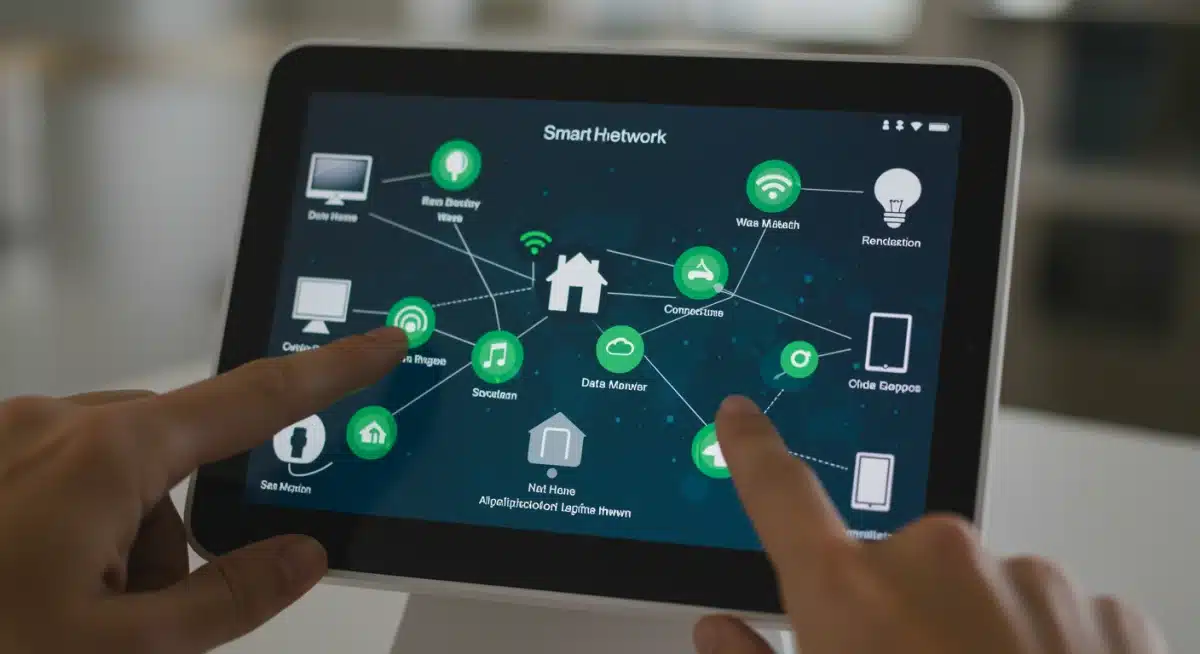
Additionally, many platforms offer robust API (Application Programming Interface) integrations, allowing power users to connect their smart home to other web services and create highly customized automations. This opens up possibilities for integrating your smart home with weather forecasts, calendar events, or even stock market fluctuations, creating truly personalized and intelligent routines.
Mastering advanced automation and routine creation is key to unlocking the full potential of your integrated smart home. By leveraging conditional logic, multi-sensor inputs, and cross-platform capabilities, you can ensure that your 10+ devices work together seamlessly and intelligently, providing a truly responsive and lag-free living environment.
Ensuring Security and Privacy in Your Connected Home
As your smart home expands with 10 or more integrated devices, the importance of robust security and privacy measures escalates. In 2026, cyber threats are more sophisticated, and protecting your personal data and home network from vulnerabilities is paramount. A truly seamless smart home is not just convenient; it’s also secure and respects your privacy.
Neglecting security can turn your smart home into a liability, exposing sensitive information and creating entry points for malicious actors. Therefore, proactive measures are essential to maintain peace of mind.
Implementing Multi-Layered Network Security
Your home network is the first line of defense for your smart devices. Implementing a multi-layered security strategy is crucial to protect against unauthorized access and cyber threats.
- Strong Router Passwords and Encryption: Always use strong, unique passwords for your Wi-Fi network and router administration interface. Ensure your network uses WPA3 encryption for the highest level of security.
- Guest Network Segmentation: Create a separate guest Wi-Fi network for visitors and less critical smart devices. This isolates them from your main network, preventing potential compromises from spreading to your core smart home infrastructure.
- Regular Firmware Updates: Keep all your router and smart device firmware updated. Manufacturers frequently release updates to patch security vulnerabilities and improve performance.
These measures create a formidable barrier against external threats, ensuring that your smart home remains a private and secure sanctuary.
Data Privacy and Device Permissions Management
In a smart home with numerous devices, each potentially collecting data, managing privacy settings is critical. Understanding what data your devices collect and how it’s used is essential for maintaining control over your personal information.
Regularly review the privacy policies of your smart devices and platforms. Be diligent in configuring device permissions, granting access only to necessary data. For instance, restrict microphone access for devices that don’t require it, or limit location data sharing to only essential services. Many 2026 smart home platforms now offer centralized privacy dashboards, making it easier to manage permissions across all your connected gadgets. This proactive approach to data privacy ensures that your smart home enhances your life without compromising your personal information.
By prioritizing multi-layered network security and diligently managing data privacy, you can enjoy the full benefits of a seamlessly integrated smart home without compromising your safety or personal information. A secure smart home is a truly smart home, providing both convenience and peace of mind.
Troubleshooting Common Integration Issues and Lag
Even with the most advanced 2026 technology, occasional integration issues or lag can occur, especially when managing 10 or more smart devices. Knowing how to effectively troubleshoot these common problems is crucial for maintaining a seamless and enjoyable smart home experience. Proactive maintenance and quick identification of issues can prevent minor glitches from escalating into frustrating disruptions.
Understanding the root causes of common problems empowers you to resolve them quickly, ensuring your smart home remains responsive and reliable.
Diagnosing Network Congestion and Interference
Network congestion is a frequent culprit behind smart home lag. With numerous devices competing for bandwidth, your network can become overwhelmed. Interference from other wireless devices or neighboring networks can also degrade signal quality.
- Utilize Network Analyzers: Many 2026 mesh Wi-Fi systems include built-in network analyzers that can identify congested channels or sources of interference. Use these tools to optimize your Wi-Fi channel selection.
- Device Placement: Ensure your mesh nodes are strategically placed to provide optimal coverage, especially for devices in distant rooms or those communicating via Thread. Avoid placing devices near large metal objects or microwaves, which can cause interference.
- Bandwidth Monitoring: Monitor your network’s bandwidth usage through your router’s interface. Identify any devices that are unusually high consumers of bandwidth and investigate their activity.
By systematically diagnosing and addressing network issues, you can significantly reduce lag and improve the responsiveness of all your integrated devices, ensuring a smooth smart home operation.
Firmware Updates and Device Compatibility Checks
Outdated firmware is a common cause of compatibility issues and performance degradation. Smart device manufacturers regularly release updates to fix bugs, enhance features, and improve interoperability.
Make it a habit to regularly check for and install firmware updates for all your smart devices and central hub. Many modern devices offer automatic updates, but it’s wise to verify. Additionally, if a new device isn’t integrating smoothly, double-check its compatibility with your chosen smart home platform and ensure it supports the latest communication protocols like Matter 2.0. Sometimes, a simple factory reset and re-pairing can resolve stubborn connection issues, especially after a major network change or firmware update. Staying on top of updates and verifying compatibility ensures your smart home ecosystem remains robust and lag-free.
Effective troubleshooting is an essential skill for any smart home enthusiast. By understanding how to diagnose and resolve common network and device-related issues, you can maintain a truly seamless and responsive smart home experience, ensuring your 10+ gadgets consistently perform at their best.
Future-Proofing Your Smart Home for Beyond 2026
The pace of technological advancement in smart home technology is relentless. While this guide focuses on 2026, looking ahead to future trends and preparing your home for what’s next is crucial for long-term seamless smart device integration. Future-proofing ensures your investments remain relevant and your home continues to evolve with emerging innovations, preventing premature obsolescence and providing a truly adaptable living environment.
Anticipating future developments allows you to make informed decisions today that will benefit your smart home for years to come.
Embracing Modular and Open Ecosystems
The key to future-proofing lies in choosing modular and open ecosystems. Platforms that fully embrace standards like Matter 2.0 and Thread are inherently more adaptable, as they are designed to integrate new devices and technologies as they emerge, regardless of brand.
- Platform Agnostic Devices: Prioritize purchasing devices that are not locked into a single ecosystem. Devices compatible with multiple platforms or universal standards offer greater flexibility for future upgrades and changes.
- API Extensibility: If you’re a tinker, look for platforms and devices that offer robust APIs. This allows for custom integrations and ensures your smart home can connect with future services and applications that may not yet exist.
- Local Processing Capabilities: Devices and hubs that perform more processing locally (edge computing) are generally more resilient to internet outages and cloud service changes, offering greater long-term reliability.
By building on open and modular foundations, you create a smart home that can easily incorporate future innovations without requiring a complete overhaul.
Anticipating Emerging Technologies: AI and XR Integration
Beyond current trends, the smart home of the late 2020s and early 2030s will likely see deeper integration of advanced AI and Extended Reality (XR) technologies. Preparing for these shifts means considering devices that can leverage these capabilities.
AI will become even more pervasive, with predictive analytics and personalized automation reaching new levels of sophistication. Imagine a home that not only anticipates your needs but also proactively suggests improvements to your well-being or energy consumption based on deeply learned patterns. XR, including Augmented Reality (AR) and Virtual Reality (VR), will likely transform how we interact with our smart homes, offering intuitive holographic interfaces for control and visualization. Investing in devices with robust processing capabilities and communication protocols can help ensure they are ready for these future integrations. By keeping an eye on these emerging technologies, you can strategically upgrade your smart home to remain at the forefront of innovation.
Future-proofing your smart home is about making conscious choices today that ensure its longevity and adaptability. By focusing on modularity, open standards, and anticipating emerging technologies, you can build a smart home that remains seamlessly integrated and ahead of the curve well beyond 2026, continuing to provide unparalleled convenience and efficiency.
| Key Aspect | Brief Description |
|---|---|
| Universal Protocols | Matter 2.0 and Thread enable devices from different brands to communicate seamlessly, crucial for diverse gadget integration. |
| Network Optimization | Mesh Wi-Fi 7 systems with QoS are essential for stable, lag-free connectivity across 10+ devices in a large smart home. |
| AI-Powered Hubs | Central hubs with AI and edge computing manage device interactions, learn routines, and process data locally for responsiveness. |
| Security & Privacy | Multi-layered network security and diligent data privacy management are critical for a safe and trustworthy smart home. |
Frequently asked questions about smart device integration
The most important factor is a robust home network, specifically a Wi-Fi 7 mesh system with intelligent Quality of Service (QoS). This ensures consistent, high-bandwidth communication across all your devices, preventing bottlenecks and maintaining instantaneous responsiveness even with many gadgets.
Matter 2.0 acts as a universal language for smart devices, allowing gadgets from different manufacturers to communicate directly and seamlessly. This eliminates compatibility issues and simplifies the setup and management of a diverse ecosystem of 10 or more devices, reducing the need for multiple apps.
Yes, AI-powered hubs are becoming increasingly essential. They learn your preferences, automate complex routines, and manage device interactions more efficiently, often using edge computing for faster local processing. This intelligence is key to orchestrating a large number of devices without lag.
Prioritize strong WPA3 encryption, unique router passwords, and a segmented guest network. Regularly update firmware for all devices and diligently manage data privacy settings. These steps create a multi-layered defense against cyber threats and unauthorized access, protecting your smart home.
Future-proof by investing in modular, open ecosystems that support universal standards like Matter 2.0. Choose platform-agnostic devices, prioritize local processing, and stay informed about emerging technologies like advanced AI and XR integration, ensuring long-term adaptability and relevance.
Conclusion
Achieving truly seamless smart device integration in 2026 is no longer a futuristic concept but a tangible reality for every homeowner. By understanding the evolving ecosystem, optimizing your home network with advanced mesh Wi-Fi 7 systems, selecting the right AI-powered platform, and mastering sophisticated automation, you can effortlessly connect and manage 10 or more smart gadgets without any discernible lag. Prioritizing robust security and privacy measures, alongside proactive troubleshooting and future-proofing strategies, ensures that your smart home remains a responsive, efficient, and secure environment well into the future. Embrace these insights to transform your living space into an intelligent, harmonious sanctuary that truly anticipates and caters to your needs.