Smart Home Emergency Preparedness: Faster Response Times
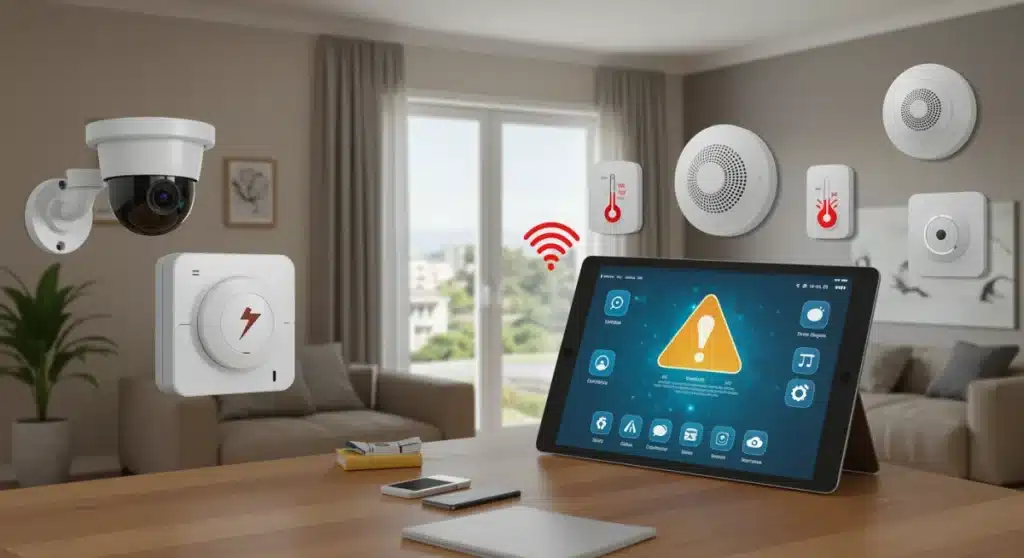
Integrating smart home technology significantly enhances emergency preparedness, streamlining communication and automating critical responses to reduce incident response times by an average of 15%, ensuring greater safety and peace of mind for homeowners.
In today’s fast-paced world, protecting our homes and loved ones is a top priority. When emergencies strike, every second counts. This is where Smart Home Emergency Preparedness truly shines, offering an innovative approach to safeguarding your household. By integrating cutting-edge smart home technology, you can significantly enhance your ability to respond to incidents, potentially reducing emergency response times by a remarkable 15%.
The Evolution of Home Safety: Beyond Traditional Alarms
Traditional alarm systems have served us well for decades, providing a basic layer of security. However, the modern homeowner demands more than just a loud siren. The evolution of home safety has ushered in an era where interconnected devices work in harmony, offering proactive protection and unprecedented levels of control. This shift from reactive to proactive safety is fundamental to effective emergency preparedness.
Smart home safety systems move beyond simple detection. They integrate various sensors and devices, creating a comprehensive network that can detect diverse threats, from intruders to environmental hazards. This holistic approach ensures that no single point of failure compromises your home’s overall security posture.
Connecting Devices for Comprehensive Coverage
The true power of smart home emergency preparedness lies in its interconnectedness. Devices communicate with each other and with a central hub, allowing for complex automation and coordinated responses. This synergy creates a robust defense system that is far more effective than individual, standalone components.
- Unified Control: Manage all safety devices from a single app or control panel.
- Cross-Device Communication: Smoke detectors can trigger smart lights or unlock doors.
- Remote Monitoring: Keep an eye on your home from anywhere in the world.
- Personalized Alerts: Receive notifications tailored to specific events and threats.
Ultimately, the integration of smart home technology transforms your residence into an intelligent fortress. It provides peace of mind, knowing that your home is not just protected, but actively monitored and capable of intelligent responses, leading to faster action when it matters most.
Smart Sensors: Your Home’s First Line of Defense
At the heart of any robust smart home emergency preparedness system are smart sensors. These devices are the eyes and ears of your home, constantly monitoring for anomalies and potential threats. Their ability to detect and report incidents instantly makes them invaluable in reducing response times during emergencies.
From smoke and carbon monoxide detectors to flood and motion sensors, smart sensors offer a wide range of protective capabilities. Unlike their traditional counterparts, smart sensors can communicate their status and alerts to a central system and directly to your smartphone, ensuring you’re always informed, no matter where you are.
Types of Essential Smart Sensors for Emergency Preparedness
Equipping your home with the right combination of smart sensors is crucial. Each type plays a vital role in detecting specific threats, contributing to a comprehensive safety net. Understanding their functions helps in building an effective emergency response strategy.
- Smart Smoke and CO Detectors: Beyond alarming, they notify you and emergency services.
- Smart Water Leak Sensors: Detect leaks early, preventing extensive water damage and mold.
- Smart Motion and Contact Sensors: Alert to unauthorized entry, securing your perimeter.
- Smart Temperature Sensors: Monitor extreme temperatures, preventing burst pipes or overheating issues.
The immediate and precise information provided by these sensors allows for rapid assessment and action. This proactive notification system is a cornerstone of achieving faster response times, enabling you to address potential hazards before they escalate into full-blown emergencies.
Automated Responses: Speeding Up Critical Actions
One of the most significant advantages of integrating smart home technology for emergency preparedness is the ability to automate critical responses. In an emergency, human reaction time can be a limiting factor. Smart systems, however, can initiate predefined actions instantly, without delay, thereby dramatically speeding up critical actions.
Imagine a scenario where a smoke detector not only sounds an alarm but also automatically unlocks doors, turns on emergency lighting, and shuts down the HVAC system to prevent smoke circulation. These automated sequences are not just conveniences; they are life-saving features that ensure a swifter, more organized response to incidents.
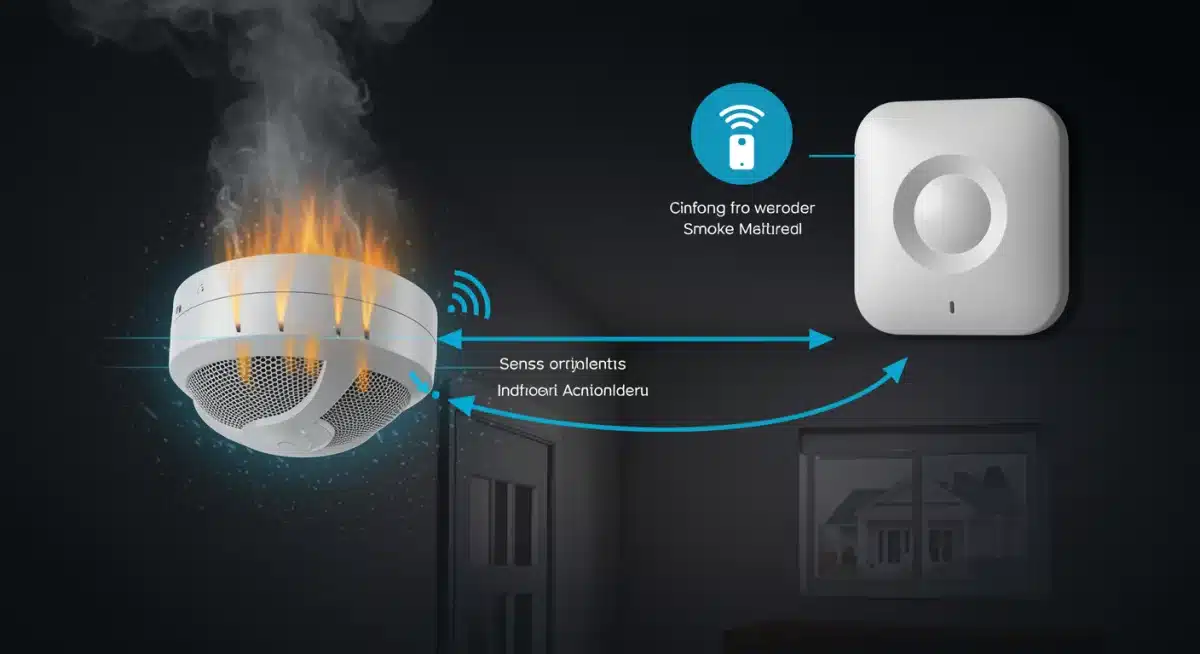
The potential for automation extends to various types of emergencies. For instance, a water leak sensor could automatically shut off the main water supply to prevent flooding, while a security breach could trigger internal cameras to record and send footage to the cloud, alongside alerting authorities. These automated actions are pivotal in achieving that 15% reduction in response times, as they eliminate the need for manual intervention during the initial, most critical moments.
Configuring these automated responses requires careful planning and understanding of your home’s layout and potential risks. However, once set up, they provide an unparalleled layer of safety and efficiency, ensuring that your home reacts intelligently and swiftly to any threat. This proactive and automated approach is a game-changer in modern emergency preparedness.
Seamless Communication with Emergency Services
A crucial element of effective emergency preparedness is the ability to communicate seamlessly and rapidly with emergency services. Smart home systems are designed to bridge this gap, providing direct or indirect channels to alert first responders, significantly cutting down on the time it takes for help to arrive.
Many modern smart home security systems offer professional monitoring services. These services act as an intermediary, receiving alerts from your smart devices and, upon verification, directly contacting fire, police, or medical personnel. This eliminates the need for you to make the call, especially in situations where you might be incapacitated or away from home.
Direct and Indirect Notification Pathways
- Professional Monitoring: A dedicated team monitors your system 24/7 and dispatches help.
- Self-Monitoring with Direct Dial: Some systems allow you to program emergency numbers for one-touch dialing.
- Automated Alerts to Contacts: Notify family and trusted neighbors simultaneously.
- Integration with Smart Assistants: Use voice commands to initiate emergency calls or alerts.
Beyond direct communication, smart home systems provide valuable information to emergency services. For example, if a fire alarm is triggered, the system can provide the exact location of the alarm, floor plans, or even live camera feeds (with homeowner permission) to aid responders. This rich data empowers first responders to act more effectively and efficiently, directly contributing to faster response times and improved outcomes during critical incidents.
Integrating Smart Lighting and Access Control
While often associated with convenience and energy savings, smart lighting and access control systems play a surprisingly vital role in enhancing emergency preparedness. Their ability to be controlled remotely or automated in response to specific events can significantly improve safety and facilitate faster responses during incidents.
In a fire, for example, smart lights can automatically illuminate escape routes, guiding occupants to safety even in smoke-filled conditions. During a security breach, flashing exterior lights can draw attention to your home, deterring intruders and signaling neighbors or arriving authorities.
Enhancing Safety with Smart Lighting and Locks
Smart lighting can be programmed to create dynamic emergency scenarios. For instance, in a medical emergency, specific lights could turn on to guide paramedics directly to the patient. For security, lights can be set to mimic occupancy when you’re away, deterring potential burglars.
- Automated Escape Routes: Lights guide occupants during fire or power outages.
- Emergency Illumination: Provide visibility for first responders entering your home.
- Remote Door Unlocking: Grant access to emergency personnel remotely.
- Secure Entry/Exit: Smart locks can automatically secure or unlock doors based on events.
Smart access control, including smart locks and garage door openers, can also be critical. In an emergency, you can remotely unlock doors for first responders, saving precious time that would otherwise be spent forcing entry. Conversely, in a security threat, you can instantly lock down your home from your smartphone, securing all entry points. These integrations enhance both the safety of occupants and the efficiency of emergency response efforts.
Building Your Personalized Smart Emergency Plan
The true potential of smart home emergency preparedness is realized when you move beyond individual devices and build a comprehensive, personalized emergency plan. This involves strategically integrating various smart technologies to create a cohesive system that responds intelligently to a wide array of potential incidents. A well-thought-out plan ensures that your smart home acts as a unified defense mechanism, optimizing every second when it matters most.
Creating this plan requires an assessment of your home’s specific vulnerabilities and the types of emergencies most likely to occur in your area. Do you live in a flood zone? Is wildfire a concern? Are security breaches a higher risk? Tailoring your smart home setup to these specific threats maximizes its effectiveness.
Key Steps to a Robust Smart Emergency Plan
Developing a personalized plan involves several stages, from initial assessment to ongoing maintenance. Each step is crucial for ensuring your system remains effective and responsive.
- Risk Assessment: Identify specific threats relevant to your location and home.
- Device Selection: Choose smart devices that address identified risks and integrate well.
- Automation Setup: Configure rules and routines for automated responses to emergencies.
- Communication Protocols: Establish how alerts are sent to you, family, and emergency services.
- Regular Testing: Periodically test your system to ensure all components are functioning correctly.
A personalized emergency plan also includes educating all household members on how the smart system works and what to do in different emergency scenarios. Practice drills and clear instructions on manual overrides are essential. By taking these steps, you transform your collection of smart devices into a powerful, intelligent system capable of dramatically improving emergency response times and safeguarding your home and family more effectively than ever before.
The Future of Smart Home Safety and Preparedness
The landscape of smart home safety and emergency preparedness is continuously evolving, driven by advancements in artificial intelligence, machine learning, and increasingly sophisticated sensor technology. The future promises even more intuitive, proactive, and interconnected systems that will further reduce response times and enhance overall home security and well-being.
We are moving towards a future where smart homes will not only detect incidents but also predict potential threats based on environmental data, behavioral patterns, and predictive analytics. Imagine a system that can anticipate a pipe burst due to unusual pressure changes or warn of an impending wildfire based on local weather conditions and proximity.
Emerging Technologies Shaping Smart Home Safety
Several key technologies are set to revolutionize how we approach emergency preparedness in our homes. These innovations will make our homes smarter, safer, and more resilient.
- AI-Powered Predictive Analytics: Anticipate issues before they become emergencies.
- Advanced Biometric Security: More reliable identification for access control.
- Drone Integration: For perimeter monitoring and post-incident assessment.
- Hyper-Localized Weather Integration: Proactive warnings for severe weather events.
Furthermore, the integration of smart home systems with municipal emergency infrastructures will become more seamless, allowing for direct, real-time data sharing with first responders. This level of integration will not only expedite response times but also provide emergency services with critical information to better prepare for and manage incidents. The future of smart home safety is one of intelligent autonomy, where your home actively participates in its own protection, offering unprecedented levels of security and peace of mind.
| Key Point | Brief Description |
|---|---|
| Smart Sensor Integration | Connects various sensors for comprehensive threat detection and immediate alerts. |
| Automated Incident Responses | Pre-programmed actions like unlocking doors or shutting off utilities during emergencies. |
| Direct Emergency Communication | Seamlessly alerts professional monitoring or emergency services for rapid dispatch. |
| Personalized Emergency Plans | Tailoring smart tech setup to specific household risks for optimized safety. |
Frequently Asked Questions About Smart Home Emergency Preparedness
Smart home technology reduces response times by automating alerts to professional monitoring or emergency services, initiating pre-programmed safety actions like unlocking doors, and providing real-time information to first responders, streamlining the entire incident management process.
Essential devices include smart smoke/CO detectors, water leak sensors, security cameras, smart locks, and a central smart hub. These devices work together to detect threats, automate responses, and communicate effectively during various emergencies.
Yes, many smart home security systems offer professional monitoring services that directly contact emergency services upon verifying an incident. Some advanced systems also allow for direct alerts or voice-activated calls to emergency numbers.
Smart lighting can automatically illuminate escape routes during a fire or power outage, guide emergency personnel to specific areas, and flash exterior lights to alert neighbors or authorities during a security breach, enhancing visibility and response.
Absolutely. A personalized plan tailors your smart home setup to your specific risks, ensuring devices are optimally placed and automated responses are configured for your home’s layout. This maximizes effectiveness and significantly improves safety outcomes.
Conclusion
The integration of smart home technology into emergency preparedness is no longer a luxury but a fundamental component of modern home safety. By leveraging interconnected sensors, automated responses, and seamless communication channels, homeowners can significantly enhance their ability to detect, respond to, and mitigate emergencies. The promise of reducing incident response times by a notable 15% is a testament to the transformative power of these technologies. As smart home systems continue to evolve, they will undoubtedly provide even greater layers of protection, fostering a future where our homes are not just comfortable, but intelligently secure and resilient against unforeseen events.