Advanced Voice Control: Unlocking 5 Hidden Commands for Your Smart Home Assistant in 2026
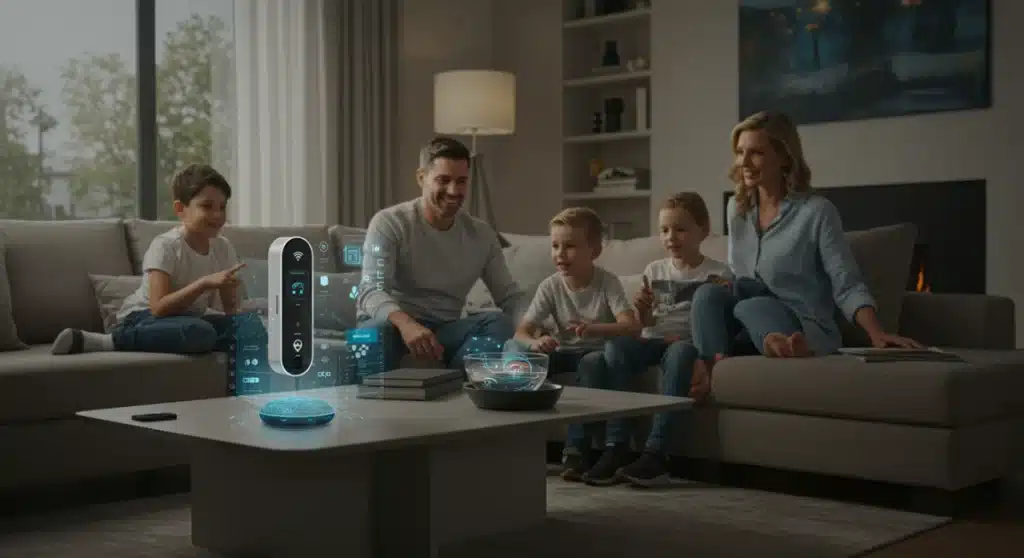
Advanced voice control is transforming smart home interaction in 2026, enabling seamless automation and personalized experiences through hidden commands that unlock new levels of convenience and efficiency.
Are you ready to truly master your smart home in 2026? Beyond the basic “turn on the lights” or “play music,” the world of advanced voice control offers a wealth of untapped potential. This article will guide you through five hidden commands designed to elevate your smart home assistant experience from functional to truly intuitive and integrated.
The evolution of voice control in 2026
Voice control technology has come a long way since its inception. What began as rudimentary command recognition has evolved into sophisticated AI-driven interaction, capable of understanding context, nuances, and even emotional cues. In 2026, smart home assistants are no longer just reactive devices; they are proactive partners in managing our daily lives.
This evolution is powered by advancements in natural language processing (NLP) and machine learning, allowing for more complex, multi-layered commands. Users can now speak more naturally, stringing together multiple actions or conditions in a single request. This shift moves beyond simple directives to more conversational and predictive interactions, making smart homes feel genuinely intelligent.
Predictive AI and contextual understanding
One of the most significant leaps in 2026 is the assistant’s ability to anticipate needs based on routines and external data. This isn’t just about learning your habits; it’s about integrating real-time information from various sources to offer truly personalized experiences.
- Anticipatory actions: Your assistant can now suggest actions before you even vocalize them, like adjusting the thermostat when a storm is predicted.
- Contextual memory: It remembers previous interactions, allowing for follow-up questions or commands without repeating the initial context.
- Personalized profiles: Voice recognition technology has advanced to differentiate between household members, tailoring responses and automations to individual preferences.
The ability to understand context means your assistant can interpret vague commands with surprising accuracy. For example, saying “It’s too bright in here” could trigger different actions depending on the time of day, the room you’re in, or even your previous light preferences. This deep understanding makes interactions feel less like commanding a robot and more like conversing with an attentive, helpful entity.
The continuous improvement in speech recognition, even in noisy environments, further solidifies voice control as the primary interface for smart homes. This foundational evolution sets the stage for discovering the hidden commands that unlock the full potential of your smart home ecosystem, moving beyond basic functionality to true integration and convenience.
Hidden command 1: dynamic scene orchestration
Gone are the days of creating static scenes like “movie night” that only adjust a few lights. In 2026, dynamic scene orchestration allows your smart assistant to create adaptive environments based on real-time factors and your current mood or activity. This hidden command leverages the assistant’s deep learning capabilities to go beyond predefined settings.
Imagine telling your assistant, “Set the mood for a relaxed evening,” and it doesn’t just dim the lights. Instead, it analyzes external weather data, your calendar for upcoming events, your preferred music genres for relaxation, and even the air quality, then tailors a complete environmental setup. This includes lighting color and intensity, ambient sounds, room temperature, and even releasing a calming aroma if you have a smart diffuser.
Creating adaptive environments
Dynamic scene orchestration is about fluidity and responsiveness. It understands that a ‘relaxing evening’ on a Tuesday might differ from a Friday, or that a ‘focus mode’ for work shifts if the sun is glaring through the window.
- “Adaptive Comfort Mode”: This command automatically adjusts climate control, lighting, and even window shades based on external weather, time of day, and your usual comfort preferences.
- “Intuitive Focus Zone”: Activates a personalized work or study environment, minimizing distractions by routing calls to voicemail, playing white noise, and setting optimal lighting for concentration.
- “Personalized Wellness Bubble”: Syncs with wearable tech to detect stress levels, then initiates a calming sequence of soft lighting, ambient nature sounds, and a gentle room temperature adjustment.
The key here is the assistant’s ability to pull data from various smart sensors and connected devices, processing it in real-time to generate a truly customized scene. It means your smart home isn’t just following instructions; it’s actively contributing to your well-being and productivity by intelligently adapting its environment to your needs. This level of integration makes your home feel more alive and responsive than ever before.
Hidden command 2: complex multi-device sequencing
While basic routines allow for sequential actions, complex multi-device sequencing in 2026 takes this to an entirely new level. This advanced voice command enables you to trigger intricate chains of events across multiple devices, often with conditional logic, using a single, natural language phrase. It’s about orchestrating a symphony of smart devices with unparalleled precision.
Instead of saying “Turn on the TV, then dim the lights, then close the blinds,” you can now issue a command like, “Initiate evening entertainment protocol.” Your assistant, understanding the context, might then check if it’s dark outside, confirm if anyone else is home, and then execute a detailed sequence: power on specific entertainment devices, adjust sound settings, lower ambient lighting to a pre-set level, and even prepare a smart coffee machine for a post-dinner brew. The conditional logic ensures that actions only occur if certain criteria are met, making the sequence truly intelligent.
Implementing nuanced automation
This command thrives on detailed planning and the integration of various smart home ecosystems. It moves beyond simple IF-THEN statements to IF-THEN-ELSE-IF scenarios that account for multiple possibilities.
- “Guest Arrival Sequence”: When a guest is detected (via smart doorbell or specific voice command), the system can unlock the smart lock, turn on entrance lights, play welcoming music, and even notify you on your smart display.
- “Morning Departure Routine”: A single command like “I’m leaving for work” can lock all doors, arm the security system, turn off all non-essential lights, adjust the thermostat to energy-saving mode, and even close the garage door.
- “Smart Home Security Check”: Triggers a full security audit, activating all cameras, checking sensor statuses, and providing a verbal report on your home’s security posture.
The power of complex multi-device sequencing lies in its ability to consolidate numerous individual actions into one seamless, intuitive command. It significantly reduces the friction of managing a multitude of smart devices, transforming your home into a truly automated and responsive living space. This level of control optimizes not just convenience but also energy efficiency and security, making your smart home work harder for you.
Hidden command 3: predictive maintenance diagnostics
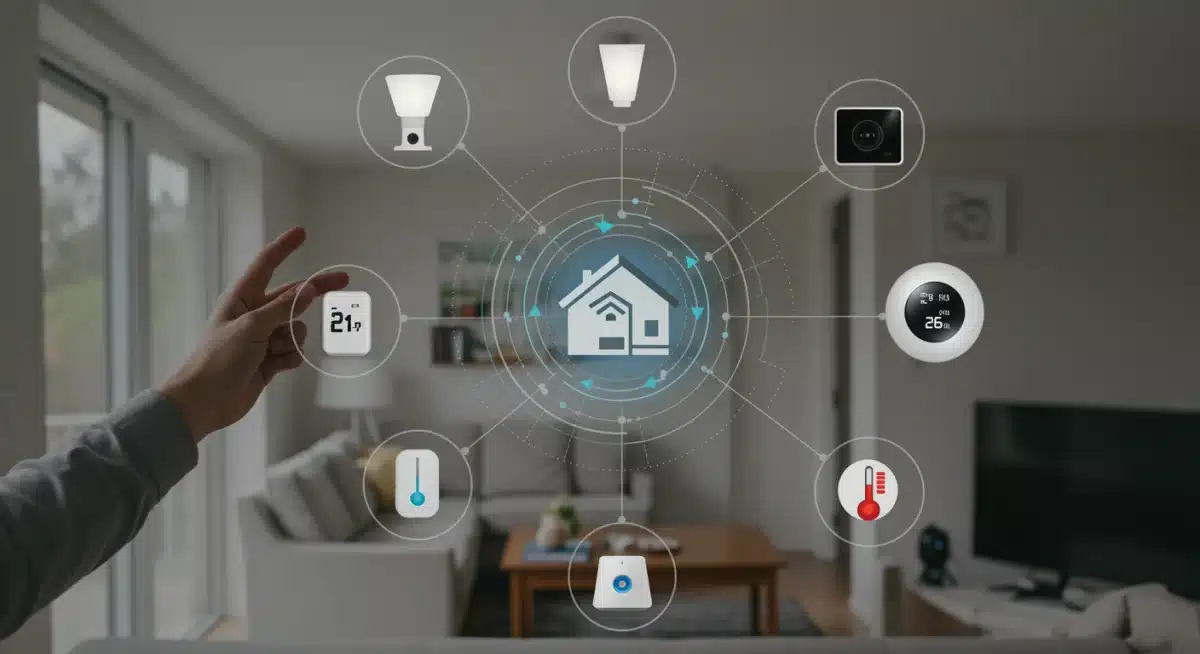
In 2026, your smart home assistant isn’t just about comfort and convenience; it’s a proactive guardian of your home’s health. Predictive maintenance diagnostics is a hidden command that allows your assistant to monitor the operational status of connected appliances and systems, anticipating potential failures before they occur. This saves you time, money, and the headache of unexpected breakdowns.
Instead of waiting for your smart refrigerator to stop cooling, you can now ask, “Run a system check on all major appliances.” Your assistant will then communicate with smart appliances, HVAC systems, and even plumbing sensors to gather diagnostic data. It can identify subtle changes in operational patterns, such as increased energy consumption from a failing motor or unusual vibrations from a heating unit, and then provide a detailed report or even schedule a technician if necessary.
Proactive home health monitoring
This advanced diagnostic capability goes beyond simple error codes, delving into predictive analytics to ensure your home runs smoothly year-round.
- “HVAC Health Scan”: Checks fan motor efficiency, filter status, refrigerant levels, and ductwork integrity, alerting you to potential issues before they impact performance.
- “Appliance Longevity Report”: Provides insights into the wear and tear of smart washing machines, dishwashers, and ovens, estimating remaining lifespan and suggesting preventative maintenance.
- “Plumbing Leak Detection Audit”: Integrates with smart water sensors to detect micro-leaks, monitor water pressure, and identify potential pipe corrosion, preventing costly water damage.
The beauty of predictive maintenance lies in its ability to prevent problems rather than just reacting to them. By using this advanced voice command, homeowners gain peace of mind, knowing that their smart home assistant is constantly working in the background to ensure optimal performance and extend the life of their investments. This feature truly embodies the ‘smart’ in smart home, offering tangible benefits beyond mere automation.
Hidden command 4: personalized digital twin interaction
The concept of a digital twin, a virtual replica of a physical object or system, has expanded into the smart home realm by 2026. This hidden command allows you to interact with a personalized digital twin of your home, offering a highly intuitive way to visualize, troubleshoot, and optimize your living space. It’s like having a miniature, real-time simulation of your house at your fingertips, accessible via voice.
Imagine saying, “Show me the energy consumption overlay for the living room heat map.” Your smart assistant could then project a holographic or augmented reality (AR) overlay of your living room, detailing real-time energy usage by various devices, identifying heat loss areas, or even simulating furniture rearrangements. This goes beyond simple data display, offering a spatial and interactive understanding of your home’s dynamics.
Augmented reality and spatial commands
Personalized digital twin interaction leverages advanced AR and spatial computing to provide a rich, immersive experience that enhances home management.
- “Simulate lighting changes in the kitchen”: Projects different lighting schemes onto your kitchen, allowing you to visualize options before committing to a physical change.
- “Highlight areas of high foot traffic”: Uses motion sensor data to create a heat map of activity within your home, useful for optimizing furniture placement or security camera angles.
- “Troubleshoot network dead zones”: Visualizes your home’s Wi-Fi signal strength in 3D, pinpointing weak spots and suggesting optimal router placement or extender locations.
This command transforms how you interact with your home’s data, moving from abstract numbers to tangible, visual representations. It empowers homeowners to make more informed decisions about energy efficiency, interior design, and connectivity, all through the natural interface of advanced voice control. The personalized digital twin becomes an invaluable tool for both casual users and tech enthusiasts looking to fine-tune every aspect of their smart living environment.
Hidden command 5: adaptive security protocols
Security in 2026 smart homes is no longer just about arming and disarming alarms. Adaptive security protocols, a powerful hidden voice command, enable your smart assistant to dynamically adjust your home’s security posture based on real-time threats, occupancy patterns, and external environmental factors. This provides a truly intelligent and responsive defense system for your property.
Instead of manually setting away modes, you can now say, “Activate adaptive perimeter defense.” Your assistant will then integrate data from smart cameras, motion sensors, door/window contacts, and even local crime reports. If an unusual pattern is detected, like a vehicle lingering outside or an unfamiliar face at the doorbell, it can automatically heighten surveillance, activate deterrents (e.g., flashing lights, loud audio warnings), and notify authorities or trusted contacts, all while assessing the level of threat.
Intelligent threat response
Adaptive security protocols are designed to be proactive and intelligent, minimizing false alarms while maximizing protection.
- “Geo-fenced perimeter hardening”: Automatically arms exterior sensors and cameras when all residents leave a defined geo-fence, and disarms upon their return, with customizable sensitivity settings.
- “Anomaly detection and response”: Learns normal patterns of activity and alerts you to any significant deviations, such as a window opening at an unusual hour or an object being moved.
- “Emergency lockdown sequence”: In a critical situation, a single voice command can lock all smart doors, close smart blinds, activate all security cameras, and send distress signals to pre-selected contacts or emergency services.
The sophistication of adaptive security protocols means your home is always protected in the most appropriate way, without constant manual intervention. This advanced voice control feature brings a new level of peace of mind to smart home owners, knowing that their assistant is constantly vigilant, assessing threats, and ready to respond intelligently to ensure the safety and security of their household. It’s a testament to how far smart home security has evolved.
| Key Command | Brief Description |
|---|---|
| Dynamic Scene Orchestration | Creates adaptive environments based on real-time factors and mood, beyond static scenes. |
| Complex Multi-Device Sequencing | Triggers intricate, conditional chains of events across multiple devices with one command. |
| Predictive Maintenance Diagnostics | Monitors appliances and systems to anticipate failures, offering proactive home health. |
| Adaptive Security Protocols | Dynamically adjusts home security based on threats, occupancy, and environmental factors. |
Frequently asked questions about advanced voice control
In 2026, advanced voice control refers to smart assistants’ ability to understand complex, contextual, and multi-layered commands. It moves beyond simple directives to include predictive AI, personalized responses, and the orchestration of intricate device sequences based on user habits and real-time data, making smart homes truly intuitive.
Hidden commands unlock deeper functionality, transforming your smart home from a collection of devices into a cohesive, intelligent ecosystem. They allow for dynamic scene creation, complex automation sequences, proactive maintenance, and adaptive security, significantly enhancing convenience, efficiency, and overall living quality.
Compatibility largely depends on your assistant’s model and the integration capabilities of your smart devices. While leading platforms (e.g., Google Assistant, Amazon Alexa, Apple HomeKit) are rapidly adopting these features, some advanced commands may require specific hardware or software updates to function optimally across all devices.
Absolutely. Most advanced voice control systems in 2026 offer extensive customization options. Users can define parameters, conditions, and specific device responses for each command, tailoring them to individual preferences, routines, and the unique layout of their smart home. This personalization is key to maximizing their utility.
With greater sophistication comes increased data collection. Users should review privacy settings, understand data usage policies, and utilize available encryption features. Manufacturers are focusing on on-device processing and robust security protocols, but user vigilance in managing permissions and data sharing remains crucial for privacy protection.
Conclusion
The journey into advanced voice control in 2026 reveals a landscape far more sophisticated and integrated than ever before. By uncovering these five hidden commands – dynamic scene orchestration, complex multi-device sequencing, predictive maintenance diagnostics, personalized digital twin interaction, and adaptive security protocols – homeowners can transform their smart environments. These capabilities move beyond simple convenience, offering a proactive, intuitive, and deeply personalized living experience. Embracing these advanced functionalities not only enhances daily life but also positions your home at the forefront of smart living, proving that the future of home automation is truly in your voice.