AI-Powered Burglary Evolution by 2026: Smart Home Security
By 2026, AI-powered burglaries will leverage advanced technologies to bypass traditional security, necessitating proactive smart home defenses including adaptive AI security systems and enhanced data privacy measures to protect against evolving threats.
The New Threat Landscape: How AI-Powered Burglaries Will Evolve by 2026 and What Your Smart Home Needs to Know is no longer a distant sci-fi concept but a rapidly approaching reality. As artificial intelligence becomes more sophisticated, so too do the methods employed by those with malicious intent, demanding a critical re-evaluation of our home security strategies.
Understanding the AI-Powered Burglar of Tomorrow
The evolution of AI presents a double-edged sword: while it enhances our lives, it also provides new tools for criminals. By 2026, burglars will not rely solely on brute force or simple lock-picking. Instead, they will likely employ AI to scout properties, identify vulnerabilities, and even bypass advanced security systems. This shift requires homeowners to move beyond conventional security measures and adopt more intelligent, adaptive defenses.
Imagine a scenario where AI algorithms analyze social media posts to determine when a home is empty, or use facial recognition to identify residents’ routines. These capabilities, once theoretical, are becoming increasingly accessible, making the proactive understanding of these threats paramount for smart home owners.
Advanced Reconnaissance and Surveillance
AI’s ability to process vast amounts of data quickly will transform how criminals conduct reconnaissance. They will move beyond physical stakeouts to digital intelligence gathering, making their operations more efficient and less detectable.
- Data Mining for Vulnerabilities: AI can sift through public records, social media, and even smart device usage patterns to pinpoint optimal times for entry and identify potential weaknesses in a home’s security.
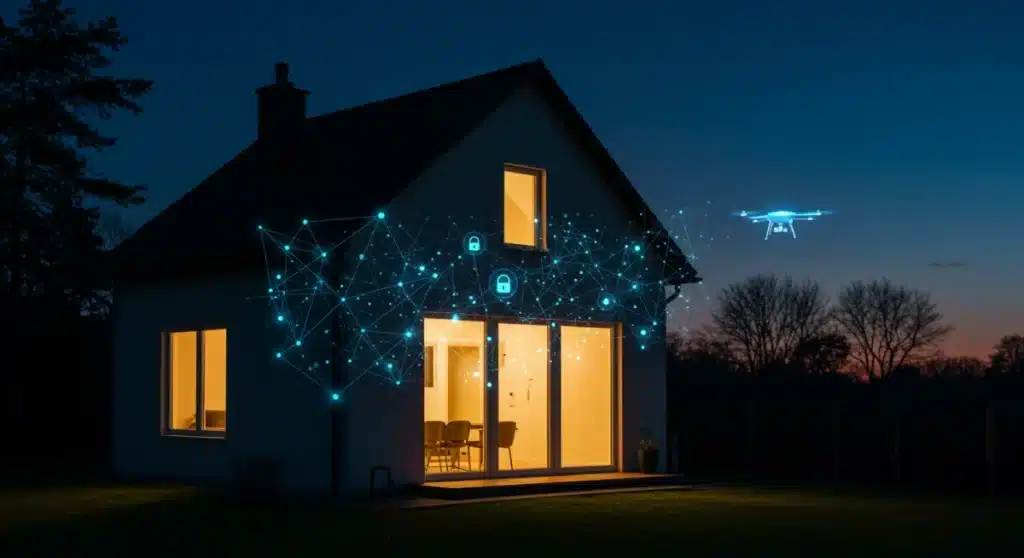
- Automated Drone Surveillance: Miniature, AI-controlled drones will offer unparalleled aerial views, mapping out entry points, identifying blind spots, and even detecting motion within a property without human presence.
- Predictive Analytics: Sophisticated AI models can predict human behavior, such as vacation schedules or work routines, based on aggregated data, providing burglars with precise windows of opportunity.
The future burglar will be a data scientist as much as a physical intruder. Understanding these advanced reconnaissance methods is the first step in building a robust defense, focusing on digital footprint reduction and anti-surveillance technologies.
In conclusion, the AI-powered burglar of tomorrow poses a significantly more intelligent and insidious threat than their predecessors. Their reliance on data and advanced technology means that traditional security thinking must evolve, placing a greater emphasis on digital defense and adaptive systems.
Exploiting Smart Home Weaknesses with AI
Smart homes, while offering convenience, introduce new attack vectors that AI can exploit. Devices connected to the internet, from smart locks to security cameras, can become entry points for sophisticated breaches if not adequately secured. By 2026, AI will be instrumental in identifying and leveraging these digital vulnerabilities.
The interconnected nature of smart home ecosystems means that a weakness in one device can compromise the entire network. Criminals using AI will be able to scan for open ports, default passwords, and unpatched firmware with unprecedented speed and accuracy, turning your smart thermostat into a gateway for intrusion.
AI-Driven Hacking Techniques
The conventional image of a hacker hunched over a keyboard is outdated. AI can automate hacking, making it faster, more scalable, and less reliant on human error.
- Brute-Force Optimization: AI algorithms can significantly accelerate brute-force attacks on passwords and encryption keys, learning from failed attempts to refine their approach.
- Deepfake and Voice Synthesis: AI can generate convincing deepfake videos or voice imitations to trick smart home systems that rely on biometric verification or voice commands, potentially unlocking doors or disarming alarms.
- Exploiting Zero-Day Vulnerabilities: While still nascent, AI is being developed to identify previously unknown software vulnerabilities (zero-day exploits), giving attackers a critical advantage before patches are available.
These AI-driven hacking techniques underscore the need for smart home devices to have robust, up-to-date security protocols and for homeowners to be vigilant about software updates and complex, unique passwords. The battle for home security is increasingly moving into the digital realm.
Ultimately, the convenience of smart home technology must be balanced with an understanding of its inherent vulnerabilities. AI-powered attackers will specifically target these weaknesses, necessitating a proactive and adaptive approach to digital security within the home.
The Role of Adaptive AI in Smart Home Security
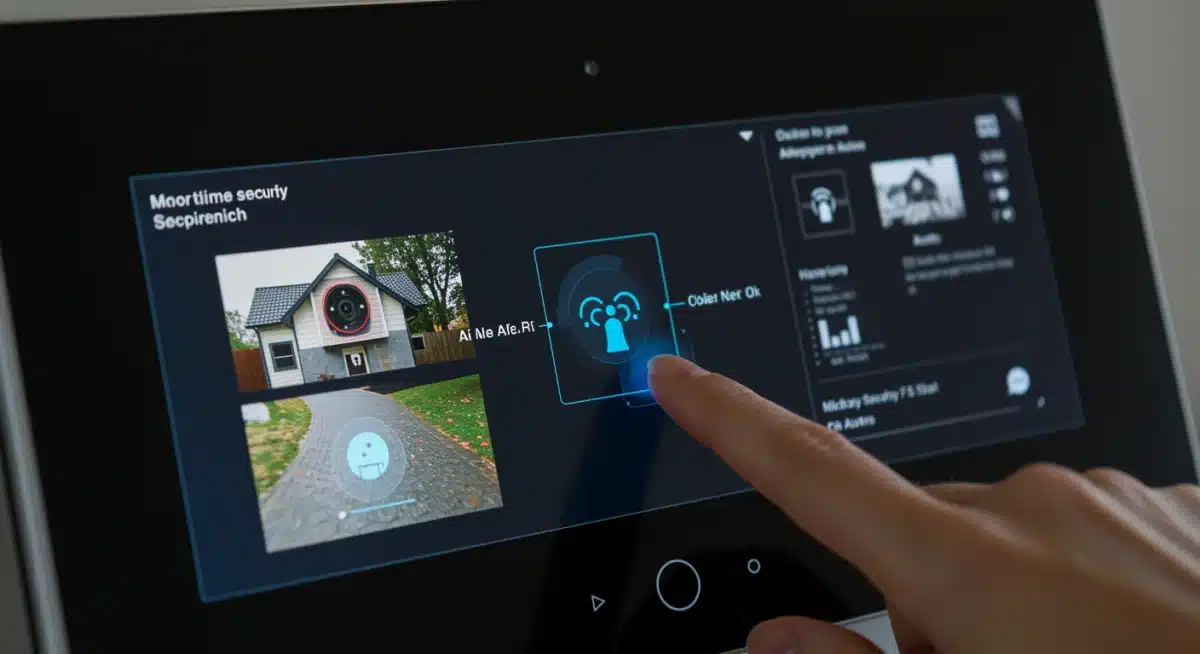
To combat the evolving threat of AI-powered burglaries, smart home security systems must also leverage AI, but in a defensive capacity. Adaptive AI systems are capable of learning, predicting, and responding to threats in real-time, offering a dynamic layer of protection that traditional alarms cannot match.
Think of adaptive AI as a digital guardian that continuously monitors your home, not just for predefined triggers, but for anomalies and suspicious patterns. This proactive stance allows it to identify threats before they escalate, potentially neutralizing them before any physical breach occurs.

Predictive Threat Detection
Unlike conventional systems that react to events, adaptive AI can anticipate them. By analyzing vast datasets of past incidents and current environmental factors, it can identify potential threats before they materialize.
- Behavioral Analytics: AI learns the typical patterns of your household – when lights are on, doors open, or motion is detected – and flags deviations as potential threats, distinguishing between a family member and an intruder.
- Environmental Anomaly Detection: Beyond human activity, AI can monitor for unusual environmental changes, such as unexpected temperature drops, abnormal Wi-Fi traffic, or unfamiliar sounds, which could indicate a sophisticated intrusion attempt.
- Real-time Vulnerability Scanning: Defensive AI can continuously scan your smart home network for new vulnerabilities, alerting you to potential weaknesses and suggesting immediate actions or even applying patches automatically.
These predictive capabilities transform smart home security from a reactive mechanism into a proactive defense system, capable of outsmarting the AI-driven tactics of future burglars. Investing in such systems is no longer a luxury but a necessity for comprehensive protection.
In essence, adaptive AI is the cornerstone of future smart home safety. It provides the intelligence and responsiveness needed to counter the sophisticated, AI-powered threats that will define the security landscape of 2026 and beyond.
Data Privacy and Cybersecurity in Smart Homes
As smart homes become more interconnected and reliant on data, the importance of data privacy and robust cybersecurity measures cannot be overstated. Every smart device collects data, and this data, if compromised, can be a goldmine for AI-powered burglars, offering insights into your routines, habits, and vulnerabilities.
Protecting your digital footprint is as crucial as securing your physical premises. A breach in your smart home’s data can not only expose personal information but also provide attackers with the intelligence needed to plan and execute a successful physical intrusion.
Fortifying Your Digital Defenses
Strengthening your smart home’s digital defenses involves a multi-faceted approach, combining technology, user awareness, and proactive management.
- Strong, Unique Passwords and Multi-Factor Authentication (MFA): This remains the first line of defense. AI can crack weak passwords, so complex, unique passwords for every device, coupled with MFA, are essential.
- Regular Software Updates: Manufacturers frequently release updates to patch security vulnerabilities. Enabling automatic updates or regularly checking for them ensures your devices are protected against known exploits.
- Network Segmentation: Creating separate network segments for your smart devices (IoT network) and your personal devices can limit the damage if one segment is compromised, preventing a breach from spreading.
Moreover, understanding the data collection policies of your smart devices and opting for privacy-focused brands can significantly reduce your exposure. The less data available, the less intelligence an AI-powered burglar has to work with.
Ultimately, a secure smart home in 2026 demands a strong emphasis on data privacy and cybersecurity. By adopting best practices and utilizing available tools, homeowners can significantly reduce their digital vulnerability and protect their physical assets.
Essential Smart Home Security Upgrades for 2026
As we approach 2026, the imperative to upgrade smart home security becomes clearer. Traditional systems are simply not equipped to handle the sophistication of AI-powered threats. Homeowners must consider integrating advanced technologies that offer proactive defense and intelligent monitoring.
These upgrades are not just about adding more gadgets; they are about creating an intelligent, interconnected defense system that can adapt to new threats and provide comprehensive protection against both digital and physical intrusions. The goal is to build a resilient smart home ecosystem.
Key Upgrades to Consider
Investing in the right technologies now can save considerable heartache and financial loss in the future. Prioritize systems that offer AI-driven capabilities and robust security features.
- AI-Powered Cameras with Facial and Object Recognition: These cameras can differentiate between residents, pets, and unknown individuals, reducing false alarms and providing more accurate threat assessments.
- Smart Locks with Biometric and Anti-Tamper Features: Beyond keypads, look for locks that integrate fingerprint scanning, advanced encryption, and alerts for tampering attempts, making them resistant to AI-driven bypass methods.
- Network Intrusion Detection Systems (NIDS): These systems use AI to monitor network traffic for suspicious activity, immediately alerting you to potential hacking attempts on your smart devices.
Furthermore, consider integrating these systems into a centralized smart home hub that offers end-to-end encryption and regular security updates. A holistic approach ensures that all components work together seamlessly to form a formidable defense.
In conclusion, preparing for the AI-powered burglary evolution by 2026 means making strategic smart home security upgrades. These enhancements provide the necessary intelligence and resilience to protect against sophisticated threats, ensuring peace of mind for homeowners.
Future-Proofing Your Smart Home Against AI Threats
Future-proofing your smart home involves more than just installing the latest gadgets; it requires a mindset of continuous adaptation and vigilance. The landscape of AI-powered threats will continue to evolve beyond 2026, necessitating an ongoing commitment to security and awareness.
Consider your smart home as a dynamic entity, requiring constant attention and updates. Relying on a ‘set it and forget it’ approach will leave you vulnerable to emerging threats that AI can quickly exploit. The key is to stay informed and proactive.
Strategies for Long-Term Security
Developing a long-term security strategy ensures your smart home remains resilient against future AI-driven challenges. This involves both technological and behavioral adjustments.
- Stay Informed on Emerging Threats: Regularly follow cybersecurity news and smart home security trends to understand new vulnerabilities and attack methods, including those leveraging advanced AI.
- Invest in Scalable and Upgradable Systems: Choose smart home platforms and devices that are designed for future compatibility and offer easy software and hardware upgrades, ensuring they can adapt to new security demands.
- Regular Security Audits: Periodically review your smart home’s security settings, device permissions, and network configurations. Consider professional audits for a comprehensive assessment of your vulnerabilities.
Educating yourself and your family about smart home security best practices is also paramount. Human error often remains the weakest link in any security chain, and awareness can significantly mitigate this risk. By fostering a culture of security, you build a stronger, more resilient smart home.
Ultimately, future-proofing your smart home means embracing an iterative approach to security. It’s about building a foundation that can evolve with technology, protecting your home not just from today’s threats, but from the sophisticated AI challenges of tomorrow.
| Key Aspect | Brief Description |
|---|---|
| AI Reconnaissance | Burglars will use AI for data mining, drone surveillance, and predictive analytics to identify vulnerabilities and routines. |
| Smart Home Exploits | AI will exploit smart device weaknesses via automated hacking, deepfakes, and zero-day vulnerability discovery. |
| Adaptive AI Defense | Smart homes need AI-powered systems for predictive threat detection, behavioral analytics, and real-time vulnerability scanning. |
| Data Privacy Priority | Robust data privacy, strong passwords, MFA, and regular updates are crucial to prevent AI-driven data exploitation. |
Frequently Asked Questions About AI and Home Security
By 2026, AI will enable burglars to conduct advanced reconnaissance through data mining, use autonomous drones for surveillance, and employ predictive analytics to identify optimal times for intrusion. It will also facilitate automated hacking of smart home devices and systems.
AI burglars could exploit weak passwords, unpatched software vulnerabilities in smart devices, and lax data privacy settings. They might also leverage deepfake technology to bypass biometric authentication or voice-activated controls, gaining unauthorized access.
Adaptive AI systems offer proactive defense by learning your home’s normal patterns and detecting anomalies. They can provide predictive threat detection, behavioral analytics, and real-time vulnerability scanning, alerting you to potential threats before they escalate into breaches.
Consider upgrading to AI-powered cameras with advanced recognition, smart locks with biometric and anti-tamper features, and network intrusion detection systems. These technologies provide intelligent monitoring and robust protection against evolving AI threats.
Absolutely. Data privacy is paramount. Compromised personal data can provide AI burglars with crucial intelligence about your routines and vulnerabilities. Implementing strong passwords, multi-factor authentication, and keeping software updated are vital for digital defense.
Conclusion
The convergence of advanced artificial intelligence and criminal intent is reshaping the landscape of home security. The New Threat Landscape: How AI-Powered Burglaries Will Evolve by 2026 and What Your Smart Home Needs to Know demands a paradigm shift in how we protect our homes. Traditional security measures, while still foundational, are no longer sufficient against adversaries armed with sophisticated AI tools. Proactive defense, centered around adaptive AI security systems, stringent data privacy practices, and continuous vigilance, will be the hallmarks of a truly secure smart home. By embracing these advancements and maintaining an informed perspective, homeowners can future-proof their properties, ensuring peace of mind in an increasingly complex digital world.