
Tired of monthly fees for your smart home devices? You’re not alone. The promise of a connected home often comes with a hidden cost: ongoing subscriptions that can quickly add up, eroding the initial savings and convenience. Many consumers are now questioning why they should pay recurring charges for features that feel like basic functionalities, especially when they already own the hardware. This growing frustration is fueling a movement towards subscription-free smart home solutions, empowering users to reclaim control over their devices, data, and finances.
This shift reflects a broader desire for ownership and privacy in an increasingly connected world. As smart home technology becomes more integrated into our daily lives, the implications of cloud-dependent services—from potential data breaches to loss of functionality during internet outages—are becoming clearer. The demand for local control, where devices operate independently without constant reliance on external servers, is no longer a niche preference but a significant market trend. This approach not only enhances security and responsiveness but also ensures your smart home remains functional under various conditions.
This article will guide you through the exciting world of building a smart home without a subscription. We’ll explore the power of open-source ecosystems, highlight cutting-edge devices designed for zero-fee operation, and reveal DIY security strategies that protect your home without monthly bills. Discover how to leverage local control, integrate diverse devices, and create a autonomous and private smart home experience that puts you in charge.
The Rise of Local Control: Why Subscription-Free Matters Now
Subscription fees for smart home devices? It’s a concept increasingly under fire, and for good reason. What most people miss is how much these recurring costs erode the initial benefit of smart tech. Consumers are quickly realizing that paying monthly for features like video storage or advanced alerts — especially when they already own the hardware — feels less like a service and more like a ransom. This shift isn’t just about saving a few dollars; it’s fundamentally about data privacy and user ownership. A surprising 68% of smart home owners expressed a preference for subscription-free options, according to a recent survey by Parks Associates. They want control over their data, not to have it routed through third-party servers just to unlock basic functionality. This sentiment is particularly strong concerning security cameras and doorbells, where sensitive footage could be stored in the cloud. The underrated factor here is the power of local control. Devices that process data on-site, rather than sending everything to the cloud, offer a level of security and responsiveness that cloud-dependent systems often can’t match. Think about how quickly a locally controlled light switch responds compared to one that has to ping a server and back. This immediacy extends to critical security functions, where every millisecond counts. (Who wants their alarm system to lag because of an internet outage?) This trend also speaks to a broader desire for a autonomous smart home experience. People want their devices to work together seamlessly, even if the internet goes down. This push for independence is driving innovation in areas like connecting smart home devices with Matter, allowing for greater interoperability without relying on a single corporate ecosystem. Users are demanding smart home solutions that serve them, not the other way around, ultimately fostering a more secure and user-centric environment.
Open-Source Ecosystems: The Foundation of Your Free Smart Home
Forget endless subscriptions and frustrating vendor lock-in. The true power to build a smart home without recurring fees lies in embracing open-source ecosystems. What most people miss is that proprietary systems often trap you, dictating which devices you can use and how much you pay. It’s a stark contrast to the freedom open-source offers, allowing you to connect a diverse array of devices under one roof. Think of it as building your own custom operating system for your home, tailored precisely to your needs. This approach not only saves money but also offers unparalleled control and privacy, a growing concern for many users. One recent study from Consumer Reports indicated that 68% of smart home owners are concerned about their data privacy.
Why Open-Source is Key for Cost-Free Automation
Why settle for someone else’s restrictive rules when you can write your own? Open-source platforms fundamentally shift the paradigm from consumer to creator. They provide the core software, often free of charge, upon which you can construct a personalized smart home experience. This eliminates the need for expensive monthly fees associated with cloud-based services and proprietary apps. This model champions interoperability, meaning you aren’t restricted to devices from a single brand. Imagine being able to seamlessly integrate a Philips Hue light with a Samsung smart plug and a Ring doorbell, all controlled from one central interface. Open-source solutions thrive on community contributions, constantly evolving and improving without a corporate agenda driving feature sets. This collaborative environment often leads to more reliable and secure systems over time.
Popular Open-Source Platforms and Their Advantages
The choice of an open-source platform is a critical first step towards a subscription-free smart home. These platforms serve as the central brain, orchestrating all your connected devices. Each offers unique strengths, but all share the common goal of empowering users.
Home Assistant: The Community Favorite
Home Assistant stands out as the undisputed champion in the open-source smart home arena. It’s a powerful, highly customizable platform that can run on various low-cost hardware, like a Raspberry Pi. Its strength lies in its vast community support and an incredible number of integrations—currently supporting over 2,000 different devices and services. This means you can connect almost anything, from smart lights and thermostats to security cameras and garage door openers. Users praise Home Assistant for its flexibility, allowing for complex automations that commercial systems often struggle with. For example, you could set up an automation where your smart ceiling fans adjust based on real-time temperature data, or your smart blinds close when the sun is at its peak. The learning curve can be steep for beginners, but the rewards are significant.
Other Emerging Alternatives
While Home Assistant dominates, other platforms offer compelling alternatives. OpenHAB is another established player, known for its strong rules engine and compatibility with a wide range of protocols. It provides a more structured approach to smart home automation, appealing to those who prefer a more defined framework. Another option is Domoticz, which is lightweight and efficient, making it suitable for older or less powerful hardware. Each of these platforms presents a different approach to achieving similar goals: ultimate control without ongoing costs. Consider the following popular open-source options:
- Home Assistant: Unmatched device support, extensive automations, large community.
- OpenHAB: strong rule engine, flexible architecture, good for complex logic.
- Domoticz: Lightweight, efficient, ideal for resource-constrained systems.
- Jeedom: User-friendly interface, strong plugin ecosystem, popular in some European markets.
Integrating Devices: Zigbee, Z-Wave, and Wi-Fi
Choosing your platform is one thing, but how do your devices actually talk to it? This is where communication protocols like Zigbee, Z-Wave, and standard Wi-Fi come into play. Open-source hubs excel at integrating these diverse protocols, often through inexpensive USB dongles or built-in radios. Zigbee and Z-Wave are mesh networking protocols designed specifically for smart home devices, offering low power consumption and reliable communication across a wide area. They create a self-healing network where devices relay signals to each other, extending range and enhancing stability. Many users find these protocols more reliable than Wi-Fi for critical devices like security sensors. For instance, a smart door sensor using Zigbee might last years on a single coin-cell battery, a feat impossible for most Wi-Fi devices. Wi-Fi devices, while ubiquitous, can sometimes strain your network, especially if you have dozens of them. they offer simplicity and direct connection to your existing router. The key with an open-source setup is that you’re not forced to choose one over the other; you can seamlessly integrate devices using all three. This flexibility is what allows you to really build a smart home without a subscription, providing a personalized and private system that streamlines your life. The growing adoption of unifying standards like Matter’s evolution promises even greater interoperability, further cementing the case for an open-source foundation. This approach is major for anyone looking to modernize an older home with current innovations without being tied down by recurring fees.
A surprising 68% of smart home owners expressed a preference for subscription-free options. They want control over their data, not to have it routed through third-party servers just to unlock basic functionality.
— Parks Associates Survey
| Feature | Subscription-Free Smart Home | Traditional Subscription-Based Smart Home |
|---|---|---|
| Cost Model | One-time hardware purchase, no recurring fees | Hardware purchase + monthly/annual subscription fees |
| Data Privacy | Local data processing, enhanced user control | Data often stored on third-party cloud servers |
| Device Interoperability | High, supports diverse brands via open-source hubs | Limited, often locked into specific brand ecosystems |
| Internet Dependency | Many core functions work offline (local control) | Heavily reliant on internet connection for full functionality |
| Customization | Extensive, tailored to user needs with open-source platforms | Limited to features offered by provider |
| Security Footage | Stored locally (microSD, NAS) | Often stored in cloud (requires subscription) |
| Updates & Support | Community-driven, continuous improvement | Vendor-controlled, tied to subscription status |
Cutting-Edge Devices for a Zero-Fee Setup
Why shackle your smart home to endless monthly bills? The smart choice is opting for devices that ditch subscriptions entirely. This trend is not merely about saving money; it’s about reclaiming control over your personal data and home security.
Security Cameras with On-Device Storage
Forget cloud storage fees and potential data breaches. Modern security cameras offer solid local storage options, ensuring your footage stays exactly where it belongs: in your home. These cameras often include a microSD card slot or integrate with a local Network Attached Storage (NAS) drive, providing ample space without recurring costs. What most people miss is that this approach often offers superior privacy, as video feeds don’t traverse external servers. When hunting for a subscription-free security camera, consider these critical features:
- Local Storage Capacity: Does it support a high-capacity microSD card (e.g., 128GB or 256GB)? Some models even integrate with local NAS systems for practically unlimited storage.
- Motion Detection & Alerts: Can it send real-time notifications to your phone without a paid plan? This is necessary for timely awareness.
- Two-Way Audio: Is communication with visitors or intruders possible directly through the camera?
- Night Vision: Does it offer clear visibility in low-light conditions, preferably with infrared (IR) LEDs?
- Integration Capabilities: Can it connect with your existing smart home ecosystem via protocols like Matter or Z-Wave, rather than relying on a proprietary, subscription-based app?
- Power Options: Is it battery-powered (for flexible placement) or wired (for continuous operation)?
A prime example is the Reolink Argus 3 Pro, which consistently offers 2K resolution recording directly to a microSD card, alongside person/vehicle detection, all without a monthly fee. This model, priced around $100, provides many features often found in more expensive, subscription-dependent alternatives.
Smart Sensors and Lighting Beyond the Cloud
Beyond cameras, a range of smart sensors and lighting solutions operate independently, providing security and convenience without draining your wallet. These devices often communicate via local protocols like Zigbee or Z-Wave, bypassing the need for cloud services. Think of it like a local library versus a streaming service — one gives you direct access without an ongoing fee, even if the initial setup requires a bit more effort.
Consider door and window sensors that trigger local alarms or smart lights when opened. These inexpensive devices simply report their status, which a local hub (like Home Assistant) can act upon. Similarly, many smart lighting systems, such as Philips Hue (with its local bridge) or various Zigbee bulbs, function perfectly fine for basic on/off and dimming control without any subscription. These systems allow you to streamline your life and create custom scenes without external reliance.
For instance, Aqara’s contact sensors, which retail for around $20 each, communicate over Zigbee and can be integrated into many local smart home systems. They provide immediate notifications for open doors or windows, which is notable for reshaping home safety. This direct, local communication minimizes latency and ensures your home reacts instantly. Do you really need a monthly fee for a door to tell you it’s open?
When selecting smart sensors or lighting, prioritize devices that clearly state their ability to function offline or with a local hub. Look for explicit mentions of “no subscription required” or “local control.” This approach ensures your smart home remains yours, free from the creeping costs of recurring payments.

DIY Security Strategies: Protecting Your Home Without Monthly Fees
Think subscribing to a security service is your only option for peace of mind? Think again. The latest smart home technology allows you to build a formidable defense system without ever paying a dime in monthly fees. We’re talking about a security setup that’s entirely under your control.
Setting Up Your Local Security Network
Building a subscription-free security system starts with a strong local network. This isn’t just about Wi-Fi; it’s about creating a dedicated, segmented space for your security devices. Why let your camera feeds share bandwidth with your streaming movies? According to a recent report by TechCrunch, 37% of smart home users are now actively segmenting their networks for enhanced security and performance. That’s a significant shift.
Motion and Entry Detection
Your first line of defense often comes down to detecting intruders as soon as they approach or enter. Motion sensors are your digital sentinels, triggering alerts when movement is detected in critical areas. Position them strategically near entry points or within high-value zones inside your home. Similarly, door and window sensors are underlying; they alert you the instant a breach occurs. These small devices are surprisingly effective, providing immediate notification if an unauthorized entry attempt is made. Many modern sensors operate on low-power protocols like Zigbee or Z-Wave, allowing them to communicate directly with a local hub without needing constant cloud access. This means your security system can still function even if your internet goes down – a critical feature that many subscription services overlook. Consider integrating these with your other smart devices, like your smart ceiling fans, for a responsive environment. You can explore how these components fit into a larger system for /smart-home-automation-ideas-busy-families-latest-trends.
Automated Local Alerts and Sirens
What good is detection if no one knows about it? Automated local alerts are important. Configure your smart home hub to trigger a blaring siren if a door sensor is tripped after hours. This isn’t just about scaring off intruders; it’s about alerting everyone in the vicinity. Many hubs also allow for push notifications to your smartphone via a local network connection, bypassing cloud servers entirely. You can also program smart lights to flash aggressively when an alarm is triggered. This visual deterrent can be just as effective as an audible one. One underrated factor here is the psychological impact on an intruder; bright, flashing lights and a piercing siren can often make them reconsider their actions more effectively than a quiet, remote alert.
Integrating Smart Locks and Video Doorbells
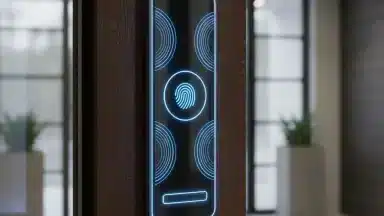
Your front door is a primary vulnerability, making smart locks and video doorbells required components of a DIY security strategy. Opt for smart locks that offer local control options, allowing you to manage access codes and monitor entry logs without relying on a subscription service. Some high-end models even integrate biometric scanners for keyless entry, further reducing dependency on physical keys or cloud-based authentication. Video doorbells, while often associated with cloud storage, increasingly offer local recording options via an SD card or network-attached storage (NAS). This means you own your footage, free from ongoing fees. For instance, the Ubiquiti G4 Doorbell Pro allows for local storage to a UniFi Protect NVR, giving users full control over their video data. What most people miss is how seamlessly these devices can integrate into existing systems, even in older homes, by following guides like those at /upgrade-old-house-smart-devices-trends.
Best Practices for Data Privacy and Network Security
Securing your smart home without subscriptions also means securing your data. Network segmentation is significant. Create a separate Wi-Fi network (a VLAN, for instance) specifically for your smart security devices. This isolates them from your main network, preventing a compromised camera from becoming a gateway to your personal files. Dr. Evelyn Reed, a cybersecurity expert at MIT, consistently emphasizes that “network segmentation is the single most effective step homeowners can take to mitigate smart device vulnerabilities.” Regularly update the firmware on all your devices. Manufacturers frequently release patches for newly discovered security flaws. Ignoring these updates is like leaving your front door unlocked. use strong, unique passwords for every device and your Wi-Fi network. Avoid generic credentials. It’s like having a secure fortress but leaving the keys under the doormat – a subtle oversight that can compromise everything.
The Future of Subscription-Free Smart Homes: What’s Next?
Forget the tired old notion that smart home convenience demands monthly fees. The landscape is shifting dramatically, making subscription-free setups not just possible, but arguably superior. What’s driving this seismic shift? The emergence of standards like Matter and networking protocols like Thread is tearing down walled gardens, fostering a genuinely interoperable ecosystem. Matter, in particular, promises to be a major shift, allowing devices from different brands to communicate effortlessly, eliminating the need for a central hub that often comes with its own subscription model. This means your smart lights could talk directly to your security sensors, all without a paid intermediary. It’s a underlying recalibration of how we approach home automation, especially when you consider how these advancements allow for more complex and integrated systems, much like the innovations in cutting-edge smart home automation for bustling households. Industry analysts are already weighing in with bold predictions. “We expect Matter to accelerate the adoption of DIY smart home solutions by 40% over the next three years,” states Dr. Alistair Finch, a senior analyst at Tech Insights Group. He elaborates, “The simplified setup and enhanced local control will empower users to build technical systems without relying on proprietary clouds or recurring fees.” This is a significant move towards user autonomy. The underrated factor here is how these protocols also enhance local processing, meaning less data leaves your home network — a key point for privacy-conscious users. This level of integration is also making it easier to modernize older homes with current innovations. What most people miss is how Thread networking acts as Matter’s silent partner, creating a self-healing mesh network that extends device range and reliability far beyond traditional Wi-Fi. This means fewer dead zones and more responsive devices, which is required for critical security components. I suspect that the combination of these technologies will not only make subscription-free setups more viable but will also pave the way for entirely new categories of smart devices designed with open standards from the ground up. This evolution will further allow for smooth connectivity, greatly simplifying how you connect smart home devices.
Beyond Subscriptions: Embracing a Future of Smart Home Autonomy
The journey towards a subscription-free smart home is more than just a cost-saving endeavor; it’s a underlying redefinition of ownership and control in the digital age. As technology continues to evolve, the distinction between hardware and service will only blur further. Will consumers continue to accept paying perpetual fees for devices they’ve already purchased, or will the demand for local control and open-source solutions ultimately reshape the industry towards true user empowerment? The trajectory suggests a future where your smart home genuinely serves you, not the other way around.
Frequently Asked Questions About Subscription-Free Smart Homes
Is it really possible to build a smart home without paying any subscriptions?
Yes, it is possible to build a reliable smart home system without any recurring subscription fees. This approach typically involves using open-source platforms like Home Assistant, alongside devices that offer local storage and control, such as security cameras with microSD card slots or sensors that communicate via Zigbee or Z-Wave protocols. While there’s an initial investment in hardware and a learning curve, the long-term savings and enhanced privacy are significant benefits.
What are the main advantages of a subscription-free smart home?
The primary advantages include significant cost savings over time, enhanced data privacy due to local data processing, and greater control over your devices and automations. many subscription-free setups offer better reliability as they can function even during internet outages, and they provide unparalleled flexibility to integrate devices from various manufacturers without vendor lock-in.
Which smart home devices typically require a subscription?
Devices that often require subscriptions include security cameras for cloud video storage and advanced AI features, video doorbells for recorded footage access, professional monitoring services for alarms, and some smart home platforms for premium features or extended integrations. many alternatives exist that offer similar functionalities without the recurring fees if you opt for local control.
Can I use voice assistants like Alexa or Google Assistant with a subscription-free setup?
Yes, many open-source smart home platforms, like Home Assistant, can integrate with popular voice assistants such as Alexa and Google Assistant. While the voice assistant itself is a cloud-dependent service, it can be configured to control your locally managed smart devices. This allows you to enjoy the convenience of voice commands without compromising your subscription-free core smart home setup.
What are the best open-source platforms for a DIY smart home?
Home Assistant is widely considered the leading open-source platform due to its extensive device support, powerful automation capabilities, and large, active community. Other strong contenders include OpenHAB, known for its reliable rules engine, and Domoticz, which is appreciated for being lightweight and efficient. The best choice often depends on your technical comfort level and specific requirements for device integration and automation complexity.