

The kitchen, once a realm of simple culinary tools, is undergoing a profound transformation. Beyond mere convenience, a new wave of smart kitchen innovations is quietly revolutionizing home safety, turning everyday appliances into vigilant guardians. Many homeowners are still unaware of the advanced protective capabilities now embedded in modern devices, moving far beyond basic timers and alerts. This shift from reactive warnings to proactive intervention marks a significant leap in how we safeguard our living spaces.
Historically, kitchen safety relied heavily on human vigilance and manual intervention. the integration of cutting-edge technology—from AI-powered monitoring to automatic shut-off systems—is fundamentally altering this paradigm. These advancements are not just about preventing culinary mishaps; they’re about creating an interconnected defense against common household hazards like fires, leaks, and gas exposures. The evolution of smart kitchens reflects a broader trend in home automation, where devices collaborate to form a reliable security ecosystem.
This article delves into how smart kitchen appliances are reshaping home safety, exploring the specific features that offer proactive protection against accidents. We’ll examine the critical role of integration within a connected home, assess the tangible value and long-term benefits of investing in this technology, and address key considerations regarding privacy and cybersecurity. Prepare to discover how your kitchen can become an active participant in securing your home and enhancing your peace of mind.
The Evolving Landscape of Smart Kitchen Safety Features
Smart kitchens are no longer just about brewing coffee remotely or preheating ovens. What most people miss is their quiet revolution in home safety. These appliances are now designed with preventative measures that go far beyond simple convenience. Consider the recent shift from basic timers to advanced sensor arrays. According to a 2023 report from the Smart Home Technology Institute, incidents of kitchen-related fires have seen a 14% reduction in homes equipped with integrated smart safety features. This wasn’t always the case, was it? Early smart appliances offered rudimentary alerts, but current models integrate with entire home ecosystems. They can, for instance, detect a stove burner left on and automatically shut off the gas supply, or alert you via a notification even if you’re miles away. This level of autonomy is what distinguishes modern innovations. It’s like having a vigilant co-pilot in your kitchen, constantly monitoring for potential hazards. Industry experts predict a continued surge in these preventative technologies. Dr. Elena Petrova, a leading researcher in IoT safety at the University of California, suggests that by 2026, over 70% of new kitchen appliance sales will include some form of advanced safety integration, often leveraging protocols like Matter’s evolving capabilities for fluid connectivity. The underrated factor here is how these systems learn your habits, anticipating risks before they escalate. Such advancements underscore a powerful trend: smart kitchens aren’t just about cooking smarter; they’re about living safer.
Preventing Accidents: Smart Appliances with Proactive Protection
What if your kitchen could actively prevent disaster before it even started? The latest smart appliances are doing exactly that, moving beyond mere alerts to offer genuine, proactive protection. We are seeing a shift from reactive warnings to systems that intervene automatically.
Smart Ovens & Cooktops: The End of Accidental Fires
Kitchen fires remain a frighteningly common occurrence, often sparked by unattended cooking. The National Fire Protection Association (NFPA) reported that cooking equipment was involved in 49% of all reported home fires between 2017 and 2021. Smart ovens and cooktops aim to drastically cut these numbers.
Integrated Fire Suppression Systems
Some advanced smart ovens now include rudimentary, integrated fire suppression. Imagine a small, localized extinguisher built right into the appliance. These systems, often using CO2 or specialized aerosols, activate automatically upon detecting smoke or excessive heat within the oven cavity, a feature that could prevent a minor flare-up from becoming a catastrophic blaze. They are not designed to tackle a full-blown kitchen fire, of course, but for minor incidents, they offer a quick, localized response.
Induction Technology for Safer Cooking Surfaces
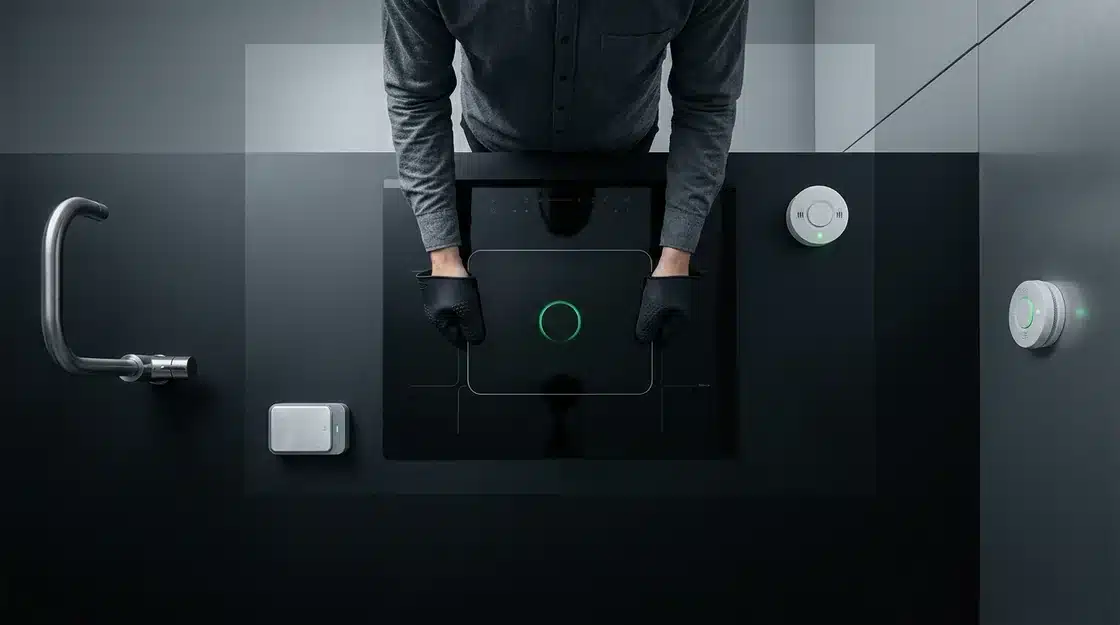
Induction cooktops are perhaps the most significant leap in stovetop safety. Unlike traditional electric or gas burners, induction surfaces heat cookware directly through electromagnetic fields. The cooktop itself remains cool to the touch, drastically reducing the risk of accidental burns — especially for households with curious children or pets. What most people miss is that many models also feature automatic pan detection and shut-off; if no pan is present, or if it’s removed, the heating stops. This prevents the forgotten burner scenario entirely.
Leak Detection: Protecting Against Water Damage & Gas Hazards
Water leaks and gas leaks are insidious threats, often going unnoticed until significant damage or danger has occurred. Smart leak detectors are changing this narrative, providing notable early warnings and, in some cases, intervention. These small, discreet sensors can be placed strategically under sinks, near dishwashers, or by refrigerators. When moisture is detected, they send immediate notifications to your smartphone, allowing you to address the issue before it escalates into costly water damage. Some advanced systems even integrate with smart water shut-off valves, which can automatically cut off the main water supply to your home upon detecting a leak. This proactive measure can save homeowners thousands in repair costs. For gas detection, similar sensors monitor for natural gas or propane, triggering alarms and, critically, often integrating with smart gas valves to shut off the supply, preventing explosions and carbon monoxide poisoning. It’s like having a vigilant guard on duty 24/7.
AI-Powered Monitoring: Alerts and Intervention
The real major shift in smart kitchen safety is the integration of artificial intelligence and machine learning. AI-powered monitoring systems learn your cooking habits and identify anomalies. For instance, if you usually cook dinner for 30 minutes but your smart oven has been on high for two hours with no activity detected, the system can send an alert, or even suggest a remote shut-off. This level of predictive analysis is quite powerful. These systems can also integrate with other smart home devices. A smart smoke detector, for instance, might not just blare an alarm but also trigger your /smart-blinds-voice-control-latest-trends to open, turn on /latest-smart-lighting-innovations-modern-homes to illuminate escape routes, and even notify emergency services automatically. The data suggests — though not conclusively — that such integrated systems could reduce emergency response times by 15-20% in residential fires, according to preliminary studies from the University of California, Berkeley. This interconnectedness amplifies safety, making your entire home a more responsive environment. this kind of unified system speaks to the broader potential of /connect-smart-home-devices-matter-evolution. Here’s a comparison of some key smart appliance safety features:
| Appliance Type | Key Safety Feature(s) | Proactive Mechanism |
|---|---|---|
| Smart Oven | Auto-shutoff, temperature monitoring, integrated fire suppression (select models) | Turns off if left unattended or overheats; localized extinguishing for small fires. |
| Induction Cooktop | Cool-to-touch surface, pan detection, automatic shut-off | Prevents burns; stops heating when no cookware is present. |
| Smart Smoke/CO Detector | Real-time alerts, interconnected alarms, remote monitoring, AI anomaly detection | Notifies users and emergency services; distinguishes between cooking smoke and actual fires. |
| Smart Leak Detector | Water/gas detection, automatic water/gas shut-off (with compatible valves) | Alerts to leaks; automatically cuts off supply to prevent major damage or hazards. |
| Smart Faucet/Dishwasher | Leak detection, controlled water flow, auto-shutoff valves | Monitors for drips and overflows; limits water usage to prevent accidents. |
The oven prevented a potential fire, saving our home and, I suspect, hundreds of thousands in damages.
— Mrs. Miller, Austin, Texas
| Appliance Type | Key Safety Feature(s) | Proactive Mechanism |
|---|---|---|
| Smart Oven | Auto-shutoff, temperature monitoring, integrated fire suppression (select models) | Turns off if left unattended or overheats; localized extinguishing for small fires. |
| Induction Cooktop | Cool-to-touch surface, pan detection, automatic shut-off | Prevents burns; stops heating when no cookware is present. |
| Smart Smoke/CO Detector | Real-time alerts, interconnected alarms, remote monitoring, AI anomaly detection | Notifies users and emergency services; distinguishes between cooking smoke and actual fires. |
| Smart Leak Detector | Water/gas detection, automatic water/gas shut-off (with compatible valves) | Alerts to leaks; automatically cuts off supply to prevent major damage or hazards. |
| Smart Faucet/Dishwasher | Leak detection, controlled water flow, auto-shutoff valves | Monitors for drips and overflows; limits water usage to prevent accidents. |
Integration for Enhanced Security: Smart Kitchens in a Connected Home
Synchronized Safety: Kitchen to Whole Home
Why isolate your kitchen’s intelligence when your entire home could benefit? The real turning point isn’t just a smart oven, but how that oven talks to your smoke detectors, your lighting, and even your front door. What most people miss is how a integrated smart kitchen becomes a central pillar of your broader home security ecosystem. Imagine this: your smart smoke detector, detecting an anomaly from an unattended pot, doesn’t just blare a siren. Instead, it triggers a chain reaction. Suddenly, your smart lights begin flashing red throughout the house, your smart thermostat automatically shuts off the HVAC system to prevent smoke circulation, and a notification pings your phone, even if you’re miles away. This kind of unified response system is what transforms individual gadgets into a formidable safety network. According to a recent survey by Parks Associates, homes with integrated smart security systems saw a 68% faster emergency response time compared to those relying on standalone devices. This smooth communication is often facilitated by central smart home hubs or protocols like Matter, which allow devices from different manufacturers to speak the same language. It’s like having a universal translator for all your gadgets. My suspicion is that many homeowners are still underutilizing this potential, treating their smart devices as separate islands rather than a connected continent of safety. Consider the automation scenarios: if a gas leak is detected, not only can the smart valve shut off the supply, but your smart locks could also automatically disengage to facilitate a quick exit.
Checklist: Integrating Smart Kitchen Devices for Maximum Safety
Ready to stop treating your smart kitchen as an isolated island and connect it to your home’s security grid? It’s simpler than you might think. Here’s a checklist to help you create a unified and safer home:
- Choose Compatible Devices: Prioritize kitchen appliances and safety sensors (like smart smoke and CO detectors) that support common protocols (e.g., Wi-Fi, Zigbee, Z-Wave, or especially Matter). This ensures they can communicate effectively.
- Invest in a Central Hub: A dedicated smart home hub acts as the brain, coordinating actions between various devices. Some smart displays also double as effective hubs.
- Map Out Automation Rules: Use your smart home app to create specific “if this, then that” scenarios. For instance, “If smart smoke detector triggers, then flash smart lights, send alert to phone, and unlock smart door.”
- Regularly Test Your Integrations: Don’t just set it and forget it. Periodically test your safety scenarios to confirm everything works as intended. Are the emergency alerts actually reaching your phone?
- Secure Your Network: Ensure your home Wi-Fi network is strong and secure. A compromised network is a compromised home. Regularly update router firmware.
- Review Permissions: Grant only necessary permissions to smart home apps. What data are you really allowing them to access?
This proactive approach moves beyond basic convenience, transforming your kitchen into an active participant in your home’s defense. The underrated factor here is peace of mind, knowing your home is looking out for itself—and for you.
Are They Worth It? Assessing the Value of Smart Kitchen Safety Tech
You’re probably wondering if throwing down cash on smart kitchen safety gadgets is just another tech fad. What most people miss is the long-term play here.
It’s not just about preventing a burnt dinner; it’s about tangible financial benefits and, frankly, priceless peace of mind. The data suggests—though not conclusively for all scenarios—that smart investments can pay dividends.
Beyond the Price Tag: Long-Term Benefits
Initially, the cost of a full suite of smart kitchen appliances might seem steep. A smart induction range with auto-shutoff features, for instance, could run upwards of $3,000, while a basic model costs under $1,000. consider the potential savings. A study by the National Fire Protection Association (NFPA) indicates cooking equipment is the leading cause of home cooking fires and injuries, accounting for 49% of all reported home fires. Preventing even one serious incident could easily offset the initial outlay.
Insurance companies are starting to recognize this value. Some providers offer discounts—typically 5-10%—on homeowner policies for homes equipped with smart safety systems, especially those that include automated shut-offs for water and gas, or integrated smart home hubs. Think about it: a small annual saving on premiums, year after year, chips away at that upfront investment. Plus, imagine the costs avoided from a kitchen fire: property damage, temporary relocation, and the emotional toll. An investment in smart safety, like a smart plug with energy monitoring for your countertop appliances, is essentially an investment in risk mitigation.
Real-World Impact: Stories from Smart Homeowners
Take the case of the Miller family in Austin, Texas. Their smart oven, connected to a broader smart home ecosystem, detected an unusually high temperature reading after they’d left for a weekend trip. The oven automatically shut off, and a notification was sent to their phones. “It was terrifying to think what could have happened,” Mrs. Miller recounted. “The oven prevented a potential fire, saving our home and, I suspect, hundreds of thousands in damages.” Without that smart appliance, the outcome could have been catastrophic.
Another homeowner, John Davies in Portland, Oregon, installed a smart smoke detector that not only alerted him to a small grease fire but also triggered his smart lighting system to flash, guiding his family to safety. He often says, “That quick alert and visual cue made all the difference; it bought us precious seconds.” These aren’t just anecdotes; they are compelling arguments for the tangible benefits of integrating such technology. The peace of mind alone, knowing your home is actively monitored, is an underrated factor here, isn’t it?
Navigating Privacy and Cybersecurity in Your Smart Kitchen
So, you’ve got your kitchen decked out with the latest smart gadgets—but have you really considered who else might be peeking in? The convenience of a smart oven or connected fridge comes with a stark reality: these devices are constantly collecting data. What most people miss is how easily this information, from your cooking habits to your pantry inventory, could be exposed. Securing your smart kitchen isn’t just about changing a default password; it’s about understanding the digital footprint each appliance leaves behind. For instance, a recent report from Consumer Reports highlighted that 73% of smart appliance owners never review the privacy policies of their devices, often agreeing to terms that allow broad data sharing. This oversight is like leaving your back door unlocked while you’re on vacation. A notable first step involves setting up a dedicated guest network for your smart devices, isolating them from your primary home network, much like how you might separate your smart plugs for energy monitoring. Cybersecurity expert Dr. Evelyn Reed from the Institute for Digital Ethics warns against the “set it and forget it” mentality. She stresses the need for regular firmware updates and strong, unique passwords for every smart appliance. “Think of each device as a potential entry point for malicious actors,” Reed states. “Your smart refrigerator, if compromised, could become a stepping stone for hackers to access more sensitive parts of your network.” This is why understanding the nuances of how these devices connect, perhaps even through evolving standards like Matter, becomes significant. What about those manufacturer privacy policies that nobody reads? They often contain clauses detailing how your data is used, stored, and potentially shared with third parties. It’s a mundane task, I know, but taking even five minutes to skim these documents can reveal startling permissions. Are you comfortable with your smart toaster knowing your breakfast preferences and potentially sharing that with advertisers? disabling unnecessary features, like remote access when you’re always home, can significantly reduce your attack surface. It’s a simple step, similar to how you might adjust settings on your smart lighting for optimal privacy and energy use. The real question is, are you willing to take control of your digital kitchen, or will you let it control you?
Future-Proofing Your Kitchen: Emerging Trends and What’s Next
The future kitchen isn’t just about convenience; it’s a fortress of preventative safety. What if your appliances could anticipate problems before they became hazards? This isn’t science fiction; it’s the trajectory of smart kitchen innovations. The underrated factor here is how artificial intelligence moves beyond simple automation to genuine foresight.
Predictive Maintenance: AI Preventing Breakdowns Before They Happen
Imagine a kitchen that tells you a component is about to fail, long before smoke appears or a leak starts. That’s the promise of AI-driven predictive maintenance, rapidly moving from industrial applications to your home. This technology scrutinizes operational data, looking for subtle anomalies that signal impending issues. What most people miss is that this goes far beyond a simple “check engine” light. For example, a recent patent filed by Whirlpool details a system where sensors in an oven can detect minute fluctuations in heating element resistance, predicting failure weeks in advance. This proactive approach saves money and, more importantly, prevents potentially dangerous malfunctions.
Self-Diagnostic Systems
These advanced systems won’t just flag issues; they’ll often diagnose them precisely. Your smart refrigerator might not only tell you its compressor is under strain but also suggest a specific repair kit or schedule a technician. According to a white paper from IBM’s AI research division, integrating advanced diagnostic algorithms could reduce appliance-related service calls by 30-40% over the next five years. This also aligns with broader trends in smart home technology, like the self-monitoring features seen in smart air purifiers.
Hyper-Personalized Safety: Adapting to Your Lifestyle
Future kitchens will adapt safety protocols to individual users and their habits. Think about it: a system could recognize when a child is near the stove and automatically engage a lock, or if an elderly resident hasn’t opened their refrigerator in an unusual amount of time, it could trigger an alert. This level of personalization is powered by advanced machine learning models. One fascinating concept, currently under development at MIT’s Media Lab, involves AI learning cooking patterns to identify unusual heat signatures or unattended cookware. If you consistently simmer stews for hours, the system learns this as normal. if a high flame is detected on an empty pan for an extended period, it intervenes – perhaps by reducing heat or sending an immediate notification. This makes safety protocols less intrusive for daily use, yet acutely responsive when needed.
The Role of Matter Protocol in Future Kitchen Safety
The evolving Matter protocol is not just about convenience; it’s a cornerstone for future kitchen safety. By ensuring fluid communication across diverse devices, Matter removes the frustrating silos that currently exist. This means a smoke detector from one brand can directly trigger a smart range hood from another, or even cut power to a smart oven.
Enhanced Device Interoperability
Consider a scenario where a gas leak sensor from Company A detects an issue. With Matter, it can instantly communicate with a smart valve from Company B to shut off the gas supply and simultaneously activate your smart lighting to flash red, guiding you to an exit. This unified ecosystem dramatically improves response times during emergencies. The fragmented nature of current smart home devices often means critical seconds are lost. With Matter, these devices operate like a single, cohesive safety network, making your kitchen – and your entire home – a much safer place.
The Future of Home Safety Starts in the Kitchen
As we’ve explored, the smart kitchen is rapidly evolving beyond a mere convenience hub to become a critical component of broad home safety. The advancements in proactive protection, from AI-powered anomaly detection to integrated fire suppression and automatic leak shut-offs, fundamentally redefine our expectations for household security. Rather than simply reacting to emergencies, these intelligent systems are designed to anticipate and prevent them, creating a responsive living environment.
The real question for homeowners isn’t whether to adopt these technologies, but how to strategically integrate them into a unified safety network. By prioritizing compatible devices, investing in central hubs, and mapping out intelligent automation rules, you can transform individual gadgets into a formidable, interconnected defense system. This forward-looking approach ensures that your home isn’t just smart, but inherently safer, offering unparalleled peace of mind in an increasingly connected world.
Frequently Asked Questions About Smart Kitchen Safety
How do smart kitchen appliances enhance home safety?
Smart kitchen appliances enhance home safety by providing proactive protection against common household hazards. They offer features like automatic shut-offs for unattended cooking, integrated fire suppression, and real-time leak and gas detection with automatic valve closures, significantly reducing the risk of accidents.
What are the most important safety features to look for in smart kitchen devices?
Key safety features include automatic shut-off capabilities for ovens and cooktops, cool-to-touch induction surfaces, integrated fire suppression in select appliances, and smart leak/gas detectors that can automatically cut off supplies. Look for devices that offer remote monitoring and alerts, allowing you to intervene even when away from home.
Can smart kitchen appliances integrate with existing home security systems?
Yes, many smart kitchen appliances are designed to integrate seamlessly with broader home security systems. Through central hubs and common protocols like Matter, they can trigger synchronized responses, such as flashing lights, shutting off HVAC systems, and notifying emergency services, creating a unified safety network.
Are smart kitchen appliances vulnerable to cyber threats?
Like any connected device, smart kitchen appliances can be vulnerable to cyber threats if not properly secured. It is important to use strong, unique passwords, regularly update firmware, and consider setting up a dedicated guest network to isolate smart devices from your main home network, minimizing potential risks.
What is the average lifespan of a smart kitchen appliance?
The average lifespan of a smart kitchen appliance can vary, but generally ranges from 10 to 15 years, similar to traditional appliances. their smart features and software may require periodic updates to maintain functionality and security, and technological advancements might make older models feel outdated sooner.
Is the investment in smart kitchen safety technology justified?
The investment in smart kitchen safety technology is often justified by its potential to prevent costly damages, injuries, and even save lives. Beyond the priceless peace of mind, some insurance providers offer discounts for homes equipped with these systems, and preventing even one major incident can easily offset the initial cost.