
Implementing Geofencing for Home Security: How to Secure Your Property with 2026’s Location-Aware Smart Devices
In an increasingly connected world, the concept of home security has evolved far beyond traditional alarms and locks. We are now at the cusp of a new era, one where our homes can intelligently anticipate our movements and react accordingly. Welcome to the world of geofencing home security, a revolutionary approach to protecting your property that leverages location-aware smart devices to create an invisible, yet highly effective, perimeter around your home. As we look towards 2026, the integration of geofencing into everyday home security systems is not just a luxury but a fundamental shift in how we think about safety and convenience.
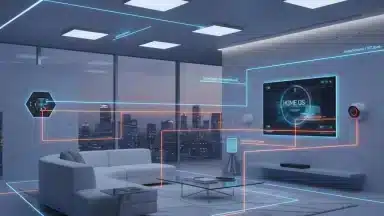
The promise of geofencing home security lies in its ability to automate security protocols based on your physical proximity to your property. Imagine leaving your driveway, and your doors automatically lock, your security cameras activate, and your smart lights adjust – all without you lifting a finger. This isn’t science fiction; it’s the reality that advanced geofencing technology offers today, and it’s only becoming more sophisticated. This comprehensive guide will delve deep into the intricacies of implementing geofencing home security, exploring its core principles, the smart devices that power it, best practices for setup, and what the future holds for this transformative technology.
Understanding Geofencing: The Invisible Shield for Your Home
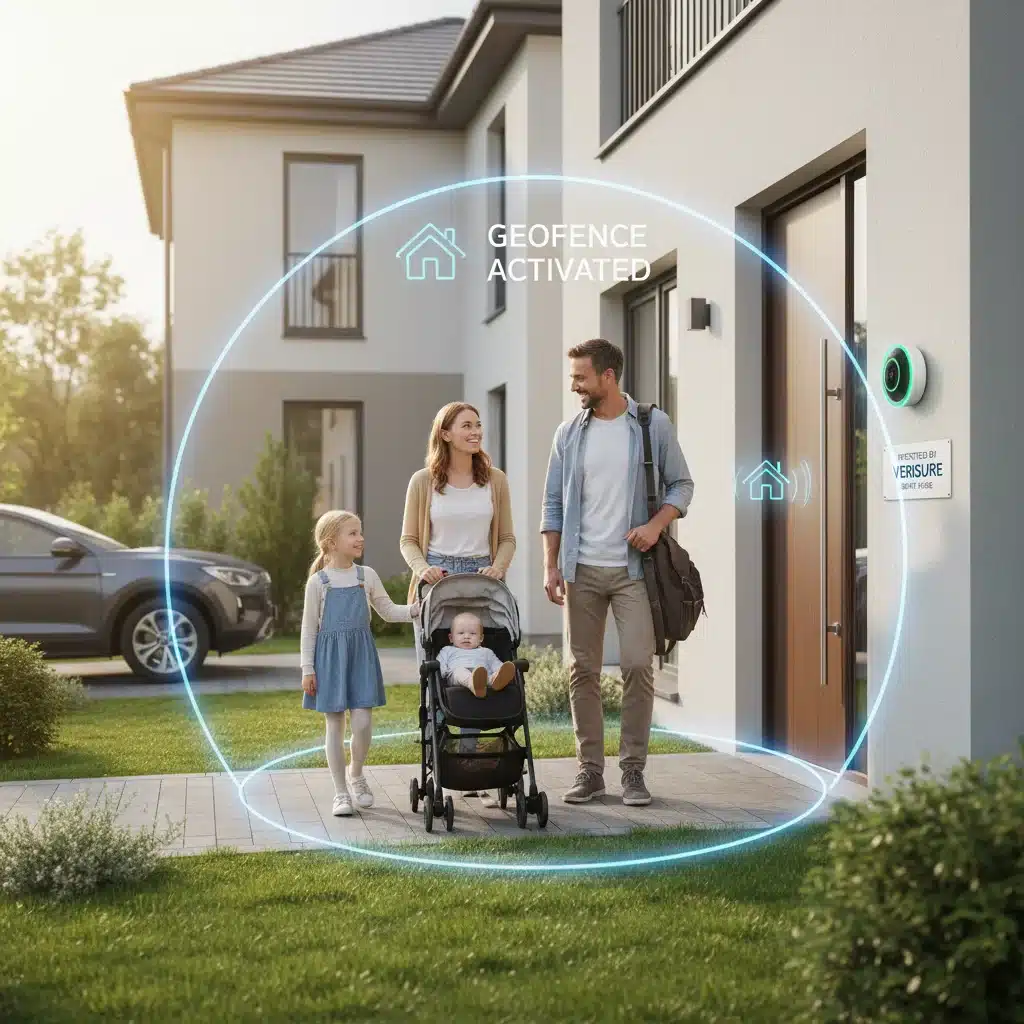
At its core, geofencing is a location-based service that uses GPS, Wi-Fi, or cellular data to create a virtual geographic boundary, or ‘geofence,’ around a specific area. When a device (like your smartphone) enters or exits this boundary, it triggers a pre-programmed action. For geofencing home security, this means your home security system can react intelligently to your presence or absence, providing a dynamic layer of protection that traditional systems simply cannot match.
How Geofencing Works in Home Security
The magic of geofencing home security hinges on the seamless communication between your smartphone (or any designated device) and your smart home hub. Here’s a simplified breakdown of the process:
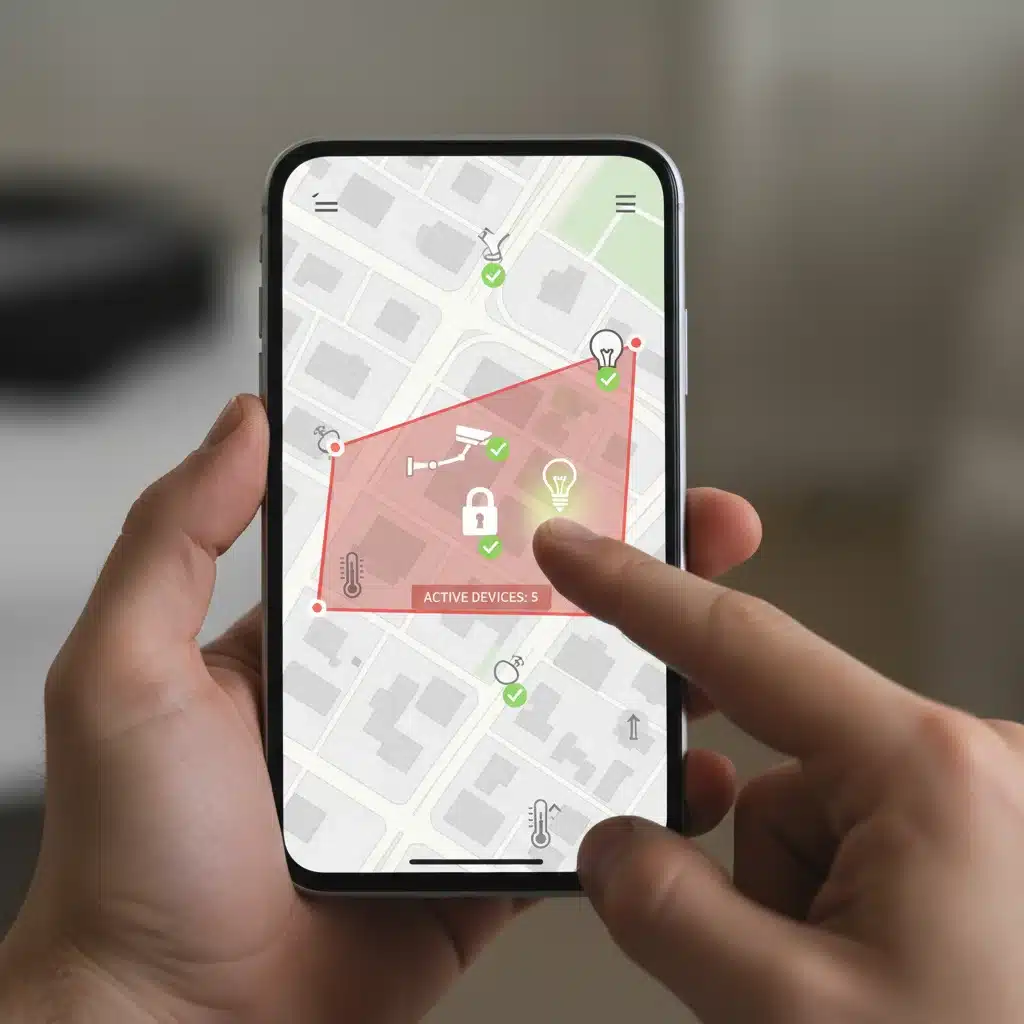
- Setting the Geofence: You define a virtual perimeter around your home using a smart home app. This can be a circular radius or a custom polygon shape, typically ranging from a few hundred feet to several miles.
- Location Tracking: Your smartphone continuously communicates its location to the smart home system. This is done securely and privately, often leveraging a combination of GPS, Wi-Fi triangulation, and cellular tower signals for accuracy.
- Triggering Actions: When your phone crosses the geofence boundary (either entering or exiting), it triggers a set of predefined rules. For example, upon exiting the geofence, your system might automatically arm, lock smart doors, turn off lights, and activate security cameras. Upon re-entering, it might disarm the system, unlock doors, and turn on lights.
- Customization: Modern geofencing home security systems allow for extensive customization. You can set different actions for different times of day, different family members, or even specific conditions (e.g., arm only if no one else is home).
The accuracy and reliability of geofencing home security have significantly improved with advancements in GPS technology and the proliferation of Wi-Fi networks. In 2026, these systems are more precise than ever, minimizing false triggers and maximizing efficiency.
The Smart Devices Powering Geofencing Home Security in 2026
For geofencing home security to function effectively, it relies on a suite of interconnected smart devices. These devices act as the eyes, ears, and hands of your automated security system. Here’s a look at the key players:
1. Smart Home Hubs
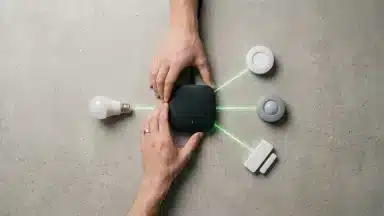
The central brain of your geofencing home security system, the smart home hub (e.g., Samsung SmartThings, Apple HomeKit, Amazon Alexa, Google Home) orchestrates communication between all your devices. It processes location data from your phone and sends commands to other smart devices. In 2026, hubs are more powerful, offering enhanced processing capabilities, broader compatibility with various device ecosystems, and robust security features to protect your data.
2. Smart Locks
Perhaps one of the most intuitive applications of geofencing home security, smart locks can automatically lock when you leave your geofence and unlock upon your return. This eliminates the worry of forgetting to lock your doors and provides unparalleled convenience. Advanced smart locks in 2026 often include biometric scanners, tamper alerts, and encrypted communication protocols.
3. Security Cameras and Video Doorbells
Geofencing can trigger security cameras to start recording or adjust their surveillance zones when you leave home. Video doorbells can be set to notify you of visitors only when you’re away, reducing unnecessary alerts. Many 2026 models feature AI-powered facial recognition, package detection, and cloud-based storage with advanced encryption.
4. Smart Lighting
While primarily for convenience, smart lighting plays a role in geofencing home security by creating a lived-in appearance when you’re away. Lights can automatically turn on and off at staggered times, deterring potential intruders. New lighting systems integrate seamlessly with geofencing, offering adaptive brightness and color temperature based on your schedule and presence.
5. Smart Alarms and Sensors
Geofencing can arm your alarm system automatically as you depart and disarm it upon arrival, preventing accidental triggers. Motion sensors, door/window sensors, and glass break detectors become active only when the system is armed, reducing false alarms. The latest sensors in 2026 are smaller, more discreet, and offer extended battery life and enhanced sensitivity.
6. Smart Thermostats
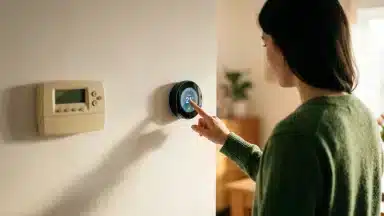
Though not directly security-related, smart thermostats can also integrate with geofencing to save energy by adjusting temperatures when no one is home and resuming comfort settings as you approach, adding another layer of smart home automation.
Benefits of Implementing Geofencing for Home Security
The advantages of incorporating geofencing home security into your property protection strategy are numerous, extending beyond mere convenience to offer significant enhancements in safety and efficiency.
Enhanced Automation and Convenience
The most immediate benefit is the hands-free automation. No more fumbling for keys or remembering to arm the alarm. Your home intelligently secures itself as you leave and prepares for your return, streamlining your daily routine.
Reduced False Alarms
Traditional security systems often suffer from false alarms, which can be a nuisance and potentially lead to fines. With geofencing home security, the system knows when you (and your family) are genuinely away, minimizing the chances of accidental triggers caused by pets or family members forgetting to disarm the system.
Dynamic and Adaptive Security
Geofencing allows your security system to be dynamic. It can adapt its state based on who is home or away, providing a more intelligent and responsive defense. For instance, if one family member leaves but another is still inside the geofence, the system can remain partially armed or adjust its sensitivity.
Energy Efficiency
Beyond security, geofencing can integrate with smart thermostats and lighting to optimize energy usage. Lights can turn off when you leave, and HVAC systems can adjust, leading to significant savings on utility bills.
Peace of Mind
Knowing that your home is automatically secured the moment you leave, and that it will prepare for your arrival, provides an unparalleled sense of security and peace of mind. This is especially valuable for busy individuals or families with varying schedules.
Setting Up Your Geofencing Home Security System: A Step-by-Step Guide for 2026
Implementing geofencing home security might seem complex, but with the right guidance, it’s an achievable and rewarding project. Here’s a step-by-step guide to help you set up your system in 2026:
Step 1: Choose Your Smart Home Ecosystem
The first crucial step is to select a compatible smart home hub and ecosystem (e.g., Apple HomeKit, Google Home, Amazon Alexa, SmartThings, Homey). Ensure that your chosen hub supports geofencing and is compatible with the smart devices you plan to integrate. Compatibility has greatly improved by 2026, with many devices supporting multiple platforms, but it’s still wise to verify.
Step 2: Install and Connect Smart Devices
Install your smart locks, security cameras, smart lights, and sensors according to their manufacturer’s instructions. Connect all these devices to your chosen smart home hub. This usually involves pairing them through the hub’s dedicated app.
Step 3: Define Your Geofence
Using your smart home app, navigate to the geofencing or location services section. Here, you will define the virtual boundary around your home. Consider the following:
- Radius Size: A larger radius (e.g., 1-2 miles) gives your system more time to prepare for your arrival, while a smaller radius (e.g., 0.25-0.5 miles) offers more precision. Experiment to find what works best for your routines.
- Shape: Most apps allow for circular geofences, but some advanced systems permit custom polygon shapes, which can be useful for irregularly shaped properties or to exclude specific areas.
- Accuracy: Ensure your smartphone’s location services are enabled and set to high accuracy.
Step 4: Configure Automation Rules (If-Then Scenarios)
This is where the power of geofencing home security truly shines. Set up your automation rules, often called ‘routines,’ ‘scenes,’ or ‘automations,’ within your smart home app. Examples include:
- Leaving Home: IF the last family member leaves the geofence, THEN lock all smart locks, arm the security system, turn off all lights, and activate security cameras.
- Arriving Home: IF the first family member enters the geofence, THEN disarm the security system, unlock the front door, turn on specific lights (e.g., entryway, living room), and adjust the thermostat.
- Guest Mode: Some advanced systems allow temporary geofence bypass for guests or service providers.
Step 5: Test and Refine
Thoroughly test your geofencing home security system. Drive or walk in and out of your geofence multiple times to ensure all actions are triggered correctly and reliably. Pay attention to any delays or missed actions and adjust your geofence radius or rules as needed. Modern systems often offer diagnostic tools to help troubleshoot.
Step 6: Educate Your Family
Ensure all family members who use the system understand how it works. They should know how to enable location services on their phones, what actions the system performs, and how to manually override it if necessary.
Advanced Geofencing Features and Considerations for 2026
As geofencing home security matures, so do its capabilities and the considerations for its implementation. Here are some advanced features and important points for 2026:
Multi-User Geofencing
Modern systems can track multiple users (family members) and react based on the presence or absence of specific individuals. For example, the system might only arm if the *last* person leaves the geofence and only disarm when the *first* person returns, or if a *specific* person (e.g., a parent) arrives.
Location Accuracy and Battery Life
While GPS is highly accurate, continuous tracking can impact smartphone battery life. Smart home apps in 2026 are more optimized, using a combination of GPS, Wi-Fi, and cellular triangulation to balance accuracy with energy consumption. Some systems even allow you to adjust the frequency of location checks.
Privacy and Data Security
Location data is sensitive. It’s crucial to choose geofencing home security systems from reputable brands that prioritize data encryption, privacy policies, and secure servers. Always review the privacy settings and understand how your location data is used and stored.
Integration with AI and Machine Learning
The future of geofencing home security in 2026 is deeply intertwined with AI and machine learning. Systems can learn your routines, predict your movements, and adapt security protocols accordingly. For instance, if you consistently leave at 8 AM on weekdays, the system can pre-arm itself, or if it detects an unusual pattern, it can flag it as a potential security concern.
Redundancy and Offline Functionality
What happens if your internet goes down? Robust geofencing home security systems offer local processing capabilities or cellular backups to ensure that core security functions (like locking doors) can still operate even without an active internet connection.
Virtual Keys and Temporary Access
Geofencing can be combined with virtual key functionality, allowing you to grant temporary, time-limited access to visitors or service providers, which can also be triggered or revoked based on their entry or exit from the geofence.
Challenges and Future Outlook for Geofencing Home Security
While geofencing home security offers immense benefits, it’s not without its challenges. Understanding these can help users make informed decisions and prepare for future advancements.
Potential for False Triggers
Despite improvements, factors like GPS drift, tall buildings, or poor cellular signal can occasionally lead to inaccurate location readings and false triggers. Setting a larger geofence radius and implementing conditional rules (e.g., ‘only arm if no one else is detected on Wi-Fi’) can mitigate this.
Reliance on Smartphone and Connectivity
The system relies heavily on your smartphone being charged, having location services enabled, and maintaining connectivity. If your phone dies or you forget it, the geofence won’t function as intended. Some systems offer alternative ‘presence sensors’ or key fobs to address this.
Initial Setup Complexity
For those new to smart home technology, the initial setup and configuration of rules can be a learning curve. However, user interfaces are becoming increasingly intuitive, and professional installation services are readily available.
The Future of Geofencing Home Security
Looking ahead to the late 2020s and beyond, geofencing home security is poised for even greater integration and intelligence. We can expect:
- Hyper-Personalization: Systems that learn individual family member preferences and adjust not just security but also climate, entertainment, and lighting settings based on who is home.
- Seamless Integration with Autonomous Vehicles: Your car could communicate with your home security system, preparing it for your arrival even before your phone crosses the geofence.
- Advanced Biometric Verification: Geofencing combined with facial recognition or fingerprint scanners for an even more secure and seamless entry experience.
- Predictive Security Analytics: AI-driven systems that can analyze patterns, identify anomalies, and proactively alert you to potential threats before they materialize.
- Ethical AI and Transparency: Increased focus on transparent data usage, user control over privacy settings, and ethical AI development to build trust in these highly intelligent systems.
Conclusion: Embracing the Future of Property Protection with Geofencing
The landscape of home security is undergoing a profound transformation, and geofencing home security stands at the forefront of this evolution. By harnessing the power of location-aware smart devices, it offers an unprecedented level of automation, convenience, and adaptive protection for your property. As we navigate 2026, these systems are becoming more robust, more intelligent, and more accessible than ever before, moving us closer to a future where our homes are not just safe havens but also intuitive partners in our daily lives.
While challenges remain, the continuous advancements in AI, connectivity, and device integration promise an even more secure and seamless experience. Investing in geofencing home security is not just about adopting new technology; it’s about embracing a smarter, more proactive approach to safeguarding what matters most. By carefully planning your setup, choosing compatible devices, and understanding the nuances of the technology, you can unlock the full potential of this invisible shield and enjoy unparalleled peace of mind in your connected home.