
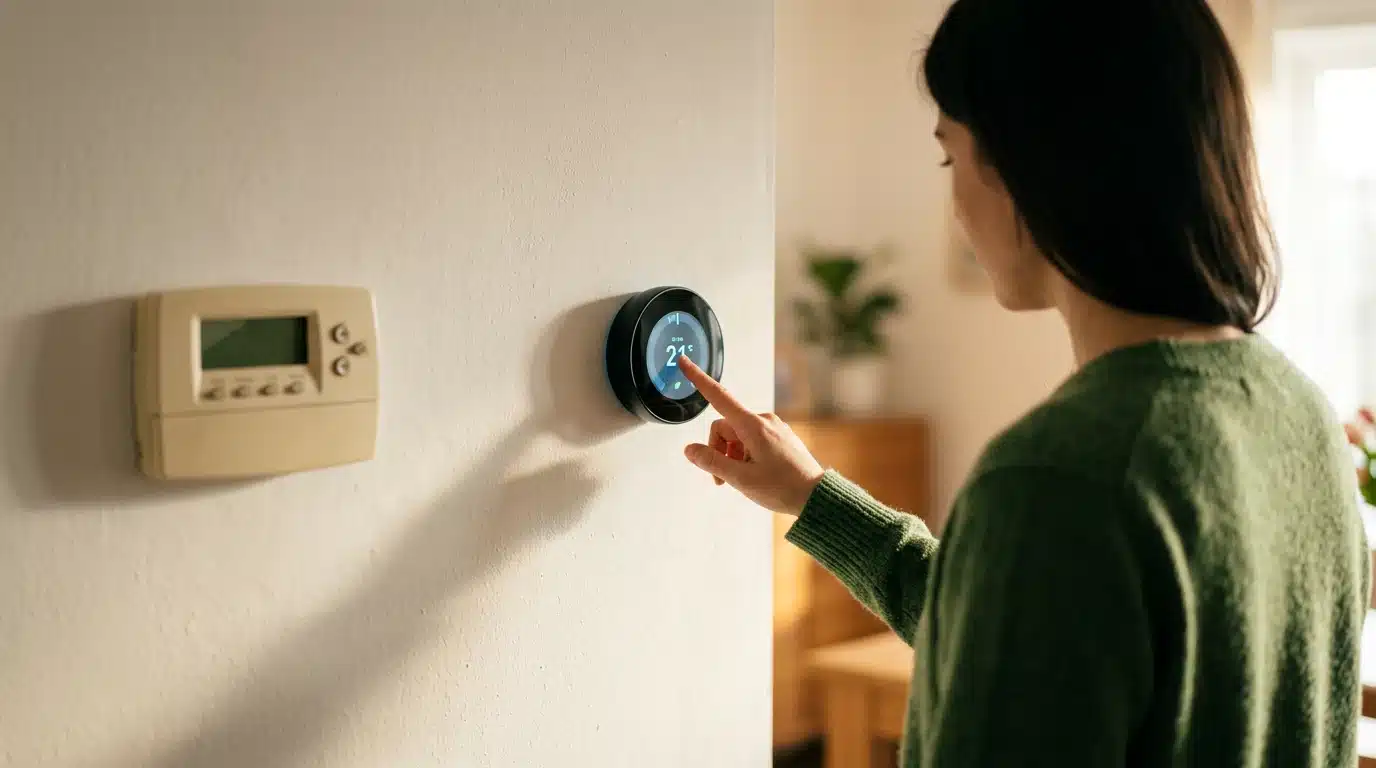
That thermostat on your wall might be smarter than its beige predecessor, but is it actually saving you money? Many homeowners invest in advanced climate control with high hopes, only to find their electricity bills remain stubbornly high. The promise of an automated, efficient home often gets lost in complex settings and features that go unused, turning a powerful tool into little more than a digital on/off switch.
The problem isn’t always the technology itself, but a misunderstanding of where the real value lies. The evolution from simple programmable thermostats to today’s learning systems represents a basic shift. Early models required users to manually input schedules—a tedious process most people abandoned. The true innovation came with the integration of AI, occupancy sensors, and real-time data, allowing the device to move from following orders to making intelligent, proactive decisions on your behalf.
So, how can you ensure your investment pays off? This guide cuts through the marketing noise to focus on what matters. We will dissect the core features that drive genuine energy savings, from geofencing to AI-powered learning. We’ll then provide a clear, comparative analysis of top models like Nest and Ecobee, helping you choose the right device for your home’s unique needs. Finally, we’ll explore how integrating your thermostat into a wider smart home ecosystem can unlock a level of efficiency you never thought possible.
Understanding the Evolution of Smart Thermostat Technology
Let’s be blunt: the old beige box on your wall was never very smart. For decades, thermostat technology was stuck in a cycle of simple on-off commands, a brute-force approach to comfort. The first leap forward, programmable thermostats, seemed promising. They allowed users to set schedules for heating and cooling, theoretically saving energy when no one was home. But did anyone actually program them correctly?
The data suggests not. A study from the Lawrence Berkeley National Laboratory found early programmable models often failed to deliver significant savings, with user error being a primary culprit. People forgot to update schedules or simply overrode them constantly. It was like giving someone a complex cookbook but they only ever make toast—the potential was there, but the execution was flawed.
This was a core misunderstanding of human behavior.
What most people miss is that the real revolution wasn’t just adding Wi-Fi. The pivotal shift was from a passive, user-programmed device to a proactive, learning system. Modern smart thermostats that help reduce electricity bills began incorporating sensors, learning algorithms, and connectivity to the internet. They started to understand occupancy patterns, local weather forecasts, and how long it takes to heat or cool your specific home, making micro-adjustments automatically. Suddenly, the device started working for you, not the other way around, even integrating with other Matter-compatible smart home devices for a connected environment.
Today’s top-tier models use AI to predict your needs, shifting from simple reaction to intelligent anticipation. They aren’t just following a schedule; they are actively managing your home’s energy profile. This evolution represents a complete change in philosophy, aiming for a system that requires almost no user input to achieve maximum efficiency.
Key Features and Latest Developments for Maximizing Savings
Let’s be blunt: most people buy a smart thermostat and use it like a glorified digital switch. They set a simple schedule and wonder why the promised savings never materialize. The truth is, the real power of smart thermostats that help reduce electricity bills isn’t in the scheduling; it’s in the advanced features that actively work to outsmart your utility company.
These devices are moving beyond basic programming into a realm of predictive intelligence. It’s about letting the machine do the heavy lifting. The latest technology transforms a thermostat from a passive tool into an active manager of your home’s energy consumption.
AI-Powered Learning and Predictive Scheduling
Forget manually inputting your daily routine. Modern thermostats with AI temperature control are designed to learn it automatically. By observing your adjustments over the first few weeks, the system builds a complex profile of your household’s patterns—when you wake up, when the last person leaves, and when you typically return. It’s like having a personal energy assistant who constantly refines the schedule for you.
This isn’t just a minor convenience. Data from a Lawrence Berkeley National Laboratory study suggests that these learning algorithms can cut HVAC energy use by an average of 11.7%. The system even accounts for external weather data and your home’s thermal properties to pre-heat or pre-cool just in time for your arrival, ensuring comfort without wasting a single kilowatt.
Geofencing and Occupancy Sensing for Dynamic Adjustments
Geofencing creates an invisible digital perimeter around your home. By connecting to your smartphone’s location, the thermostat knows precisely when you leave and when you’re on your way back. The moment you cross that boundary, it automatically switches to an “Away” mode, saving energy without you ever touching the device.
It’s the ultimate solution to heating or cooling an empty house.
More advanced models take this a step further with built-in occupancy sensors. These can detect motion or even body heat within a room, allowing for hyper-targeted climate control. Why blast the AC in an empty living room? This granular control, especially when integrated with other Matter-compatible smart home devices, creates a responsive and efficient ecosystem—one where energy is only used exactly when and where it’s needed. This is where the most significant, often untapped, savings are found.
The combination of these features means the thermostat makes countless micro-decisions daily to optimize energy use. The next challenge is integrating these systems with fluctuating utility rates, allowing them to automatically run when electricity is at its absolute cheapest.
The pivotal shift was from a passive, user-programmed device to a proactive, learning system.
— Alex Rivera, Smart Home Analyst
| Model | Key Feature | Estimated Savings | Pro | Con |
|---|---|---|---|---|
| Nest Learning Thermostat | Algorithmic learning that builds a schedule for you. | 10-15% annually | Simple setup and hands-off operation. | Relies on a single location for temperature readings. |
| Ecobee SmartThermostat | Remote room sensors for balanced temperature. | Up to 26% annually | Excellent integration and solves the “one-room” problem. | Savings depend on buying and placing additional sensors. |
| Honeywell Home T9 | Room sensor priority and optional smart vent integration. | Varies; focused on comfort | Unmatched room-by-room temperature control. | Can become expensive and complex with add-ons. |
Top Smart Thermostat Models: A Comparative Analysis for Efficiency
Choosing a smart thermostat isn’t just about picking the one with the slickest app. The market is saturated with devices all promising to slash your energy bills, but the truth is, their methods and effectiveness vary wildly. Some are glorified programmable thermostats with a Wi-Fi connection, while others are advanced command centers for your home’s climate. The underrated factor here is how each device gathers and processes data to make decisions on your behalf.
We’re going to dissect three of the most popular models that claim to be the best smart thermostats on the market. Forget the marketing fluff. We’ll look at the core technology, the real-world savings potential, and who each device is actually for. This is about finding the right tool for the job.
Nest Learning Thermostat: Adaptive Intelligence
Google’s Nest Learning Thermostat pioneered the “set it and forget it” approach. Its main selling point is its ability to build a schedule automatically based on your adjustments during the first week or so. It watches when you turn the temperature up or down and creates a program it thinks you’ll like. For many, this is a dream come true — no more fiddling with complex schedules. It just works.
But does it learn what’s most efficient, or just what you’re used to? Data from a Lawrence Berkeley National Laboratory study suggests users see an average electricity saving of around 10-12% on heating and 15% on cooling. The device relies entirely on its built-in sensors and your proximity (tracked via your phone) to determine if you’re home. This single-point-of-data approach can be its biggest weakness; if the thermostat is in a hallway that’s always colder than your living room, your comfort might be compromised for the sake of simplicity.
Ecobee SmartThermostat with Voice Control: full Sensor Integration
Ecobee’s philosophy is that one sensor can’t possibly know the temperature of your entire home. Their solution is the SmartSensor, a small, separate device you place in other rooms. The thermostat then averages the temperature or prioritizes the room you’re currently in, providing a more accurate climate picture. This approach moves beyond simple programming and into true home climate management.
This multi-sensor system is like trading a single floodlight for targeted spotlights. The Ecobee can heat or cool based on the occupied bedroom at night, not the empty living room. According to Ecobee’s own data, users save up to 26% on their annual energy costs. A key advantage is its broad compatibility with other smart home ecosystems, including Apple HomeKit, Amazon Alexa (which is built-in), and Google Assistant. This makes it a strong contender for those building out a network of Matter-compatible smart home devices for a unified system.
The downside is that you are now managing more hardware and data points, which can feel less fluid than Nest’s approach.
Honeywell Home T9 Smart Thermostat: Room-by-Room Comfort
Honeywell takes the multi-room concept even further than Ecobee, but it requires a more involved setup. While Ecobee’s sensors inform the thermostat, the T9, when paired with smart vents and dampers in your ductwork, can actively redirect airflow to specific rooms. This provides true “zoning” without the massive expense of a full HVAC overhaul. It’s the most granular level of control offered in a consumer-grade thermostat.
This isn’t for the casual user. The system’s effectiveness is directly tied to the layout of your ductwork and the proper placement of sensors and vents. I suspect that for many older homes, the benefits might not justify the complexity and cost of the additional hardware. for those with persistent hot or cold spots (like a sun-drenched office or a chilly basement bedroom), the T9 offers a solution that other thermostats simply can’t match. It’s less about whole-home savings and more about targeted comfort efficiency.
Comparative Chart: Features vs. Savings
Here’s a direct breakdown of what separates these energy efficient models based on our smart thermostat reviews.
- Nest Learning Thermostat
- Key Feature: Algorithmic learning that builds a schedule for you.
- Estimated Savings: 10-15% annually.
- Compatibility: Google Assistant, Amazon Alexa.
- Price Point: ~$249.
- Pro: simple setup and hands-off operation.
- Con: Relies on a single location for temperature readings.
- Ecobee SmartThermostat with Voice Control
- Key Feature: Remote room sensors (one included) for balanced temperature.
- Estimated Savings: Up to 26% annually.
- Compatibility: Apple HomeKit, Google Assistant, built-in Amazon Alexa, Matter.
- Price Point: ~$219 (plus extra for more sensors).
- Pro: Excellent integration and solves the “one-room” problem.
- Con: Savings depend on buying and placing additional sensors.
- Honeywell Home T9 Smart Thermostat
- Key Feature: Room sensor priority and optional smart vent integration for true zoning.
- Estimated Savings: Varies greatly; focused on comfort efficiency.
- Compatibility: Google Assistant, Amazon Alexa.
- Price Point: ~$179 (plus sensors and vents).
- Pro: Unmatched room-by-room temperature control.
- Con: Can become expensive and complex with add-ons.
Ultimately, the thermostat comparison reveals a basic choice: do you want a device that thinks for you, one that gives you more data, or one that offers direct physical control over your airflow? Your home’s unique quirks will dictate which path leads to the greatest savings.
Integrating Smart Thermostats into Your Wider Smart Home Ecosystem
Buying a smart thermostat and using it as a standalone device is like buying a race car just to drive to the grocery store. You are missing the entire point. The real power—and the deepest energy savings—comes from making it the central hub of a connected home environment. Without integration, you’re leaving a significant amount of money on the table each month.
A smart thermostat on its own is reactive. When it gets too warm, it cools the house. But when it works with other devices, it becomes predictive. It’s a basic shift in how your home consumes energy.
Synergistic Routines with Lighting and Blinds
The most immediate savings come from pairing your thermostat with smart lighting, window sensors, and automated blinds. Imagine a “Leaving Home” routine. With one tap, your thermostat enters an energy-saving eco mode, all your lights turn off, and your smart blinds close on sun-facing windows. According to a study by the Department of Energy, automated shades can reduce solar heat gain by as much as 77% in the summer. Why would you pay to cool your home while the sun is simultaneously heating it up?
This synergy also works in reverse. A “Good Morning” routine can tell the blinds to open on east-facing windows in the winter, using natural sunlight to help warm the house. This allows the heating system to work less. The underrated factor here is consistency; these routines run every single time, unlike a human who might forget—a detail that compounds savings over time.
Leveraging Smart Home Hubs for Centralized Control
For this coordination to happen, you need a central brain. This is where smart home platforms like Amazon Alexa, Google Home, and Apple HomeKit come into play. They act less like a boss and more like an air traffic controller, managing the communication between devices that otherwise wouldn’t speak the same language. You connect your thermostat, lights, and sensors to the hub, then build automation rules.
For example, you can create a rule in the Google Home app: “If the front door sensor hasn’t detected motion for 30 minutes and it’s after 10 AM, set the thermostat to Away.” This simple automation prevents the system from heating or cooling an empty house. The emergence of new universal standards is making this even easier. Exploring some of the latest Matter-compatible smart home devices shows how the industry is moving toward plug-and-play interoperability, removing much of the previous setup headache.
This level of control isn’t just about saving money (though data from Parks Associates suggests integrated homes save 12-15% more on energy than those with just one smart device). It’s about creating an environment that responds to you. The next frontier is already appearing, with AI beginning to anticipate your needs based on patterns, making manual routine-building a thing of the past.
Future Trends: What’s Next for Energy-Saving Climate Control?
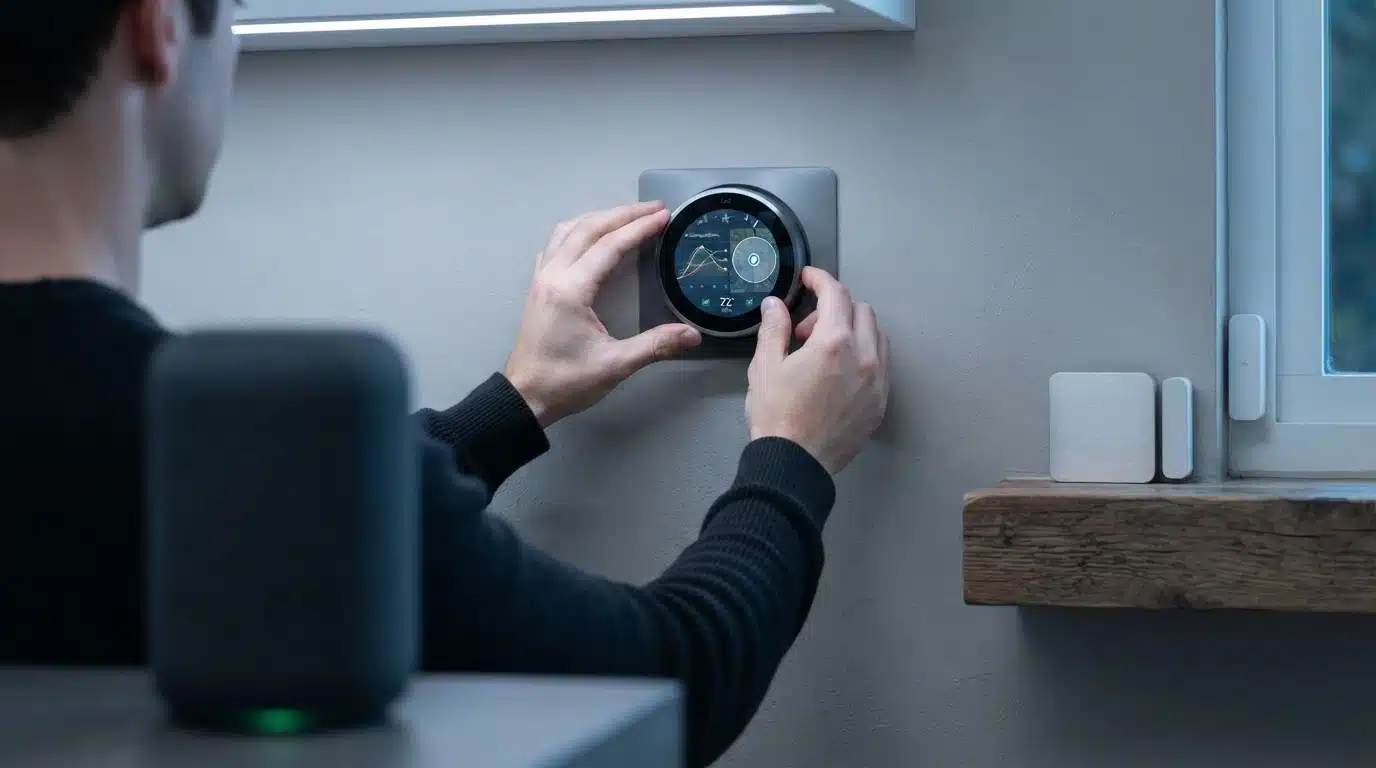
The smart thermostat on your wall is already becoming obsolete. While current models learn your schedule and adjust accordingly, the next wave of climate control technology is poised to be far more predictive, personalized, and deeply integrated into our lives and infrastructure. The focus is shifting from simple reaction to proactive energy management. Forget just turning the heat down when you leave; the future is about micro-adjustments you’ll never even notice.
This isn’t just about saving a few dollars. It’s about a underlying re-imagining of how our homes consume energy. The data suggests we’re on the cusp of a major shift. A recent analysis from the U.S. Department of Energy projects that next-generation climate controls could reduce residential HVAC energy use by an additional 22% compared to current smart thermostat models.
Hyper-Personalized Climate Zones and Zonal Heating/Cooling
The one-size-fits-all approach to home temperature is a relic. Why heat an empty guest room to the same temperature as a busy living room? Future systems will move beyond the single sensor, creating hyper-personalized climate zones. Using a network of inexpensive, wireless sensors, these thermostats will understand which rooms are occupied and adjust airflow or radiator output accordingly. This is zonal heating and cooling on a granular level.
Think of it less like a central command system and more like a team of tiny managers, each responsible for one room’s comfort. The underrated factor here is the integration with other smart devices. Your thermostat will know you’ve entered the home office because your smart light turned on and will adjust the temperature just for that space—without wasting energy on the rest of the house. It’s efficiency through precision.
Advanced Grid Integration and Demand Response Programs
Your thermostat’s next job will be to talk directly to the power grid. This concept, known as demand response, allows utility companies to subtly adjust your thermostat during peak energy usage times to prevent blackouts. In exchange for enrolling in these programs, consumers typically receive credits or discounts on their bills.
This creates a symbiotic relationship between your home and the grid. Instead of firing up another power plant on a hot afternoon, the utility can ask thousands of thermostats to raise the temperature by a single degree for an hour. Most people won’t even feel the difference, but the collective impact on the grid is enormous. The question is, are you willing to cede that sliver of control for a cheaper bill and a more stable power supply?
The Role of AI and Machine Learning in Future Efficiency
Underpinning this grid integration is a dramatic leap in artificial intelligence. Future thermostats won’t just learn your schedule; they will predict it. By analyzing patterns, weather forecasts, and real-time energy pricing from the grid, predictive climate control systems will pre-cool or pre-heat your home when electricity is cheapest. This is where the real money is saved.
According to Dr. Evelyn Reed, a senior researcher at the American Council for an Energy-Efficient Economy, “The next frontier isn’t just knowing when you’re home, but predicting energy price spikes and shifting consumption to off-peak hours automatically. We’re moving from a thermostat that learns to one that strategizes.”
Enhanced Security and Data Privacy in Connected Thermostats
With all this data flowing between your home, the cloud, and the power grid, security becomes a non-negotiable priority. A compromised thermostat isn’t just an inconvenience; it’s a potential backdoor into your home network and a point of vulnerability for the energy grid. Manufacturers are responding by implementing more stringent encryption and authentication protocols.
What most people miss is that this data is incredibly personal, revealing when you’re home, when you sleep, and when you’re on vacation. The industry is facing pressure to adopt transparent privacy policies and give users more control over their data. This push for security is part of a broader trend towards interoperability, with new standards improving how all required Matter-compatible smart home devices communicate securely. The thermostat of tomorrow must not only be smart and efficient but also a trusted guardian of your digital and physical space.

Maximizing Your Savings: A Checklist for Smart Thermostat Owners
You installed a smart thermostat, but your electricity bill barely budged. Sound familiar? What most people miss is that these devices aren’t magic boxes; they require active management to deliver on their promises. Simply setting a temperature and walking away is like buying a high-performance car and never taking it out of first gear.
First, verify the thermostat’s placement. Is it in direct sunlight or near a drafty window? According to research from Lawrence Berkeley National Laboratory, improper placement can cause temperature misreadings of 5°F or more, forcing your HVAC system to work overtime. Ensure it’s on an interior wall, away from heat sources. This simple check is often the most overlooked.
Your scheduling needs to be ruthless. Don’t just set a “home” and “away” temperature. Program aggressive setbacks for the eight hours you’re at work and the hours you’re asleep. A 7-10°F adjustment for these periods can cut your heating and cooling costs by up to 10% annually, according to the U.S. Department of Energy.
Now, activate the advanced features you paid for. Turn on geofencing so the system powers down the moment your phone leaves the house. Allow the learning algorithm a few weeks to understand your patterns (don’t keep overriding it!). True optimization happens when your thermostat integrates with your entire home ecosystem, which is why understanding protocols that enable required Matter-compatible smart home devices to communicate is so important for future savings.
Finally, perform basic maintenance. Wipe down the sensors every few months to ensure they’re reading correctly. This isn’t just about saving money; it’s about transforming a passive gadget into an active financial tool that works for you every single day.
Beyond Savings: The Ambient Home of Tomorrow
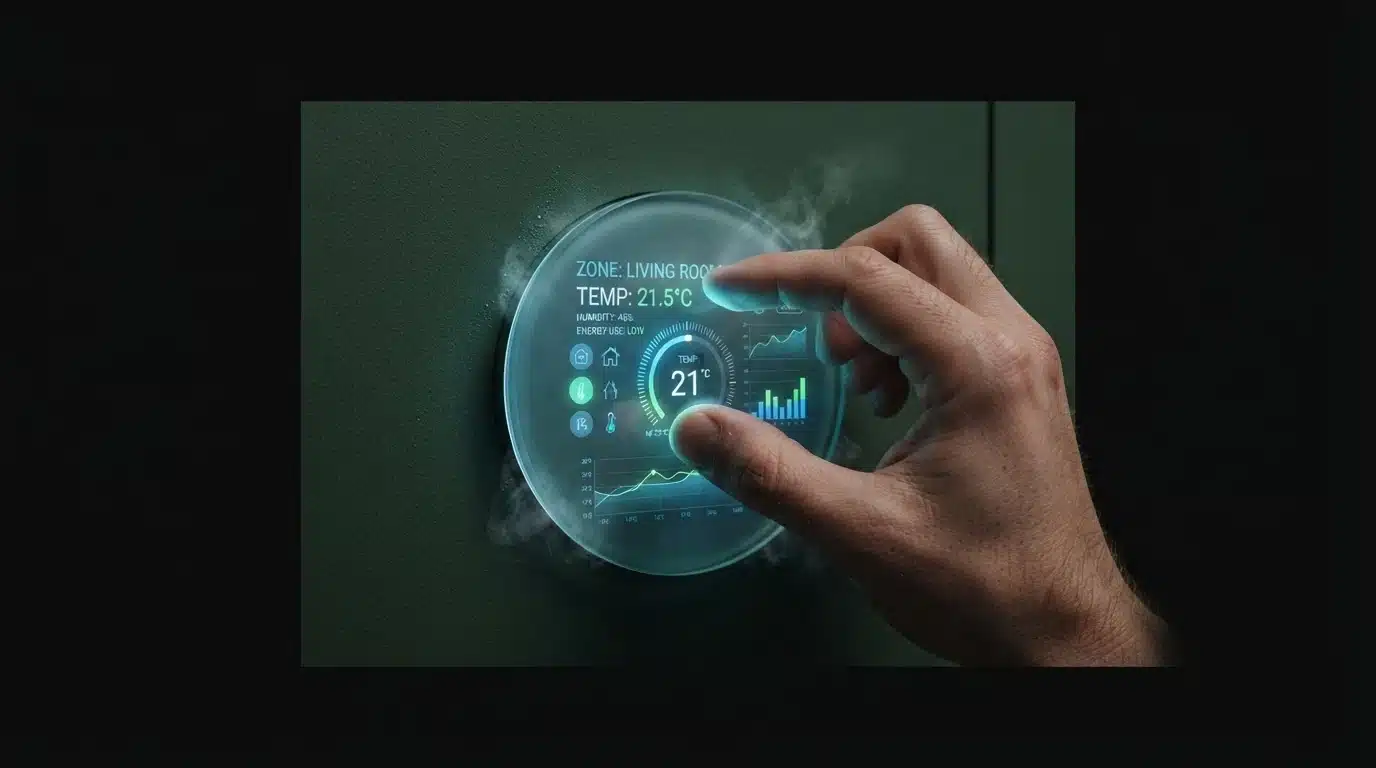
As smart thermostats become more intelligent, the conversation is shifting away from simple cost savings and toward a more profound question: what does it feel like to live in a home that anticipates your needs? The next generation of climate control won’t require you to set routines or even think about efficiency. It will be an invisible, ambient system that uses data from your wearables, your calendar, and even the real-time cost of electricity to create a perfectly comfortable environment at the lowest possible impact.
The ultimate goal is a home that manages its own energy profile with no human intervention required. This raises new considerations about data privacy and our willingness to cede control for ultimate convenience. As these systems become more deeply integrated into our lives, will we be comfortable with the level of predictive power they hold? The real challenge ahead isn’t just engineering a more efficient thermostat, but designing an intelligent home we can trust.
Frequently Asked Questions
How much can a smart thermostat actually save on electricity bills?
Savings vary significantly based on your climate, home insulation, and usage patterns. manufacturers and independent studies report average savings between 10% and 26% on annual heating and cooling costs. The biggest savings come from utilizing advanced features like learning schedules and geofencing.
Are smart thermostats compatible with all HVAC systems?
Most smart thermostats are compatible with standard 24-volt HVAC systems, which covers the majority of modern homes. they often don’t work with high-voltage or proprietary systems, such as electric baseboard heaters. Always use the manufacturer’s online compatibility checker before making a purchase.
What’s the difference between a smart thermostat and a programmable thermostat?
A programmable thermostat strictly follows a fixed schedule that you must manually set. A smart thermostat learns your habits, uses sensors and your phone’s location to detect occupancy, and automatically adjusts the schedule to maximize both comfort and energy efficiency, requiring far less manual input.
Do smart thermostats require professional installation?
Many models are designed for straightforward DIY installation, especially if you are replacing an existing thermostat and are comfortable with basic wiring. if you have a complex HVAC system or are unsure about the process, hiring a professional is the safest option to ensure correct functionality.
Can smart thermostats contribute to home safety beyond temperature control?
Yes, many advanced models can enhance safety. They can send you alerts if your HVAC system is malfunctioning or if temperatures drop to a level that could freeze your pipes. Some can also integrate with smart smoke detectors to automatically shut off your HVAC fan during a fire to prevent smoke from circulating.