
The Critical Role of Network Segmentation in 2026 Smart Home Security: Preventing Device Compromises
Welcome to the future of home living, where convenience and connectivity define our daily lives. By 2026, smart homes are no longer a luxury but a standard, with an ever-growing array of interconnected devices managing everything from lighting and climate to security and entertainment. While this interconnectedness brings unparalleled comfort, it also introduces a complex web of potential vulnerabilities. The question is no longer if your smart home devices will face a cyber threat, but when. This is where the concept of smart home segmentation becomes not just beneficial, but absolutely critical. Understanding and implementing robust network segmentation strategies is the cornerstone of preventing device compromises and safeguarding your digital sanctuary in the years to come.
The Evolving Landscape of Smart Home Threats
The proliferation of Internet of Things (IoT) devices in our homes has created an expansive attack surface for malicious actors. From smart refrigerators to voice assistants, each device is a potential entry point into your home network. Traditional security measures, such as a single firewall protecting the entire home network, are becoming increasingly insufficient against sophisticated cyber threats. By 2026, the sheer volume and diversity of IoT devices will necessitate a more granular approach to security. Attackers are constantly finding new ways to exploit vulnerabilities in these devices, often leveraging compromised gadgets to gain access to more sensitive data or even to launch larger-scale attacks.
Imagine a scenario where a vulnerability in your smart light bulb allows an intruder to access your home surveillance system, or worse, your personal computer. Without proper smart home segmentation, such a breach could lead to a catastrophic compromise of your privacy and security. The risks extend beyond mere data theft; they encompass physical security risks, identity theft, and even the potential for your devices to be co-opted into botnets for distributed denial-of-service (DDoS) attacks. The interconnected nature of smart homes means that a weakness in one device can rapidly cascade through your entire network, making effective isolation paramount.
What is Network Segmentation and Why is it Essential for Smart Homes?
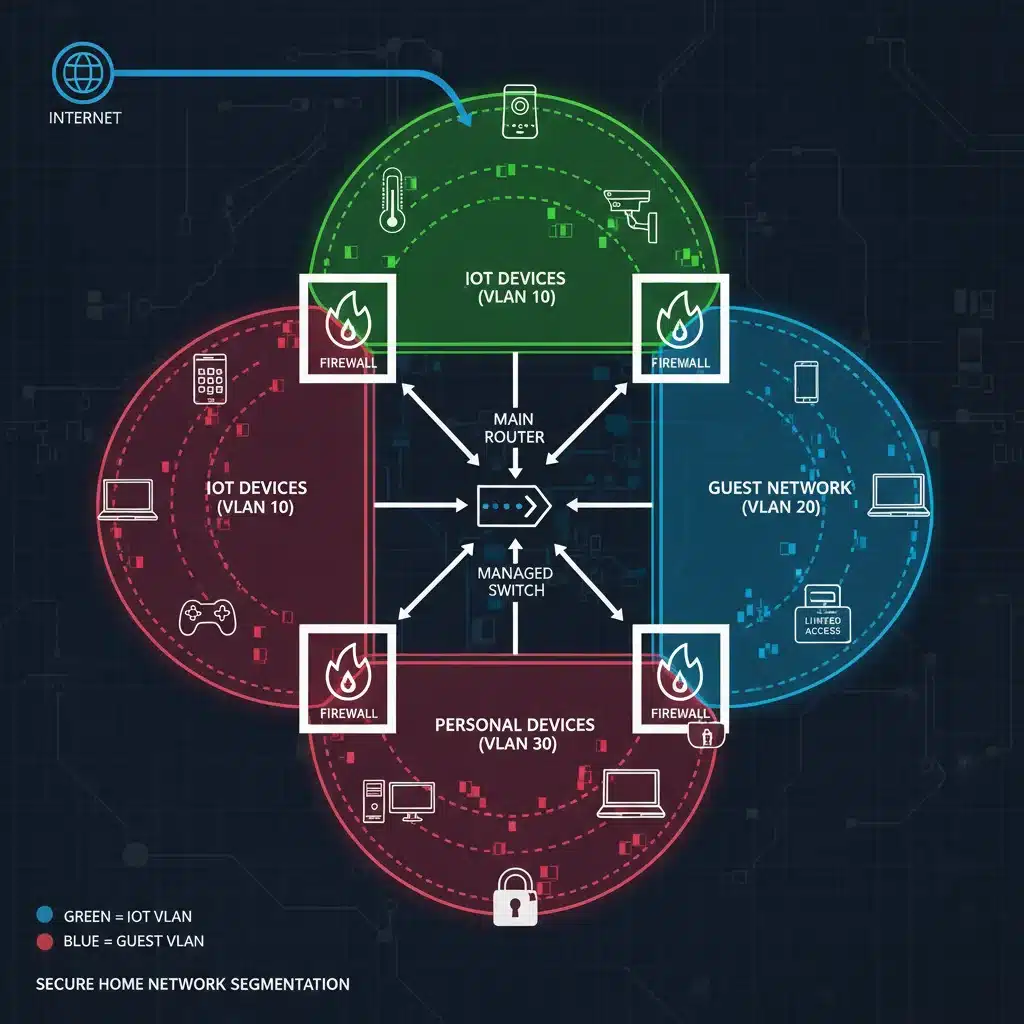
At its core, network segmentation involves dividing a computer network into smaller, isolated sub-networks or segments. Each segment can then be secured and managed independently. In the context of a smart home, this means creating separate logical networks for different categories of devices. For instance, your smart speakers, smart cameras, and smart locks might reside on one segment, while your personal computers, smartphones, and tablets are on another, and your guest Wi-Fi on yet another.
The primary benefit of smart home segmentation is containment. If one device or segment is compromised, the breach is confined to that specific segment, preventing the attacker from easily moving laterally to other, more critical parts of your network. This significantly reduces the impact of a security incident. Think of it like watertight compartments on a ship; if one compartment floods, the others remain dry, keeping the vessel afloat. In the digital realm, this means protecting your sensitive personal data even if a less secure IoT device is breached.
Furthermore, segmentation allows for tailored security policies. Devices with different security requirements can be placed in segments with appropriate levels of protection. For example, a smart TV that primarily streams content might have different firewall rules than a smart lock that controls physical access to your home. This granular control is vital for optimizing security without sacrificing convenience.
Key Principles of Effective Smart Home Segmentation by 2026
Implementing effective smart home segmentation requires a thoughtful approach, considering current technologies and anticipating future threats. Here are the key principles that will guide robust segmentation strategies by 2026:
1. Device Categorization and Isolation
The first step is to categorize your smart home devices based on their function, sensitivity, and trust level. Common categories include:
- High-Security Devices: Smart locks, security cameras, alarm systems, garage door openers. These devices should be on their own highly restricted segment.
- Entertainment & Convenience Devices: Smart TVs, streaming devices, smart speakers, smart lighting. These can often be grouped together on a separate segment.
- Guest Network: For visitors, completely isolated from your main devices and IoT network.
- Personal Devices: Laptops, smartphones, tablets, personal computers. These should be on a primary, secure network segment with strong authentication.
- “No-Internet-Needed” Devices: Some devices might function perfectly well without direct internet access, communicating only locally. These should be strictly isolated from the internet entirely.
Once categorized, each group should be placed into its own Virtual Local Area Network (VLAN) or subnet. This logical separation ensures that even if devices share the same physical network infrastructure (e.g., your Wi-Fi router), they cannot directly communicate with devices in other segments without passing through a controlled gateway.
2. Implementing Zero-Trust Principles
By 2026, the Zero-Trust security model will be indispensable for smart home segmentation. This model operates on the principle of “never trust, always verify.” It means that no device or user, whether inside or outside the network perimeter, is inherently trusted. Every connection attempt must be authenticated and authorized before access is granted. For smart homes, this translates to:
- Strong Authentication: Enforcing unique, complex passwords for all devices and requiring multi-factor authentication (MFA) wherever possible.
- Least Privilege Access: Devices should only have access to the resources absolutely necessary for their function. A smart light bulb, for example, doesn’t need access to your personal financial data.
- Continuous Monitoring: Regularly monitoring network traffic and device behavior for anomalies that might indicate a compromise.
3. Advanced Router and Firewall Capabilities
Modern routers designed for smart homes are increasingly offering advanced segmentation capabilities. Look for routers that support:
- VLAN Tagging: The ability to create multiple VLANs to logically separate devices.
- Stateful Packet Inspection (SPI) Firewall: A firewall that tracks the state of active connections and makes intelligent decisions about allowing or blocking traffic.
- Intrusion Detection/Prevention Systems (IDS/IPS): These systems monitor network traffic for suspicious activity and can actively block threats.
- Application-Layer Gateway (ALG): For specific protocols used by certain IoT devices.
For more advanced users, a dedicated firewall appliance or a router running open-source firmware like pfSense or OpenWRT can provide even greater control and customization over your network segments and security policies.
4. Secure Wireless Networks (Wi-Fi 6E and Beyond)
Wireless networks are the backbone of most smart homes. By 2026, Wi-Fi 6E and its successors will be common, offering faster speeds and enhanced security features. Leveraging these advancements is crucial for smart home segmentation:
- Multiple SSIDs: Create separate Wi-Fi networks (SSIDs) for each segment (e.g., ‘MyHome_Main’, ‘MyHome_IoT’, ‘MyHome_Guest’).
- WPA3 Encryption: Ensure all your Wi-Fi networks use WPA3, the latest and most secure encryption standard.
- Client Isolation: Configure your Wi-Fi access points to enable client isolation within the IoT network. This prevents devices on the same Wi-Fi segment from directly communicating with each other, further limiting lateral movement in case of a compromise.
5. Regular Updates and Patch Management
Even with perfect segmentation, unpatched vulnerabilities remain a significant risk. By 2026, automated patch management for smart home devices will be more prevalent and essential. Regularly check for and apply firmware updates for all your smart devices, routers, and other network equipment. Manufacturers are constantly releasing patches to address newly discovered security flaws, and neglecting these updates leaves your network exposed.
Practical Steps to Implement Smart Home Segmentation Today (and for 2026)
While some of these concepts might seem complex, many modern networking devices simplify the process. Here’s a step-by-step guide to implementing smart home segmentation:
Step 1: Inventory Your Devices
Make a comprehensive list of all internet-connected devices in your home. Note their function, manufacturer, and how they connect to the network (Wi-Fi, Ethernet). This will help you categorize them effectively.
Step 2: Assess Your Router’s Capabilities
Check your current router’s specifications. Does it support VLANs, multiple SSIDs, or advanced firewall rules? If not, consider upgrading to a more capable router or adding a dedicated network switch that supports VLANs.
Step 3: Create Separate Wi-Fi Networks (SSIDs)
Most modern routers allow you to create multiple Wi-Fi networks. Set up at least three:
- Main Network: For your personal computers, smartphones, and other trusted devices.
- IoT Network: For all your smart home gadgets.
- Guest Network: For visitors.
Ensure each network has a strong, unique WPA3 password.
Step 4: Configure VLANs (If Supported)
If your router or network switch supports VLANs, assign each of your separate Wi-Fi networks (and any wired segments) to its own VLAN. This provides a robust logical separation even if they share the same physical hardware.
Step 5: Implement Firewall Rules Between Segments
This is the most critical step for effective smart home segmentation. Configure your router’s firewall to control traffic flow between segments:
- Block IoT to Main Network: Prevent devices on the IoT segment from initiating connections to devices on your main personal network.
- Allow Main Network to IoT (Controlled): You might want your smartphone on the main network to control smart lights on the IoT network. Configure rules to allow only necessary, specific communication.
- Restrict IoT Internet Access: Many IoT devices only need to communicate with specific cloud services. Block all other outbound internet traffic from the IoT segment.
- Isolate Guest Network: Ensure the guest network cannot access any other internal network segment.
Step 6: Enable Client Isolation on IoT Network
Within your IoT Wi-Fi network settings, look for an option like “Client Isolation” or “AP Isolation” and enable it. This prevents smart devices on the same IoT network from directly communicating with each other, reducing the risk of a worm-like attack spreading between compromised gadgets.
Step 7: Monitor and Audit Regularly
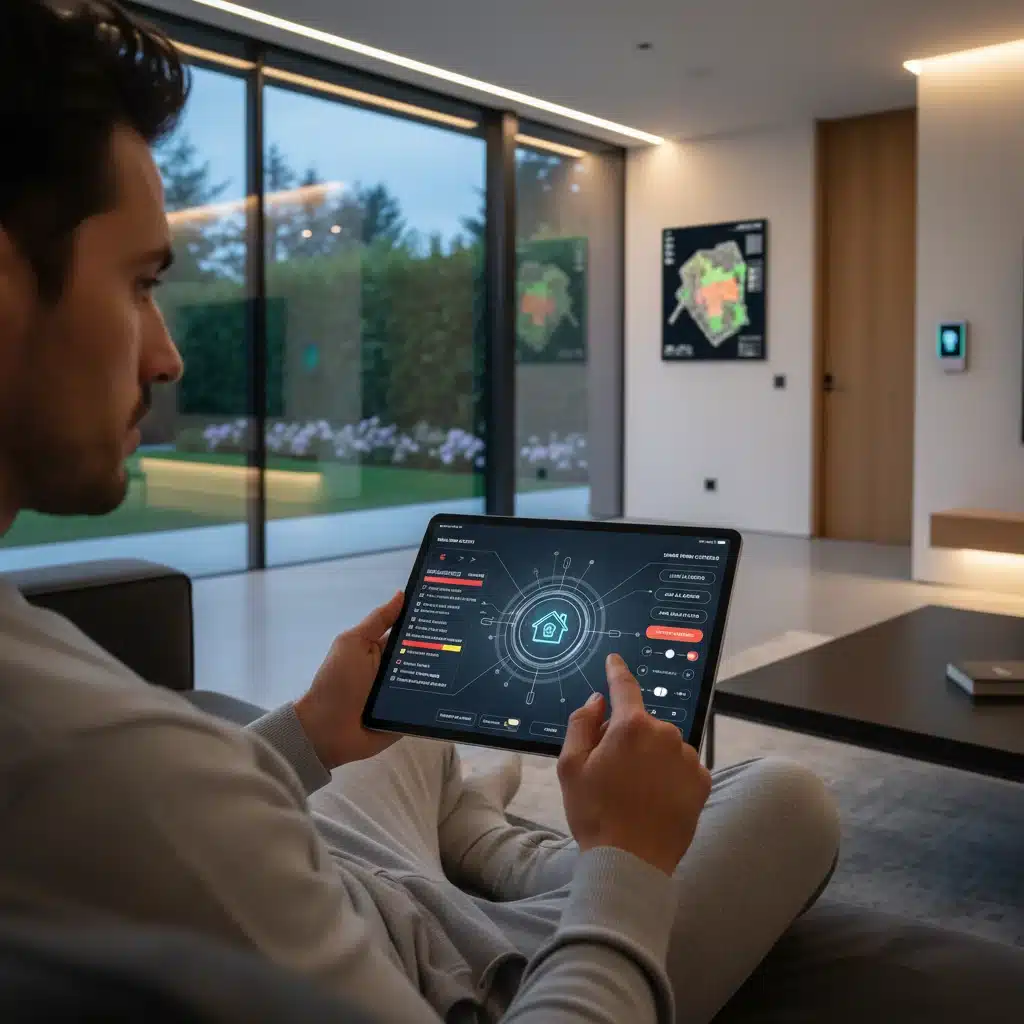
Periodically review your network configuration and device logs. Look for unusual traffic patterns or unauthorized connection attempts. Tools like network analyzers can help visualize traffic flow and identify potential security gaps in your smart home segmentation.
The Future of Smart Home Segmentation: AI and Automation
By 2026 and beyond, the complexity of managing countless smart devices will drive advancements in automated smart home segmentation. Artificial intelligence and machine learning will play a pivotal role:
- AI-Powered Device Profiling: AI will automatically identify new devices joining your network, categorize them based on their behavior and known signatures, and assign them to appropriate segments with minimal user intervention.
- Behavioral Anomaly Detection: Machine learning algorithms will continuously monitor device behavior within each segment. Any deviation from normal patterns (e.g., a smart thermostat trying to access a financial website) will trigger an alert and potentially automatic isolation.
- Self-Healing Networks: Future networks may have the ability to automatically reconfigure segments or quarantine compromised devices without human intervention, ensuring continuous security.
- Context-Aware Security: Segmentation policies will become more dynamic, adapting based on the context of your home (e.g., different rules when you are home versus away, or during specific times of day).
These innovations will make robust smart home segmentation accessible and manageable for the average homeowner, moving us closer to a truly secure and autonomous digital living environment. The goal is to provide enterprise-grade security within a consumer-friendly framework.
Challenges and Considerations
While the benefits of smart home segmentation are clear, there are challenges to consider:
- Complexity: For users unfamiliar with networking concepts, setting up VLANs and advanced firewall rules can be daunting. Manufacturers need to prioritize user-friendly interfaces.
- Device Compatibility: Some older or less sophisticated IoT devices might not behave well in a highly segmented environment, requiring careful testing and configuration.
- Performance Overhead: While generally minimal for home networks, poorly configured segmentation could theoretically introduce minor latency, though this is rare with modern hardware.
- Maintenance: As new devices are added, they must be properly categorized and assigned to the correct segments. This requires ongoing vigilance.
Addressing these challenges will involve a collaborative effort between device manufacturers, network equipment providers, and security researchers to develop more intuitive and robust solutions for the evolving smart home ecosystem.
Conclusion: Securing Your Digital Fortress with Smart Home Segmentation
As we advance towards 2026, the smart home will continue to evolve, bringing unprecedented levels of comfort and automation. However, this convenience must not come at the expense of security. The critical role of smart home segmentation cannot be overstated. By strategically dividing your home network into isolated segments, you create a robust defense mechanism that contains breaches, limits lateral movement, and protects your most sensitive data from compromise. It’s about building a digital fortress, brick by digital brick, ensuring that even if one part is attacked, the entire structure remains secure.
Embracing network segmentation now is an investment in your future security and peace of mind. As smart homes become more integrated into our lives, a proactive and layered security approach, centered around intelligent segmentation, will be the defining characteristic of a truly resilient and secure digital living space. Don’t wait for a breach to understand its importance; start segmenting your smart home network today and secure your connected future.