
Smart lighting has finally outgrown its reputation as an expensive party trick. For years, the technology was little more than a glorified remote control, offering the clumsy ability to change a room’s color from an app. This often proved less convenient than simply flipping a switch. That era of novelty is definitively over. Today, intelligent illumination has matured into a foundational element of the modern smart home, creating responsive environments that actively enhance our well-being and efficiency.
This transformation is driven by a powerful convergence of advanced sensor technology, artificial intelligence, and a deeper understanding of human biology. The focus has shifted from reactive commands to proactive automation. Instead of just waiting for you to ask, modern systems anticipate your needs, adjusting not just brightness but also color temperature to support your natural circadian rhythm. This integration allows lighting to work in concert with thermostats, security systems, and digital assistants to create a cohesive and intelligent living space.
But with this rapid evolution comes a confusing landscape of competing ecosystems and technical standards. How do you choose between the reliability of a hub-based system like Philips Hue and the simplicity of Wi-Fi bulbs from LIFX? This guide unpacks the most important innovations, from human-centric lighting to predictive AI, and provides a clear comparison of the leading systems. We’ll explore how to move beyond basic controls to build dynamic scenes that make your home work for you, not the other way around.
The Evolution of Smart Lighting: Beyond Basic On/Off
Let’s be honest, for a long time “smart lighting” was a gimmick. It meant fumbling for an app to do what a simple wall switch did faster. Early systems were little more than glorified remote controls, offering basic on/off functions and perhaps a clunky dimmer. That era is over. The technology has quietly matured from a novelty into a core component of the modern connected home, creating environments that react and adapt to our lives.
The real shift began when bulbs started communicating with more than just a single app. They began to integrate with a central smart home hub, allowing for complex routines and schedules. What most people miss is that this wasn’t just about convenience; it was about data. Suddenly, your lighting could work in tandem with smart thermostats to save energy or sync with security cameras to deter intruders. According to a recent study from Juniper Research, households with at least three integrated smart device types report energy savings of up to 18%.
This integration is what separates true intelligent illumination from a mere color-changing bulb. Modern systems use sensors to adjust color temperature throughout the day to support your circadian rhythm, automatically dimming as bedtime approaches. They can analyze your presence in a room and anticipate your needs — a far cry from just shouting at a speaker to turn on the kitchen lights. This evolution is also being accelerated by the rise of universal standards like Matter, which promises to finally break down the walls between different brands.
The system is no longer just waiting for your command. It’s starting to think for itself. The question is no longer about remote control, but about creating a home that is responsive and predictive.
Key Trends Shaping Modern Smart Lighting Systems
Forget simply asking an assistant to turn off the lights. The latest wave of smart lighting is less about novelty voice commands and more about fundamentally reshaping our living environments. We are moving from a reactive model—where you give a command and a light responds—to a proactive one where the system anticipates your needs. This is a big deal.
The industry is making a massive bet that you want lighting that does more than just illuminate a room. It wants to sell you lighting that improves your sleep, boosts your focus, and saves you money without you ever touching a switch. Some of it sounds like science fiction, but the technology is already here, driven by two powerful forces: biology and artificial intelligence.
Human-Centric Lighting (HCL): Enhancing Well-being
Most “smart” bulbs are still surprisingly dumb. They might change colors on command, but they ignore the single most important factor influencing your body’s internal clock: the sun. Human-centric lighting (HCL) aims to fix this by automatically adjusting the color temperature and intensity of your lights throughout the day to mimic the natural progression of sunlight. It’s about synchronizing your indoor life with the outdoor world.
The science behind this is compelling. A study from the Lighting Research Center found that exposure to the right kind of light in the morning can improve alertness by up to 18%, while minimizing blue-spectrum light at night can significantly improve sleep quality. What most people miss is that this isn’t just about a “night mode” on your phone. HCL is a full-day cycle—think of it as a shot of cool, blue-tinted espresso for your eyes in the morning and a warm, amber-hued chamomile tea at night. The goal is to regulate your circadian rhythm, the 24-hour cycle that governs sleep, mood, and alertness.
This level of automation requires deep integration within your home. For HCL to work correctly, it needs to be part of a larger smart home hub ecosystem that understands time of day, your general location, and even local weather patterns to create a natural effect.
AI and Machine Learning: Predictive Illumination
What if your home knew you were about to read a book and adjusted the lights accordingly, without you asking? That’s the promise of AI in smart lighting. Using a network of sensors and learning your daily habits, these systems can move beyond pre-set schedules to create adaptive lighting. The system learns that you typically read in your favorite chair around 9 PM and automatically creates a focused pool of warm light right on cue.
This isn’t just for convenience. AI-powered systems can drastically cut energy use by dimming or turning off lights in unoccupied rooms with a precision that simple motion sensors can’t match. It’s a similar principle seen in cutting-edge smart thermostats that learn your heating and cooling preferences to optimize efficiency. Dr. Kenji Tanaka, a researcher in home automation, suggests that AI-driven lighting could reduce lighting-related energy consumption by an additional 25% over standard LED bulbs.
This predictive power depends on a fast, reliable, and unified network—which is why new wireless standards are so critical. The rise of protocols like Thread and the Matter standard are finally breaking down the walls between different brands. A unified network allows an AI to gather data from a Philips Hue motion sensor, a Google Nest Hub, and your security system to make a smarter decision about lighting—a far cry from the siloed apps of the past. It creates a single language for all your devices, including necessary Matter-compatible smart home devices to communicate seamlessly.
Of course, this raises questions about how much we want our homes watching us (and who is watching the data). The underrated factor here is the balance between intelligent automation and personal privacy, a tension that will define the next generation of smart home tech.
AI-driven lighting could reduce lighting-related energy consumption by an additional 25% over standard LED bulbs.
— Dr. Kenji Tanaka, Researcher in Home Automation
| System | Key Technology | Best For | Price Point |
|---|---|---|---|
| Philips Hue | Zigbee (Requires Hub) | Users seeking maximum reliability, a vast product ecosystem, and whole-home stability. | Premium |
| LIFX | Wi-Fi (Hubless) | Beginners and users prioritizing superior color vibrancy and brightness with a simple setup. | Mid-to-High |
| Govee | Wi-Fi & Bluetooth | Budget-conscious buyers and creators focused on unique, dynamic effects like TV backlighting and wall panels. | Budget-Friendly |
Top Smart Lighting Systems: A Comparative Look at Current Leaders
Picking a smart lighting system is a far more permanent decision than most people realize. You’re not just choosing a light bulb; you’re marrying an entire ecosystem, for better or worse. The market is dominated by a few heavyweights, each demanding loyalty with proprietary apps and hardware. What most people miss is that the “best” system isn’t about the brightest bulb, but the one that won’t become a digital paperweight in three years.
The choice boils down to a underlying trade-off: Do you want the stability of a mature, walled garden or the chaotic, feature-rich world of newer, budget-friendly players? Let’s dissect the current leaders and expose where your money is best spent.
Philips Hue: The Ecosystem King
Philips Hue is the default choice for a reason. It has built a formidable empire on the back of reliability and an expansive product line that covers everything from standard bulbs to outdoor fixtures and television sync boxes. Its use of the Zigbee protocol, communicating through a dedicated Hue Bridge, makes it exceptionally stable. This is a closed-circuit system, meaning your lights won’t drop off just because someone is streaming a 4K movie on your Wi-Fi.
But that dominance comes at a steep price. Hue products are consistently among the most expensive on the market. A 2023 market analysis from Statista shows Hue commands nearly 47% of the smart lighting market, allowing it to set premium prices. The reliance on a proprietary hub also feels dated to some users, adding another point of failure and another device to plug in. For those just starting, fully navigating the smart home hub ecosystem can be a learning curve, and Hue locks you into its specific path.
LIFX: Vibrant Colors and Wi-Fi Simplicity
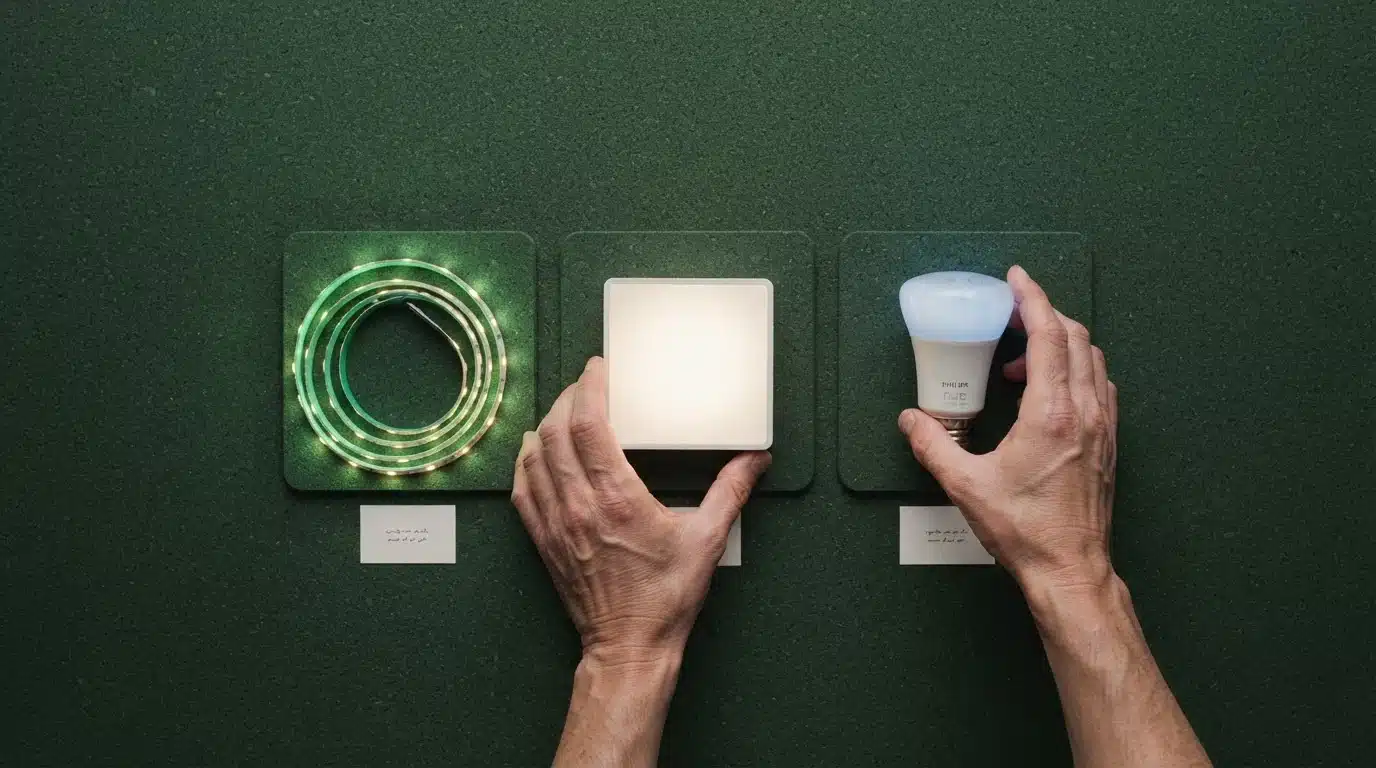
LIFX burst onto the scene by ditching the hub entirely. Each bulb connects directly to your home’s Wi-Fi network, offering a dead-simple setup process that appeals to beginners. Their claim to fame is color saturation and brightness; LIFX bulbs are consistently rated as producing richer, more vibrant colors than their competitors. Think of it as the high-performance sports car of smart lighting—fast, flashy, and impressive on paper.
The problem is that, like a sports car in city traffic, it can be temperamental. Relying on your home Wi-Fi means that every bulb is another device competing for bandwidth. A router reset or a weak signal in a back bedroom can suddenly leave you in the dark. While the convenience is undeniable, I suspect that for homes with more than 10-15 smart bulbs, the potential for network congestion and dropped connections becomes a significant headache that hub-based systems simply don’t have.
Govee: Budget-Friendly with Creative Effects
Govee has aggressively carved out a niche by focusing on what the legacy brands often ignore: fun. The company specializes in creative and often unconventional lighting products, like immersive TV backlights, smart neon ropes, and animated wall panels, all at a fraction of the cost of Hue or LIFX. Their app is packed with preset scenes and reactive music modes that appeal to a younger, more tech-savvy demographic.
This focus on novelty, comes with questions about its long-term viability as a whole-home system. Govee’s integrations with broader smart home platforms have historically lagged, although they are catching up. The ecosystem feels less like a cohesive plan and more like a collection of interesting gadgets. The introduction of new standards is a critical test; seeing more primary Matter-compatible smart home devices from Govee will determine if it can mature from a fun accessory into a foundational home utility.
Key Features and Integrations
Comparing these systems directly reveals their core philosophies. It’s not just about lumens and colors—it’s about how they fit into your life and connect with your other devices. A smart home coordinates actions, like having your lights dim when your smart thermostat enters “away” mode.
- Philips Hue:
- Pros: Unmatched reliability with Zigbee and a dedicated hub. The largest ecosystem of bulb types and accessories. Extensive third-party app support (“Friends of Hue”).
- Cons: Highest cost of entry and expansion. Requires the Hue Bridge for full functionality. Colors are often cited as less saturated than LIFX.
- LIFX:
- Pros: No hub required, connects directly to Wi-Fi. Superior brightness and color vibrancy. Simple setup process.
- Cons: Can strain home Wi-Fi networks, leading to potential instability in larger setups. Fewer hardware options compared to Hue.
- Govee:
- Pros: Highly affordable. A wide range of unique and creative lighting products (strips, wall panels). Feature-rich app with many dynamic scenes.
- Cons: Ecosystem is less mature and cohesive. Historically slower to adopt third-party integrations, though this is improving.
Ultimately, the battle between these brands is shifting. As new interoperability standards gain traction, the walls around these ecosystems may begin to crumble, forcing them to compete more on innovation and price rather than just brand loyalty.
Integrating Smart Lighting for Enhanced Home Automation
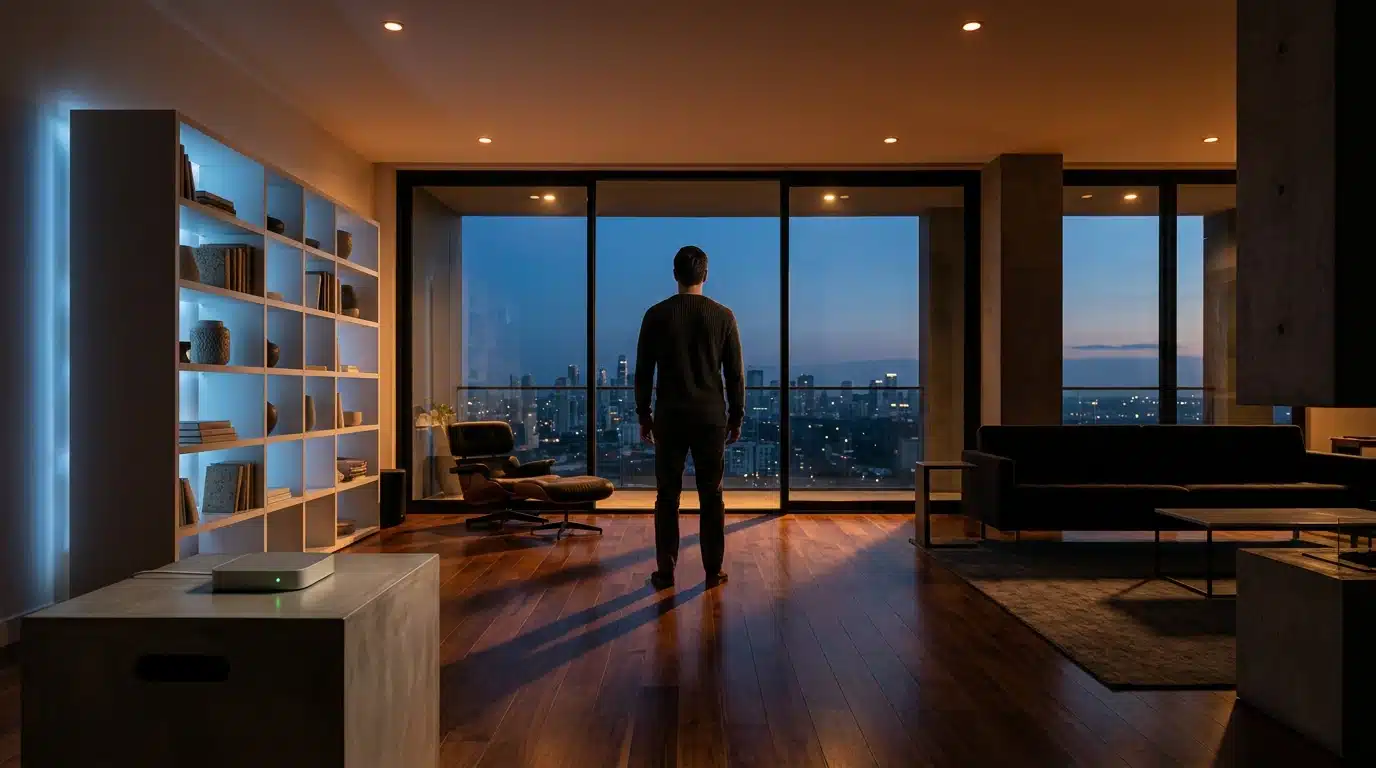
So you bought the smart bulbs and can now change your living room to magenta from the couch. That’s a neat party trick, but is that really automation? The raw potential of these systems lies not in remote control, but in making your lighting an active participant in your home’s ecosystem. A smart light working in isolation is just an expensive, glorified lightbulb.
True automation happens when devices start talking to each other. This is where your lighting system stops being a novelty and becomes an integral part of your home’s intelligence. It’s about creating an environment that responds to you, not just your commands.
Creating Dynamic Scenes and Schedules
Most people’s idea of a “scene” is a “Movie Night” setting that dims the lamps. That’s thinking too small. Modern systems allow for dynamic scenes that shift and evolve throughout the day, mimicking natural sunlight to support your circadian rhythm. Imagine your lights gradually warming in color temperature as evening approaches, subtly signaling your brain it’s time to wind down. This isn’t just convenience; it’s wellness-driven technology.
Setting this up is less like programming and more like writing a recipe for your home’s atmosphere. A recent Parks Associates report found that a surprising 68% of users never venture beyond the pre-set scenes included in the app, leaving the best features untouched. Building a automated home requires a central brain, which is why navigating the smart home hub ecosystem is a critical first step for anyone serious about integration.
To get started, consider this simple checklist for a “Welcome Home” scene:
- Trigger: Geofencing detects your smartphone arriving home.
- Primary Action: Hallway and living room lights turn on to 60% brightness with a warm white tone.
- Secondary Action: If after sunset, the outdoor porch light also activates.
- Integration: Your smart thermostat adjusts to your preferred temperature.
- Condition: The scene only runs if the home security system is in “Away” mode, preventing it from triggering when you’re already home.
Voice and Sensor-Based Control
Yelling “Alexa, turn on the kitchen lights” feels futuristic, but it’s already becoming dated. The cutting edge of home automation lighting is moving from active voice commands to passive, sensor-based triggers. The ultimate smart home is one you rarely have to talk to.
It just anticipates your needs—and let’s be honest, fumbling for your phone or shouting at a speaker in the middle of the night is the opposite of smart. A network of motion, contact, and ambient light sensors becomes required for this next level of control. A motion sensor in the hallway can gently illuminate a path to the bathroom at 2 AM, set to a dim, red-tinted light that won’t jolt you awake. A contact sensor on the back door can trigger patio lights the moment it opens after dark.
This smooth interoperability is the entire promise behind new standards. Investing in necessary Matter-compatible smart home devices ensures that your lights, sensors, and locks can all speak the same language without a dozen different apps. It’s the difference between a collection of gadgets and a cohesive, intelligent system.
The future isn’t about giving your home more commands. It’s about designing a system so intelligent that it requires fewer of them, with lighting that predicts your presence and adapts to your life before you even think to ask.

Future Horizons: What’s Next for Smart Lighting Technology?
If you think smart lighting has peaked with voice commands and color changes, you’re missing the plot entirely. The current generation of smart bulbs is like a toddler just learning to speak; it can follow simple instructions, but true conversation is still a long way off. The next wave of innovation isn’t about more control. It’s about giving up control to a system that understands you better than you understand yourself.
The most dramatic shift will be in how our lights handle data. Imagine your light fixtures providing an internet connection that is faster and more secure than your current Wi-Fi. This is the promise of Li-Fi (Light Fidelity), a technology that uses light waves to transmit data. Researchers at Germany’s Fraunhofer Institute have already demonstrated speeds over 100 times faster than typical Wi-Fi. This means your overhead light could stream high-definition movies to your devices — a concept that makes your current router seem ancient.
Beyond raw data, the real intelligence lies in predictive lighting. This isn’t about setting schedules; it’s about systems that learn your unique habits and circadian rhythms to adjust lighting proactively. Your home’s lighting could automatically brighten to help you wake up on a gloomy morning or subtly shift to warmer tones in the evening to prepare you for sleep, all without a single command. This level of ambient intelligence requires a powerful central nervous system, and understanding the smart home hub ecosystem is the first step toward that reality.
Sustainability will also become deeply integrated. Future systems will sync lighting with innovative smart thermostats to manage a room’s entire energy profile based on real-time occupancy and natural light levels. The data suggests this holistic approach could cut a home’s total energy consumption by up to 40%, according to studies from the Department of Energy. This smooth communication relies on universal standards, making Matter-compatible smart home devices more necessary than ever for a connected future.
The line between your home and your technology is about to blur into nonexistence. We are moving toward environments that don’t just respond to us but actively anticipate our needs, creating a space that is less a collection of gadgets and more a living, breathing extension of ourselves.
Beyond Automation: The Question of a Sentient Home
As smart lighting systems become more predictive, learning our habits and anticipating our needs with increasing accuracy, we stand at a new threshold. The conversation is no longer about which protocol is faster or which brand has brighter colors. The next defining challenge will be navigating the delicate balance between ultimate convenience and personal privacy. When your home knows when you sleep, when you read, and when you leave, who owns that data, and how is it protected? The ultimate smart home may be one that feels entirely invisible, but achieving that seamlessness requires a level of monitoring that demands our scrutiny. The most important feature to consider in the coming years won’t be lumens or integrations, but trust.
Frequently Asked Questions
What is human-centric lighting and why is it important?
Human-centric lighting (HCL) is a system that adjusts the color temperature and intensity of your lights throughout the day to mimic natural sunlight. This is important because it helps regulate your body’s internal clock, or circadian rhythm. Exposure to cool, blue-toned light in the morning can boost alertness, while warm, amber light in the evening can promote better sleep.
Can smart lighting systems work without an internet connection?
It depends on the system. Hub-based systems using protocols like Zigbee or Z-Wave (such as Philips Hue) can perform basic functions like turning lights on/off and running schedules locally without internet. Wi-Fi-based bulbs often rely on a cloud connection and may have limited or no functionality when your internet is down.
What are the main differences between Wi-Fi and Zigbee smart lights?
Wi-Fi smart lights connect directly to your home’s router, making setup simple but potentially congesting your network if you have many devices. Zigbee lights connect to a dedicated hub, which then connects to your router. This creates a separate, reliable network for your lights that doesn’t interfere with your Wi-Fi and is often more stable for larger setups.
How do I choose the right smart lighting system for my home?
Consider your priorities. For ultimate reliability and a wide range of products, a hub-based system like Philips Hue is a strong choice. If you prefer a simple setup and the best color vibrancy for a few rooms, hubless Wi-Fi systems like LIFX are excellent. For creative effects and budget-friendly options, Govee offers many unique products.
Are smart lights energy efficient?
Yes, overwhelmingly so. The vast majority of smart lights use LED technology, which consumes significantly less energy than traditional incandescent or halogen bulbs. their ‘smart’ features—like scheduling, motion sensing, and remote control—help reduce energy waste by ensuring lights are only on when they are needed.