
The kitchen, often considered the heart of the home, is on the cusp of a profound revolution. We are moving beyond simple convenience and stepping into an era where artificial intelligence, connectivity, and automation converge to create truly intelligent culinary spaces. The concept of smart kitchen appliances is no longer a futuristic fantasy but a rapidly evolving reality, with innovations set to redefine our cooking experiences by 2026.
Imagine a kitchen that anticipates your needs, suggests recipes based on your dietary preferences and available ingredients, and even cooks your meals to perfection with minimal intervention. This isn’t just about fancy gadgets; it’s about a holistic ecosystem designed to enhance efficiency, reduce waste, and elevate the joy of cooking. As technology advances at an unprecedented pace, the integration of smart features into everyday kitchen tools is becoming more sophisticated, promising a future where culinary mastery is accessible to everyone.
In this comprehensive guide, we’ll delve into the exciting world of smart kitchen appliances, exploring the five most impactful innovations that are poised to transform how we prepare, cook, and even enjoy our food in the very near future. From intelligent ovens that learn your preferences to refrigerators that manage your inventory, get ready to discover the cutting-edge technologies that will shape your kitchen by 2026.
The Dawn of Predictive Cooking: Smart Ovens and Cooktops
One of the most significant advancements in smart kitchen appliances is the evolution of ovens and cooktops. Gone are the days of constant monitoring and guesswork. The next generation of cooking appliances is equipped with advanced sensors, AI algorithms, and internet connectivity, making them more intuitive and precise than ever before.
Innovation 1: AI-Powered Smart Ovens with Predictive Cooking
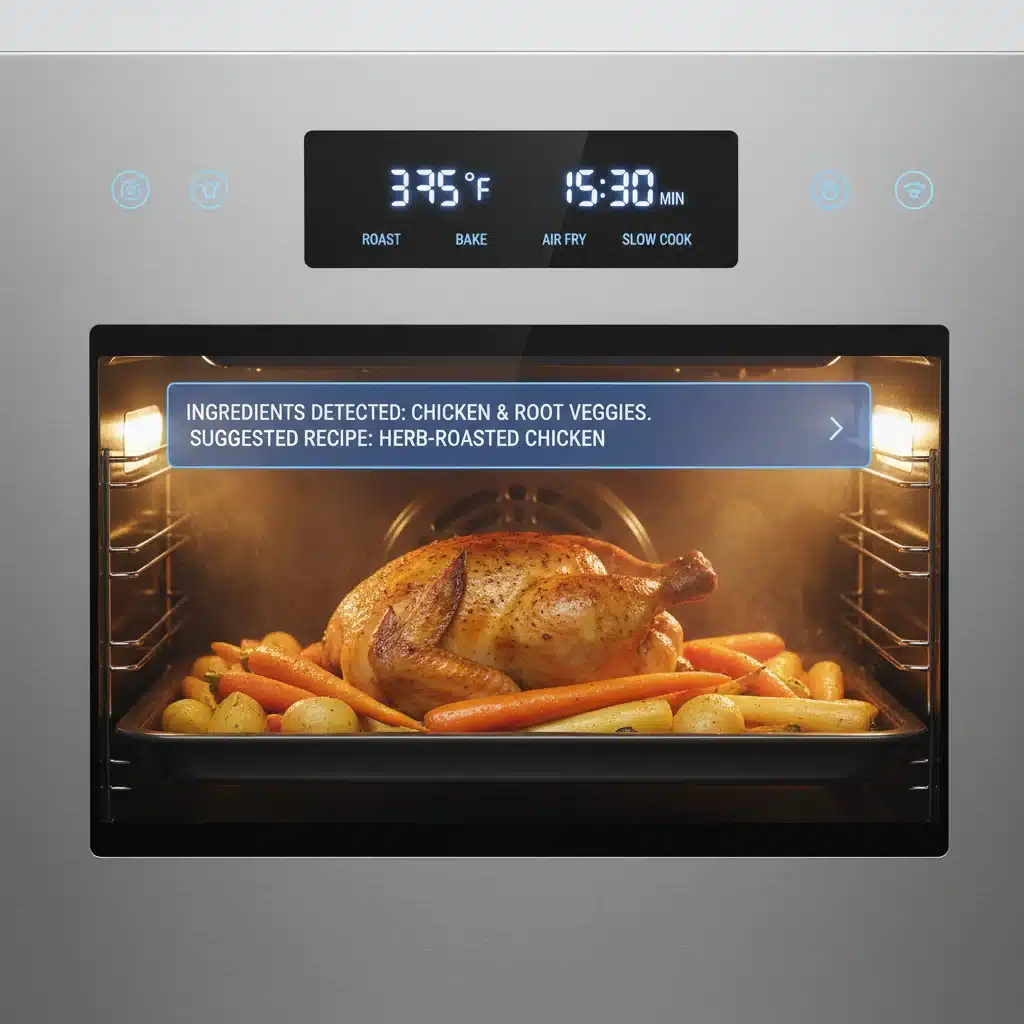
By 2026, smart ovens will transcend basic pre-programmed settings. These intelligent appliances will feature AI-driven systems capable of learning your cooking habits, preferred doneness levels, and even your family’s favorite dishes. Imagine an oven that recognizes the type of food you’ve placed inside, suggests optimal cooking times and temperatures, and adjusts its settings autonomously for perfect results every time. They will integrate with recipe apps, guiding you through complex dishes step-by-step, ensuring you never overcook or undercook a meal again.
Furthermore, these ovens will communicate with other smart devices in your home. For instance, if your smart refrigerator detects you have chicken and vegetables, your oven might suggest a roasted chicken and vegetable medley, preheating itself to the ideal temperature before you even begin prep. Some models are already incorporating internal cameras and advanced sensors to monitor food doneness in real-time, providing visual updates to your smartphone and automatically shutting off when the meal is ready. This level of automation frees up valuable time, allowing you to focus on other tasks or simply enjoy more time with loved ones.
The predictive capabilities extend to energy efficiency as well. By optimizing cooking cycles and learning peak energy usage times, these smart kitchen appliances can suggest off-peak cooking schedules to save on utility bills. They can also perform self-diagnostics, alerting you to potential issues before they become major problems, thus extending the lifespan of the appliance.
Reimagining Food Management: Intelligent Refrigerators and Pantries
Food waste is a significant global issue, and managing groceries effectively can be a challenge for many households. Fortunately, smart kitchen appliances are stepping up to address this with innovative solutions for inventory management and freshness preservation.
Innovation 2: Smart Refrigerators with AI-Powered Inventory and Expiry Tracking
The modern smart refrigerator is far more than just a cooling unit. By 2026, these appliances will become the central hub for your kitchen’s food management system. Equipped with internal cameras, weight sensors, and advanced object recognition, they will meticulously track every item stored inside. You’ll be able to see the contents of your fridge from anywhere via a smartphone app, eliminating the need for redundant grocery purchases.
Beyond simple inventory, these intelligent refrigerators will actively monitor expiry dates, alerting you when items are nearing their spoil point and even suggesting recipes to use them up. Imagine your fridge sending you a notification: "Your Greek yogurt expires tomorrow. Would you like a recipe for a berry parfait?" This proactive approach will dramatically reduce food waste and help households save money on groceries.
Integration with online grocery services will also become standard. When your milk runs low, your smart fridge could automatically add it to your shopping list or even place an order for delivery. Some high-end models may even feature modular compartments with customizable temperature and humidity controls, optimized for different types of food to extend their freshness even further. The goal is to create a seamless, waste-free food ecosystem within your kitchen, making grocery management effortless and efficient.
Precision and Personalization: Advanced Cooking Gadgets
Beyond the major appliances, smaller, more specialized smart kitchen appliances are also undergoing significant transformations, bringing unprecedented levels of precision and personalization to everyday cooking tasks.
Innovation 3: Smart Countertops with Integrated Cooking and Interactive Surfaces
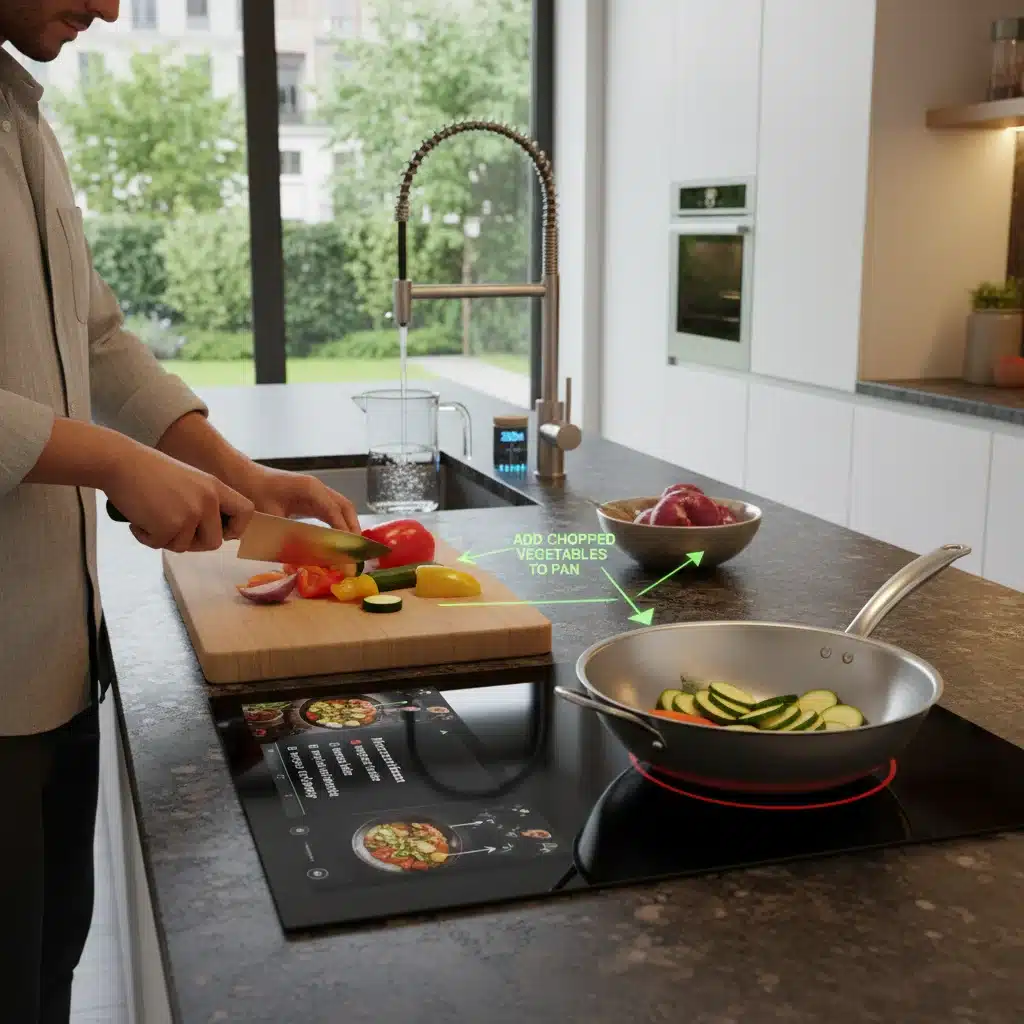
The kitchen countertop, traditionally a passive workspace, is evolving into an active, intelligent hub. By 2026, we’ll see the proliferation of smart countertops that incorporate induction cooking zones directly into the surface, eliminating the need for traditional stovetops. These integrated cooktops will offer precise temperature control, allowing for sous-vide cooking directly on the counter or maintaining exact simmering temperatures for delicate sauces.
But the innovation doesn’t stop there. These surfaces will also feature interactive displays, projecting recipes, step-by-step instructions, and even ingredient measurements directly onto the workspace. Imagine placing a bowl on the counter, and the surface illuminates with a scale showing the exact weight of your ingredients as you add them. Augmented reality overlays could guide you through knife skills or plating techniques. These intelligent surfaces will connect with your smart oven and refrigerator, creating a cohesive cooking experience where information flows seamlessly between devices. They can also serve as charging pads for other smart gadgets or even display news and entertainment while you cook, transforming the kitchen into a truly multi-functional space.
The Rise of Automated Beverage and Meal Preparation
Coffee makers and other small appliances have already started their smart journey, but the next few years will see an explosion in their capabilities, moving towards full automation and personalization for beverages and even simple meals.
Innovation 4: Fully Automated Smart Beverage Systems with Personalized Profiles
Coffee lovers, rejoice! By 2026, smart beverage systems will offer an unparalleled level of customization and automation. These machines will go beyond simply brewing a cup of coffee at a scheduled time. They will store personalized profiles for each family member, remembering their preferred coffee beans, grind size, water temperature, milk frothing level, and even cup size. Imagine waking up to a perfectly brewed latte, tailored precisely to your taste, initiated by a simple voice command or automatically triggered by your morning alarm.
These systems will also integrate with smart home assistants, allowing you to order specific drinks without touching a button. Some advanced models may even feature automatic bean grinding and milk dispensing, minimizing human interaction. Beyond coffee, similar levels of automation will extend to smart blenders capable of creating personalized smoothies based on nutritional goals, or even automated cocktail makers that can mix a perfect drink from a pre-loaded selection of spirits and mixers. The focus here is on convenience, consistency, and a truly personalized beverage experience, making your morning routine or evening unwinding effortlessly enjoyable.
Hygienic and Sustainable Kitchens: Smart Dishwashers and Waste Management
The future of smart kitchen appliances isn’t just about cooking; it’s also about maintaining a clean, efficient, and sustainable kitchen environment. Dishwashers and waste management systems are undergoing significant upgrades to meet these demands.
Innovation 5: Smart Dishwashers with AI-Optimized Cycles and Water Management
Dishwashers by 2026 will be far more intelligent and resource-efficient. Equipped with advanced sensors, they will be able to detect the level of soil on dishes and automatically select the most appropriate wash cycle, optimizing water and energy consumption. No more guessing which setting to use for a half-full load of lightly soiled plates versus a full load of heavily caked-on pots.
These smart dishwashers will also connect to your home’s energy grid, allowing them to run cycles during off-peak electricity hours to save money. They can send notifications to your smartphone when a cycle is complete, when detergent is low, or if there’s a potential maintenance issue. Some innovative models may even feature integrated water filtration systems to ensure sparkling clean dishes and self-cleaning capabilities for internal components, reducing the need for manual maintenance. The emphasis is on efficiency, convenience, and a reduced environmental footprint, making cleanup as smart as the cooking itself.
Furthermore, the integration of smart waste management systems will complement these advancements. Smart bins that automatically sort recyclables, compact waste, and even alert municipal services when they are full will become more common, contributing to a truly sustainable smart kitchen ecosystem.
The Integrated Smart Kitchen Ecosystem: Beyond Individual Appliances
While discussing individual smart kitchen appliances is essential, the true power of these innovations lies in their ability to work together as a cohesive ecosystem. By 2026, kitchens will be fully integrated, with appliances communicating seamlessly with each other and with other smart home devices.
Imagine a scenario where your smart refrigerator detects you’re low on milk and automatically adds it to your smart shopping list. Your smart oven, connected to your calendar, knows you’ll be home late and suggests a quick-prep meal, preheating itself to the perfect temperature just as you walk through the door. Your smart faucet dispenses the exact amount of water needed for the recipe, and your smart dishwasher is ready to clean up after you’ve enjoyed your meal, running on an off-peak energy cycle.
Voice control will become ubiquitous, allowing you to manage your entire kitchen with simple commands. "Hey Google, preheat the oven to 375 degrees for chicken." "Alexa, what’s in the fridge that expires soon?" "Siri, start a heavy wash cycle on the dishwasher." This level of hands-free operation will not only enhance convenience but also improve hygiene in the kitchen.
The data collected by these interconnected appliances will also provide valuable insights. Over time, your smart kitchen will learn your family’s dietary preferences, peak usage times, and even energy consumption patterns, offering personalized recommendations and optimizing operations for maximum efficiency and enjoyment. This data can also be used to proactively schedule maintenance or suggest upgrades, ensuring your kitchen always runs at its best.
Challenges and Considerations for the Smart Kitchen Future
While the future of smart kitchen appliances looks incredibly promising, it’s also important to acknowledge potential challenges and considerations that need to be addressed as these technologies become more mainstream.
Cost: Advanced smart appliances often come with a higher price tag. As technology matures and mass production increases, costs are expected to decrease, but initial adoption might be limited to early adopters and higher-income households.
Privacy and Security: With increased connectivity comes concerns about data privacy and cybersecurity. Smart appliances collect data on usage patterns, food preferences, and even inventory. Ensuring this data is secure and that users have control over its use will be paramount.
Interoperability: For a truly seamless smart kitchen ecosystem, appliances from different manufacturers need to communicate effectively. Industry-wide standards for interoperability will be crucial to avoid fragmented systems and ensure a smooth user experience.
Complexity and User Experience: While smart features aim to simplify life, poorly designed interfaces or overly complex systems can lead to frustration. Manufacturers must prioritize intuitive design and user-friendly controls to ensure broad adoption.
Maintenance and Longevity: The more complex an appliance, the more potential points of failure. Ensuring that smart components are robust and that software updates are consistently provided will be vital for the longevity and reliability of these investments.
Digital Divide: Access to reliable internet and digital literacy will be important for maximizing the benefits of smart kitchens. Efforts will be needed to ensure these innovations are accessible to a wider demographic.
Addressing these challenges proactively will be key to unlocking the full potential of smart kitchen appliances and ensuring a smooth transition into the kitchen of tomorrow.
Conclusion: The Future is Cooking
The evolution of smart kitchen appliances is set to fundamentally redefine our relationship with food and cooking by 2026. From AI-powered ovens that predict your culinary needs to refrigerators that manage your inventory with precision, and interactive countertops that guide your every chop, the future kitchen promises unprecedented levels of convenience, efficiency, and personalized experiences.
These innovations are not just about making cooking easier; they are about fostering a more sustainable approach to food, reducing waste, and empowering home chefs with tools that were once the exclusive domain of professional kitchens. As technology continues to advance, the smart kitchen will become an indispensable part of the modern home, seamlessly integrating into our daily lives and transforming the chore of cooking into an enjoyable and intuitive art form.
Are you ready to embrace the future of cooking? The next few years promise to be an exciting time for kitchen technology, and the innovations in smart kitchen appliances are just beginning to heat up. Get ready to experience a culinary revolution that will change the way you cook, eat, and live.