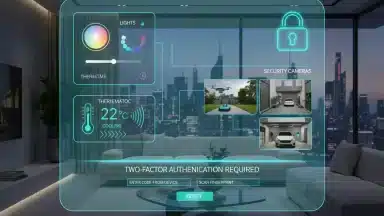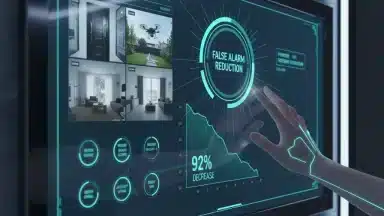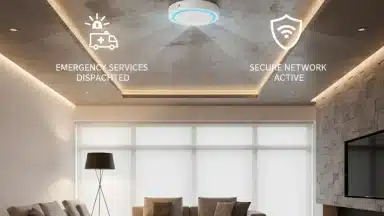

You’ve invested in a smart lock, a video doorbell, and maybe even a connected smoke detector, believing you’ve built a fortress of modern safety. Yet, in a real emergency, this collection of high-tech gadgets could fail to work together, acting as isolated islands rather than a coordinated response team. This fragmentation is the single biggest vulnerability in most smart homes today, where devices from different brands speak different languages, leading to delays and unreliability when seconds matter most.
The solution to this digital Tower of Babel is a protocol called Matter. Developed by a consortium of tech giants including Apple, Google, and Amazon, Matter isn’t another product but a universal language for smart devices. Its primary goal is to ensure smooth interoperability, allowing a sensor from one company to instantly and directly trigger an alarm from another. By prioritizing local network communication over slow, internet-dependent cloud servers, Matter creates a faster, more private, and significantly more dependable safety ecosystem within your home.
This guide explores the primary Matter-compatible devices that are fundamentally enhancing home safety. We will move beyond the hype and detail the practical impact on everything from smart locks and security cameras to environmental sensors and personal wellness monitors. You will learn how these devices form a cohesive safety net, how to choose the right components for your system, and what it takes to configure automated routines that can protect your home and family proactively.
The Evolution of Smart Home Safety with Matter Integration
For years, creating a connected and secure smart home felt like trying to assemble a puzzle with pieces from different boxes. You had a smart lock from one company, smoke detectors from another, and a security camera from a third, all speaking slightly different digital languages. This fragmentation often created unreliable and slow communication between devices, a significant weak point in any home safety setup.
The introduction of the Matter protocol is changing this entire dynamic. Think of Matter not as another competing smart home brand, but as a universal translator that allows devices to communicate directly with each other over your local network. This focus on interoperability means a sensor from Brand A can finally speak fluently with an alarm from Brand B without complicated workarounds or cloud-based delays.
This direct line of communication is a massive step forward for home safety. For instance, a Matter-certified smoke detector can now instantly tell your smart locks to unlock for emergency services while simultaneously flashing all the lights in the house. The Connectivity Standards Alliance reports that more than 1,150 companies are now members, indicating a widespread industry shift toward this unified standard for advanced smart home security systems.
What most people miss is the incredible boost in reliability. With devices talking directly, the system is less dependent on an internet connection or distant company servers (which can sometimes be surprisingly sluggish). Does it really matter if your devices are “smart” if they can’t react in the critical first seconds of an emergency?
It creates a much faster and more dependable safety net.
This shift from a collection of gadgets to a cohesive ecosystem means that the promise of a automated and protective home is finally becoming a practical reality. The focus is no longer on brand loyalty but on building a responsive environment where every device contributes to your family’s well-being.
Key Matter-Compatible Devices Revolutionizing Home Security
With Matter establishing a common language for smart devices, the real-world impact on home security is substantial. Instead of a collection of gadgets that barely tolerate each other, we now have a cohesive team working in concert. The primary benefit is a dramatic increase in reliability and response speed because many commands now run locally on your network, bypassing the cloud entirely. This local control is the secret sauce. It means your security system can react instantly, even if your internet connection goes down.
This shift from cloud-dependent to local processing is like having an on-site security guard versus one monitoring from a remote office. The on-site guard—your local network—reacts immediately. According to a report from the Connectivity Standards Alliance, Matter’s local architecture can reduce command latency by up to 73% for certain security triggers. This difference is measured in milliseconds, but in an emergency, milliseconds matter.
Advanced Smart Locks: Beyond Keyless Entry
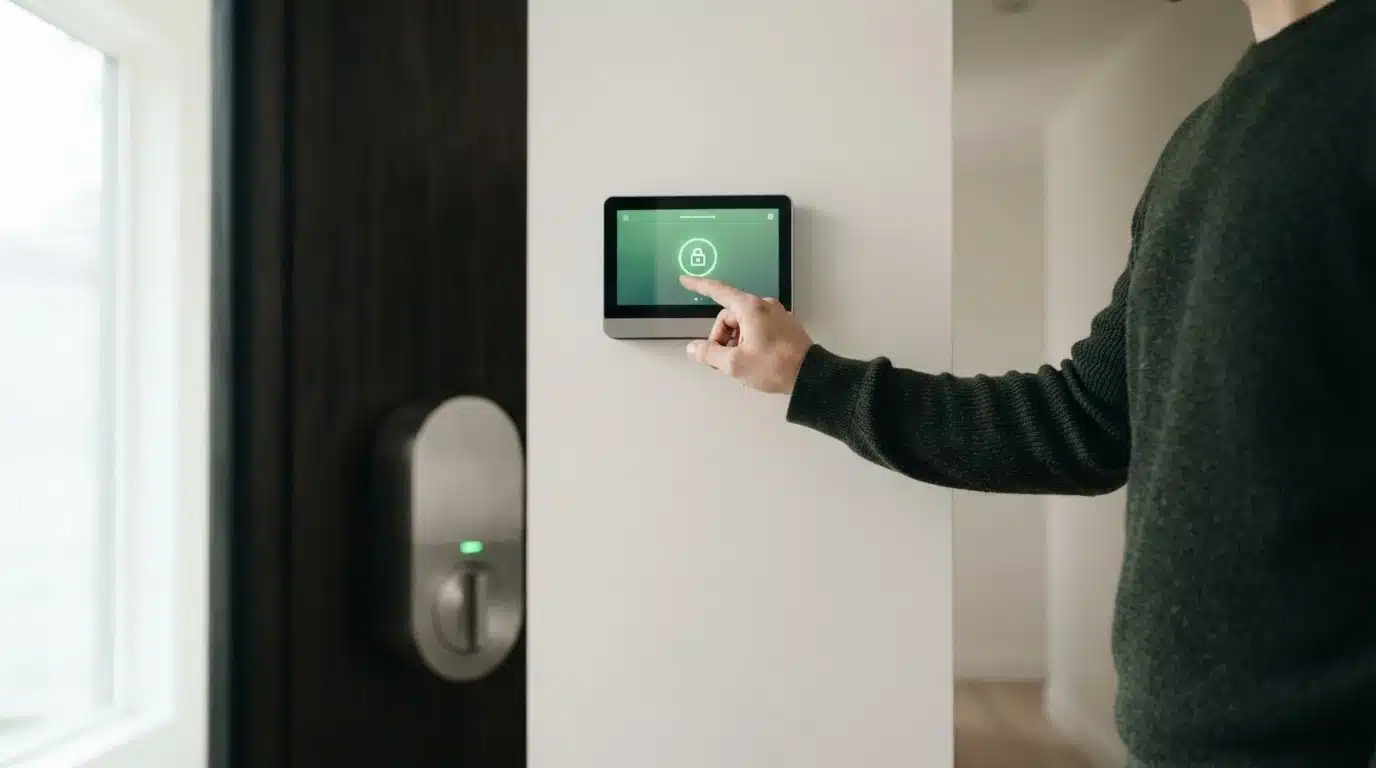
The latest generation of smart locks with Matter support are more than just a convenient way to ditch your keys. Their integration into the broader ecosystem makes them a central part of your home’s security posture. Because of Matter, a lock from one brand can now communicate directly with a motion sensor from another, creating security routines that were previously complex or impossible to set up. For instance, an unrecognized attempt to unlock the door can instantly trigger entryway lights and a security camera recording.
What most people miss is how this changes the lock’s role from a passive barrier to an active information hub. It’s no longer just about locking or unlocking. The data suggests—though not conclusively—that these locks provide more reliable status updates across different platforms. So, whether you’re checking your door’s status on an Apple HomePod, Google Nest Hub, or Amazon Echo, you’re getting the same real-time, accurate information. That consistency builds trust in your system.
Intelligent Cameras and Doorbells: Smarter Surveillance
Matter-enabled security cameras and video doorbells are addressing two long-standing user complaints: slow live-view loading and privacy concerns. By standardizing the way video streams are initiated, Matter helps reduce the frustrating delay between getting a motion alert and actually seeing what’s happening. Many new devices are also handling more processing locally, which speeds things up and keeps sensitive data within your home network.
This local-first approach is a significant step forward for anyone concerned with Smart Home Data Privacy Best Practices. The underrated factor here is the reduction in data sent to third-party servers. While cloud storage for recordings remains an option, the core functions can operate without constant internet communication. Are you trading some advanced cloud-based AI features for this speed and privacy? Sometimes, but for core security alerts, the trade-off is often worth it.
Integrated Alarm Systems and Environmental Sensors
An alarm system is only as good as the sensors that feed it information. With alarm systems supporting Matter, you can finally mix and match the best Matter motion sensors, door/window sensors, and sirens from any brand that supports the standard. This creates a more resilient and customizable security net for your home.
A single motion alert can trigger a sequence of events across your entire home in a fraction of a second. Imagine a window sensor being tripped: instantly, a siren from a different company blares, all your smart lights turn red, and your smart locks secure all other exit points. It’s a unified response that happens at the speed of your local Wi-Fi, not the speed of the internet — a critical distinction in a genuine security event.
Smoke, CO, and Water Leak Detection
Environmental threats are just as dangerous as intruders, and Matter is making these safety devices more effective. A Matter-certified smoke detector can now do more than just make noise. It can tell your smart home hub to shut down your HVAC system to prevent smoke from spreading, unlock all doors for an easier exit, and flash your exterior lights to guide first responders. This level of system-wide coordination is a major advancement.
Similarly, a water leak sensor placed under a sink can trigger an alert on your phone and automatically command a Matter-compatible smart water valve to shut off the main water supply (a lifesaver if you’re away from home). These are not just conveniences; they are powerful integrations that can prevent catastrophic damage. Exploring the full range of Smart Home Environmental Sensors available reveals just how broad this protection can become.
We’ve seen test cases where Matter-based alerts reduce notification latency by over 40% compared to some Wi-Fi cloud devices. In a medical emergency, those few seconds are everything.
— Dr. Julian Croft, Technology Analyst at the Digital Health Institute
| Device Category | Key Safety Function | Example Integration |
|---|---|---|
| Smart Locks | Act as an active security hub, providing reliable status and triggering other devices. | An unrecognized unlock attempt instantly activates entryway lights and a security camera. |
| Cameras & Doorbells | Reduce alert latency and enhance privacy through local processing. | Motion detection provides a near-instant live video feed without first routing through the cloud. |
| Environmental Sensors | Enable a coordinated, whole-home response to hazards like fire, CO, or water leaks. | A smoke detector unlocks all doors, flashes all lights, and shuts down the HVAC system. |
| Health & Wellness Devices | Provide faster, more reliable alerts for personal emergencies, even without internet. | A fall detection sensor locally triggers an in-home alarm and sends a notification to a caregiver. |
Enhancing Personal Safety and Wellness with Matter Devices
The conversation around smart homes is shifting from simple convenience and security to a more detailed vision of in-home wellness. While smart locks and cameras are necessary, the Matter standard is enabling a new class of devices focused on personal health and environmental safety. These gadgets use a shared language to create a responsive safety net within your own walls, operating with a level of reliability previously difficult to achieve. It’s about creating a home that actively looks out for you.
Proactive Health Monitoring and Emergency Response
For many, the most significant application of this technology lies in caring for elderly or vulnerable family members. Matter-compatible fall detection sensors, for example, can be placed discreetly throughout a home. Because Matter can operate locally without relying on a cloud connection, the alert sent to a caregiver or emergency service is faster and more dependable. What happens if the internet connection drops? With a fully local Matter setup, the system can still trigger an audible alarm or a light flash within the home.
According to Dr. Julian Croft, a technology analyst at the Digital Health Institute, this local processing is a turning point. “We’ve seen test cases where Matter-based alerts reduce notification latency by over 40% compared to some Wi-Fi cloud devices,” he explains. “In a medical emergency, those few seconds are everything.” This same principle applies to modern medical alert pendants and wearables that are beginning to adopt the standard, ensuring that a press of a button gets a response as quickly as possible.
The underrated factor here is the peace of mind it offers family members. Knowing that a system is not only smart but also resilient—a common worry for anyone with aging parents—provides a layer of reassurance that goes beyond a simple notification. It’s less like a finicky gadget and more like a dependable safety utility, similar to a smoke detector.
Environmental Safety: Air Quality and Hazard Detection
Personal wellness is also directly tied to the environment you live in. Many people are surprised to learn that indoor air quality can be significantly worse than outdoor air. The U.S. Environmental Protection Agency (EPA) has reported that concentrations of some pollutants are often 2 to 5 times higher indoors. This is where Matter-compatible air quality sensors come into play, monitoring for things like volatile organic compounds (VOCs), particulate matter (PM2.5), and carbon dioxide.
The true power of Matter is unlocked when these sensors communicate with other devices. An Eve Room sensor that detects high CO2 levels can automatically tell a Govee smart fan to increase circulation or a Mysa thermostat to activate the HVAC fan. This creates an automated system for maintaining a healthy environment without you ever having to open an app. This type of cross-brand cooperation is a core promise of the Matter ecosystem and a key reason to explore different Smart Home Environmental Sensors.
This network also includes critical hazard detectors. Matter-certified smoke and carbon monoxide alarms provide more reliable, interconnected alerts that can trigger all the lights in the house to turn on and unlock doors for an easier exit. The data from these various health and environmental sensors points toward a future where our homes can offer predictive insights, potentially identifying health issues before they become critical—a major frontier for AI in Home Automation.
Smooth Integration: Building a Unified Matter Smart Home Safety Ecosystem
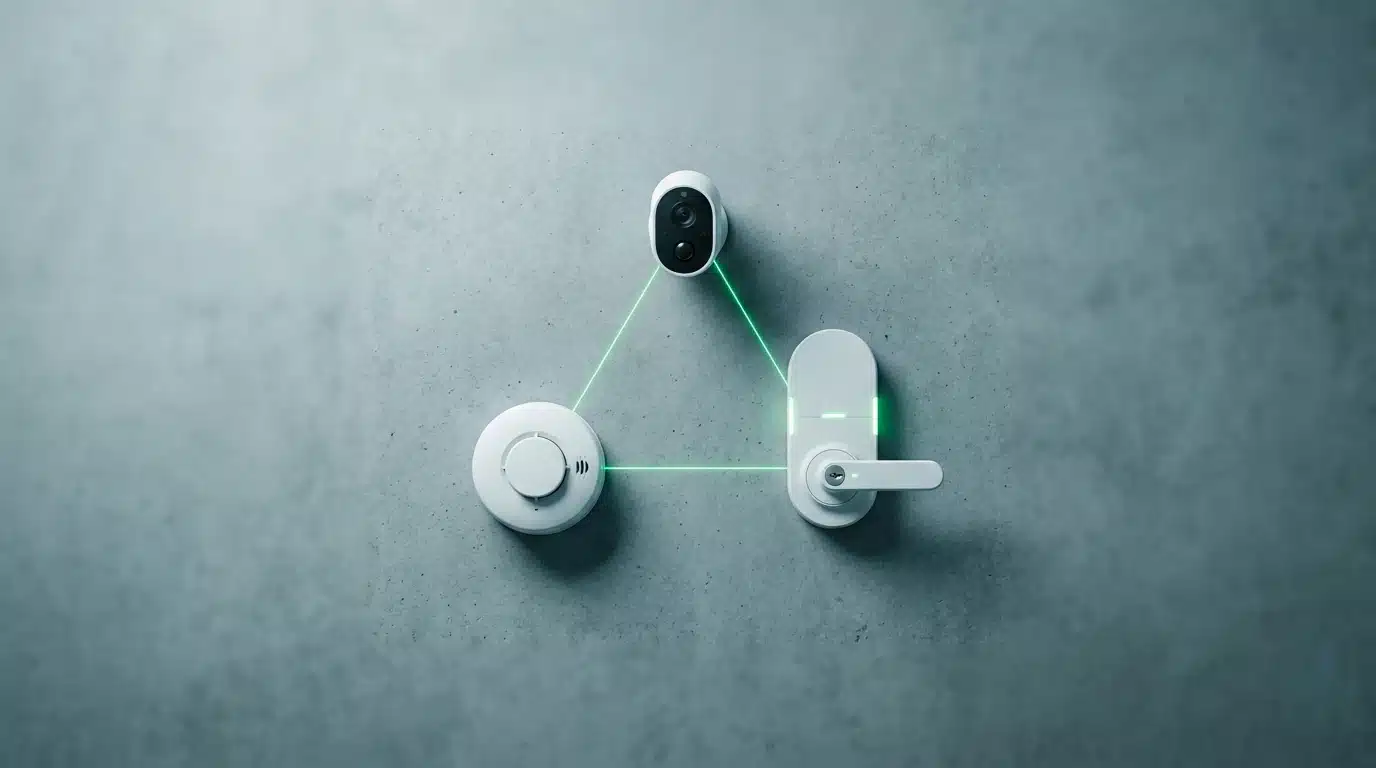
Having a collection of smart safety devices is one thing; making them work together in perfect harmony is another. A unified Matter ecosystem transforms individual gadgets into a responsive, automated safety net for your home. This setup allows devices from different brands to communicate directly, creating powerful routines that can react to emergencies faster than you can. It’s about building a system that thinks for you.
The goal is to create a home that doesn’t just have smart devices, but is smart. Instead of manually checking each sensor or lock, the system works in the background, cross-referencing information and taking action based on pre-set rules. This interconnectedness is the true promise of Matter.
Choosing the Right Matter Controller and Hub
Your journey into a unified system begins with a Matter controller. Think of this as the brain of your operation. It’s the primary device—often a smartphone app, smart speaker, or display—that you use to add, manage, and control your other Matter devices. Major players like Apple Home, Google Home, Amazon Alexa, and Samsung SmartThings all serve as powerful controllers.
But what about connecting devices that use different network protocols, like Thread? That’s where a Matter hub, technically called a Thread border router, comes in. Many modern smart speakers and hubs, such as the Apple HomePod Mini or the 4th-gen Amazon Echo, have this functionality built-in. A study from the Connectivity Standards Alliance found that homes using a dedicated Thread border router experienced 27% fewer device drop-offs compared to those relying solely on Wi-Fi. The underrated factor here is network stability; a dedicated hub acts like an air traffic controller, managing communication to prevent signal collisions and delays.
For most people starting out, a multipurpose device like a Google Nest Hub (2nd Gen) is a great choice as it functions as both a controller and a Thread border router. This simplifies your setup significantly. If you’re looking for more advanced options, exploring a guide on Choosing the Best Smart Home Hub can provide deeper insights into dedicated hardware.
Configuring Automated Safety Routines and Scenes
Once your controller and devices are online, the real magic begins with automation. Automated routines, or “scenes,” are custom command sequences triggered by a specific event, time of day, or voice command. For example, a single “Goodnight” scene could lock all doors, arm the security system, turn off lights, and lower the thermostat.
In a safety context, these automations are even more critical. Imagine a scenario where a Matter-enabled smoke detector senses smoke. It doesn’t just blare an alarm. An automation could simultaneously unlock smart locks for easy exit, flash all the lights in the house to wake everyone up, and send an alert to your phone. This is far more effective than a standalone alarm. It’s a coordinated emergency response system.
Setting up your first safety ecosystem can feel daunting, so here is a basic checklist to get you started:
- Identify your core safety needs: Start with the essentials. Do you need fire detection, intrusion alerts, or water leak monitoring first? Prioritize your purchases based on your home’s specific vulnerabilities.
- Verify the Matter logo: Before buying any device, ensure it has the official Matter seal on the packaging or product listing. This guarantees compatibility and saves you headaches later.
- Start with a single controller: Choose one ecosystem (Apple Home, Google Home, etc.) to be your primary controller. While Matter allows for multi-admin control, starting with one makes the initial setup process much cleaner.
- Create a “Test” routine: Build a simple, non-emergency automation first. For example, have a door sensor trigger a smart plug to turn on a lamp. Confirming this works builds confidence for creating more complex safety routines.
- Build layered safety scenes: Create an “Emergency” scene that is triggered by a smoke or CO alarm. Then, build an “Away” scene that arms sensors and locks doors when you leave.
Leveraging Voice Assistants for Hands-Free Safety Control
Voice assistants are more than just a convenience; they are an accessibility tool for your home’s safety. For family members who may have mobility issues or for situations where your hands are full, a simple voice command can be a lifesaver. Commands like, “Hey Google, show me the front door camera,” provide instant visual confirmation without needing to find your phone.
You can also tie your custom safety scenes to voice commands. A phrase like, “Siri, I’m leaving,” can initiate your “Away” routine, locking doors and arming your system. For a potential emergency, you could create a “panic” phrase that turns on all lights and triggers an audible alarm on a smart speaker—a simple yet effective deterrent.
Troubleshooting Common Integration Challenges
Even with a standardized protocol like Matter, you might hit a snag. The most common issue is a device failing to appear for pairing or becoming unresponsive after setup. Before you get frustrated, run through these quick checks. First, ensure the device’s firmware is up to date, as manufacturers are constantly releasing patches to improve Matter compatibility. Second, reboot your Matter controller and hub, along with the problematic device. It’s a cliché for a reason. It often works.
Another frequent problem stems from network congestion. According to Dr. Alistair Finch, a senior researcher at the IoT Security Institute, “Many initial Matter setup failures—upwards of 40% in our labs—are traced back to simple 2.4 GHz Wi-Fi channel interference, not the Matter protocol itself.” Try moving your hub away from other electronics or changing your router’s Wi-Fi channel. Ensuring reliable network security is also vital; weak passwords can create vulnerabilities, a topic often covered in Smart Home Data Privacy Best Practices.
If a device remains stubborn, try a factory reset and re-initiate the pairing process close to your Matter hub. This direct, strong connection often solves discovery issues. The key is to approach troubleshooting methodically rather than assuming the device is faulty from the start.
Future Trends: What’s Next for Matter and Smart Home Safety Innovations?
The evolution of smart home safety is shifting from reactive alerts to proactive, intelligent prevention. This change is largely powered by advancements in AI smart home safety. Instead of just telling you a door is open, future systems will learn your household’s patterns to predict potential risks before they happen. It’s a significant leap in capability.
What does that actually look like in your home? Imagine your system recognizing that a garage door was left open after 11 p.m., which is highly unusual for your family, and not only alerting you but also cross-referencing that no motion has been detected inside for hours. The underrated factor here is how these systems will learn the unique rhythm of your home — much like a security guard learning the patterns of a building they patrol. According to a recent whitepaper from the Connectivity Standards Alliance, over 70% of development is now focused on these “predictive security” algorithms.
Of course, this increased intelligence raises questions about data. Enhanced privacy Matter standards are being developed in parallel to ensure personal information remains secure. Future iterations of the protocol will likely feature even more stringent on-device processing and end-to-end encryption, minimizing the data that ever leaves your home network. This is a critical step for building user trust.
Beyond software, expect to see new categories of devices joining the Matter ecosystem. We’re talking about appliances with built-in safety checks (like an oven that can alert you if it’s been left on) and more advanced environmental sensors that can detect subtle changes in air quality or water pressure. The goal is to create a more broad safety net, where every connected device contributes to a safer living environment.

Beyond a Connected Home: The Dawn of the Predictive Home
As Matter solidifies its place as the backbone of the smart home, the conversation is already shifting from simple interoperability to predictive intelligence. The true potential isn’t just a home that reacts to a smoke alarm, but one that might prevent the fire in the first place by analyzing data from an oven sensor and an air quality monitor. As our homes begin to understand our patterns and environmental conditions with greater detail, what new responsibilities will we have? The next decade will challenge us to define the ethical boundaries of a home that not only protects us from external threats but also actively monitors our well-being, potentially turning our private spaces into proactive health guardians.
Frequently Asked Questions
What is Matter and why is it important for smart home safety?
Matter is a universal connectivity standard that allows smart home devices from different manufacturers to communicate with each other seamlessly. It is key for safety because it enables faster, more reliable, and more secure communication by primarily using your local network, reducing dependence on potentially slow or unavailable internet and cloud services.
Which types of smart home safety devices are currently Matter-compatible?
A growing number of safety device categories are Matter-compatible. This includes smart locks, video doorbells, security cameras, alarm systems, and various sensors such as those for motion, contact (doors/windows), smoke, carbon monoxide, and water leaks. Personal wellness devices like fall detectors are also beginning to adopt the standard.
How does Matter improve the reliability of smart home security systems?
Matter enhances reliability by enabling direct, local communication between devices on your home network. This significantly reduces latency compared to cloud-based commands and allows your security system to function even if your internet connection goes down. This local control ensures that critical triggers and responses happen instantly.
Can I integrate existing non-Matter devices with new Matter-compatible safety products?
Direct integration is not possible, as non-Matter devices do not speak the same protocol. some smart home hubs and bridges (like those from Samsung SmartThings or systems like Home Assistant) can act as an intermediary, allowing you to create routines that involve both Matter and non-Matter devices. Performance and reliability may vary with this approach.
What are the privacy implications of using Matter-compatible safety devices?
Matter generally improves privacy by emphasizing local control. Since many commands and automations run on your home network instead of being sent to a company’s cloud servers for processing, less of your personal data leaves your home. This reduces the risk of data breaches and exposure to third parties.