
Unlocking the Future: Matter Protocol’s Impact on 7 Smart Home Device Integration Trends for US Consumers in 2026
The smart home ecosystem has long been a fragmented landscape, a collection of disparate devices speaking different languages, often requiring multiple apps and complex setups. This fragmentation has been a significant barrier to widespread adoption and a source of frustration for early adopters. However, a seismic shift is underway, spearheaded by the introduction and rapid adoption of the Matter smart home trends protocol. By 2026, Matter is poised to fundamentally reshape how US consumers interact with their smart homes, ushering in an era of unprecedented interoperability, simplicity, and enhanced security.
This article dives deep into seven pivotal smart home device integration trends that will be profoundly influenced by the Matter protocol, offering a glimpse into the seamless, intuitive, and robust smart home experience awaiting US consumers in the near future. Understanding these Matter smart home trends is crucial for both consumers looking to upgrade their homes and manufacturers aiming to stay competitive in a rapidly evolving market.
Trend 1: Universal Interoperability Becomes the Standard
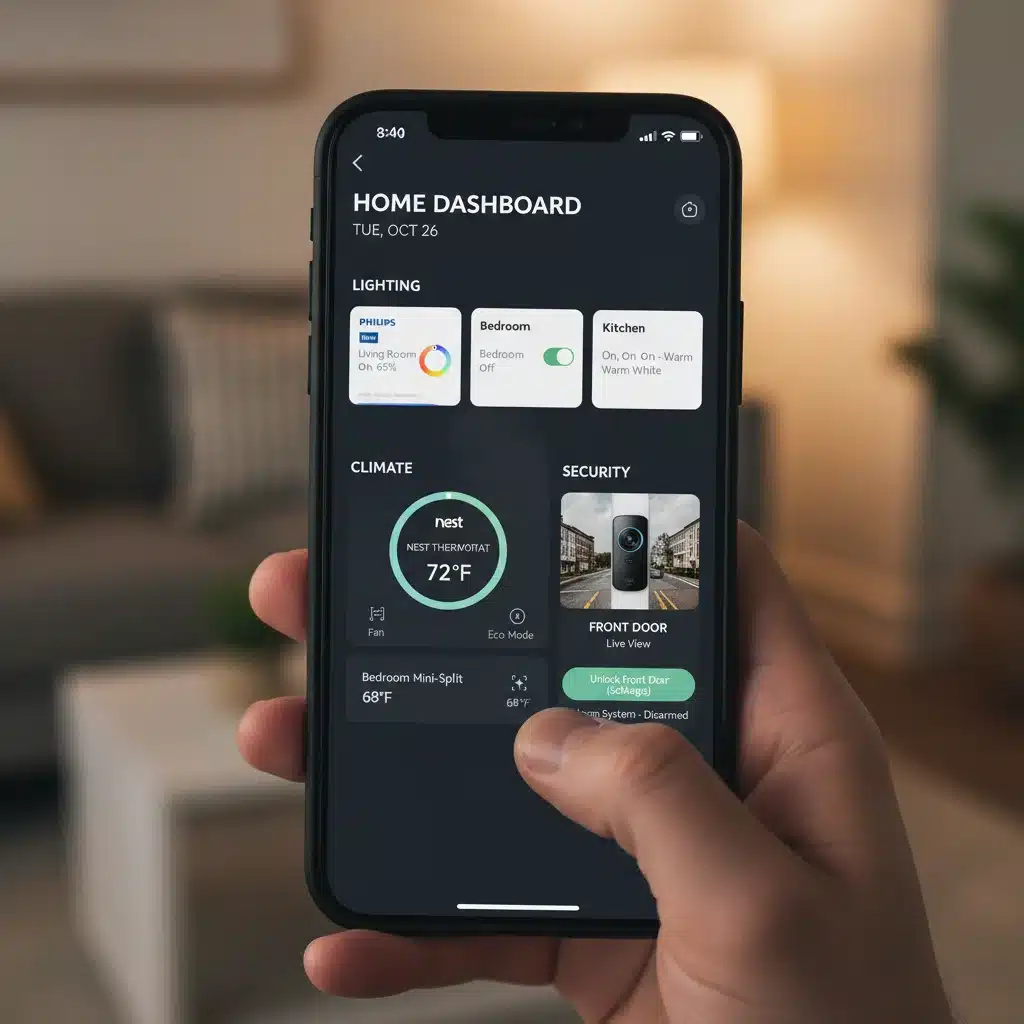
Perhaps the most significant promise of Matter is its commitment to universal interoperability. For years, consumers have grappled with the challenge of ensuring their smart devices from different brands could communicate. A Philips Hue light might not easily connect with a Google Nest thermostat, and an August smart lock might operate independently of an Apple HomeKit system. This siloed approach has led to consumer confusion, vendor lock-in, and a convoluted user experience.
By 2026, thanks to the widespread adoption of the Matter smart home trends, this will largely be a relic of the past. Matter acts as a unifying language, allowing devices from different manufacturers to communicate seamlessly, regardless of their underlying technology (Wi-Fi, Thread, or Ethernet). This means a single smart home hub or app will be able to control a diverse array of devices, simplifying setup and daily management. Consumers will no longer need to check compatibility lists or worry about ecosystem allegiances; if a device is Matter-certified, it will work with other Matter-certified devices. This shift will empower consumers to choose devices based on features, price, and aesthetic, rather than brand compatibility, fostering a truly open and competitive smart home market. The implications for innovation are immense, as manufacturers can focus on creating superior products rather than proprietary communication protocols.
Trend 2: Simplified Setup and Onboarding Experience
One of the biggest hurdles for new smart home users has been the often-complex and frustrating setup process. Pairing devices, connecting them to Wi-Fi, downloading multiple apps, and configuring routines can be a daunting task. Many potential smart home enthusiasts have been deterred by the initial friction.
Matter addresses this head-on with a dramatically simplified onboarding process. Devices will feature a universal QR code or numerical code that, once scanned by a Matter-compatible controller (like a smartphone app or smart speaker), will instantly add and configure the device to the network. This ‘plug-and-play’ functionality will significantly lower the barrier to entry for new users. Imagine buying a new smart bulb, scanning a code, and having it immediately recognized and controllable by your existing smart home system, without needing to download a new app or create another account. This streamlined experience will be a game-changer, accelerating the adoption of smart home technology across all demographics. The focus shifts from technical configuration to immediate utility, making smart homes more accessible and enjoyable. This simplified setup is a cornerstone of the evolving Matter smart home trends, making technology work for people, not the other way around.
Trend 3: Enhanced Security and Privacy by Design
Concerns about security breaches and data privacy have been a persistent shadow over the smart home industry. With more devices connected to the internet, the attack surface grows, and consumers worry about their personal data being compromised or their homes being vulnerable to cyber threats. The fragmentation of past systems also made security patching and updates inconsistent.
Matter is built with security and privacy as core tenets. It leverages robust, industry-standard cryptographic techniques for secure communication between devices. All Matter devices are required to meet stringent security certifications, ensuring that they are protected against common vulnerabilities. Furthermore, Matter’s local control capabilities mean that many commands and automations can occur entirely within the local network, reducing reliance on cloud services and minimizing data exposure to the internet. This local-first approach enhances both speed and privacy. For US consumers, this means greater peace of mind, knowing that their smart home ecosystem is designed from the ground up to be secure and that their personal data is better protected. The transparency and accountability built into the Matter standard will also push manufacturers to prioritize security updates and long-term support, a crucial aspect of responsible device ownership. This focus on security is a vital component of the future Matter smart home trends.
Trend 4: Accelerated Adoption of Thread Networking
While Wi-Fi has been the dominant wireless technology for many smart home devices, it can be power-intensive and sometimes struggles with mesh networking for smaller, battery-powered sensors. Bluetooth is great for short-range connections but lacks the scalability for a whole home. Thread, a low-power, self-healing mesh networking protocol, offers a compelling alternative, particularly for battery-operated devices.
Matter explicitly supports Thread, and its widespread adoption will significantly accelerate Thread’s integration into smart homes by 2026. This means more reliable connections for devices like door sensors, motion detectors, and smart buttons, which can operate for years on a single battery. Thread’s mesh capabilities ensure that if one device goes offline, others can route around it, maintaining network stability. For consumers, this translates to more responsive devices, fewer dropped connections, and longer battery life for their sensors and accessories. The synergy between Matter and Thread creates a robust, efficient, and scalable foundation for the next generation of smart home devices, allowing for larger and more complex smart home setups without performance degradation. This fundamental shift in networking protocols is a key driver of the upcoming Matter smart home trends, enhancing reliability and efficiency.
Trend 5: Deeper Integration with Voice Assistants and AI
Voice assistants like Amazon Alexa, Google Assistant, and Apple Siri have become integral to many smart homes, offering a natural and intuitive way to control devices. However, their integration capabilities have often been limited by the underlying device compatibility. A voice command might work for one brand of light but not another, even if both are connected to the same assistant.
Matter’s universal language will enable much deeper and more consistent integration with these voice assistants by 2026. Because all Matter-certified devices will communicate using a common standard, voice assistants will be able to control a far broader range of devices with greater reliability and consistency. This means more seamless voice control over lights, thermostats, locks, and even appliances, regardless of their manufacturer. Furthermore, as AI capabilities advance, Matter’s unified data structure will provide richer context for these assistants, allowing for more intelligent and proactive automations. Imagine your smart home anticipating your needs based on learned patterns and environmental data, all orchestrated through Matter and responded to via your voice assistant. This level of intelligent automation, fueled by unified device communication, is a significant aspect of future Matter smart home trends.
Trend 6: Emergence of ‘Smart Home as a Service’ (SHaaS)
With the complexities of smart home setup and ongoing management, a new business model is emerging: Smart Home as a Service (SHaaS). This involves service providers (e.g., internet service providers, utility companies, security companies) offering pre-configured, managed smart home systems to consumers, often bundled with other services.
Matter will significantly accelerate the growth of SHaaS by 2026. The protocol’s simplified setup, universal interoperability, and enhanced security make it far easier for service providers to deploy and manage large numbers of diverse smart home devices for their customers. They can offer curated packages of Matter-certified devices, knowing they will all work together flawlessly. This reduces installation costs and support overhead for the providers, while offering consumers a hassle-free, professionally managed smart home experience. For many US consumers who desire the benefits of a smart home but lack the technical expertise or time for self-installation, SHaaS will be an attractive option. This trend democratizes smart home technology, making it accessible to a wider audience and further embedding Matter smart home trends into everyday life.
Trend 7: Focus on Energy Efficiency and Sustainability
As climate change concerns grow and energy costs fluctuate, consumers are increasingly looking for ways to make their homes more energy-efficient and sustainable. Smart home technology has a significant role to play in this, but fragmented systems have often hindered comprehensive energy management.
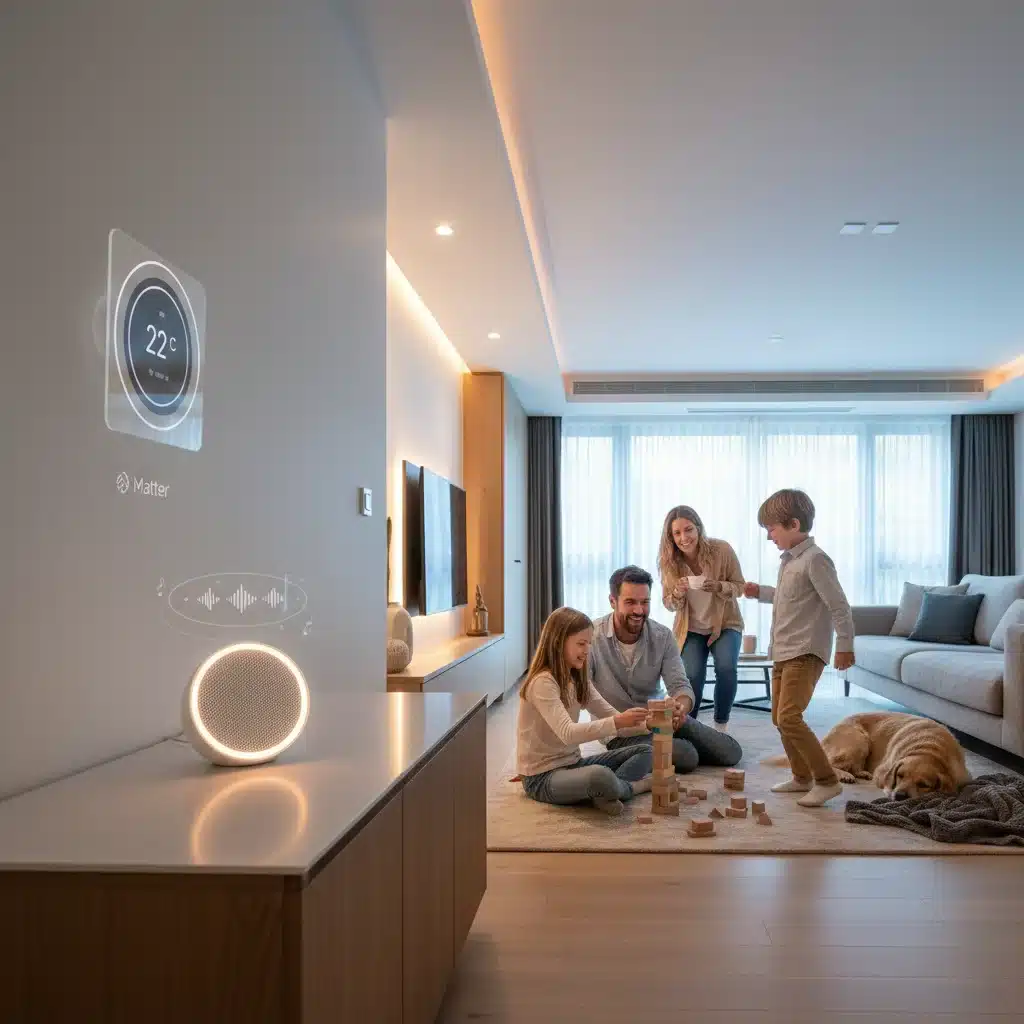
By 2026, Matter will empower a new wave of energy efficiency and sustainability initiatives within the smart home. Because Matter enables seamless communication between devices like smart thermostats, lighting systems, smart plugs, and even large appliances, a truly holistic energy management system becomes possible. Consumers will be able to monitor energy consumption across all their devices from a single dashboard, identify energy vampires, and create sophisticated automations to optimize usage. For example, a Matter-enabled system could automatically adjust heating/cooling based on occupancy sensors, turn off lights in empty rooms, and even communicate with the utility grid for demand response programs. This level of integrated control, facilitated by Matter’s interoperability, will not only save consumers money but also contribute to a greener future. The ability to easily integrate and manage energy-monitoring and energy-saving devices is a crucial and impactful aspect of the evolving Matter smart home trends.
Conclusion: The Dawn of a Truly Smart Home Era
The smart home market has been on a trajectory of steady growth, but the introduction of the Matter protocol marks an inflection point. By 2026, the seven trends outlined above – universal interoperability, simplified setup, enhanced security, accelerated Thread adoption, deeper voice assistant integration, the rise of SHaaS, and a strong focus on energy efficiency – will have fundamentally transformed the smart home experience for US consumers. The days of frustration, incompatibility, and security concerns will increasingly be replaced by a vision of seamless, intuitive, and secure home automation.
Matter isn’t just another protocol; it’s a foundational shift that promises to unlock the full potential of the smart home. It empowers consumers with choice, simplifies technology, and ensures a more reliable and private experience. Manufacturers, in turn, are given a clear path to innovation and broader market reach. As these Matter smart home trends solidify, we can anticipate a future where our homes are not just connected, but truly intelligent, responsive, and seamlessly integrated into our lives, making everyday living more convenient, comfortable, and sustainable. The era of the truly smart home is not just on the horizon; it is rapidly becoming a reality, largely thanks to the unifying power of Matter.