Smart Home Security: 5 Vulnerabilities to Patch in 2026
The evolving landscape of connected living demands vigilance, and understanding the top 5 smart home security system vulnerabilities to patch in 2026 is crucial for safeguarding your digital sanctuary against sophisticated cyber threats.
As our homes become increasingly connected, the convenience of smart devices brings a new frontier of security challenges. This insider’s guide will delve into the top 5 smart home security system vulnerabilities to patch in 2026, offering actionable strategies to fortify your digital defenses and ensure your connected living remains private and secure.
Outdated Firmware and Software Exploits
One of the most persistent and critical vulnerabilities in smart home security systems stems from outdated firmware and software. Manufacturers frequently release updates to address newly discovered security flaws, improve performance, and add new features. However, many users neglect to install these updates promptly, leaving their devices open to known exploits that cybercriminals actively scan for.
The year 2026 will see an increase in targeted attacks leveraging these outdated systems. From smart cameras to thermostats, every connected device running old software becomes a potential entry point for malicious actors. Proactive patching is not just a recommendation; it’s a fundamental requirement for digital defense.
The Perils of Neglected Updates
Ignoring firmware updates is akin to leaving your front door unlocked. Attackers can exploit these vulnerabilities to gain unauthorized access, steal data, or even hijack your devices for broader botnet attacks. The consequences can range from privacy breaches to physical security compromises if your smart locks or alarm systems are affected.
- Unpatched vulnerabilities create backdoors for hackers.
- Outdated software can lead to data theft and privacy invasion.
- Compromised devices can be used in larger cyberattacks.
Staying on top of updates requires a systematic approach. Enable automatic updates whenever possible, and regularly check manufacturer websites for manual updates if automatic options aren’t available. A small investment of time can prevent significant security headaches.
In conclusion, the prevalence of outdated firmware and software remains a significant threat. Users must prioritize regular updates to ensure their smart home devices are protected against the latest known exploits, thereby closing a primary avenue for cyberattacks.
Weak Default Passwords and Authentication Gaps
Another prevalent vulnerability that continues to plague smart home security systems is the use of weak default passwords and inadequate authentication mechanisms. Many devices ship with easily guessable default credentials, and users often fail to change them, creating an open invitation for attackers.
By 2026, automated tools will be even more sophisticated at identifying and exploiting these common password weaknesses. Beyond default passwords, authentication gaps, such as reliance on single-factor authentication or poorly implemented biometric security, present additional risks that hackers are keen to exploit.
Strengthening Your Digital Gates
The first line of defense against unauthorized access is robust password hygiene. Every smart device, router, and hub should have a unique, strong password. Multi-factor authentication (MFA) should be enabled wherever available, adding an extra layer of security that significantly deters attackers.
- Change all default passwords immediately after setup.
- Use strong, unique passwords for each device and service.
- Enable multi-factor authentication (MFA) whenever offered.
Beyond passwords, evaluate the authentication methods of your smart devices. Are they relying solely on a PIN, or do they offer more secure options like biometric scans or secure tokens? Understanding these gaps is key to shoring up your defenses. A compromised password on one device could potentially grant access to your entire smart home ecosystem.
To summarize, weak default passwords and insufficient authentication protocols are critical vulnerabilities. Adopting strong password practices and leveraging multi-factor authentication are essential steps to close these security gaps and protect your smart home from intrusion.
Insecure Network Configurations and Wi-Fi Vulnerabilities
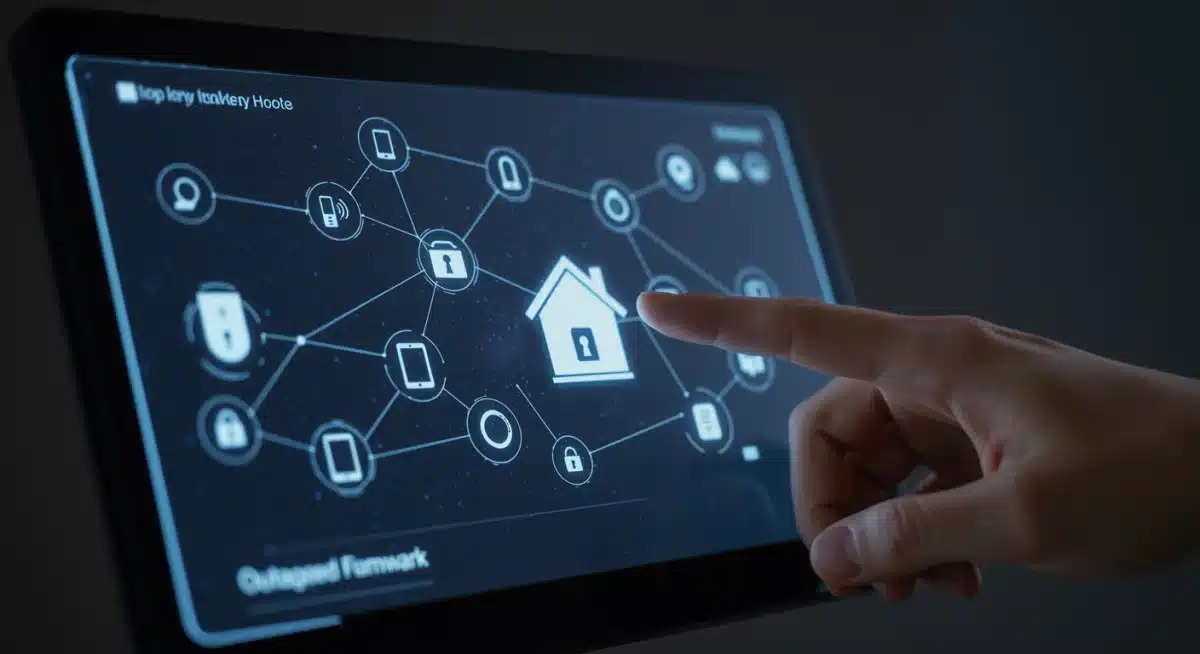
The foundation of any smart home is its network, and an insecure network configuration can expose all connected devices to risk. Many users overlook basic network security practices, leaving their Wi-Fi vulnerable to eavesdropping, unauthorized access, and denial-of-service attacks.
In 2026, with the proliferation of personal IoT devices, the attack surface expands. Untrained users often leave their home networks wide open, utilizing outdated encryption protocols or failing to segment their networks. This creates a single point of failure where a breach in one device can compromise the entire home network.
Securing Your Home Network Perimeter
Implementing strong Wi-Fi encryption (WPA3 is ideal, WPA2-AES is the minimum), changing default router credentials, and creating a separate guest network are fundamental steps. For advanced users, network segmentation, placing smart devices on a separate VLAN, can isolate potential threats.
- Use strong Wi-Fi encryption (WPA3 or WPA2-AES).
- Change default router usernames and passwords.
- Create a separate guest network for visitors.
- Consider network segmentation for IoT devices.
Regularly reviewing your router’s security settings and ensuring its firmware is up-to-date are also crucial. Attackers can exploit vulnerabilities in router software to gain control of your entire network, bypassing individual device security measures. A secure network acts as a robust perimeter, protecting all your smart devices within.
In essence, insecure network configurations and Wi-Fi vulnerabilities represent a significant threat to smart home security. Strengthening your network’s perimeter through robust encryption, unique credentials, and segmentation is vital for comprehensive digital defense.
Lack of Device Lifecycle Security and End-of-Life Support
As smart home technology rapidly advances, many devices suffer from a critical vulnerability: a lack of comprehensive device lifecycle security and premature end-of-life (EOL) support. Manufacturers may cease providing security updates or technical support for older models, leaving them permanently vulnerable to new exploits.
By 2026, the volume of EOL smart devices will be substantial, creating a vast landscape of unpatchable entry points for cybercriminals. Consumers often continue using these devices, unaware of the inherent risks, or find it uneconomical to replace perfectly functional but insecure hardware.
Navigating the EOL Challenge
Understanding a device’s expected support lifecycle before purchase is becoming increasingly important. Consumers should prioritize brands with a strong commitment to long-term security updates. When a device reaches EOL, the safest course of action is to replace it or, if absolutely necessary, isolate it on a segmented network with strict firewall rules.
- Research manufacturer’s security update policies before buying.
- Plan for device replacement when EOL is announced.
- Isolate EOL devices on a separate, restricted network.
The industry needs to address this issue more proactively, perhaps through longer guaranteed support periods or clearer EOL communication. For users, awareness and proactive planning are the best defenses. Continuing to use unsupported devices is a significant risk that can undermine the security of your entire smart home.
To conclude, the absence of robust device lifecycle security and inadequate end-of-life support create persistent smart home vulnerabilities. Consumers must be diligent in understanding and managing the support status of their devices to maintain a secure environment.
Insufficient Data Encryption and Privacy Concerns
The sheer volume of data collected and transmitted by smart home devices raises significant privacy concerns, especially when insufficient data encryption is employed. From voice commands to video feeds, this data can be intercepted and exploited if not properly secured during transit and at rest.
In 2026, with advanced data analysis capabilities, even seemingly innocuous data points can be pieced together to create detailed profiles of users. Lack of end-to-end encryption, insecure cloud storage, and opaque data handling policies from manufacturers represent critical vulnerabilities that compromise user privacy and security.
Protecting Your Digital Footprint
Consumers should scrutinize the privacy policies of smart device manufacturers and select products that prioritize robust encryption for data in transit and at rest. Opting out of unnecessary data collection, understanding how your data is used, and regularly reviewing privacy settings are crucial steps.
- Choose devices with strong data encryption (end-to-end where possible).
- Review and understand manufacturer privacy policies.
- Opt out of unnecessary data collection features.
- Regularly check and adjust privacy settings on all devices.
Furthermore, using a VPN on your home network can add an extra layer of encryption for all internet traffic, further safeguarding your data from potential interception. The principle here is to minimize your digital footprint and ensure that any data shared is done so securely and intentionally.
In summary, insufficient data encryption and privacy vulnerabilities pose a direct threat to personal information within smart homes. Prioritizing devices with strong encryption and adopting vigilant privacy practices are essential for safeguarding your digital footprint.
The Rise of AI-Powered Attacks and Advanced Persistent Threats
Looking ahead to 2026, one of the most sophisticated and challenging vulnerabilities will be the emergence of AI-powered attacks and advanced persistent threats (APTs) specifically targeting smart home ecosystems. These attacks leverage machine learning to adapt, evade detection, and exploit complex chains of vulnerabilities.
Traditional signature-based security solutions may struggle against these dynamic threats. AI can be used to automate reconnaissance, identify zero-day exploits, and launch highly personalized phishing campaigns tailored to smart home users. APTs, often state-sponsored or highly organized, aim for long-term infiltration and data exfiltration.
Countering Intelligent Adversaries
Defending against AI-powered attacks requires a multi-layered approach that includes AI-driven security solutions capable of anomaly detection and behavioral analysis. Regular security audits, penetration testing (if feasible for advanced users), and staying informed about emerging threat intelligence are paramount.
- Utilize security solutions with AI-driven threat detection.
- Conduct regular security audits of your smart home network.
- Stay updated on the latest cyber threat intelligence.
- Consider professional cybersecurity consultation for complex setups.
Furthermore, maintaining a robust overall security posture, encompassing all the previously discussed points, makes your smart home a less attractive target. A strong defense in depth strategy is the best way to deter and mitigate these advanced threats. The battle against AI-powered attacks will be ongoing, requiring continuous adaptation and vigilance.
To conclude, the advent of AI-powered attacks and APTs introduces a new level of sophistication to smart home vulnerabilities. A proactive, adaptive, and multi-layered security strategy is crucial to effectively counter these intelligent adversaries in 2026 and beyond.
| Vulnerability | Patching Strategy |
|---|---|
| Outdated Firmware | Enable automatic updates; regularly check for manual firmware patches. |
| Weak Passwords | Change all default passwords; use strong, unique passwords and MFA. |
| Insecure Network | Use WPA3/WPA2-AES; segment network for IoT devices; update router firmware. |
| Lack of EOL Support | Plan for device replacement; isolate unsupported devices on a separate network. |
Frequently Asked Questions About Smart Home Security
Firmware updates often contain critical security patches that fix newly discovered vulnerabilities. Neglecting these updates leaves your smart devices exposed to known exploits, making them easy targets for cybercriminals seeking unauthorized access to your home network and personal data.
Use a password manager to generate and store unique, complex passwords for each device. Aim for a mix of uppercase and lowercase letters, numbers, and symbols. Avoid using personal information or easily guessable sequences. Enable multi-factor authentication (MFA) whenever possible for an extra layer of security.
Yes, creating a separate network (often called a guest network or IoT VLAN) for your smart devices isolates them from your main home network. If a smart device is compromised, the attacker gains access only to that segmented network, preventing them from reaching your computers, phones, or sensitive personal data.
When a smart device reaches EOL, the manufacturer stops providing security updates, making it increasingly vulnerable. The safest option is to replace the device. If replacement isn’t immediately possible, isolate it on a separate, firewalled network to minimize its potential impact on your overall home security.
AI-powered attacks can dynamically adapt to bypass traditional defenses, identify zero-day exploits, and craft highly convincing phishing attempts. They can automate reconnaissance and exploit complex vulnerability chains, making them harder to detect and mitigate than conventional cyber threats. Advanced security solutions are needed to counter them.
Conclusion
Navigating the complex landscape of smart home security in 2026 demands a proactive and informed approach. By understanding and addressing the top 5 smart home security system vulnerabilities to patch in 2026—outdated firmware, weak authentication, insecure networks, lack of EOL support, and insufficient data encryption—homeowners can significantly bolster their digital defenses. The evolving threat of AI-powered attacks further underscores the need for continuous vigilance and adaptation. Protecting your connected sanctuary is an ongoing commitment, ensuring that convenience doesn’t come at the cost of your privacy and safety.