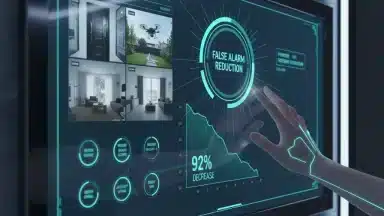
In an increasingly interconnected world, the mechanisms we use to protect our most valuable assets — our homes, businesses, and loved ones — are constantly evolving. As we look towards 2026, the debate between smart locks and traditional locks is more pertinent than ever. This comprehensive analysis delves deep into the security implications, technological advancements, and financial considerations of both systems, aiming to provide a clear roadmap for consumers and businesses navigating their security choices. Our goal is to offer a 2026 security analysis that not only compares these options but also highlights the potential for 15% better protection through informed decisions and strategic implementation.
The Evolving Landscape of Home and Business Security
For centuries, the traditional lock and key have been the bedrock of physical security. Simple, robust, and familiar, they have served humanity well. However, the 21st century has introduced a new paradigm: the smart lock. These devices integrate with existing smart home ecosystems, offering features like remote access, keyless entry, and activity logs. The question is no longer just "Is it secure?" but "How secure is it, and what else can it do?" This article will provide a detailed smart locks analysis, examining their strengths and weaknesses against their traditional counterparts.
Defining Traditional Locks: The Enduring Legacy
Traditional locks, at their core, rely on a physical mechanism — pins, tumblers, levers, or wafers — that must be precisely aligned by a corresponding key to allow access. They are tangible, mechanical, and operate independently of any power source or network connection. Common types include deadbolts, knob locks, padlocks, and mortise locks. Their simplicity is their strength, making them generally immune to cyber threats and EMPs (electromagnetic pulses).
The primary vulnerabilities of traditional locks stem from physical manipulation: picking, bumping, drilling, or forced entry. Their security level is largely dependent on the quality of their construction, the material strength, and the installation integrity. A high-quality, properly installed deadbolt, for instance, offers significant resistance to brute-force attacks. However, the loss or theft of a physical key immediately compromises security, often necessitating expensive rekeying or lock replacement.
Defining Smart Locks: The Dawn of Digital Access
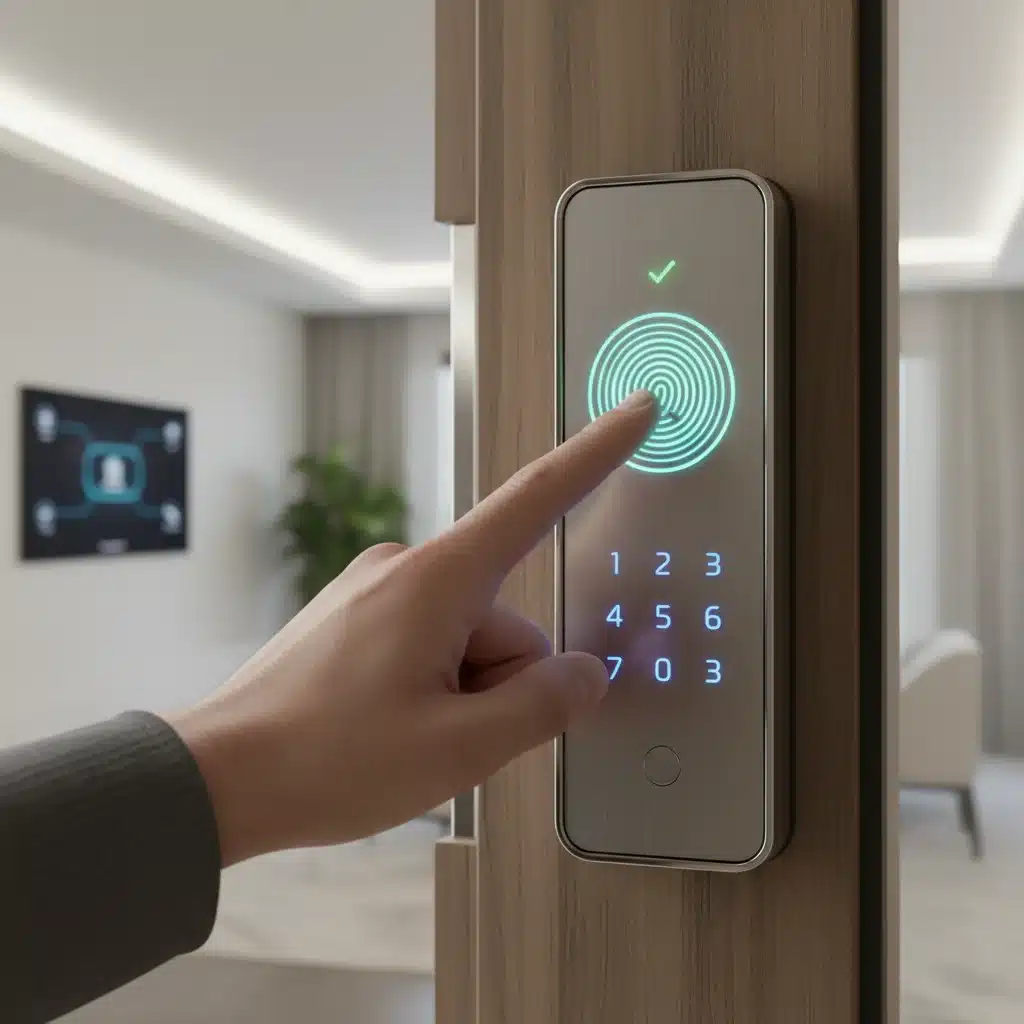
Smart locks represent a technological leap, incorporating electronic components and connectivity features. They replace or augment traditional keyholes with keypads, biometric scanners (fingerprint, facial recognition), Bluetooth, Wi-Fi, Z-Wave, or Zigbee modules. Users can unlock doors via smartphones, voice commands, or unique codes. Beyond mere access, smart locks offer enhanced functionalities such as:
- Remote Access Control: Granting or revoking access from anywhere in the world.
- Activity Logs: Tracking who enters and exits, and when.
- Temporary Access Codes: Providing time-sensitive access for guests or service providers.
- Integration with Smart Home Systems: Automating lighting, thermostats, and security cameras upon entry or exit.
- Notifications: Receiving alerts for suspicious activity or when specific individuals arrive.
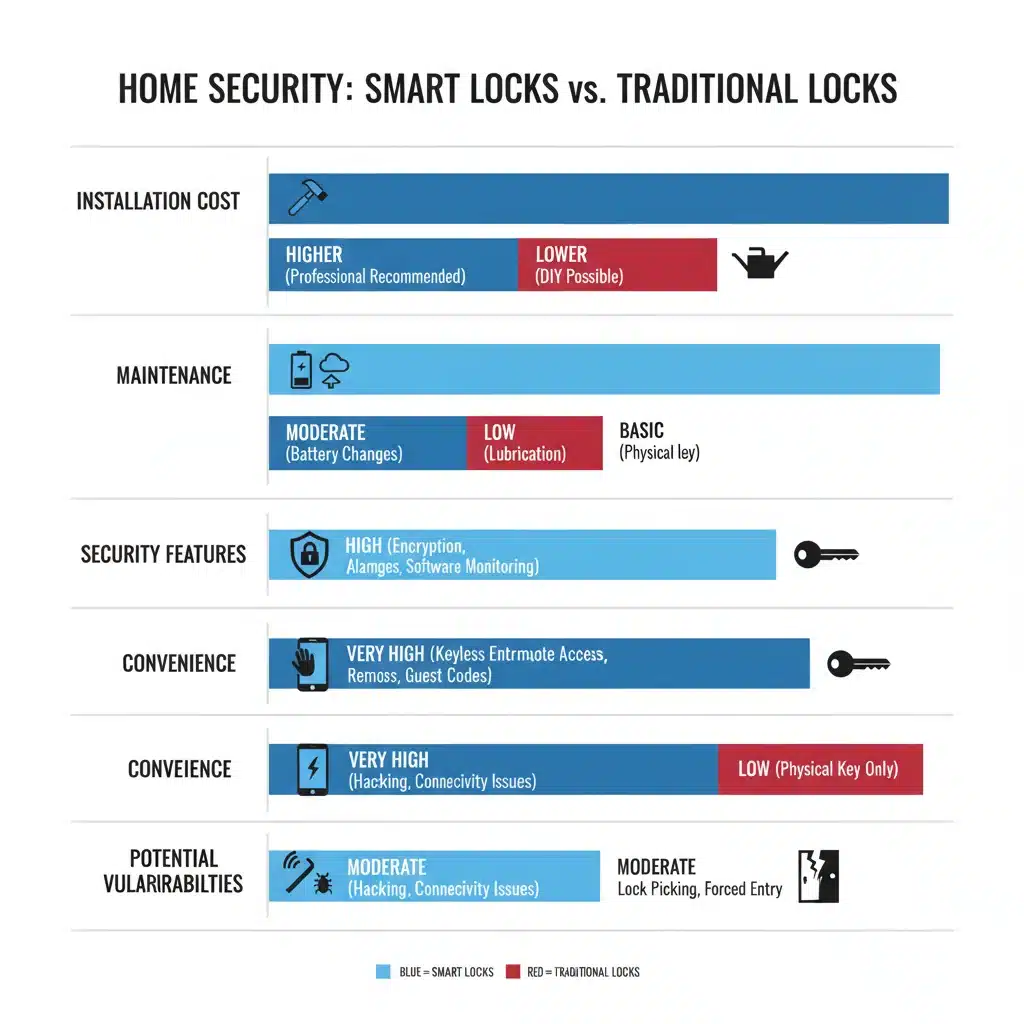
The security of smart locks is multifaceted, encompassing both physical robustness and digital resilience. While they still require a sturdy mechanical component, their digital interfaces introduce new vectors for attack, including hacking, data breaches, and network vulnerabilities. The smart locks analysis must therefore consider both spheres of security.
2026 Security Analysis: Smart Locks vs. Traditional Locks
To truly understand the protective capabilities of each system in 2026, we must conduct a detailed smart locks analysis across several critical dimensions.
Physical Security: The First Line of Defense
Both smart and traditional locks serve as physical barriers. The quality of materials and construction remains paramount for both. High-security traditional locks often feature hardened steel components, anti-drill plates, and complex keyways designed to resist manipulation. Similarly, reputable smart lock manufacturers build their devices with robust housings and strong locking mechanisms that meet or exceed industry standards (e.g., ANSI Grade 1, BHMA certified).
Traditional Lock Strengths:
- Mechanical Simplicity: No electronic components to fail or be hacked.
- EMP Resistance: Unaffected by electromagnetic pulses.
- Cost-Effective Physical Upgrades: A high-quality deadbolt can be relatively inexpensive.
Traditional Lock Weaknesses:
- Vulnerability to Picking/Bumping: Unless specifically designed to resist these techniques.
- Key Duplication: Keys can be easily copied if not restricted.
- Lost Keys: Requires rekeying or replacement, leaving a vulnerability until addressed.
Smart Lock Strengths:
- Tamper Alerts: Many smart locks send notifications if tampering is detected.
- Robust Construction: Leading brands often match or exceed the physical strength of traditional locks.
- Keyless Convenience: Eliminates the risk of lost physical keys.
Smart Lock Weaknesses:
- Power Dependency: Requires batteries or external power, which can fail.
- Complex Failure Points: More components mean more potential points of failure.
Digital Security: The New Battleground
This is where smart locks introduce an entirely new dimension of security — and vulnerability. As of 2026, cybersecurity is no longer an abstract concept but a daily concern for connected devices. A thorough smart locks analysis must scrutinize their digital resilience.
Smart Lock Digital Strengths:
- Encryption: Data transmitted between the lock, app, and cloud is typically encrypted (AES 128-bit or higher).
- Multi-Factor Authentication (MFA): Many apps support MFA, adding layers of security.
- Firmware Updates: Manufacturers regularly release updates to patch vulnerabilities.
- Activity Logs: Provides an audit trail of access events.
- Remote Disablement: Ability to remotely disable lost or stolen devices/credentials.
Smart Lock Digital Weaknesses:
- Hacking: Vulnerable to network attacks, brute-force attacks on passcodes, or exploitation of software flaws.
- Data Breaches: Cloud-based systems can be targets for data theft.
- Network Vulnerabilities: Weak Wi-Fi passwords or unsecured home networks can compromise the lock.
- Phishing/Social Engineering: Users can be tricked into revealing access codes.
- Interoperability Risks: Integration with other smart home devices can introduce shared vulnerabilities.
Traditional locks, by their nature, are immune to these digital threats. This stark contrast is a key point in our smart locks analysis.
Convenience and User Experience
Beyond security, convenience is a major driver for smart lock adoption. The ability to unlock a door with a smartphone, grant temporary access to a delivery person, or check if the door is locked from a distance offers unparalleled ease of use.
Smart Lock Convenience:
- Keyless entry (codes, biometrics, phone app).
- Remote management.
- Automated locking/unlocking.
- Integration with voice assistants.
Traditional Lock Convenience:
- Simple, tactile operation.
- No power source required.
The trade-off for this convenience in smart locks is often a steeper learning curve, potential technical glitches, and reliance on technology that might not always be flawless.
Reliability and Durability
Traditional locks, with fewer moving parts and no electronics, generally boast high reliability and longevity, often lasting decades with minimal maintenance. Smart locks, while increasingly robust, are subject to battery life, software bugs, and the lifespan of electronic components. However, advancements in battery technology and self-diagnostics are continuously improving their reliability.
Cost Analysis: Initial Investment vs. Long-Term Value
The financial impact is a crucial aspect of this smart locks analysis. The upfront cost of smart locks is significantly higher than that of traditional locks.
Traditional Locks:
- Initial Cost: £20 – £150 for a high-quality deadbolt.
- Installation: Often DIY or low-cost professional installation.
- Maintenance: Minimal, occasional lubrication.
- Rekeying: £50 – £150 per lock.
- Key Duplication: £5 – £20 per key.
Smart Locks:
- Initial Cost: £100 – £400+, depending on features and brand.
- Installation: Can be DIY for basic models, but professional installation might be preferred for complex integrations.
- Maintenance: Battery replacement (every 6-12 months, £5 – £20), firmware updates.
- Subscription Fees: Some advanced features (e.g., cloud storage for video doorbells, extended activity logs) may require monthly subscriptions (£5 – £20/month).
- Potential Repair/Replacement: Electronic components can fail, leading to higher repair costs or full replacement.
While the initial outlay for smart locks is higher, their long-term value can be substantial. The ability to avoid rekeying costs due to lost keys, the potential for reduced insurance premiums (some providers offer discounts for smart home security), and the added convenience and control can offset the initial investment over time. For businesses, the efficiency gains from remote access management and detailed audit trails can lead to significant operational savings.
Achieving 15% Better Protection by 2026: A Strategic Approach
The claim of "15% better protection" isn’t about one lock being inherently superior to another across all metrics, but rather about leveraging the strengths of modern security solutions and integrating them intelligently. It’s about a holistic approach that considers both physical and digital safeguards.
For Homeowners:
- Hybrid Security: Combining a high-security traditional deadbolt with a smart lock (e.g., a smart deadbolt that still accepts a physical key) offers redundancy.
- Network Hardening: Securing your home Wi-Fi network with strong passwords, WPA3 encryption, and regular router updates.
- Multi-Factor Authentication: Always enable MFA for smart lock apps and associated accounts.
- Regular Updates: Ensure your smart lock’s firmware is always up-to-date.
- Awareness and Education: Understanding common phishing tactics and social engineering scams.
- Integration with Other Security Systems: Connecting smart locks with security cameras, alarm systems, and motion sensors for a layered defense.
For Businesses:
- Access Control Systems: Smart locks are integral to modern access control, allowing granular permissions for employees and contractors.
- Audit Trails: Detailed logs provide invaluable data for security investigations and compliance.
- Centralized Management: Managing multiple entry points from a single dashboard improves efficiency and response times.
- Cybersecurity Protocols: Implementing strong cybersecurity policies for all networked devices, including smart locks.
- Physical Security Reinforcement: Even with smart locks, reinforcing doors, frames, and hinges remains critical.
The "15% better protection" comes from this synergistic approach. A smart lock alone might not be 15% more secure than a top-tier traditional lock against every threat. However, a smart lock integrated into a well-secured smart home ecosystem, managed with strong digital hygiene, and backed by robust physical door reinforcement, absolutely elevates overall security by a significant margin. This smart locks analysis emphasizes that the true value lies in the ecosystem, not just the individual device.
The Future of Door Security: Trends Towards 2026 and Beyond
By 2026, we anticipate several key trends shaping the door security landscape:
- Enhanced Biometrics: More accurate and faster fingerprint, facial, and even iris recognition will become standard, reducing false positives and improving user experience.
- AI-Powered Anomaly Detection: Smart locks will leverage AI to learn usage patterns and flag unusual activity, such as multiple failed entry attempts or unexpected access times.
- Edge Computing for Security: More processing will occur on the device itself (edge computing) rather than solely in the cloud, potentially improving response times and reducing reliance on internet connectivity for basic functions, while also enhancing privacy.
- Standardization and Interoperability: Greater emphasis on universal communication protocols (e.g., Matter) will lead to more seamless integration across different smart home brands, creating more robust and cohesive security ecosystems.
- Improved Battery Life and Power Solutions: Innovations in low-power wireless technologies and potentially even energy harvesting will extend battery life significantly, reducing maintenance.
- Quantum-Resistant Encryption: As quantum computing advances, smart lock manufacturers will begin incorporating quantum-resistant cryptographic algorithms to future-proof their digital security.
- Subscription-Based Security Services: More advanced features, proactive monitoring, and extended warranties will likely be offered through subscription models.
These trends suggest that smart locks will continue to evolve, addressing current vulnerabilities and offering even more sophisticated layers of protection and convenience. The smart locks analysis indicates a clear trajectory towards more intelligent, self-sufficient, and integrated security solutions.
Potential Drawbacks and Mitigation Strategies
While the benefits of smart locks are compelling, it’s crucial to acknowledge and address potential drawbacks:
- Privacy Concerns: Activity logs and data collection raise privacy questions. Users should choose reputable brands with transparent privacy policies and strong data encryption.
- Battery Failure: A dead battery can lock you out or in. Most smart locks have backup power options (e.g., 9V battery terminals) or a traditional key override. Regular battery checks and replacements are essential.
- Internet Outages: If your smart lock relies solely on Wi-Fi for remote access, an internet outage can limit functionality. Locks with Bluetooth or local control (keypad) offer redundancy.
- Cybersecurity Risks: No system is 100% hack-proof. Employing strong passwords, MFA, keeping firmware updated, and using a secure network are critical mitigation steps.
- Cost of Entry: The initial investment can be a barrier. Consider phased upgrades or entry-level smart locks that offer core features.
This smart locks analysis underscores that proactive management and informed choices are key to mitigating these risks and maximizing the protective benefits.
Making the Right Choice: A Personalized Security Assessment
Deciding between smart locks and traditional locks isn’t a one-size-fits-all answer. It depends on individual needs, budget, technical comfort, and specific security concerns. Here’s how to approach your decision:
- Assess Your Current Security Needs: What are you protecting? What are the primary threats? Do you need remote access or activity logs?
- Evaluate Your Tech Savvy: Are you comfortable managing apps, firmware updates, and troubleshooting minor tech issues?
- Consider Your Budget: Factor in not just the initial purchase but also installation, maintenance, and potential subscription costs.
- Review Your Home Network: Is your Wi-Fi secure? Do you have good coverage near the door?
- Look for Certifications: For both types of locks, look for certifications like ANSI Grade 1, BHMA, or UL for physical robustness. For smart locks, also consider certifications related to cybersecurity (though these are less standardized).
- Read Reviews and Research Brands: Not all locks are created equal. Choose reputable brands known for security and customer support.
Ultimately, the goal is to create a security system that provides peace of mind. For some, the simplicity and proven reliability of a high-quality traditional lock will suffice. For others, the enhanced control, convenience, and advanced features of a smart lock, especially when integrated into a broader security ecosystem, will offer that desirable "15% better protection." This detailed smart locks analysis aims to empower you with the knowledge to make that informed decision for 2026 and beyond.
Conclusion: The Future is Smart, But Fundamentals Remain
As we navigate the security landscape of 2026, it’s clear that smart locks are not just a passing trend but a fundamental shift in how we approach access control and home security. Their integration with smart home ecosystems, remote management capabilities, and advanced features offer levels of convenience and control that traditional locks simply cannot match. However, the foundational principles of physical security — robust construction, proper installation, and a well-secured door — remain as critical as ever.
The "15% better protection" comes from a strategic fusion of these two worlds: leveraging the digital intelligence of smart locks while never neglecting the physical integrity they are built upon. By understanding the strengths and weaknesses of both, investing in quality products, maintaining strong digital hygiene, and integrating security solutions thoughtfully, individuals and businesses can build a truly resilient defense against evolving threats. The smart locks analysis presented here serves as a guide for making informed decisions, ensuring that your chosen security solution not only meets the demands of today but is also prepared for the challenges of tomorrow.