Augmented Reality in Home Design: 2026 Trends & Smart Upgrades
Augmented Reality in Home Design: A 2026 Trend for Visualizing Smart Upgrades
The landscape of home design is undergoing a profound transformation, driven by an accelerating wave of technological innovation. As we cast our gaze towards 2026, one technology stands out as a true game-changer: Augmented Reality (AR). No longer confined to the realms of science fiction or niche gaming, AR is poised to revolutionize how we envision, plan, and execute home renovations and smart upgrades. Imagine stepping into your living room and, through a pair of sleek AR glasses or a simple tablet, seeing a new sofa perfectly placed, a revamped kitchen layout, or even the energy output of your smart solar panels overlaid onto your physical environment. This isn’t just a futuristic dream; it’s the rapidly approaching reality of AR Home Design 2026.
The traditional home design process, often fraught with uncertainties and misinterpretations based on 2D drawings or small samples, is evolving. AR offers an immersive, interactive, and incredibly precise method for homeowners, designers, and contractors to collaborate and visualize their projects. This article will delve deep into the burgeoning trends of AR in home design for 2026, exploring its multifaceted applications, the smart upgrades it facilitates, and what this means for the future of our living spaces. From virtual staging to intelligent space planning and predictive maintenance, AR is not just a tool; it’s a new paradigm for creating the homes of tomorrow.
The Dawn of Immersive Visualization: What is AR Home Design 2026?
At its core, AR Home Design 2026 refers to the integration of augmented reality technology into every stage of the home design and renovation process. Unlike virtual reality (VR), which creates an entirely artificial environment, AR overlays digital information onto the real world. This means you can use your smartphone, tablet, or specialized AR eyewear to see virtual objects, furniture, textures, and even entire structural modifications directly within your existing physical space. The implications for home design are monumental.
By 2026, AR applications will be far more sophisticated, offering photorealistic rendering, accurate spatial mapping, and seamless interaction. We’re moving beyond simple furniture placement apps to comprehensive design platforms that can simulate lighting conditions, material reflectivity, and even acoustic properties. This level of detail allows homeowners to make informed decisions with unprecedented confidence, minimizing costly mistakes and ensuring the final outcome perfectly matches their vision. The ability to ‘try before you buy’ is amplified tenfold when you can see a new kitchen island in your actual kitchen, walk around it, and even open its virtual drawers.
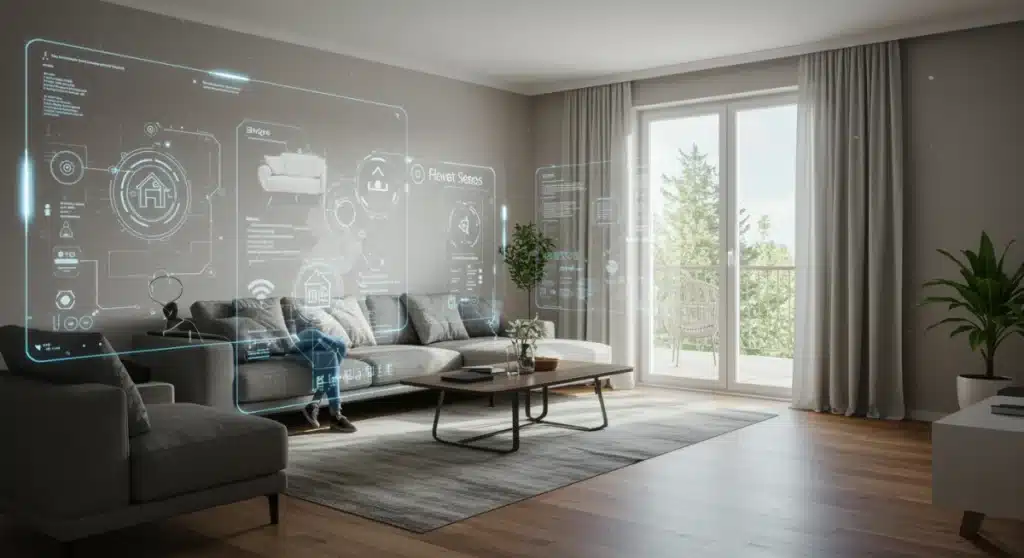
Furthermore, AR Home Design 2026 isn’t just about aesthetics. It’s about functionality and intelligence. As smart home technology becomes ubiquitous, AR will serve as an intuitive interface for visualizing and managing these systems. Imagine seeing the energy consumption of each appliance overlaid on your smart meter, or adjusting ambient lighting with a gesture while viewing the real-time effect in your living room. This convergence of design and smart technology is where AR truly shines, offering a holistic approach to crafting intelligent and beautiful living spaces.
Key Trends Driving AR Adoption in Home Design by 2026
Several significant trends are accelerating the adoption and sophistication of AR Home Design 2026. Understanding these trends is crucial for anyone looking to stay ahead in the evolving world of interior and architectural design.
1. Hyper-Realistic Rendering and Spatial Mapping
The fidelity of AR experiences is rapidly improving. By 2026, AR applications will boast hyper-realistic rendering capabilities, making virtual objects almost indistinguishable from real ones. Advanced spatial mapping technologies, leveraging LiDAR and improved camera sensors in devices, will allow for incredibly accurate placement and interaction. This means furniture won’t just float in the air; it will cast realistic shadows, interact with existing light sources, and conform precisely to the dimensions of your room. This precision is vital for designers and homeowners alike, ensuring that what they see in AR is what they get in reality.
2. Seamless Integration with Smart Home Ecosystems
The smart home market is booming, and AR is the natural interface for managing these complex systems. AR Home Design 2026 will see applications that don’t just show you where to place a smart thermostat but allow you to visualize its operational data, adjust settings, and even troubleshoot issues by overlaying diagnostic information onto the device itself. This integration extends to smart lighting, security systems, climate control, and even smart appliances, transforming the way we interact with our intelligent homes. AR will make smart home management more intuitive and less reliant on multiple apps or complex dashboards.
3. Collaborative Design and Remote Consultation
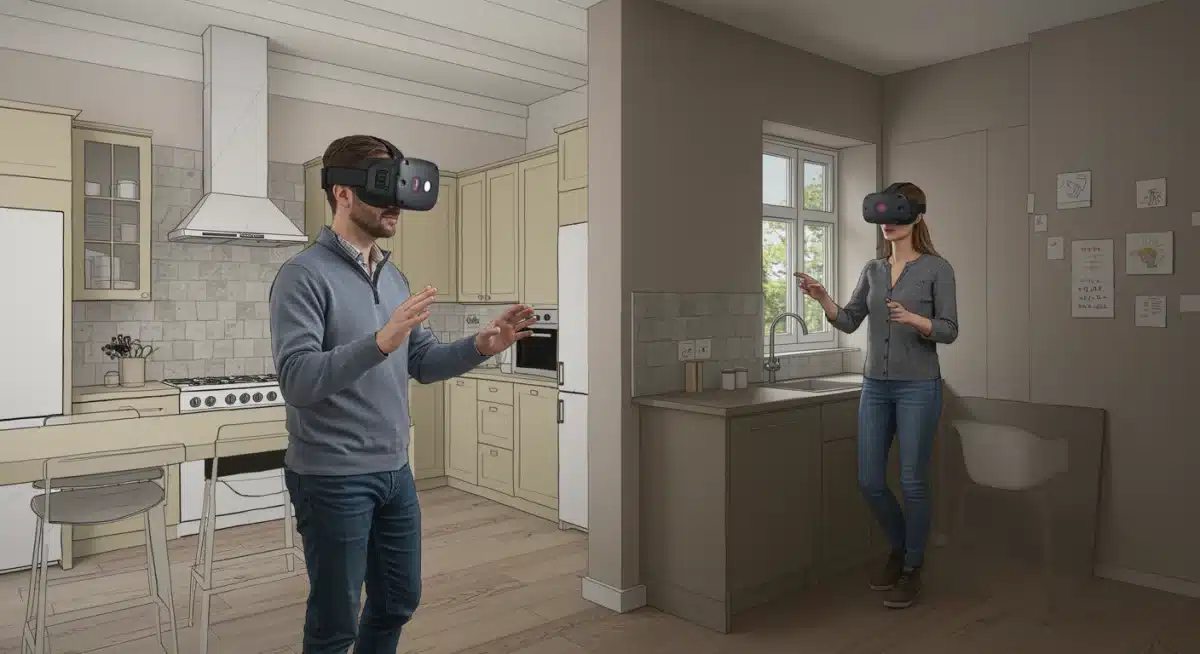
The ability to collaborate in a shared AR space will be a cornerstone of AR Home Design 2026. Designers will be able to ‘walk through’ a virtual renovation with clients, even if they are in different geographical locations. Both parties can interact with the virtual design in real-time, making changes, experimenting with materials, and discussing options as if they were physically together in the space. This significantly streamlines the design process, reduces travel, and allows for more dynamic and engaging client involvement, fostering better communication and ultimately, more satisfying outcomes.
4. DIY Empowerment and Guided Renovations
AR isn’t just for professionals. Homeowners embarking on DIY projects will find AR an invaluable tool. From guiding you through furniture assembly with step-by-step overlays to showing you where to drill holes for shelving or how to properly tile a bathroom, AR will democratize complex renovation tasks. Imagine an AR app that projects precise measurements, shows you the stud locations behind a wall, or guides you through the wiring of a new smart switch. This empowers individuals to tackle projects with greater confidence and accuracy, reducing errors and improving safety.
5. Predictive Maintenance and Proactive Upgrades
Beyond design, AR Home Design 2026 will extend into the realm of home maintenance. Imagine using AR to scan your HVAC system and see real-time data on its performance, identify potential issues before they become critical, or even receive augmented instructions for routine maintenance tasks. AR could highlight areas of poor insulation, show heat loss through windows, or visualize the optimal placement for smart sensors to improve efficiency. This proactive approach to home management can save homeowners significant time and money in the long run.
Practical Applications of AR in Smart Home Upgrades
Let’s explore some specific, tangible ways AR is transforming smart home upgrades by 2026.
Virtual Staging and Furniture Placement
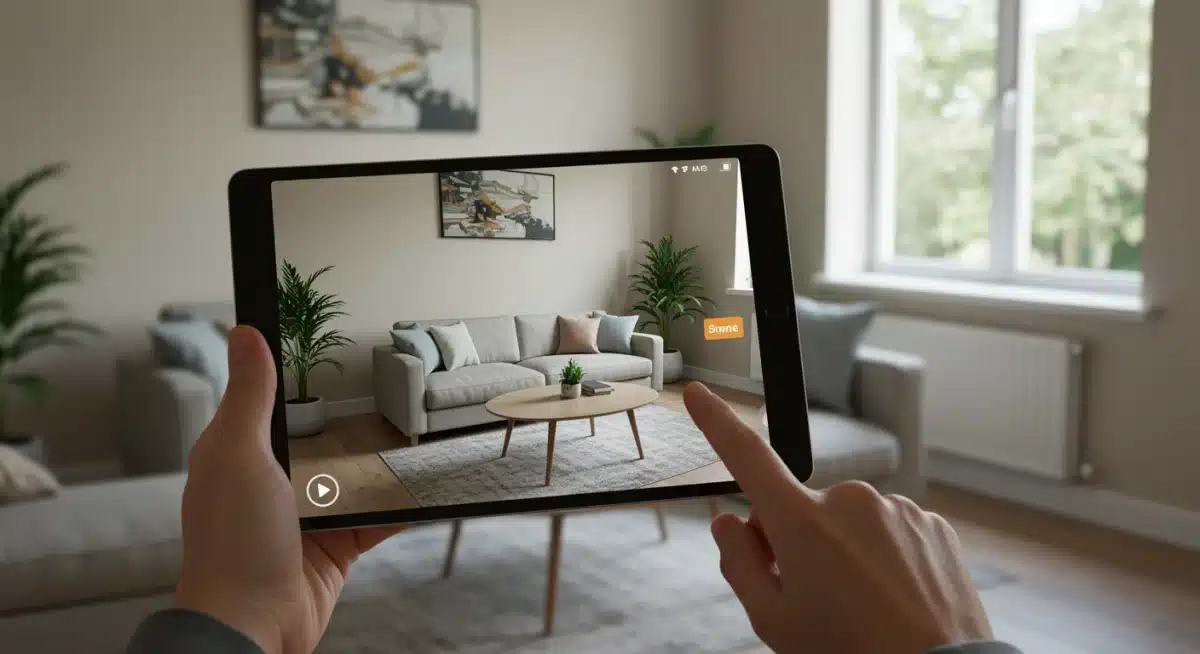
One of the most immediate and impactful applications of AR is virtual staging. Homeowners can experiment with different furniture layouts, styles, and colors without moving a single physical item. Retailers are already leveraging this, allowing customers to ‘try on’ furniture in their homes before purchasing. By 2026, this will be even more sophisticated, with AR apps offering personalized recommendations based on room dimensions, existing decor, and user preferences. This reduces buyer’s remorse and ensures perfect fit and style.
Kitchen and Bathroom Remodel Visualization
These are often the most expensive and disruptive renovations. AR offers an unparalleled way to visualize new cabinetry, countertops, flooring, and appliances. You can see how different finishes interact, test various layouts for functionality, and even visualize the impact of new plumbing fixtures. Designers can present multiple options to clients in real-time, allowing for immediate feedback and adjustments, drastically shortening the decision-making process and ensuring client satisfaction with the AR Home Design 2026 plan.
Smart Lighting and Climate Control Planning
Planning a smart lighting system involves more than just picking fixtures; it’s about understanding light distribution, color temperature, and energy efficiency. AR can simulate these effects in real-time, allowing you to see how different smart bulbs and fixtures illuminate your space throughout the day. Similarly, for climate control, AR can help visualize optimal thermostat placement, identify drafts, or show the impact of smart window coverings on energy consumption. This leads to more efficient and comfortable smart homes.
Security System Optimization and Placement
For smart security systems, AR can help homeowners and installers determine the optimal placement for cameras, sensors, and smart locks. You can visualize camera fields of view, identify blind spots, and ensure comprehensive coverage. AR can also demonstrate how different smart locks would look on your doors and integrate with your overall home aesthetic, ensuring both security and style are met within your AR Home Design 2026 strategy.
Energy Efficiency Audits and Green Upgrades
AR is becoming a powerful tool for visualizing energy efficiency. Imagine an AR app that highlights areas of heat loss in your home, shows the potential energy savings of installing new windows, or visualizes the impact of solar panel placement on your roof. This allows homeowners to make data-driven decisions about green upgrades, understanding the tangible benefits of their investments before they even begin construction. This is a crucial aspect of sustainable AR Home Design 2026.
The Technology Behind AR Home Design 2026
The advancements enabling sophisticated AR Home Design 2026 experiences are rooted in several key technological developments:
LiDAR and Advanced Depth Sensing
Light Detection and Ranging (LiDAR) sensors, increasingly common in high-end smartphones and tablets, provide highly accurate depth mapping of environments. This allows AR applications to understand the precise dimensions and geometry of a room, leading to more accurate placement of virtual objects and realistic occlusion (where virtual objects are correctly hidden by real-world objects).
Powerful Mobile Processors and GPUs
The processing power of mobile devices continues to grow exponentially. This allows for complex 3D rendering and real-time interaction without lag, making AR experiences smooth and immersive. Dedicated Graphics Processing Units (GPUs) in these devices are crucial for rendering photorealistic textures and lighting effects.
Cloud Computing and AI
Cloud platforms provide the computational backbone for storing vast libraries of 3D models, textures, and design algorithms. Artificial Intelligence (AI) plays a role in enhancing spatial understanding, optimizing object placement, and even generating design recommendations based on user preferences and existing home characteristics. AI can learn from user interactions to refine the AR experience over time, making AR Home Design 2026 more intuitive and personalized.
5G Connectivity
The rollout of 5G networks is vital for enabling seamless, low-latency AR experiences, especially for cloud-rendered content or collaborative sessions. Faster data transfer rates mean quicker loading of complex 3D models and real-time synchronization between multiple users in a shared AR environment.
Standardization and Interoperability
As AR platforms mature, there’s a growing push for standardization and interoperability. This will allow different AR applications and hardware to work together more seamlessly, fostering a richer ecosystem of tools and content for AR Home Design 2026.
Challenges and Considerations for AR in Home Design
While the future of AR Home Design 2026 is bright, there are still challenges to address:
Hardware Accessibility and Cost
While smartphones are ubiquitous, high-end AR glasses capable of truly immersive experiences are still relatively expensive and not yet mainstream. As costs decrease and form factors improve, adoption will accelerate.
Content Creation and 3D Modeling
Creating high-quality, accurate 3D models of furniture, appliances, and building materials is a labor-intensive process. A robust ecosystem of 3D content creators and standardized formats is essential for widespread AR adoption in design.
User Experience and Interface Design
Designing intuitive and user-friendly AR interfaces that are easy for both professionals and casual users to navigate is crucial. The learning curve for new technologies can be a barrier to entry.
Data Privacy and Security
As AR applications gather more data about our physical environments and personal preferences, ensuring robust data privacy and security measures will be paramount.
The Future is Now: Embracing AR Home Design 2026
The integration of augmented reality into home design is not just an incremental improvement; it’s a paradigm shift. By 2026, AR will be an indispensable tool for anyone involved in creating, renovating, or managing a home. From individual homeowners planning a simple furniture purchase to professional designers orchestrating complex structural overhauls, AR offers a level of visualization, precision, and collaboration previously unimaginable.
The ability to ‘see’ your dream home before it’s built, to experiment with countless design iterations without physical effort, and to optimize smart home functionality with intuitive overlays will redefine our relationship with our living spaces. AR Home Design 2026 promises not just aesthetically pleasing homes, but also more functional, efficient, and intelligent ones. It empowers us to be active participants in the design process, ensuring that our homes are truly reflections of our needs and aspirations.
As technology continues to advance, we can expect even more sophisticated features: AI-driven design suggestions, real-time cost estimations integrated into AR models, and even AR-guided construction robots. The future of home design is interactive, immersive, and incredibly exciting. Embracing AR now means preparing for a future where every home upgrade is visualized with precision, every design decision is made with confidence, and every living space is optimized for comfort, efficiency, and beauty.
Are You Ready to Experience AR Home Design 2026?
The tools are becoming more accessible, the experiences more realistic, and the benefits more profound. Whether you’re a homeowner dreaming of a perfect renovation, an interior designer seeking innovative ways to engage clients, or a contractor looking to streamline project execution, augmented reality is poised to become your most valuable asset. The era of AR Home Design 2026 is here, and it’s set to transform how we build, design, and live in our homes forever.